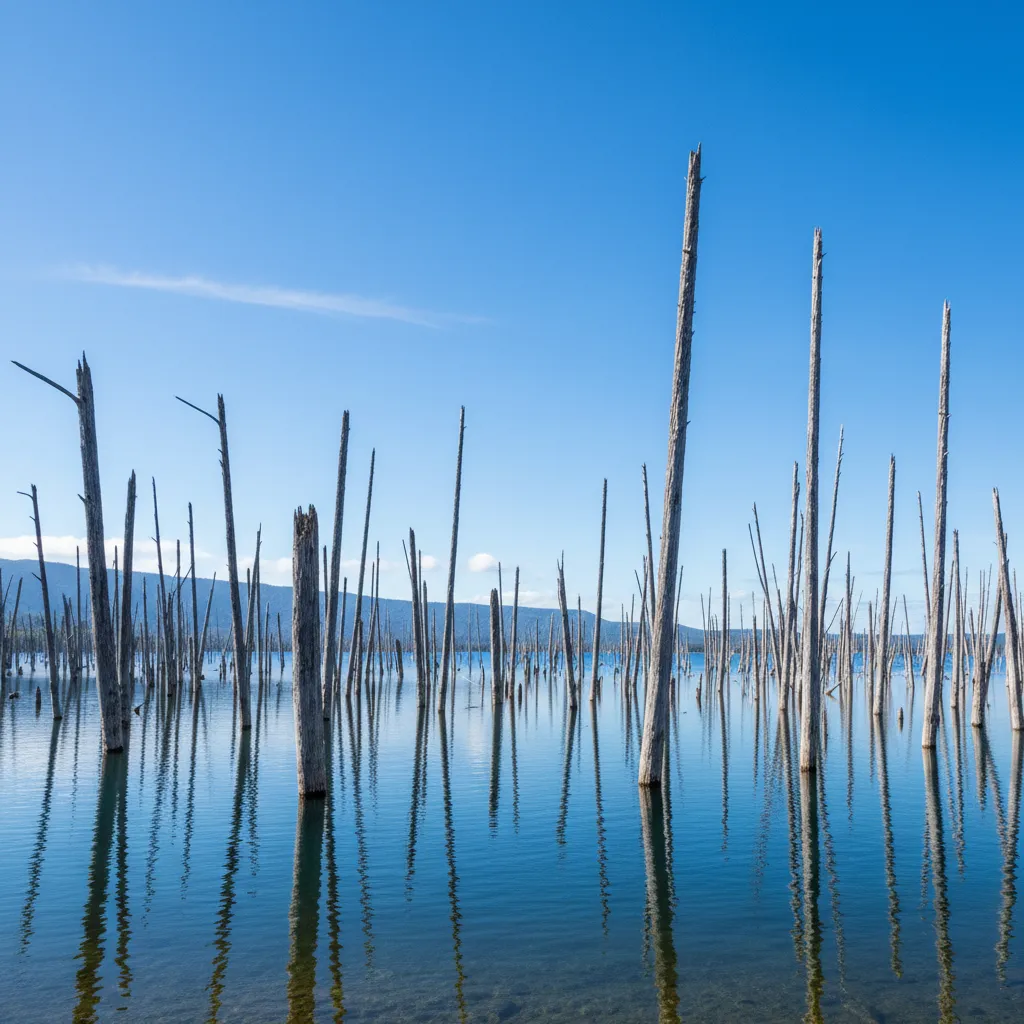
Whale watching in New Caledonia is a premier eco-tourism experience occurring from mid-July to mid-September. During this period, humpback whales migrate from Antarctica to the warm lagoon waters for breeding and calving. Most tours depart from Prony Bay, offering New Zealand travelers a unique opportunity to witness these majestic mammals in a protected marine sanctuary.
The Best Time for Whale Watching: July to September
For New Zealanders looking to escape the damp winter, New Caledonia offers more than just tropical sunshine; it provides a front-row seat to one of nature’s most spectacular migrations. The whale watching season in New Caledonia is strictly defined by the biological needs of the humpback whale (Megaptera novaeangliae). These gentle giants travel thousands of kilometers from their feeding grounds in the Antarctic to reach the safety of the New Caledonian lagoon.
While the official season runs from mid-July to mid-September, the peak sightings usually occur in August. During this window, the water temperature in the Southern Lagoon stays at a comfortable range that is ideal for newborn calves who lack the thick blubber layers of their parents. For Kiwis, this aligns perfectly with the mid-year school holidays, making it a popular choice for families seeking an educational and awe-inspiring adventure.

Understanding the Humpback Migration
The humpback whales that visit New Caledonia belong to the Oceania sub-population. Unlike the whales seen off the coast of Kaikoura or the Bay of Islands, these whales are here specifically to mate and give birth. This means their behavior is distinct; you are less likely to see high-speed hunting and more likely to witness tender interactions between mothers and calves, or the dramatic ‘heat runs’ where males compete for the attention of a female.
Prony Bay: The Gateway to the Giants
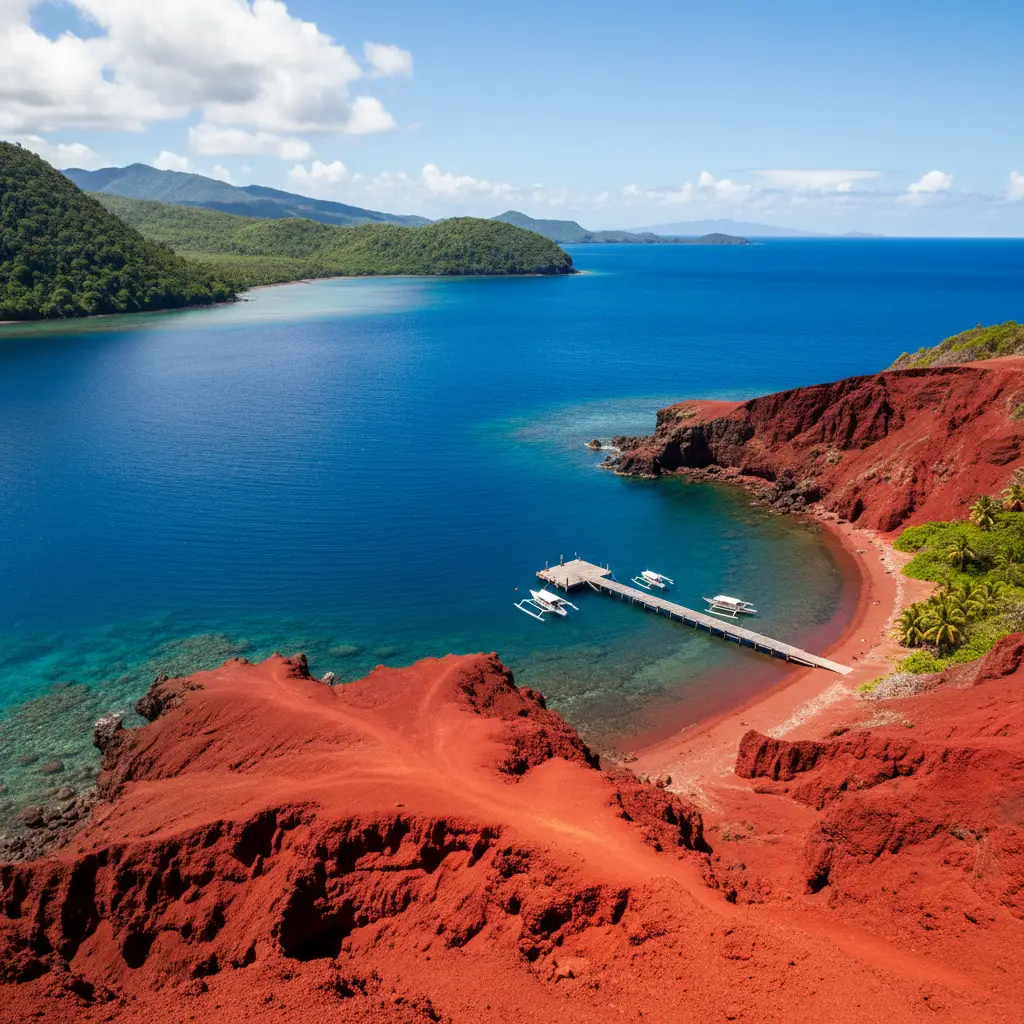
Prony Bay (Baie de Prony) is the undisputed heart of whale watching in New Caledonia. Located at the southern tip of the main island, Grande Terre, this bay is a geographic marvel. It is a deep-water inlet surrounded by the striking red soil of the ‘Grand Sud’ (Great South), creating a visual contrast between the crimson earth and the vibrant turquoise sea that is unlike anywhere else in the Pacific.
Most whale watching expeditions depart from the Somme Bay wharf within Prony. For travelers staying in Noumea, this requires a scenic 60-to-90-minute drive through the Yaté region. The journey itself is a highlight, passing through the ‘Maquis Minier’—a unique shrubland ecosystem found only on New Caledonia’s nickel-rich soil. Many tour operators offer shuttle services from Noumea hotels, which is highly recommended for those unfamiliar with the local winding roads.
The Historic Prony Village
Before or after your boat trip, take a moment to explore the ruins of the Prony penal colony. Established in the 19th century, the site is now being reclaimed by massive banyan trees, their roots wrapping around the old stone buildings. It adds a layer of historical depth to your natural excursion, reminding visitors of the complex colonial history of the archipelago.
Responsible Whale Watching: Local Regulations
New Caledonia takes the protection of its marine life seriously. The Southern Lagoon is a UNESCO World Heritage site, and the whale watching industry is governed by strict environmental codes of conduct. These regulations are designed to minimize stress on the animals, particularly nursing mothers.
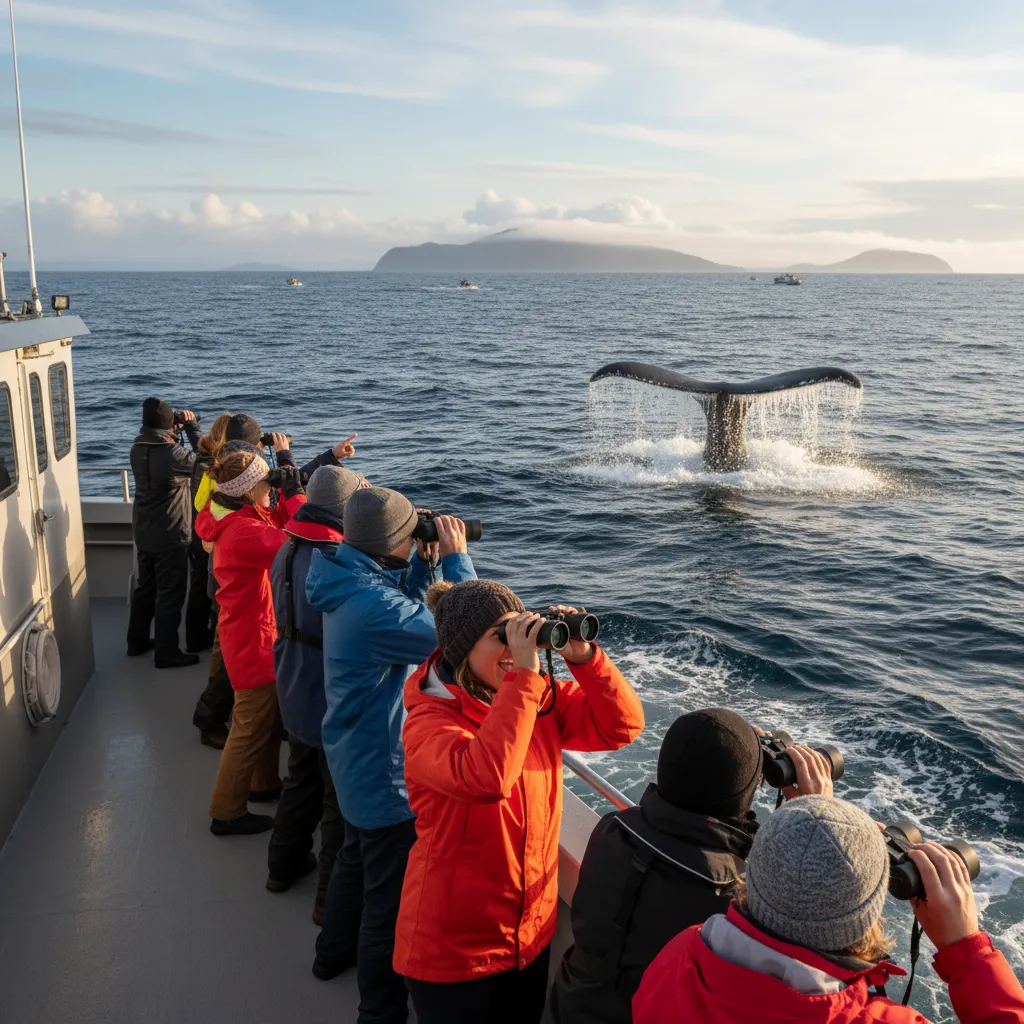
When you are out on the water, your skipper must adhere to the following rules: boats must maintain a distance of at least 100 meters from the whales (or 300 meters if a calf is present). If the whales choose to approach the boat, the engine must be placed in neutral. Furthermore, observation time is limited to 1 hour per boat, or 30 minutes if other vessels are waiting. Unlike some other Pacific nations, swimming with whales is strictly prohibited in New Caledonia to ensure the animals are not disturbed during their critical breeding cycle.
Looking for the ‘Ambassadeur des Baleines’
When booking, look for operators who carry the ‘Ambassadeur des Baleines’ (Whale Ambassador) label. This certification ensures the crew has undergone specific training in whale biology and respectful approach techniques. For the conscious Kiwi traveler, choosing a certified operator ensures that your tourism dollars are supporting sustainable practices that protect the lagoon for future generations.
Top Tour Operators for New Zealand Travelers
Choosing the right operator can make or break your experience. For New Zealanders, who are used to high standards of maritime safety and professional guiding, several operators stand out for their service and expertise. Most tours offer either a full-day experience on a large catamaran or a more intimate, faster trip on a rigid inflatable boat (RIB).
Luxury and Stability: Catamaran Excursions
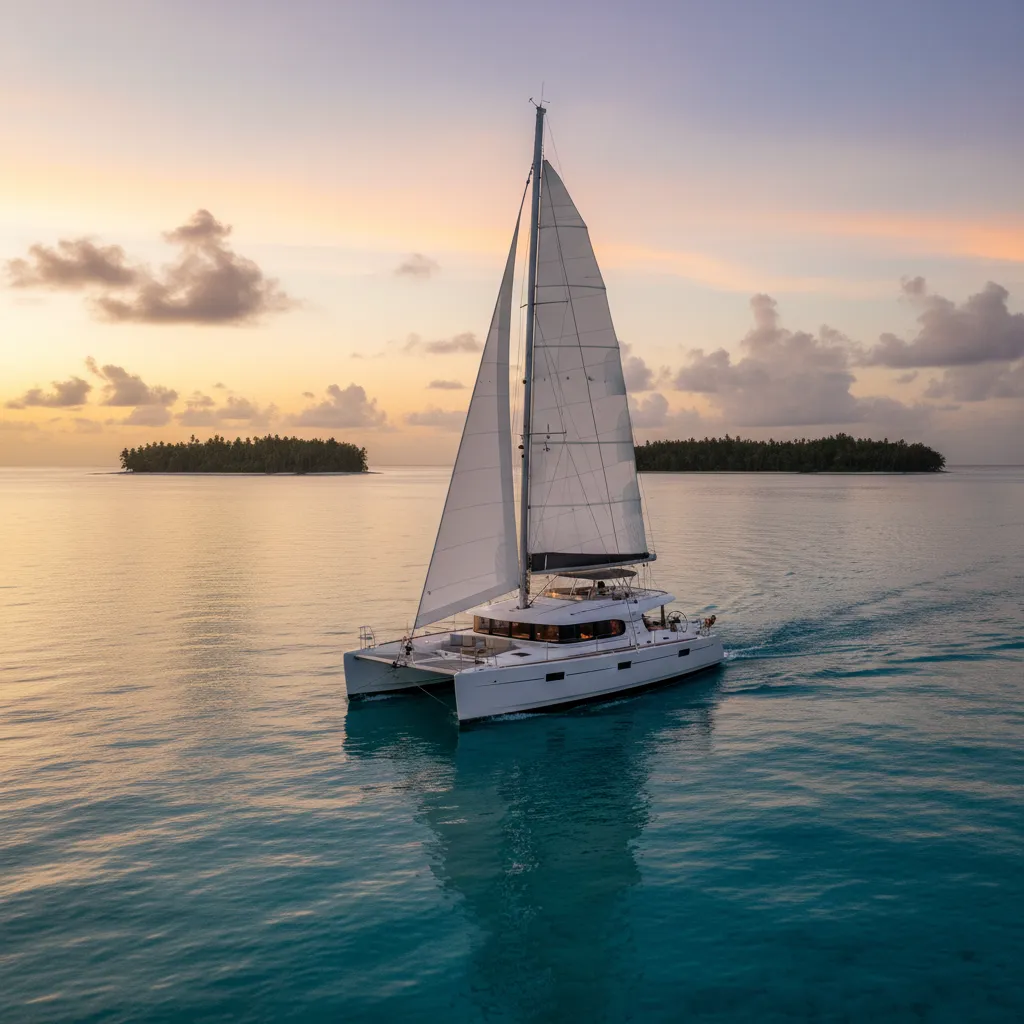
Operators like **Abyss** and **Terres de Lumière** operate large, stable catamarans. These are ideal for families or those prone to seasickness. These tours often include a buffet lunch featuring local Caledonian flavors—think fresh prawns, coconut-infused salads, and French pastries. The spacious decks provide excellent vantage points for photography without the need to jostle for space.
Speed and Proximity: RIB Expeditions
If you are looking for a more adventurous ‘safari’ feel, smaller operators offer RIB tours. These boats are faster, allowing them to cover more ground and respond quickly to sightings reported by other vessels. While less comfortable than a catamaran, the proximity to the water level provides a truly humbling perspective when a 40-tonne humpback surfaces nearby.
Practical Planning Tips for Kiwis
Traveling from New Zealand to New Caledonia is remarkably easy, with the Cost of Flights to New Caledonia: Monthly Breakdown often showing favorable rates for the flight from Auckland. Before you fly, review our Seat Selection Tips: Best & Worst Seats. However, there are several Arrival Logistics: Tontouta Airport to Noumea to consider when planning a whale-focused itinerary.
Booking in Advance: Because the season is short and demand is high, it is essential to book your whale watching tour at least 4-6 weeks in advance, especially if you plan to visit during the August school holidays. Many operators only run tours on specific days of the week.
What to Pack: Even in the tropics, the wind on a moving boat can be chilly. Bring a windproof jacket, high-SPF sunscreen (the Pacific sun is fierce), and polarized sunglasses to help see through the water’s surface glare. A camera with a telephoto lens (200mm-400mm) is recommended for capturing clear shots of breaches and tail flukes while adhering to distance regulations.
Currency and Language
New Caledonia uses the CFP Franc (XPF), which is pegged to the Euro. While many tour operators in the tourism sector speak English, having a few basic French phrases will greatly enhance your experience, especially when dealing with smaller local vendors in Prony or Yaté.
Conservation and the Southern Lagoon
The success of whale watching in New Caledonia is a testament to the country’s commitment to marine conservation. The ‘Parc Naturel de la Mer de Corail’ is one of the largest protected marine areas in the world. By participating in a regulated tour, visitors contribute to the local economy, proving that live whales are more valuable than the alternative.
Scientists from the **Opération Cétacés** organization often join tours to collect data, including fluke photographs and skin biopsies. These photographs act like fingerprints, allowing researchers to track individual whales across the Pacific. Don’t be surprised if your guide asks you to share your photos after the trip—your holiday snapshots could contribute to vital scientific research.
People Also Ask
When is the best time for whale watching in New Caledonia?
The peak season is from mid-July to mid-September. August is generally considered the best month for consistent sightings as the number of humpback whales in the lagoon reaches its maximum.
Can you swim with whales in New Caledonia?
No, swimming with whales is strictly prohibited in New Caledonia to protect the animals from stress and ensure the safety of tourists. Observation is boat-based only.
How do I get to Prony Bay from Noumea?
Prony Bay is about a 90-minute drive south of Noumea. You can rent a car, take a shuttle provided by your tour operator, or book a boat transfer that departs directly from the Noumea marina (though these are less common).
Is New Caledonia whale watching better than New Zealand?
It offers a different experience. While NZ is famous for Sperm Whales in Kaikoura year-round, New Caledonia offers the chance to see Humpback whales in a tropical lagoon setting with calving behaviors that aren’t typically seen in NZ waters.
What should I wear on a whale watching tour?
Wear layers, including a light sweater and a waterproof/windproof jacket. Even on sunny days, the sea breeze can be cold. Don’t forget a hat with a chin strap and polarized sunglasses.
How much does a whale watching tour cost in New Caledonia?
Prices typically range from 12,000 to 18,000 XPF (approx. $160-$240 NZD) per adult, depending on the boat type and whether lunch and transfers from Noumea are included.