An Upi Bay outrigger tour is a traditional sailing excursion on the Isle of Pines, New Caledonia, utilizing a Melanesian pirogue. Departing from St Joseph’s Bay, this wind-powered journey navigates the coral-studded waters of Upi Bay before connecting travellers to the famous Natural Pool via a tropical forest trail.
For New Zealand travellers seeking an authentic escape into the Pacific, few experiences rival the serenity and cultural immersion of gliding across the turquoise lagoon of L’Île-des-Pins (Isle of Pines) on a traditional wooden vessel. Far removed from the noise of motorized jet skis, the Upi Bay outrigger tour offers a silent, majestic voyage through landscapes often compared to a “Mini Halong Bay” due to the impressive coral rocks jutting from the water. This guide provides a comprehensive breakdown of the experience, logistics, and booking details essential for planning your itinerary.
What is a Traditional Melanesian Pirogue?
To understand the allure of the Upi Bay outrigger tour, one must first understand the vessel itself. A pirogue (pronounced pee-rog) is a traditional outrigger canoe that has been used by the Kanak people of New Caledonia for centuries. Historically, these boats were the primary mode of transport for fishing, trade, and travel between the islands and coastal villages.
Unlike modern fiberglass tourist boats, the pirogues used in Upi Bay are crafted with a distinct nod to heritage. While modern materials are sometimes integrated for durability, the design remains faithful to the ancient Melanesian architecture. The boat features a main hull where passengers sit, stabilized by a lateral outrigger (the ama) connected by wooden spars. Propulsion is achieved primarily through a large, triangular sail, allowing the vessel to glide silently with the trade winds.
For the Kunyie (the inhabitants of the Isle of Pines), the pirogue is a symbol of their maritime culture. When you book this tour, you are not merely purchasing a transfer; you are participating in a cultural practice. The skippers are local men who navigate these waters with an intuitive understanding of the tides and winds, often steering the boat using a large wooden paddle at the stern.

The Route: From St Joseph’s Bay to Upi Bay
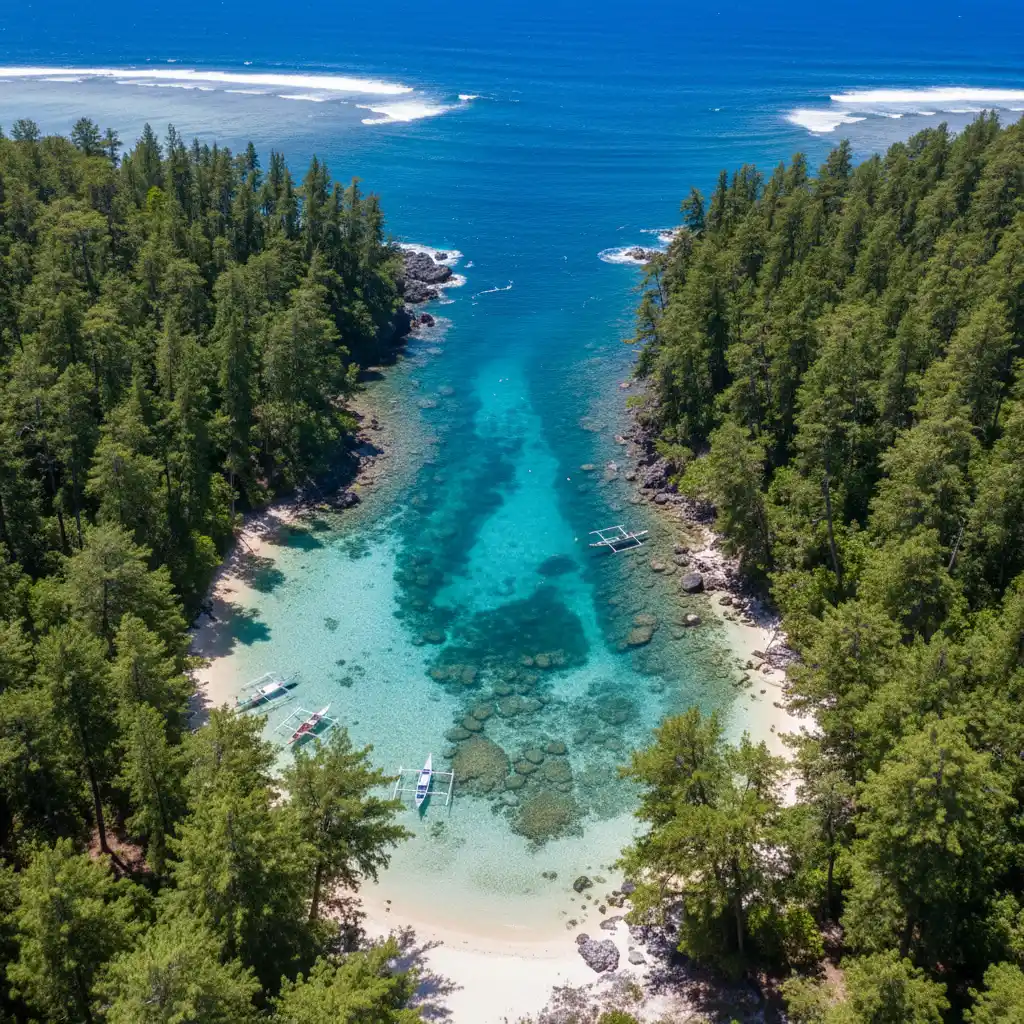
The journey typically begins at St Joseph’s Bay (Baie de Saint Joseph), located near the village of Vao on the southern tip of the island. This is the logistical hub for the pirogues. Upon arrival, you will see a fleet of these traditional boats lined up on the shore or bobbing in the shallow water, creating a picturesque scene before you even board.
The Departure
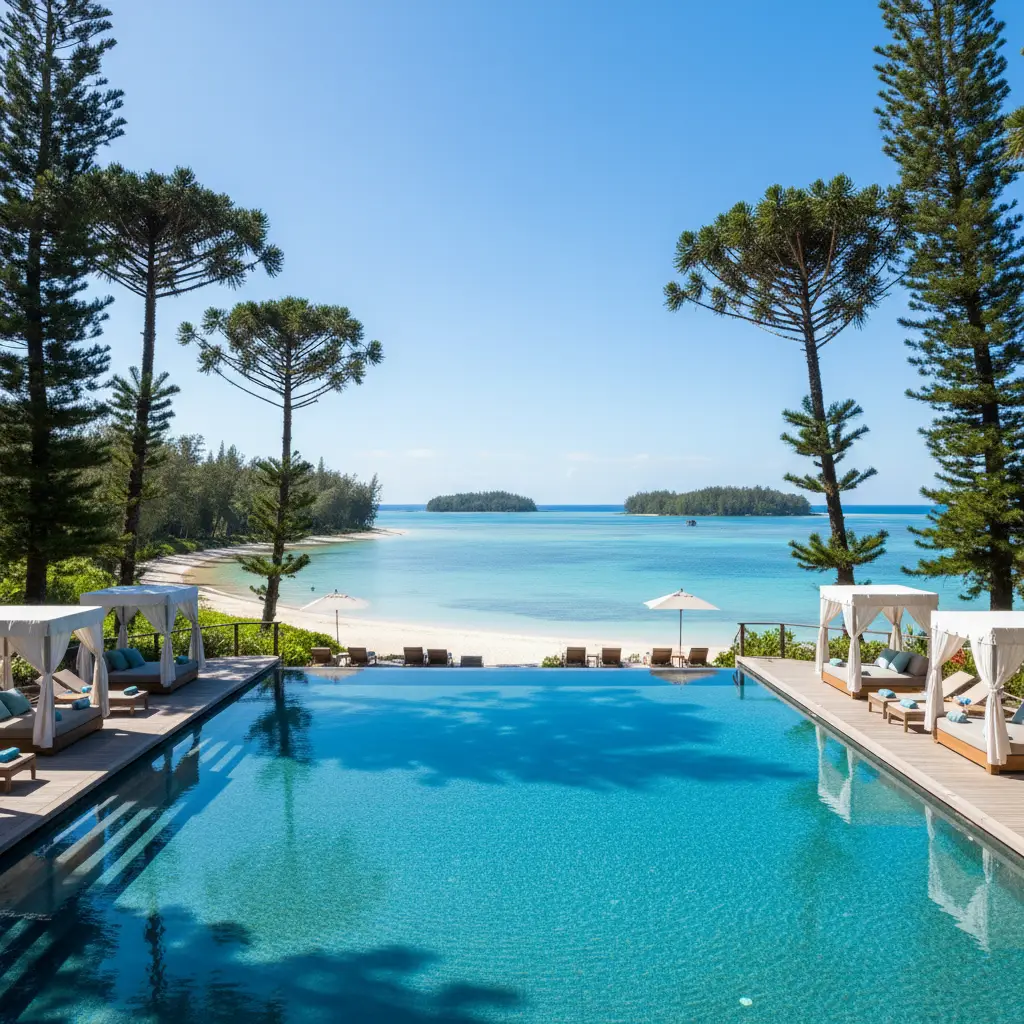
Boarding the pirogue requires wading into knee-deep water, so appropriate footwear is essential from the start. Once aboard, the skipper will hoist the sail. If the wind is favorable, the engine (used only for maneuvering out of the mooring) is cut, and silence descends. The departure from St Joseph’s Bay offers a panoramic view of the coastline, lined with the iconic Araucaria columnaris (Cook Pines) that give the island its name.
Entering Upi Bay
As the pirogue navigates around the headland, you enter the majestic Upi Bay. This area is geographically distinct due to the massive coral rocks that rise vertically from the lagoon floor. These limestone formations, undercut by centuries of tidal erosion, create a mushroom-like appearance and serve as nesting grounds for seabirds.
The water in Upi Bay is renowned for its shifting spectrum of blues—ranging from deep indigo in the channels to a blindingly bright cyan in the shallows. Because the pirogue draws very little water, the skipper can navigate over sandbars and coral heads that deeper vessels cannot reach, providing an intimate look at the lagoon’s ecosystem.

Wildlife and Scenery: What You Will See
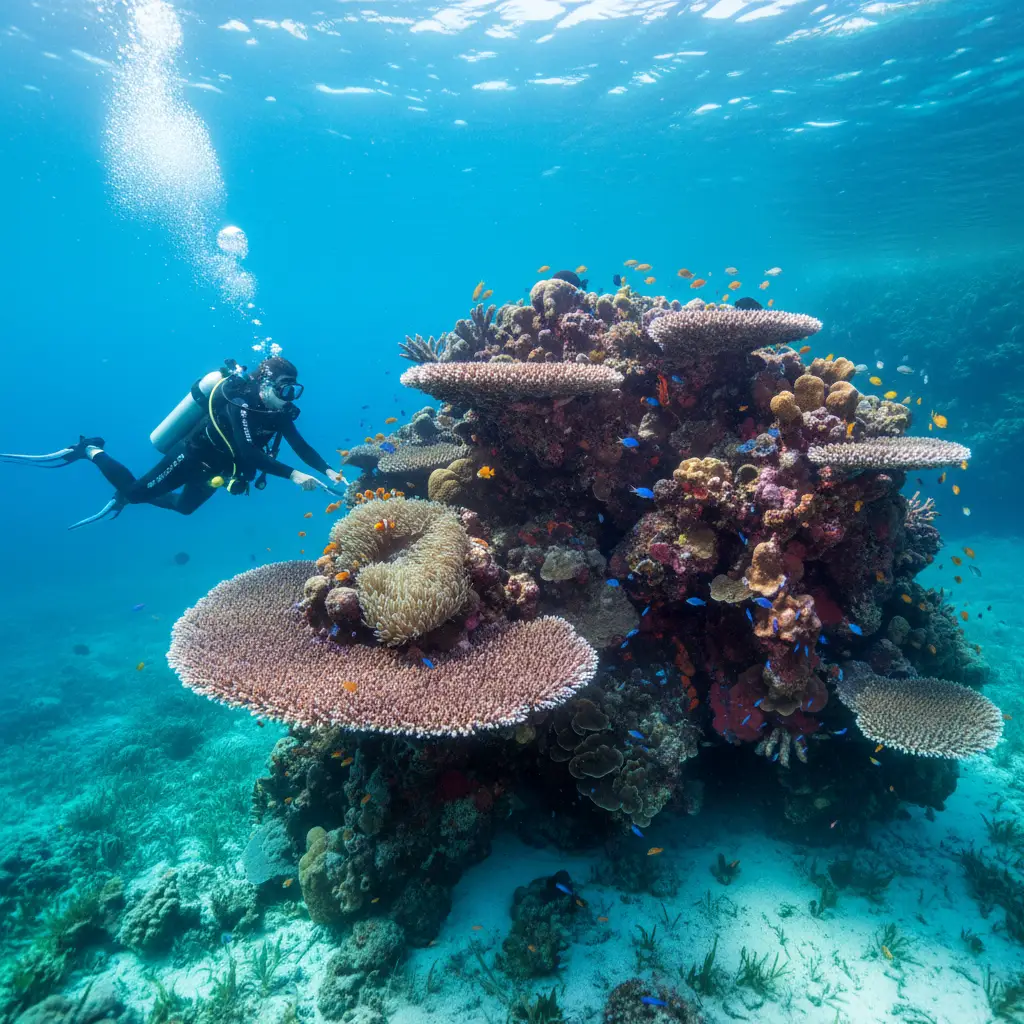
The Upi Bay outrigger tour is effectively a marine safari. The silence of the wind-powered vessel is a critical advantage here; without the noise and vibration of a diesel engine, marine life is less likely to be startled, allowing for closer encounters.
Marine Life
New Zealand travellers, accustomed to the cold-water marine life of the Pacific South, will find the tropical biodiversity astounding. It is highly common to spot:
- Green Sea Turtles and Loggerheads: These are frequently seen surfacing for air or resting on the sandy bottom of the lagoon.
- Manta Rays and Stingrays: The shallow, sandy flats of Upi Bay are ideal feeding grounds for rays.
- Reef Sharks: Small, non-aggressive Blacktip and Whitetip reef sharks often patrol the coral heads.
- Dolphins: While less guaranteed than turtles, pods of dolphins often enter the bay to hunt or play in the calm waters.
Your skipper will act as a spotter. Their trained eyes can detect the shadow of a turtle or the ripple of a ray long before the average tourist. They will often steer the boat gently toward these animals for a better view, ensuring a respectful distance is maintained.
Combining the Tour with the Natural Pool Walk
It is crucial to understand that the pirogue tour is a one-way sailing journey that serves as the first leg of a larger adventure. The boat does not return you to St Joseph’s Bay immediately, nor does it drop you directly at the Natural Pool (Piscine Naturelle).
The End of the Sail
After approximately 90 minutes to 2 hours of sailing, the pirogue will reach the end of Upi Bay. Here, the water becomes too shallow and the mangroves too dense for the boat to proceed further. You will disembark onto a beach or a shallow sandbar.
The Jungle Trek
From the landing point, you must walk to reach Oro Bay and the Natural Pool. This is a guided or self-guided walk (the path is obvious) through a tropical rainforest. The walk takes approximately 30 to 45 minutes.
The terrain is generally flat but can be uneven due to tree roots and fossilized coral rocks. The trail winds through lush ferns, banyan trees, and coconut palms. It is a humid but beautiful walk that transitions from dense jungle to the white sands of Oro Bay.
Arrival at the Natural Pool
The trail opens up at Oro Bay. From here, you walk along the river/inlet to reach the Piscine Naturelle. This is a protected natural aquarium carved out of coral, separated from the open ocean by a reef barrier. The water is crystal clear and teeming with colorful tropical fish. It is the perfect place to cool off after the jungle walk.
Booking Information, Costs, and Logistics for Kiwis
For New Zealanders planning their New Caledonia itinerary, booking the Upi Bay outrigger tour requires some advance planning, as availability is limited by the number of pirogues and the tides.
How to Book
There are very few “online instant booking” engines for this specific local activity. The most reliable methods are:
- Through your Accommodation: Hotels like Le Méridien Ile des Pins, Oure Tera Beach Resort, and Hotel Kou-Bugny have direct relationships with the pirogue operators. They can book the tour for you, often including the shuttle transfer to the departure point.
- Direct with Operators: If you are staying in a Gite (guesthouse) or camping, your host can call the pirogue association in Vao to reserve a spot.
Cost Estimates
Prices vary slightly depending on the provider and transfer inclusions, but you should budget for the following (estimates in XPF and NZD):
- Pirogue Tour Only: Approx. 3,500 – 4,500 XPF per person ($50 – $65 NZD).
- Transfer (Shuttle): You will likely need a shuttle to get to St Joseph’s Bay and to pick you up from Oro Bay (near the Meridian) to return to your hotel. This can cost an additional 1,500 – 2,000 XPF ($20 – $30 NZD) per person.
- Natural Pool Entry Fee: There is a small conservation fee to enter the Piscine Naturelle area, usually around 200 XPF ($3 NZD), payable in cash at the entrance booth.
Timing and Tides
The tour departure times are dictated by the tides. Pirogues cannot navigate the shallow channels of Upi Bay at low tide. Consequently, the departure might be as early as 7:00 AM or as late as 10:00 AM. Your hotel reception will confirm the departure time the evening before.
Essential Packing List
To ensure a comfortable experience, pack a small day bag with the following items. Remember, you have to carry this bag during the 40-minute jungle walk, so keep it light.
- Reef Shoes (Critical): You will be wading in water to board the boat, and walking over sharp coral rocks during the jungle trek and at the Natural Pool. Jandals (flip-flops) are not sufficient for the walk.
- Sun Protection: The New Caledonian sun is fierce. Bring high-SPF sunscreen, a hat that won’t blow away, and sunglasses.
- Water and Snacks: There are no shops on the boat or in the jungle. Bring at least 1.5 liters of water per person.
- Snorkel Gear: While you can rent gear at some hotels, it is best to bring your own mask and snorkel for the Natural Pool.
- Cash (XPF): You will need cash for the Natural Pool entry fee and potentially for a snack at the small restaurants near Oro Bay (like Kou-Gny) if you plan to eat there.
- Waterproof Bag: To protect your phone and camera from salt spray on the boat.
Frequently Asked Questions
How long does the Upi Bay outrigger tour take?
The entire experience usually takes half a day. The sailing portion lasts between 1.5 to 2 hours. The subsequent walk to the Natural Pool takes 30-45 minutes. Most visitors spend another hour or two swimming at the pool before catching a shuttle back, making the total trip duration around 4 to 5 hours.
Is the tour suitable for young children?
Yes, the tour is generally family-friendly. The bay is calm, making sea-sickness unlikely. However, parents must consider the 45-minute jungle walk. Very young children may need to be carried, which can be tiring in the humidity. Life jackets are usually provided, but bringing a child-sized one is recommended.
What happens if there is no wind?
While the pirogues are designed to sail, they are all equipped with small outboard motors. If the wind is dead calm, the skipper will use the motor to propel the boat through the bay. While less romantic than sailing, you still get to see the stunning scenery and wildlife.
How do I get back to my hotel from the Natural Pool?
The boat does not wait for you. The tour is a one-way trip ending at the start of the jungle walk. You must arrange a shuttle pick-up from the parking lot at Oro Bay (near Le Méridien) or the Kou-Gny restaurant area. If you booked via your hotel, this return transfer is usually included in the package.
Is lunch included in the tour?
No, lunch is typically not included. Most visitors bring a picnic to eat at the Natural Pool. Alternatively, you can book a table at the snack bar or restaurant at Oro Bay (reservations recommended for the lobster lunch at Kou-Gny), but verify opening times beforehand.
Can I do the tour in reverse?
Generally, no. The standard route is St Joseph’s Bay to Upi Bay, then walk to Oro Bay. This takes advantage of the prevailing trade winds. Going against the wind would require motoring the whole way, which defeats the purpose of the traditional sailing experience.