
For New Zealanders planning a trip to New Caledonia, current travel advice emphasizes exercising a high degree of caution due to the civil unrest experienced in 2024. While tourist zones in Nouméa are stabilizing, Kiwis must check SafeTravel.govt.nz for the latest MFAT alert levels. Essential preparations include verifying travel insurance coverage for civil disturbances, adhering to local curfews, and pre-arranging secure transport from La Tontouta International Airport.
New Caledonia has long been a favoured tropical getaway for New Zealanders, offering a unique blend of French sophistication and Melanesian culture just a short flight from Auckland. However, the political and civil unrest that unfolded in May 2024 has significantly altered the travel landscape. For Kiwis looking to visit, understanding the nuances of safety, logistics, and insurance is no longer optional—it is critical.
This guide serves as a comprehensive resource for New Zealand travellers, breaking down the current situation, identifying safe zones, and explaining the logistical realities of visiting New Caledonia in the wake of recent events.
Understanding the 2024 Unrest: What Tourists Need to Know
To navigate New Caledonia safely, it is essential to understand the context of the 2024 disturbances. The unrest stemmed from proposed electoral reforms that sparked significant protests, roadblocks, and clashes, primarily concentrated in the Greater Nouméa area. While the situation has moved towards stabilization with a heavy security presence, the atmosphere can remain tense, and political demonstrations can occur with little warning.
For the New Zealand traveller, the primary impact is on logistics and freedom of movement rather than direct targeting of tourists. The violence was largely internal and political; however, infrastructure damage and roadblocks have historically disrupted access to La Tontouta International Airport and essential services.

Is it safe to travel to New Caledonia now?
Safety is relative and situational. While major tourist resorts and the outer islands often remain peaceful, the road network in the main island (Grande Terre) can be unpredictable. The “safety” of your trip depends heavily on your itinerary. Staying within the verified tourist bubbles of Anse Vata and Baie des Citrons is generally considered safer than venturing into the suburbs or travelling independently by rental car across the mainland without local knowledge.
MFAT Advice Explained: SafeTravel.govt.nz Updates
The New Zealand Ministry of Foreign Affairs and Trade (MFAT) provides official travel advisories via the SafeTravel website. These advisories are the gold standard for risk assessment and determine the validity of your travel insurance.
Decoding the Alert Levels
MFAT uses a four-level system. During periods of unrest, New Caledonia often fluctuates between:
- Level 2: Exercise Increased Caution. This is common for many destinations. It implies that while travel is possible, you should be more vigilant than usual.
- Level 3: Avoid Non-Essential Travel. If the advisory sits here, you should reconsider your need to travel. Most standard travel insurance policies will not cover you if you travel against this advice unless you have a specialized policy.
- Level 4: Do Not Travel. This is the highest warning. All travel should be cancelled.
Crucial Action: Before booking and again before departing, check the specific advice for New Caledonia on SafeTravel.govt.nz. The advice can be regional; for instance, MFAT may advise “Exercise increased caution” for the Loyalty Islands but “Avoid non-essential travel” for specific suburbs of Nouméa.
Safe Zones: Nouméa Tourist Bays vs Outer Islands
Not all of New Caledonia experiences unrest in the same way. The archipelago is vast, and the political tension is often localized to urban centers on the main island.
The Nouméa Tourist Bubble
The tourist hubs of Anse Vata and Baie des Citrons are heavily secured and economically vital to the territory. Hotels, restaurants, and beaches here generally operate normally even when tensions are higher elsewhere. Security forces prioritize these areas to ensure visitor safety. However, tourists are advised to stay within these zones and avoid the northern suburbs of Nouméa or industrial areas where unrest is more likely to flare up.
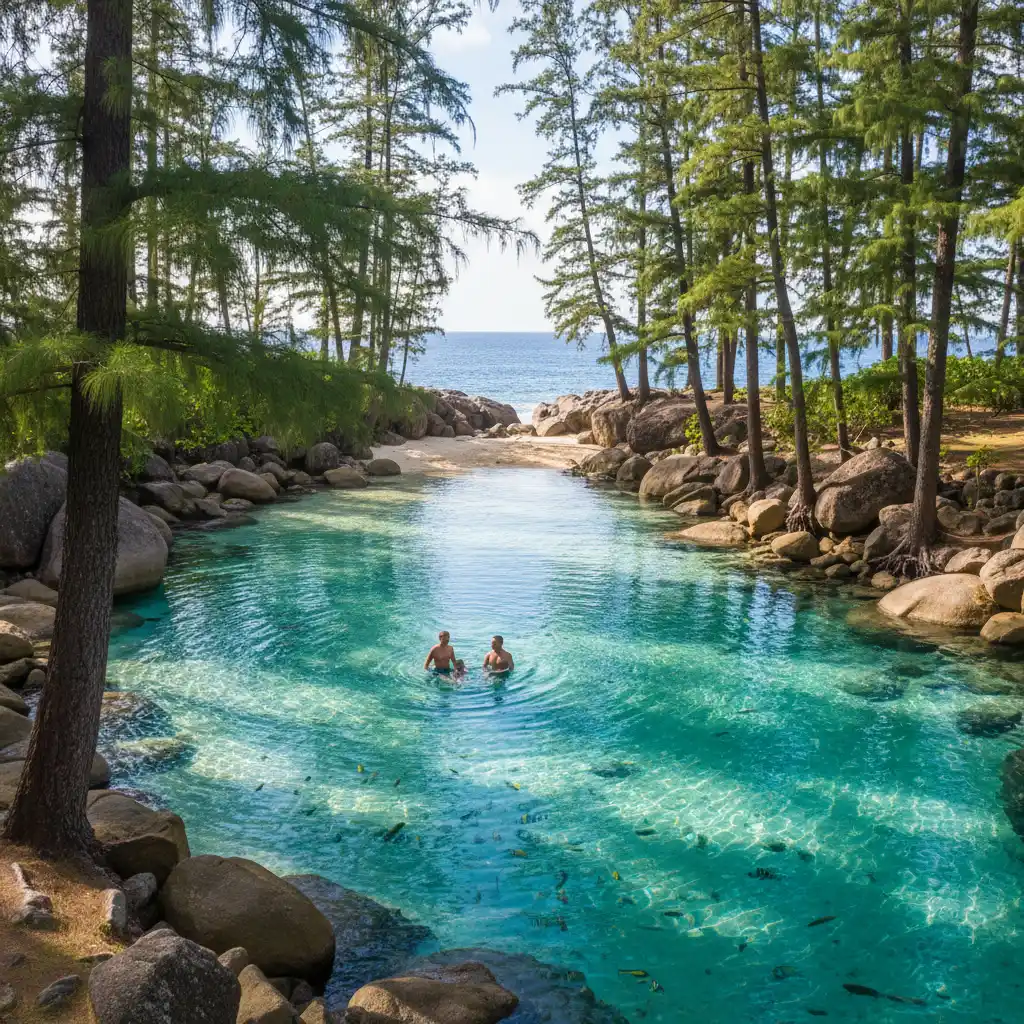
The Outer Islands: Isle of Pines and Loyalty Islands
The Isle of Pines (Île des Pins) and the Loyalty Islands (Lifou, Maré, Ouvéa) are often insulated from the political strife occurring on the mainland. These locations offer a traditional, peaceful Melanesian lifestyle and are largely considered safe havens for tourists.
Travel Tip: If you are concerned about safety but still want to visit, consider booking a direct transfer to the domestic airport (Magenta) and flying immediately to the Isle of Pines or the Loyalty Islands, spending the majority of your trip there rather than in the capital.
Navigating Curfews, Transport, and Local Restrictions
One of the most tangible impacts of the 2024 unrest for tourists is the imposition of curfews and restrictions on the sale of alcohol. The French High Commission may implement these measures at short notice to maintain order.
Curfews and Movement
During heightened alert phases, a nightly curfew may be enforced (e.g., from 10:00 PM to 5:00 AM).
For tourists, this means:
- Restaurants may close earlier than usual to allow staff to get home.
- You must remain in your accommodation during curfew hours.
- Airport transfers during curfew hours require proof of travel (flight ticket) and often designated transport providers.
The Airport Transfer Bottleneck
La Tontouta International Airport is located approximately 45 minutes to an hour from Nouméa. The road connecting them (RT1) has been a focal point for roadblocks in the past.
Advice for Kiwis: Do not rent a car to drive yourself to the airport if tensions are high. Utilize official shuttle buses or private transfers arranged by your hotel. These operators communicate directly with authorities regarding road safety and safe passage corridors.

Alcohol Restrictions
To prevent public disorder, authorities frequently ban the sale of takeaway alcohol. While you can usually still order a glass of wine or beer with a meal in a restaurant or hotel bar, buying bottles from supermarkets or liquor stores may be prohibited. Travelers should be prepared for these limitations and respect local laws.
Health & Emergency Contacts for Kiwis
New Zealanders should always travel with a list of emergency contacts. The healthcare system in New Caledonia is high quality (comparable to France), but access can be difficult if roads are blocked.
Key Emergency Numbers
- Medical Emergency (SAMU): 15
- Police: 17
- Fire Brigade: 18
- Maritime Rescue: 16
New Zealand Consular Assistance
New Zealand has a Consulate-General in Nouméa. If you find yourself in serious distress, arrested, or in a medical emergency, they can provide consular assistance.
New Zealand Consulate-General Nouméa:
Street Address: 2nd Floor, 27 Rue de Verdun, Nouméa
Telephone: +687 27 25 43
Email: nznoumea@mfat.govt.nz
Note: The Consulate cannot pay your hotel bills, legal fees, or medical expenses, which reinforces the need for insurance.
Why Travel Insurance is Your Most Critical Document
For New Zealanders travelling to New Caledonia in the current climate, standard “credit card” travel insurance may not be sufficient. You must read the Policy Wording carefully regarding “Civil Unrest,” “Riots,” and “Government Advice.”

Checklist for Insurance Policies:
- Coverage for Civil Unrest: Does the policy exclude claims arising from civil commotion or riots? Many do. Look for policies that offer “cancellation for any cause” or specific add-ons for political unrest.
- MFAT Advisory Clauses: If MFAT raises the alert level to “Do Not Travel” after you have booked but before you leave, does your policy cover cancellation costs?
- Disruption Expenses: If you are stuck in Nouméa because the road to the airport is closed, will the insurer cover the extra accommodation costs?
Given the proximity and the relationship between the two nations, New Zealand insurers are generally well-versed in New Caledonia claims, but assuming coverage is a risky strategy. Call your provider and ask specific questions about the 2024 unrest events.
Frequently Asked Questions (People Also Ask)
Is it safe for New Zealanders to visit New Caledonia right now?
Travel is generally possible but requires increased caution. The safety level depends on the current MFAT alert status and the specific region you visit. Tourist areas like Anse Vata are usually safe, but travelers should avoid protests and monitor local news daily.
What happens if my flight to Nouméa is cancelled due to unrest?
If the airline cancels the flight, they are typically required to refund you or rebook you. However, they are not usually liable for accommodation or other lost costs if the cancellation is due to “force majeure” (like civil unrest). This is where comprehensive travel insurance is essential.
Can I drive a rental car in New Caledonia safely?
Currently, renting a car to drive outside of Nouméa is discouraged for tourists unfamiliar with the area. Roadblocks can appear suddenly on the RT1 and provincial roads. It is safer to use hotel transfers, domestic flights, or organized tours for transport.
Are the beaches in Nouméa open to tourists?
Yes, the main tourist beaches such as Anse Vata and Baie des Citrons are open. However, swimming bans may occasionally be in place due to shark risk (a separate issue from the unrest), so always check the flags and local signage.
What currency should I take to New Caledonia?
New Caledonia uses the Pacific Franc (XPF/CFP). While credit cards are widely accepted in hotels and restaurants in Nouméa, cash is essential for the islands and smaller markets. ATMs are available, but ensure you have some cash upon arrival in case of banking disruptions.
Do I need a visa to visit New Caledonia from New Zealand?
New Zealand passport holders do not need a visa for short tourist stays (up to 3 months). Ensure your passport is valid for at least three months beyond your planned departure date.