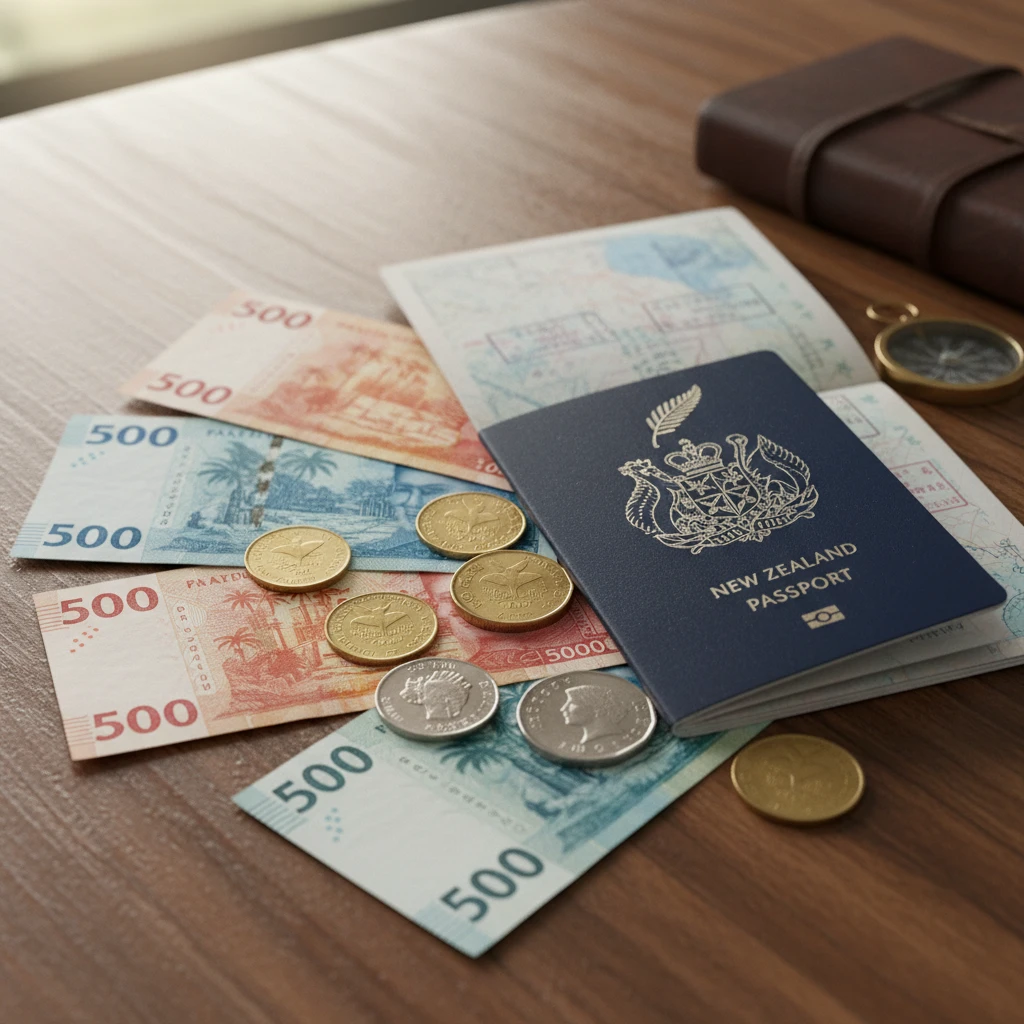
To secure cheap car hire at Tontouta Airport (NOU), travelers should book at least three weeks in advance using comparison aggregators rather than direct counters. Be aware that most budget rates in New Caledonia include daily mileage caps; for unlimited travel across Grand Terre, opt for premium packages or local agencies like Point Rouge to avoid costly per-kilometer penalties.
Which Rental Agencies are Located at Tontouta Airport?
La Tontouta International Airport (NOU) is the primary gateway for New Zealanders visiting New Caledonia. Unlike the domestic airport at Magenta, Tontouta is located approximately 52 kilometers northwest of Nouméa. Upon arrival, navigating the car hire landscape is relatively straightforward, as the terminal is compact, but availability can be scarce if not managed correctly.
The arrival hall hosts counters for several major international brands as well as reputable local companies. Because flights from Auckland (usually via Air New Zealand or Aircalin) often arrive in the afternoon or evening, it is crucial to ensure your rental agency desk is open, although most align their operating hours with scheduled international arrivals.
International Brands
For Kiwis who prefer the familiarity of global loyalty programs, the following major agencies operate on-site:
- Hertz: Known for a reliable fleet and standard insurance packages. They often have the largest inventory of SUVs suitable for the “Brousse” (the bush).
- Europcar: A dominant player in the French territories. They frequently offer deals for longer-term rentals, which suits travelers planning a two-week road trip around the main island.
- Avis/Budget: These brands often share logistics in smaller airports. They are competitive on price for compact cars suitable for city driving in Nouméa.
Local Agencies
Often, the key to finding cheap car hire Tontouta airport lies with the local operators. These companies understand the local terrain better and sometimes offer more flexible terms regarding mileage:
- Point Rouge: A highly popular local low-cost option. They function similarly to budget airlines—you pay for the base rental and add on extras. They are often the cheapest option upfront but require careful reading of the terms regarding mileage.
- Sixt: While international, their presence in New Caledonia is managed locally and often features premium vehicles like BMWs or Peugeots, which are popular in the French market.

What Are the Hidden Costs? Mileage Limits and Insurance Excess
New Zealand travelers are accustomed to “unlimited kilometers” being the standard for rental cars in NZ, Australia, and the USA. However, New Caledonia operates on a different model that can shock the unprepared wallet. Understanding these hidden costs is essential for maintaining a budget.
The Mileage Trap
Many “cheap” rental quotes displayed on aggregators for Tontouta are based on a limited mileage allowance. A typical daily cap might be 100km or 150km. While this is sufficient for pottering around Nouméa, it is woefully inadequate for exploring La Grande Terre.
For example, a return trip from Tontouta to Hienghene (on the northeast coast) is approximately 700km. If you book a 3-day rental with a 100km/day cap (300km total), you will pay a per-kilometer penalty for the 400km excess. This penalty is often between 40 XPF and 80 XPF ($0.60 – $1.20 NZD) per kilometer. That simple trip could cost you an extra $400 NZD upon return.
Strategy: Always calculate your estimated route. If you plan to leave the Nouméa peninsula, filter your search results for “Unlimited Mileage” (Kilométrage Illimité). It will appear more expensive upfront but is cheaper in the long run.
Insurance Excess (Franchise)
The standard insurance excess in New Caledonia is significantly higher than in New Zealand. It is not uncommon to see a standard excess (franchise) of 150,000 XPF to 250,000 XPF ($2,200 – $3,700 NZD). Minor damage to the undercarriage from rough roads can result in a massive bill.
Most agencies offer a “Rachat de Franchise” (Excess Reduction) for a daily fee. Given the driving conditions outside the city—where loose gravel and narrow mountain roads are common—purchasing full coverage or using a premium travel insurance policy that explicitly covers rental vehicle excess is highly recommended.
How to Book During Peak Season (July/Dec)
New Caledonia experiences two distinct peak seasons that affect availability and price. Understanding these windows is vital for securing a vehicle.
The Double Peak
- December/January: This is the major summer holiday period. It coincides with New Zealand school holidays and the local “Grandes Vacances.” Locals leave Nouméa to visit family in the north or the islands, and tourists flood in. Inventory hits zero quickly.
- July/August: This is the French summer holiday. Many metropolitan French travelers visit friends and family in the territory. Additionally, the weather is cooler and drier, making it popular for NZ tourists seeking a winter escape.
Strategic Booking Windows
To get the best rates during these times:
- Book 3 Months Out: For travel in December, lock in your car by September. Prices can double in the final four weeks.
- Manual Transmission: In New Caledonia, manual transmission cars are still very common and often cheaper. If you can drive a stick shift, you will have access to a wider pool of “cheap” inventory that automatic-only drivers cannot book.
- Flight Alignment: Ensure your booking start time accounts for the time it takes to clear customs (usually 45-60 minutes). If you arrive late at night, verify if the agency applies an “out of hours” fee, which is common for arrivals after 11:00 PM.
Shuttle vs. Rental: What Is Cheaper?
A common dilemma for Kiwis is whether to pick up the car at the airport or take a shuttle to Nouméa and rent from the city center. This decision depends entirely on your itinerary and group size.
The Transfer Cost
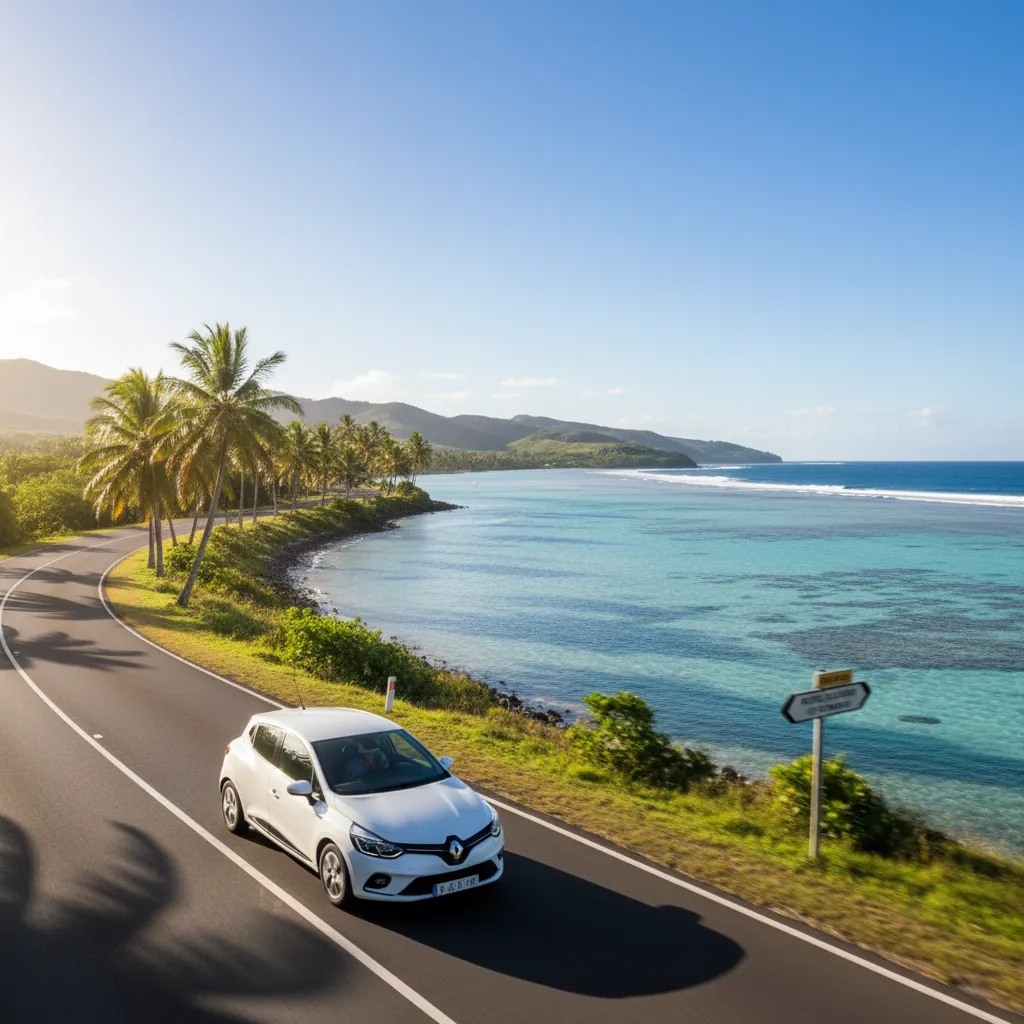
Tontouta is 50km from Nouméa. A taxi ride is prohibitively expensive, often costing 10,000 XPF ($150 NZD) or more one way. Shared shuttles (Navettes) generally cost around 3,000 XPF ($45 NZD) per person, one way.
The Math for a Couple
- Shuttle Option: 2 people x Return Trip = roughly $180 NZD total just for transfers.
- Rental Option: A budget car might cost $60-$80 NZD per day.
If you are staying for a week but only plan to use the car for 3 days, taking the shuttle and renting in the city might save money. However, if you are staying for 3-4 days, picking up the car at the airport is almost always cheaper than paying for transfers, plus it gives you the freedom to stop at supermarkets on the way into town.
The Convenience Factor
The drive from Tontouta to Nouméa takes about 45 minutes on the RT1 express road. Having your own car immediately allows you to manage your luggage easily and avoid waiting for other passengers to fill a shuttle bus. For families of four, the rental is invariably the cheaper option compared to four shuttle tickets.
Which Vehicle Types are Suitable for Grand Terre Roads?
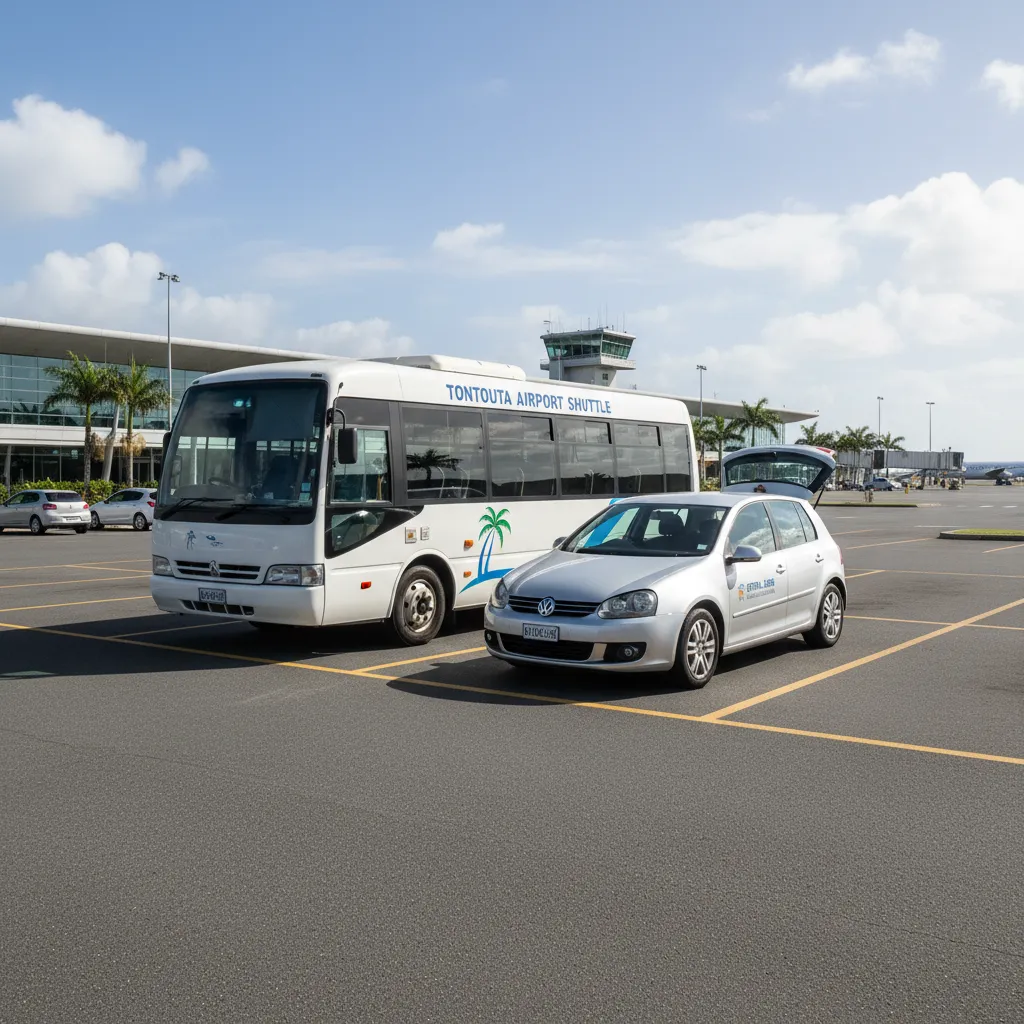
New Caledonia is an island of contrasts. The roads around Nouméa are paved and generally well-maintained, but once you venture into the “Brousse” (the bush) or cross the central mountain chain, conditions change.
Economy/Compact (Category A/B)
Best for: Staying within Nouméa, driving to the beaches at Baie des Citrons or Anse Vata, and short trips to the Parc Provincial de la Rivière Bleue (main entrance only).
Pros: Fuel efficient (gas is expensive in NC), easy to park in the city.
Cons: Low clearance. Not suitable for unsealed roads or steep driveways in eco-lodges.
SUV / Crossover (Category C/D)
Best for: The Great South (Grand Sud), the Loop of the Great Ferns, and crossing the mountain passes like Col des Roussettes.
Why upgrade? The roads in the south, particularly towards Yaté, can have potholes and red earth shoulders. Sudden tropical downpours can cause localized flooding on low-lying roads. An SUV provides better visibility and higher clearance, which is safer for the chassis.
4WD / Pickup (Category E+)
Best for: Serious exploration, accessing remote tribal stays (Gîtes), or driving during the wet season (January-March).
Note: Many rental contracts strictly forbid taking 2WD vehicles on unsealed roads (pistes). If you plan to drive the coast-to-coast connectors that aren’t the main RT1, a 4WD is not just a luxury; it’s a safety requirement.
Critical Driving Rules for New Zealanders
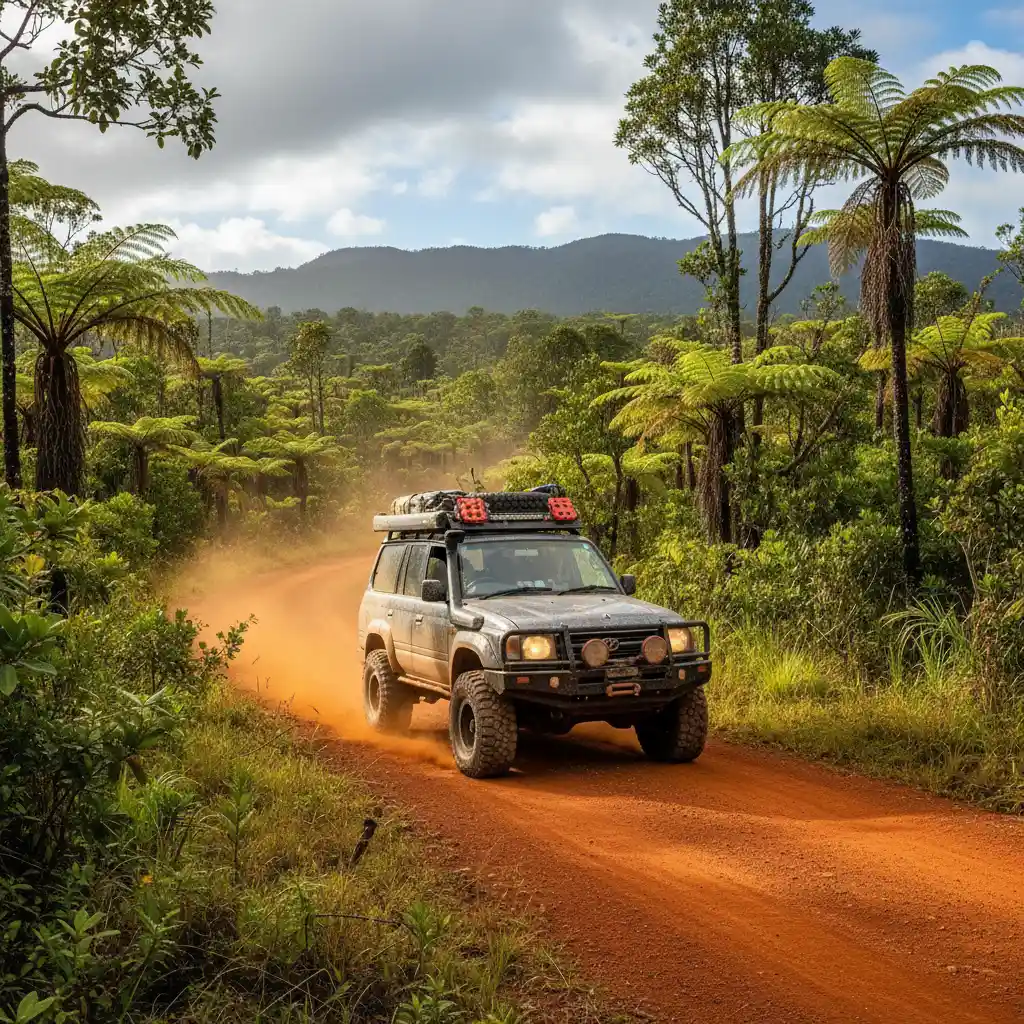
Driving in New Caledonia is generally safe, but there are significant differences from New Zealand that require attention.
Right-Hand Traffic
The most obvious difference is driving on the right side of the road. The driver sits on the left side of the car. The gear stick will be in your right hand. Take extra care at roundabouts (go anti-clockwise) and when pulling out of intersections.
Priority to the Right (Priorité à Droite)
This is a French driving rule that confuses many Kiwis. Unless signed otherwise (with a yellow diamond or a give way sign), traffic coming from a side street on your right has the right of way. This applies even if you are on a straight road and they are turning out. In Nouméa, this is less common as most intersections are signed, but in rural towns, you must be vigilant. If in doubt, slow down and check the right.
Speed Limits and Policing
- Open Road: Usually 110 km/h on the expressways, 80-90 km/h on rural roads.
- Towns: Strictly 50 km/h, sometimes 30 km/h near schools.
- Police: The Gendarmerie are active and use speed cameras. Fines must be paid before leaving the country or will be charged to your credit card by the rental agency with an administrative fee added.
Fuel
Gas stations are not self-service in the countryside; they are often attended. However, on weekends and late nights, rural stations may close. Always fill up before leaving a major town like Bourail, Koné, or Nouméa. The fuel price is government-regulated and is the same at every station across the island, so there is no need to shop around for a better price.
People Also Ask
Do I need an international driver’s license for New Caledonia?
For New Zealanders, a valid full NZ driver’s license is generally accepted for rentals up to three months. However, it is highly recommended to carry an International Driving Permit (IDP) as a backup, especially if your license does not have a photo or is the older paper version. Police checks may go smoother with an IDP.
How much is the deposit for car rental at Tontouta?
The security deposit is substantial, usually ranging from 100,000 XPF to 250,000 XPF ($1,500 – $3,700 NZD). This amount is blocked (pre-authorized) on your credit card, not debited. You must ensure your credit card limit can handle this hold plus your travel expenses.
Is it safe to drive in New Caledonia at night?
Driving at night outside of Nouméa is discouraged. Roads are often unlit, and pedestrians or stray animals (cattle, deer, dogs) frequently wander onto the road. Additionally, drunk driving can be an issue on weekends. It is safer to reach your destination before sunset.
Can I take a rental car to the Loyalty Islands (Lifou, Isle of Pines)?
No. You cannot take a rental car from the main island (Grande Terre) to the Loyalty Islands or Isle of Pines on the ferry (Betico). You must rent a separate vehicle on those islands if you visit them.
What is the minimum age to rent a car at Tontouta Airport?
Most agencies require drivers to be at least 21 years old and to have held a full license for at least two years. Drivers under 25 often face a “Young Driver Surcharge.” Some luxury or 4WD vehicles have a minimum age requirement of 25 or even 30.
Are child car seats mandatory in New Caledonia?
Yes, appropriate child restraints are mandatory for children under 10 years old. Rental agencies at Tontouta offer baby seats and boosters for a daily fee, but it is often cheaper and cleaner to bring your own from New Zealand as checked luggage.