
Tipping in New Caledonia is generally not expected or required, as service charges are legally included in the prices of goods and services. Following French tradition, the ‘service compris’ system ensures staff are fairly compensated. While rounding up the bill is appreciated for exceptional service, it is never an obligation for New Zealanders.
What are the French tipping customs in New Caledonia?
New Caledonia is a unique destination for New Zealanders, offering a slice of French Mediterranean lifestyle right in the heart of the Pacific. To understand tipping in New Caledonia, one must first understand the French concept of “Service Compris.” In the mid-20th century, France implemented laws that required restaurants and cafes to include a service charge in their displayed prices. This was designed to provide waitstaff with a stable, guaranteed income rather than forcing them to rely on the unpredictable generosity of patrons. As an overseas territory of France, New Caledonia adheres to these same principles.
For a Kiwi traveler, this means the price you see on the menu at a bistro in Noumea or a resort in the Isle of Pines is the final price you are expected to pay. There is no hidden 15% or 20% addition at the end of the meal. The staff are professionals who receive a living wage, and while they appreciate politeness and a friendly “Merci,” they do not view a tip as a necessary part of their compensation. This creates a relaxed dining atmosphere where the transaction is straightforward and transparent.

How do service charge inclusions work in New Caledonia?
In New Caledonia, the law dictates that all prices must be inclusive of both taxes and service. This is often noted on the menu as “Prix Nets” or “Service Compris.” When you receive your bill at the end of a meal, you will notice that there is no separate line item for a tip or a gratuity. This is a significant departure from the tipping culture in North America and even differs slightly from the evolving standards in Australia. For New Zealanders, who are used to a similar “what you see is what you pay” model, this makes budgeting for a holiday much easier.
The service charge inclusion covers the labor costs of the waitstaff, bartenders, and kitchen crew. Because the minimum wage in New Caledonia (the SMIG) is relatively high compared to other Pacific nations, workers are not living in poverty and do not depend on tips to meet their basic needs. However, it is important to note that the “service compris” does not mean the staff doesn’t appreciate a small gesture. If you find the service to be exceptionally attentive, or if a waiter goes out of their way to accommodate a dietary requirement, leaving a few small coins (100 or 200 CFP) is a perfectly acceptable way to say thank you.
What is the difference between tipping in hotels and restaurants?
While the general rule of “no tipping” applies across the board, there are subtle differences between how you might handle gratuities in a high-end resort versus a local eatery. In restaurants, the process is simple: you pay the bill and leave. If you are paying by credit card, there is rarely even a line on the receipt for a tip, and the card machine will usually be processed for the exact amount of the meal. If you wish to leave a tip, you should do so in cash (XPF) rather than trying to add it to the card transaction.
In luxury hotels and resorts, such as those found in the Anse Vata or Baie des Citrons areas, the environment is more international. Porters who assist with heavy luggage or concierge staff who arrange complex tours may be more accustomed to receiving small tips from international tourists. If a porter carries several heavy bags to your room, a tip of 200 to 500 CFP (roughly $3 to $7 NZD) is a generous gesture. Similarly, if you stay in a resort for several days, leaving a small amount of cash in the room for the housekeeping staff at the end of your stay is a kind way to show appreciation for their hard work, though it is by no means expected.
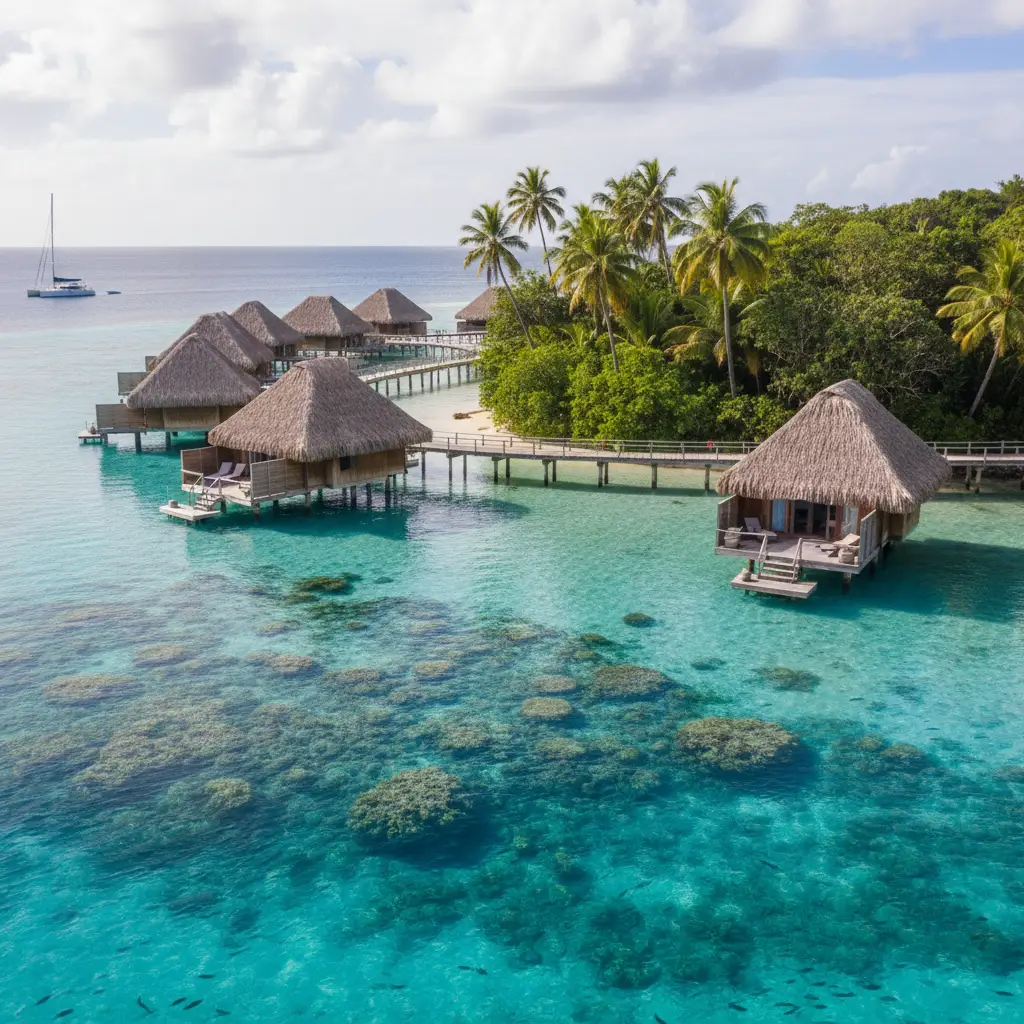
Tipping in Cafes and Bars
In the casual cafes and bars of Noumea, tipping is even less common. If you are grabbing a quick coffee or a glass of wine, it is standard practice to simply pay the bill. If you are paying with cash and receive a small amount of change—say, 50 or 100 CFP—it is common to leave those coins on the table or in a tip jar if one is provided. This is known as “laisser la petite monnaie” (leaving the small change). It is a low-pressure way to acknowledge the service without the formal expectations found in other countries.
What are the cultural expectations and the Kanak influence?
New Caledonia is a land of dual cultures: the French European influence and the indigenous Kanak culture. Understanding the Kanak perspective is vital for any New Zealander traveling outside of the main city of Noumea. In Kanak culture, hospitality is a cornerstone of social interaction, but it is governed by the concept of “La Coutume” (The Custom). This is a formal process of gift-giving and respect that is far removed from the Western concept of tipping.
If you are invited into a tribal village or are staying in a traditional homestay (gîte) in the Loyalty Islands or on the East Coast of the Main Island (Grande Terre), you should not offer a tip for the hospitality. Instead, you should participate in “La Coutume.” This usually involves presenting a small gift to the tribal chief or the head of the household. A piece of fabric (manou), a small amount of money (around 500 or 1000 CFP), or a small gift from New Zealand (like Manuka honey or a Māori carving) is appropriate. This is not a payment for services rendered; it is a gesture of respect and a request for permission to be on their land. Offering a tip in this context could be seen as transactional and potentially offensive, as it ignores the spiritual and social significance of the host-guest relationship.

Do you tip for taxis, tours, and activities in New Caledonia?
When it comes to transportation, the rules are similarly relaxed. Taxi drivers in New Caledonia do not expect tips. The fares are regulated and can be quite high compared to New Zealand standards, so there is no social pressure to add more. However, most passengers will round up to the nearest 100 CFP to avoid dealing with small coins. For example, if the fare is 1,850 CFP, it is common to give the driver 2,000 CFP and tell them to keep the change. This is seen as a matter of convenience rather than a formal tip.
For guided tours—such as boat trips to Signal Island, snorkeling excursions, or guided hikes—tipping is entirely at your discretion. Most tour operators are small, locally-owned businesses where the owner is often the guide. In these cases, your patronage and a positive review on TripAdvisor or Google are often more valuable to them than a small cash tip. If you are part of a large group tour and the guide has provided exceptional entertainment and information, a tip of 500 to 1,000 CFP per person is a very generous way to show your appreciation, but again, you will not be looked down upon if you choose not to tip.
How does tipping in New Caledonia compare to New Zealand?
New Zealanders will find the tipping culture in New Caledonia very familiar. In New Zealand, we generally only tip for exceptional service in high-end restaurants, and even then, it is entirely optional. New Caledonia takes this a step further by having the service charge legally integrated into the price. This shared “no-tip” culture makes New Caledonia a very comfortable destination for Kiwis, as it removes the “math at the end of the meal” and the anxiety of wondering if you have given enough.
The main difference for Kiwis to keep in mind is the currency. The CFP Franc (XPF) has a fixed exchange rate with the Euro, and the notes and coins can feel quite different from the New Zealand Dollar. Because the denominations are larger (e.g., a coffee might be 500 CFP), it can be easy to lose track of how much you are actually spending. It is helpful to remember that 1,000 CFP is roughly equivalent to $14-$15 NZD (depending on current exchange rates). Keeping this in mind will help you realize that a 500 CFP tip is actually quite a significant amount of money—roughly $7—which is more than most people would leave as a casual tip in Auckland or Wellington.
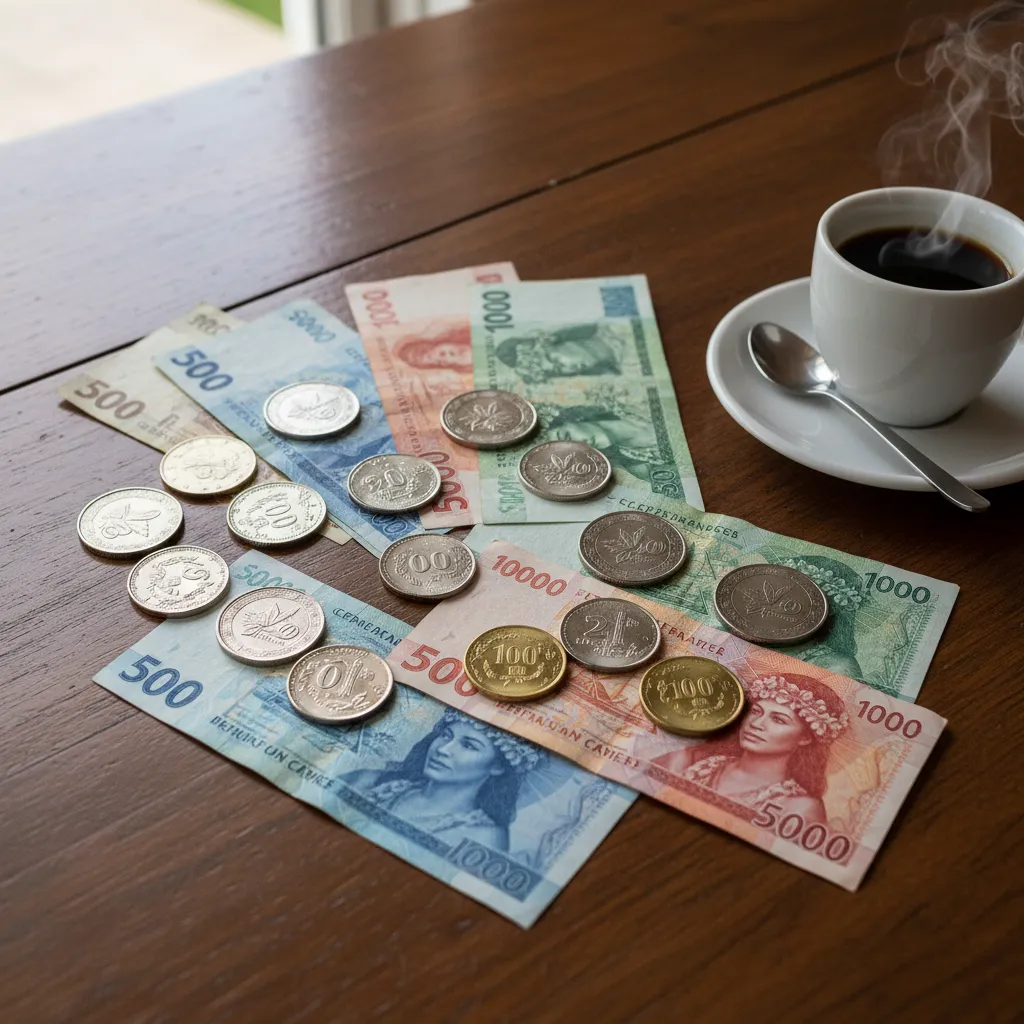
Summary of Tipping Etiquette for NZers
To summarize, here are the key points for New Zealanders visiting New Caledonia: First, don’t feel pressured. Tipping is not part of the local culture, and you will never be chased down the street for failing to leave a gratuity. Second, focus on “rounding up.” This is the most common form of tipping and is appreciated for its simplicity. Third, remember “La Coutume” when visiting tribal areas; it is a cultural ritual, not a tip. Finally, always carry a bit of cash if you do intend to tip, as adding gratuities to credit card payments is not standard practice in the territory. By following these simple guidelines, you can enjoy the stunning beauty and exquisite cuisine of New Caledonia with the confidence that you are respecting local customs and traditions.
People Also Ask
Is tipping mandatory in New Caledonia?
No, tipping is not mandatory in New Caledonia. Service charges are included in the price of all goods and services by law.
What is the currency in New Caledonia?
The currency is the Central Pacific Franc, abbreviated as XPF or CFP. It has a fixed exchange rate with the Euro.
How much should I tip for a meal in Noumea?
You do not need to tip, but rounding up the bill or leaving 100-200 XPF for excellent service is a kind and accepted gesture.
Do you tip tour guides in New Caledonia?
Tipping tour guides is not expected, but if you had an exceptional experience, a small tip of 500-1,000 XPF is appreciated.
Are prices in New Caledonia inclusive of tax?
Yes, all prices displayed in New Caledonia include the local tax (TGC) and the service charge.
Is it rude not to tip in New Caledonia?
No, it is not considered rude. The staff are paid a fair wage, and the service is already included in your bill.