
North Province New Caledonia travel offers an authentic immersion into the Kanak heartland, characterized by a dramatic contrast between the lush, tropical fjords of the East Coast and the arid, red-earth savannahs of the West. It is the premier destination for travelers seeking the iconic Great North Loop, cultural tribal homestays, and the majestic limestone formations of Hienghène.
For New Zealand travelers accustomed to the rugged beauty of the Coromandel or the cultural depth of Rotorua, New Caledonia’s North Province (Province Nord) presents a familiar yet distinctly exotic adventure. Leaving the polished resorts of Nouméa behind, the North invites you into “Le Brousse” (the bush)—a region defined by wide-open spaces, towering peaks, and a silence so profound it feels ancient. This guide explores the essential stops of Hienghène and Koumac, the cultural protocols of the Kanak people, and the ultimate road trip itinerary for the adventurous Kiwi.
Why Visit the North Province?
While the South Province boasts the capital and the famous Isle of Pines, the North Province is the soul of the archipelago. It covers nearly 60% of the main island, Grande Terre, yet holds a fraction of the population. For the traveler, this translates to empty roads, untouched landscapes, and a level of authenticity that mass tourism cannot replicate.
Visiting the North is not just about sightseeing; it is about engagement. Here, the landscape dictates the pace of life. You do not simply look at the mountains; you drive over them via winding passes like the Col des Roussettes or the Col d’Amos. You do not just swim in the ocean; you snorkel in reefs that are part of a UNESCO World Heritage site, often with no one else in sight.
East vs. West: A Tale of Two Coasts
One of the most compelling reasons to undertake North Province New Caledonia travel is the stark geographical duality. The central mountain range, La Chaîne Centrale, acts as a climatic barrier, creating two distinct worlds separated by only a few hours of driving.
The West Coast: The Caldoche Cowboy Country
The West Coast is the land of the “Stockmen” (New Caledonian cowboys). It is arid, vast, and dominated by niaouli trees (paperbarks) and expansive cattle stations. The earth here is often a striking red, rich in nickel and iron. The vibe is rugged and frontier-like. Towns like Koné and Koumac serve as the commercial hubs, where you are as likely to see a pickup truck covered in red dust as you are a tourist vehicle.
The East Coast: The Tropical Kanak Heartland
Crossing the mountain range to the East Coast feels like entering a different country. The vegetation explodes into lush rainforests, coconut groves, and banana plantations. The humidity rises, and the mountains drop dramatically into the sea, creating fjord-like inlets. This side is the stronghold of Kanak culture, where traditional tribes (tribus) line the coastal road, and life revolves around the ocean and the yam harvest.
Koumac: Gateway to the Wild West
Located approximately 360 kilometers north of Nouméa, Koumac is the last major outpost before the road dissolves into the far north. It is an essential stop for refueling, restocking supplies, and exploring the unique geology of the region.
What are the Koumac Caves?
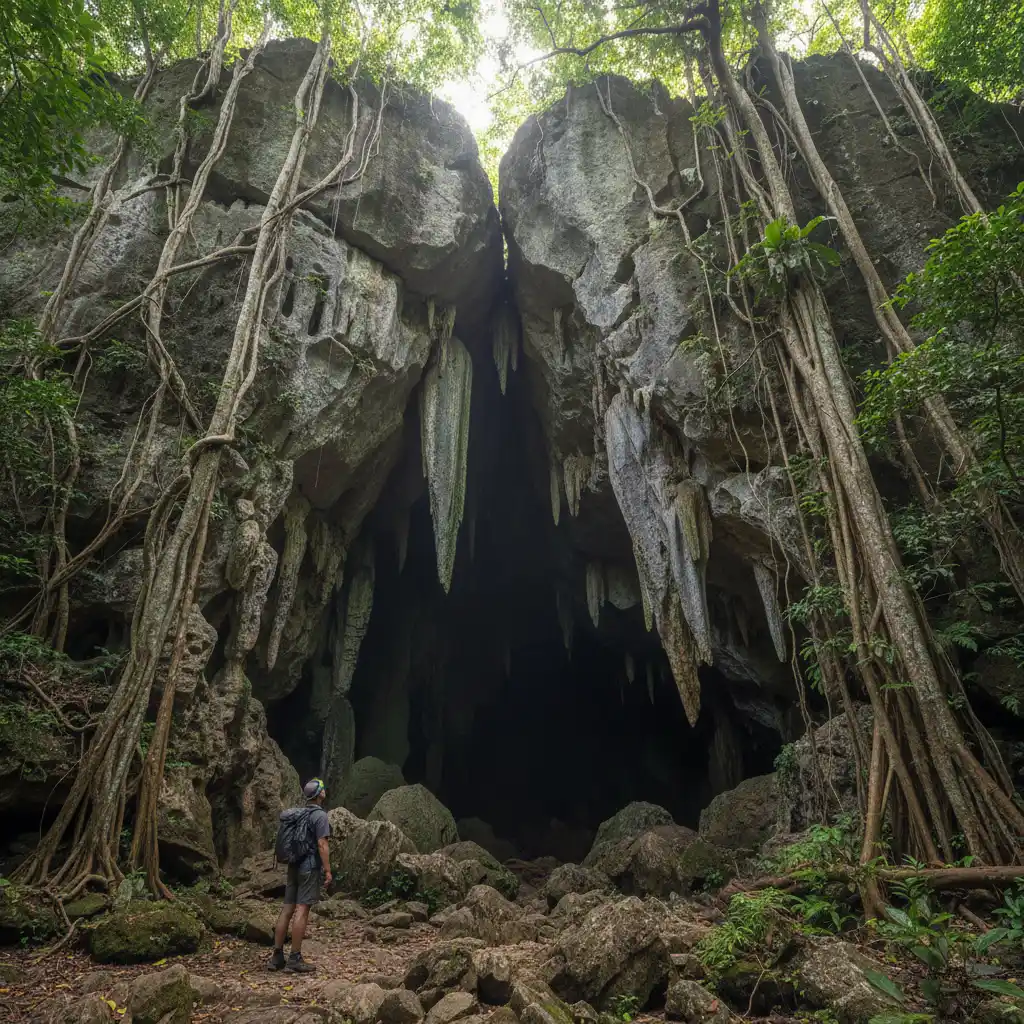
The Koumac Caves (Grottes de Koumac) are a network of limestone karst caves located just outside the town. They are accessible to the public and feature impressive stalactites, stalagmites, and banyan tree roots that pierce through the cavern ceilings. Exploring the caves gives you a sense of the geological history of the island, which broke away from Gondwana millions of years ago.
The Mining Heritage
Koumac’s history is deeply intertwined with chrome and nickel mining. The old mining village of Tiebaghi, located nearby, offers a fascinating glimpse into the industrial past of the region. For Kiwis interested in history, the preserved machinery and buildings provide a narrative similar to the gold mining history of Otago, but set against a tropical backdrop.
Hienghène: The Sacred Heart of the East
If Koumac is the rugged west, Hienghène is the mystical east. It is arguably the most visually stunning location in New Caledonia. The town is nestled between the sea and the highest peak of the territory, Mont Panié (1,628m).
The Black Rocks of Lindéralique
The coastline of Hienghène is defined by sharp, black limestone karst formations that rise vertically out of the lagoon. These formations, known as the Lindéralique Rocks, create a dramatic seascape that is best explored by kayak. Paddling through the silent, dark rock mazes while tropical fish swim beneath you is a highlight of any North Province itinerary.
The Brooding Hen and The Sphinx
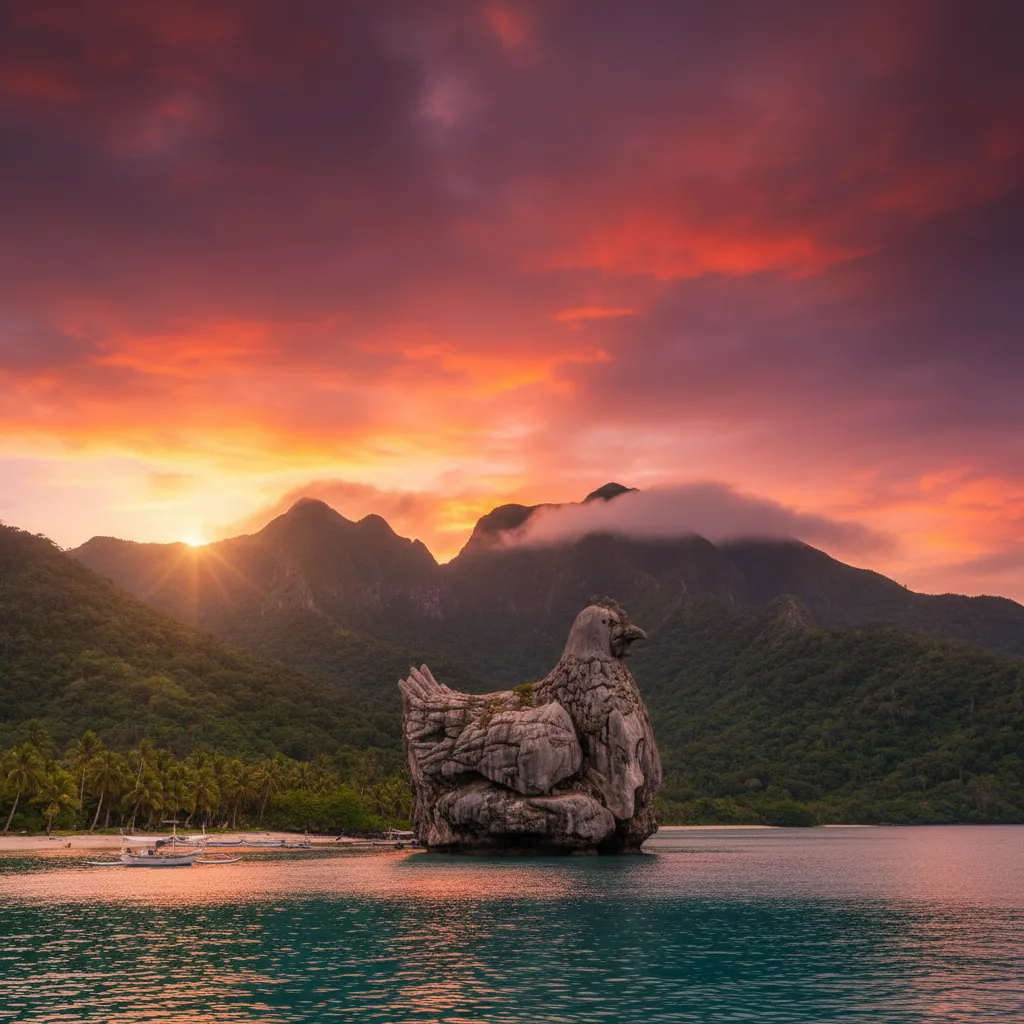
The most famous of these formations is “La Poule Couveuse” (The Brooding Hen) and the Sphinx. From the belvedere lookout point south of the village, the resemblance is uncanny. These sites are not just geological oddities; they hold deep spiritual significance for the local Kanak people.
The Tao Waterfall
Driving north from Hienghène towards the Ouaième River, you will encounter the Tao Waterfall. Cascading from the heights of the Mont Panié range, it is spectacular, especially after rain. The drive itself, involving the crossing of the Ouaième River on the last historic ferry (Le Bac de la Ouaième), is an adventure. The ferry is free and operates 24/7, serving as a vital link for the local tribes.
Cultural Significance & La Coutume
Travel in the North Province is inextricably linked to Kanak culture. Unlike the more European-influenced Nouméa, the North operates on traditional structures. Understanding this enhances your travel experience significantly.
What is “Faire la Coutume”?
“La Coutume” (The Custom) refers to the traditional gesture of exchange and respect when entering a tribal area or asking for hospitality. If you plan to stay in a tribe (Accueil en Tribu) or visit a specific sacred site, it is respectful to present a small offering to the chief or the host.
For New Zealanders, this is very similar to the concept of Koha in Māori culture. The offering usually consists of a piece of textile (a “manou” or sarong), a small amount of money (1000-2000 XPF), and perhaps a pack of tobacco or coffee. It is not about the value, but the gesture of acknowledging the host’s authority and asking for permission to be on their land.
Staying in a Tribe
Accommodation in the North includes hotels, but for a true experience, consider a tribal homestay. You will typically stay in a traditional case (hut) or a simple bungalow. It is a chance to share meals with local families, learn about their connection to the land, and experience the warm Melanesian hospitality.

Road Trip Itinerary: The Great North Loop
To truly experience the North Province, you need a vehicle. A 4WD or an SUV is highly recommended, not necessarily for off-roading, but for clearance on unsealed tracks and comfort on winding mountain roads. Here is the ideal 5-day itinerary for the Great North Loop.
Day 1: Nouméa to Koné (The West Coast Drive)
Distance: 270km (approx. 3.5 hours)
Depart Nouméa and head north on the RT1. Stop at Bourail to see the Roche Percée and the Turtle Bay. Continue to Koné, the capital of the North Province. Koné is the jumping-off point for the famous “Heart of Voh.”
Day 2: Koné to Koumac via the Heart of Voh
Distance: 110km (approx. 1.5 hours)
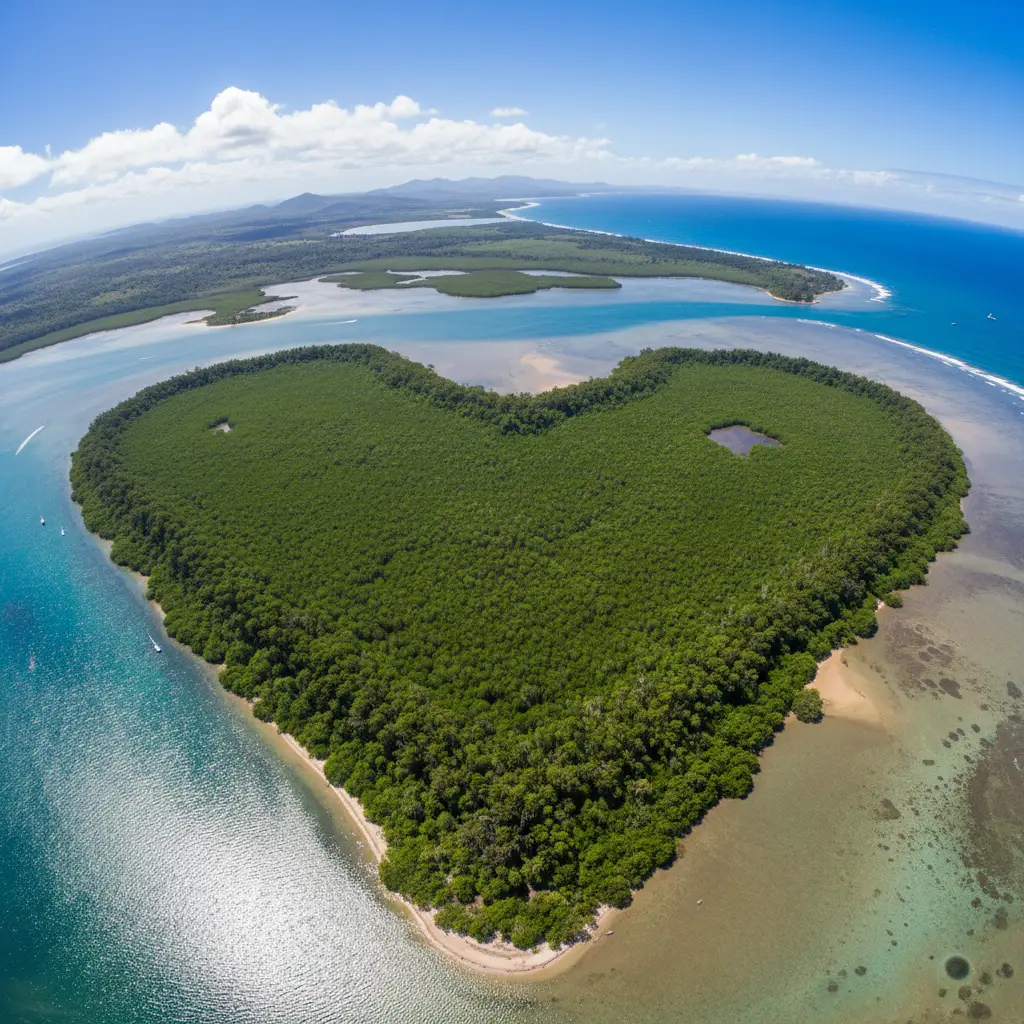
In the morning, arrange a 4×4 excursion up the Katepai Mountain to view the Coeur de Voh (Heart of Voh), a natural heart shape formed in the mangroves, immortalized by photographer Yann Arthus-Bertrand. Afterward, drive north to Koumac. Explore the caves in the afternoon or visit the marina.
Day 3: Koumac to the Far North (Poum) and Cross to East
Distance: 150km (approx. 2.5 hours)
Drive to the very tip of the island at Poum. The landscape here is stunningly desolate with white sand beaches and wild horses. Enjoy a picnic at Boat Pass. Then, backtrack slightly to cross the island via the Col d’Amos. This mountain pass offers breathtaking views as you descend from the arid west into the lush east. Arrive in the Ouégoa region and continue south towards Hienghène.
Day 4: Hienghène Exploration
Distance: Local driving
Dedicate this day to Hienghène. Take a boat tour or kayak around the Lindéralique rocks. Visit the cultural center (Goa Ma Bwarhat). Drive north to the Ouaième River ferry and see the Tao Waterfall. The atmosphere here is serene; take your time.
Day 5: Hienghène to Poindimié and Return
Distance: 310km back to Bourail/Nouméa
Drive south along the scenic coastal road to Poindimié, considered the diving capital of the main island. The road hugs the coastline, passing through numerous tribes. From Poindimié, take the traverse road (Houaïlou-Bourail) across the central chain back to the West Coast, completing the loop.
Practical Tips for NZ Travelers
- Driving: New Caledonia drives on the right-hand side of the road. Speed limits are strictly enforced (110km/h max on open roads, usually 50km/h in tribes).
- Language: French is the official language. While English is spoken in major hotels, it is less common in the “Brousse.” Download an offline translation app or bring a phrasebook. A simple “Bonjour” goes a long way.
- Currency: The currency is the Pacific Franc (XPF). It is pegged to the Euro. Ensure you carry cash (notes) when traveling in the North, as small tribal shops or roadside stalls may not accept cards.
- Connectivity: Mobile coverage is generally good along the main roads (OPT network) but can be patchy in deep valleys. Pick up a tourist SIM card at Tontouta Airport upon arrival.
- Water: Tap water is generally safe in towns like Koné and Hienghène, but bottled water is recommended in remote tribal areas.
Frequently Asked Questions
Is it safe to drive in the North Province of New Caledonia?
Yes, it is generally very safe. The main roads (RT1 and RPN3) are sealed and in good condition. However, drivers should be cautious of stray cattle and horses, especially at night. It is recommended to avoid night driving for this reason. Always respect local speed limits, particularly when passing through tribal villages.
How long does it take to drive from Nouméa to Hienghène?
The drive from Nouméa to Hienghène takes approximately 5 to 6 hours (roughly 380km) if you take the East Coast road via Houaïlou. However, most travelers prefer to break the journey up or take the West Coast route to Koné first, then cross over, which makes for a more comfortable multi-day trip.
Do I need a 4WD for the North Province?
While a standard car can handle the main sealed roads, a compact SUV or 4WD is highly recommended. It provides better clearance for accessing accommodation driveways, the Heart of Voh viewpoint, and exploring scenic unsealed side roads. It also offers a more comfortable ride on winding mountain passes.
What is the best time of year to visit the North Province?
The best time to visit is during the cooler, drier months from May to October. Temperatures are pleasant (20-25°C), and there is less rainfall. February and March are typically the hottest and wettest months, which can make hiking difficult but makes the waterfalls like Tao spectacular.
Can I use New Zealand Dollars in the North Province?
No, New Zealand Dollars are not accepted. You must use the Pacific Franc (XPF). While you can exchange money at the airport or banks in Nouméa, ATMs are available in major northern towns like Koné, Koumac, Poindimié, and Hienghène. Always carry cash for small purchases.
Are there medical facilities in the North Province?
Yes, there is a modern hospital in Koné (Pôle Sanitaire du Nord) and smaller medical centers (dispensaries) in Koumac, Hienghène, and Poindimié. For serious emergencies, medical evacuation to Nouméa is available. Travel insurance is essential for New Zealand travelers.