
A New Caledonia west coast road trip is a journey through the archipelago’s distinct “Far West,” characterized by rolling niaouli plains, historic cattle ranches, and rugged coastal cliffs. Stretching approximately 160 kilometers from Nouméa to Bourail along the RT1, this route offers travelers a blend of French colonial history, authentic stockman culture, and access to the UNESCO World Heritage-listed lagoon.
The “Far West” Atmosphere: A Landscape of Contrasts
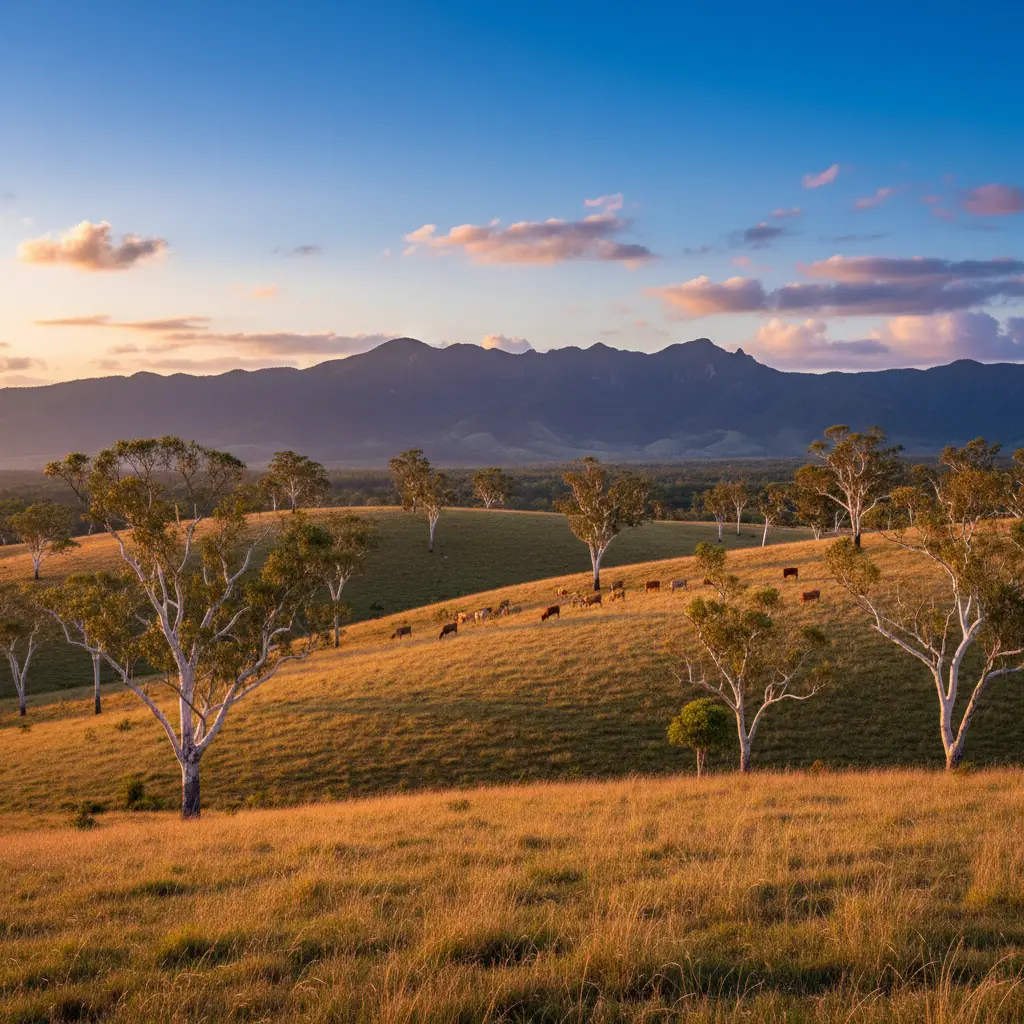
For New Zealand travelers accustomed to the lush greenery of the North Island or the alpine peaks of the South, the West Coast of New Caledonia presents a startling and captivating contrast. Often referred to as the “Far West,” this region is the agricultural backbone of the main island, Grande Terre. It is a land where the tropical Pacific meets the rugged spirit of the American West, yet retains a distinctly French flavor.
As you leave the urban sprawl of Nouméa, the landscape shifts dramatically. The humid rainforests retreat, replaced by vast savannas dotted with paperbark trees, known locally as niaoulis. These plains are the domain of the Broussards (bushmen), the descendants of early French settlers who established large cattle stations in the 19th century. The golden light hitting the tall grasses in the late afternoon creates a cinematic atmosphere reminiscent of a classic western movie, but with the turquoise lagoon shimmering on the horizon.
Planning Your New Caledonia West Coast Road Trip
Embarking on a New Caledonia west coast road trip is straightforward, but preparation is key to maximizing the experience. The primary artery is the Route Territoriale 1 (RT1), a sealed and well-maintained highway that runs up the west coast.
How long does the drive take?
The drive from Nouméa to Bourail is approximately 160 kilometers (100 miles) and takes about 2 to 2.5 hours without stops. However, to truly appreciate the region, this should not be treated as a sprint. We recommend allocating a full day for the journey up, or ideally, planning an overnight stay in the Bourail region to explore the Deva Domain fully.
What are the driving conditions like?
For Kiwi drivers, the most critical adjustment is driving on the right-hand side of the road. The RT1 is generally wide and easy to navigate, with speed limits typically set at 110 km/h on open stretches and reducing to 50 km/h through villages. Traffic is usually light once you clear the Greater Nouméa area. Be vigilant for cattle and horses, which can occasionally wander near unfenced sections of the road, particularly at dusk.
La Foa: The Cultural Gateway
Approximately 110 kilometers north of Nouméa lies La Foa, a charming town that serves as the cultural capital of the rural west. It is an essential first stop to stretch your legs and soak in the colonial architecture. The town is famous for its annual film festival and its public art; you will notice monumental sculptures of wood and stone decorating the town square, created by local and international artists.
A must-see landmark is the Passerelle Marguerite. This historic suspension bridge, designed by a disciple of Gustave Eiffel (of Eiffel Tower fame), marks the entrance to the town. Although no longer used for vehicle traffic, it remains a photogenic monument to the engineering era of the early 20th century. La Foa also offers excellent dining options where you can sample local venison or freshwater prawns, a regional specialty.
Moindou and Fort Teremba: Echoes of the Penal Colony
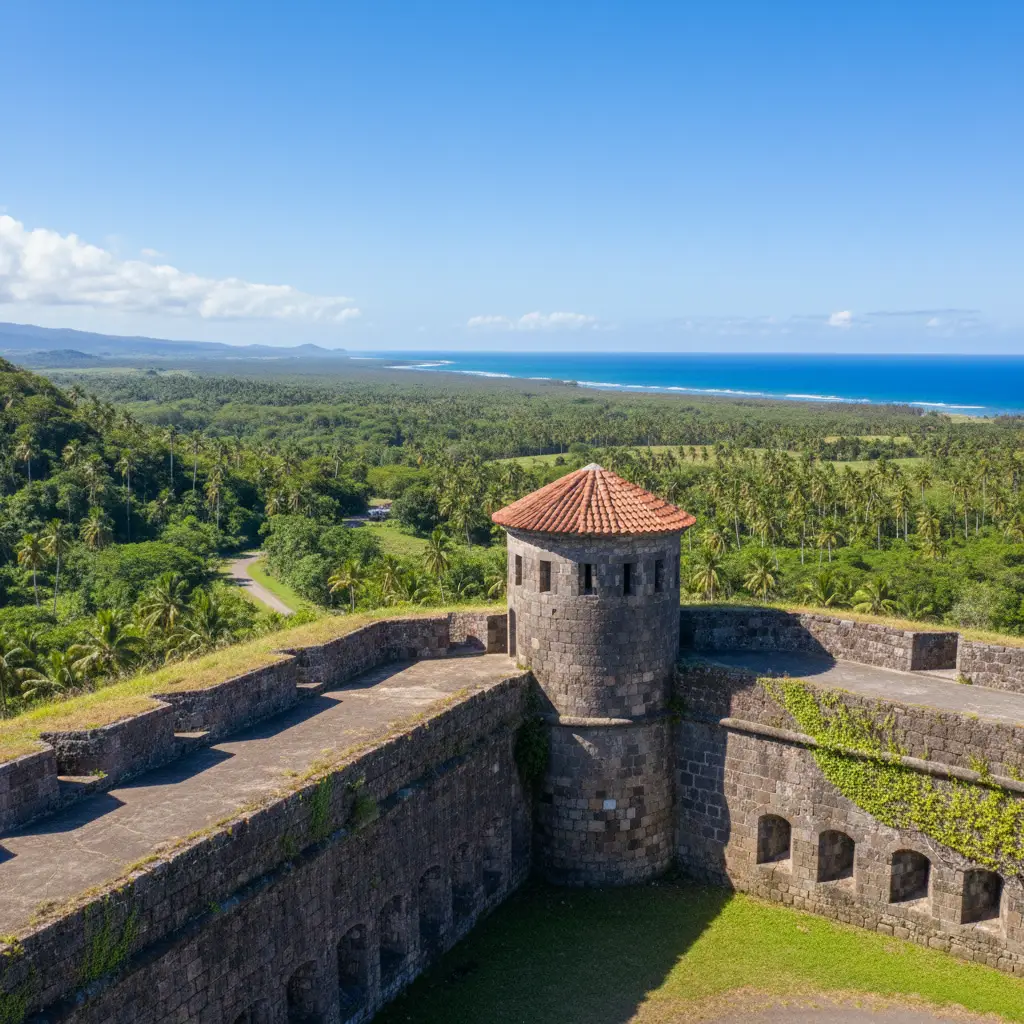
Continuing north along the RT1, you will reach Moindou, a small locality that holds significant historical weight. Just a few kilometers off the main road lies Fort Teremba. For history enthusiasts, this is a non-negotiable stop.
Built in 1871, Fort Teremba served as a military stronghold and a prison for convicts sent from France. It overlooks the bay and was the site of fierce battles during the Kanak revolt of 1878. Today, the site has been meticulously restored. Visitors can walk through the prison cells, the watchtower, and the museum, which provides a sobering and educational insight into the harsh realities of colonial life and the penal system. The site also hosts a spectacular sound and light show once a year, reenacting historical events with hundreds of extras.
Bourail: The Heart of Cowboy Country
Bourail is the second-largest town in New Caledonia and the undisputed capital of the rural west. This is the epicenter of the “caloche” (Caledonian cowboy) lifestyle. The town itself is a hub of activity, with a museum, old colonial buildings, and a vibrant market.
What are the natural wonders of Bourail?
While the town offers cultural context, the coastline of Bourail offers geological masterpieces. A short drive from the town center takes you to La Roche Percée (The Pierced Rock). This dramatic coastline features quartz cliffs battered by the ocean waves. The most famous formation is the Bonhomme de Bourail (The Bourail Gentleman), a monolith carved by wind and sea that resembles a man’s face in profile. It is a sacred site for the local Kanak people, representing the guardian of the “Door to the Dead.”
Adjacent to Roche Percée is Turtle Bay (Baie des Tortues), named for the loggerhead turtles that come ashore to lay their eggs between November and February. The Araucaria pines lining the cliffs here create a prehistoric aesthetic that is unique to New Caledonia.

The Domain of Deva and Poé Beach
Just past Bourail lies the crown jewel of the West Coast: the Domain of Deva. This 8,000-hectare protected area is the largest dry forest ecosystem in New Caledonia and offers an incredible playground for outdoor enthusiasts.
Why visit Poé Beach?
Poé Beach is arguably the most beautiful stretch of sand on the West Coast. Unlike the deep waters of the East, the lagoon at Poé is shallow, translucent, and stretches for 17 kilometers. It is a UNESCO World Heritage site and offers world-class snorkeling, kayaking, and kitesurfing. The water is often a striking shade of turquoise that contrasts vividly with the white sand.
For those seeking luxury, the Sheraton New Caledonia Deva Spa & Golf Resort is located here, offering a high-end base for exploring the region. However, the Domain is accessible to everyone, featuring an extensive network of hiking and mountain biking trails that wind through the hills, offering panoramic views of the reef and the shark-fin-shaped pass in the barrier reef.
Understanding the Stockmen Culture & Rodeos
You cannot discuss a New Caledonia west coast road trip without addressing the Stockmen culture. This is not a tourist gimmick; it is a living tradition. The cattle stations here are vast, and the skills of the stockmen are legendary.
The highlight of the calendar is the Foire de Bourail (Bourail Agricultural Fair), typically held in mid-August. It is the largest annual event in the country. For three days, the town transforms into a festival of rodeo competitions, woodchopping contests, livestock judging, and equestrian displays. For a New Zealander, it feels strangely familiar—like an A&P show on steroids, but with French wine and croissants served alongside the beef skewers.
Even if you miss the fair, you can experience this culture through the local cuisine. Restaurants in the area heavily feature local beef and venison (deer are an introduced species that are hunted for population control). A “broussard” meal is hearty, unpretentious, and delicious.
Practical Tips for New Zealand Travelers
To ensure your road trip is seamless, keep these specific tips in mind for the New Zealand market:
- Currency: The currency is the Pacific Franc (XPF). While credit cards are widely accepted in Nouméa and resorts like the Sheraton, smaller roadside stalls or markets in La Foa may require cash. It is advisable to exchange some NZD for XPF upon arrival at Tontouta International Airport.
- Language: French is the official language. While staff at major hotels and tourist attractions in Bourail speak English, it is less common in rural gas stations or small eateries. A simple “Bonjour” (Hello) and “Merci” (Thank you) go a long way in establishing rapport.
- Connectivity: Mobile data coverage is generally good along the RT1 but can be patchy in the valleys of the Deva Domain. Downloading offline maps before you leave Nouméa is a smart precaution.
- Sun Safety: The New Caledonian sun is intense, similar to New Zealand’s. However, the tropical heat can be deceptive. High SPF sunscreen and hats are mandatory, especially when exploring the exposed cliffs of Roche Percée.
People Also Ask
Do I need a 4WD for a West Coast road trip?
No, a 4WD is not strictly necessary for the main route. The RT1 from Nouméa to Bourail is fully sealed and suitable for standard sedans or hatchbacks. However, if you plan to explore remote farm tracks or specific off-road trails within the Deva Domain, a vehicle with higher clearance or 4WD capabilities is recommended.
What is the best time of year to visit Bourail?
The best time to visit is during the cooler, drier months from May to October. This period avoids the peak heat and humidity of the tropical summer and coincides with the famous Foire de Bourail in August. The water remains warm enough for swimming year-round.
Is it safe to drive in New Caledonia?
Yes, driving in New Caledonia is generally very safe. The roads are well-signposted and maintained. Drivers should be cautious of speed limits, which are strictly enforced, and be aware of wandering livestock in rural areas, particularly at night.
Can you swim at Roche Percée?
Swimming at Roche Percée can be dangerous due to strong currents and waves, as it is more exposed to the ocean than the lagoon beaches. It is better suited for walking and photography. For swimming and snorkeling, the nearby Poé Beach is much safer and calmer.
How far is the Sheraton Deva from Bourail town center?
The Sheraton New Caledonia Deva Spa & Golf Resort is located approximately 15 to 20 minutes by car from the Bourail town center. It is situated closer to Poé Beach and the hills of the Deva Domain.
Are there sharks in the Bourail lagoon?
Like all healthy tropical ecosystems, sharks inhabit the waters of New Caledonia. However, the lagoon at Poé is generally very shallow and safe for swimming. Authorities monitor the waters, and visitors should always adhere to local signage and advice regarding swimming conditions.