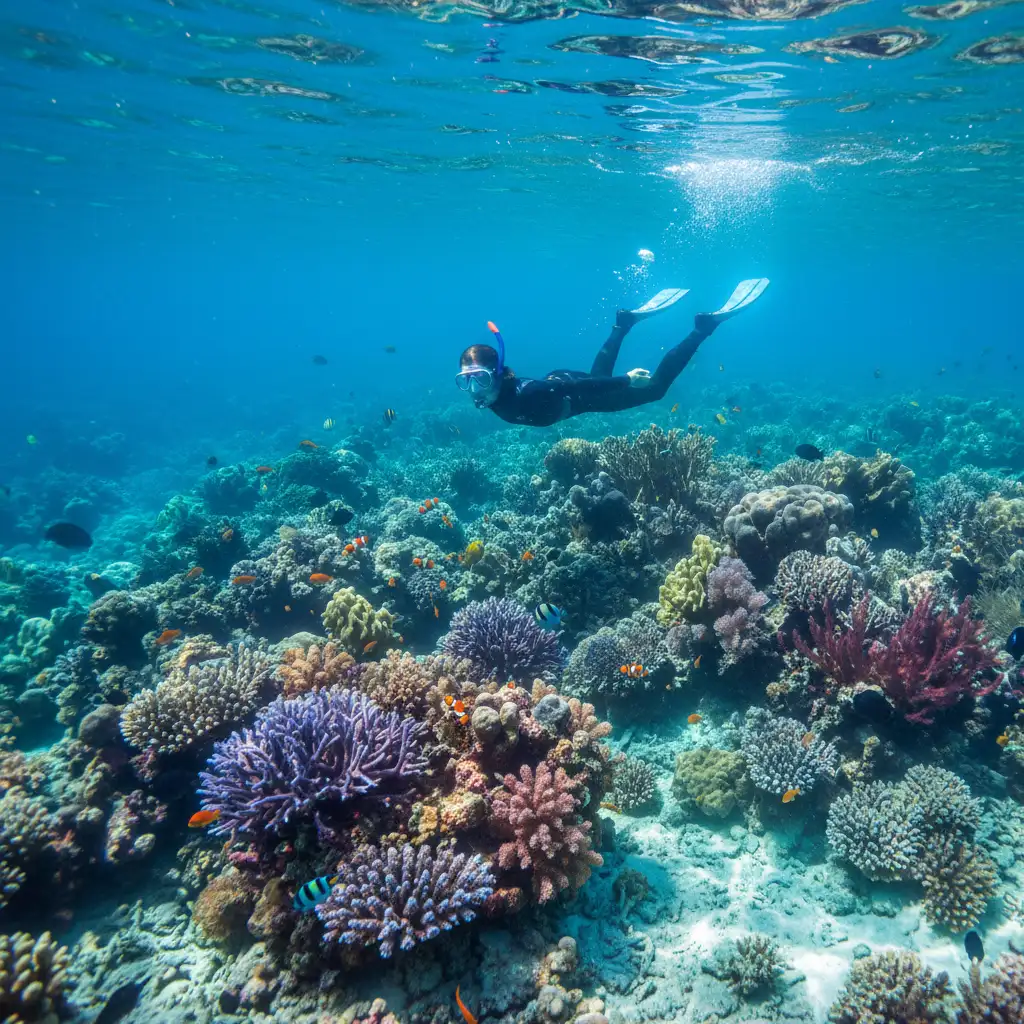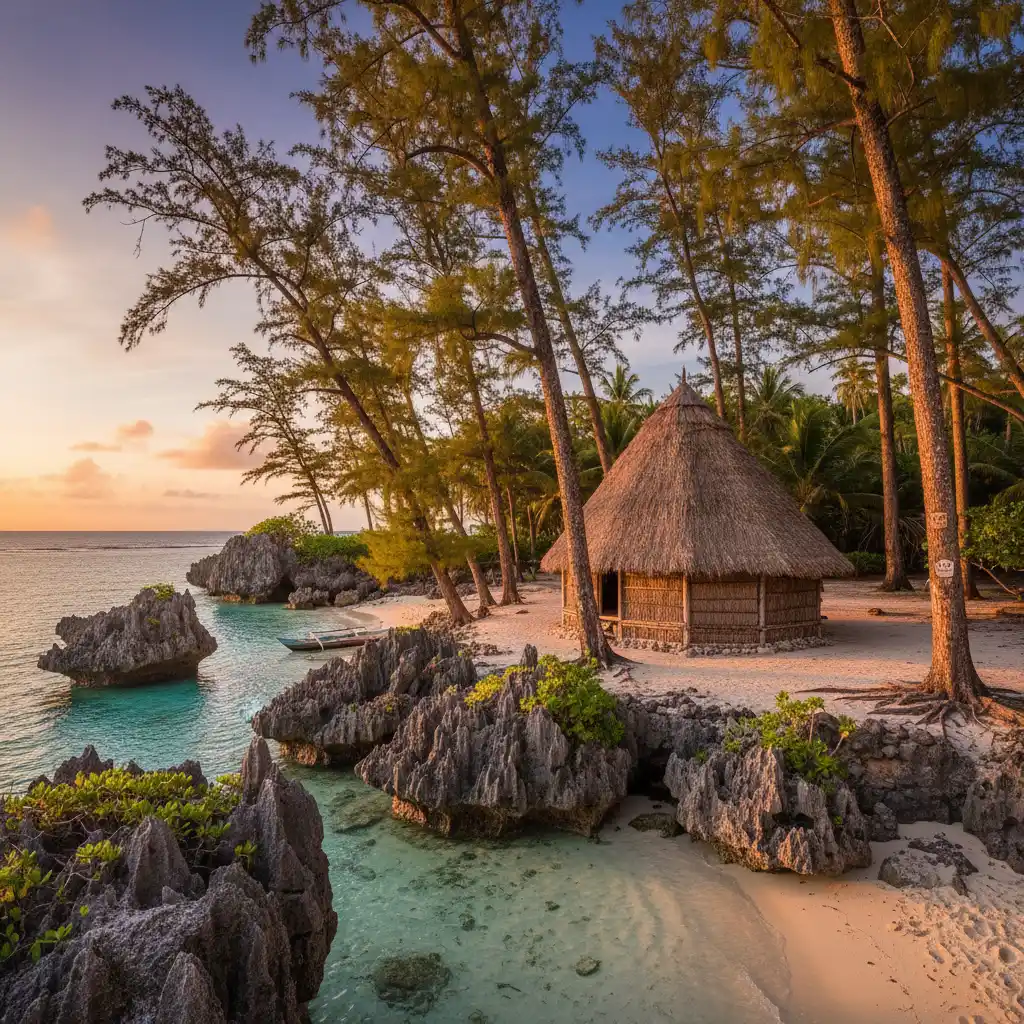
Scuba diving operators in Lifou are primarily represented by professional centers located in Easo, offering direct access to the Loyalty Islands’ pristine marine reserves. These operators provide guided boat dives to signature sites like Gorgone Reef and Tomoko Cave, equipment rental, and PADI or CMAS certification courses suitable for all experience levels.
Top Scuba Diving Operators in Lifou
For New Zealand divers seeking an untouched underwater paradise, Lifou offers a distinct advantage over more commercialized destinations. While the island is the largest of the Loyalty group, the commercial diving infrastructure is concentrated, ensuring small group sizes and personalized attention. Understanding the landscape of scuba diving operators in Lifou is the first step to planning your itinerary.

Lifou Fun Dive: The Premier Operator
The primary commercial entity servicing the island is Lifou Fun Dive. Located strategically in Easo, on the northwest side of the island within the stunning Santal Bay, this center is the heartbeat of the local diving community. For Kiwi travelers accustomed to the high safety standards of New Zealand dive shops, Lifou Fun Dive adheres to strict French maritime safety regulations, which are among the most rigorous in the world.
The operator typically runs two-tank morning dives, returning around lunch. This schedule allows visitors to explore the terrestrial beauty of the Loyalty Islands in the afternoon. Their fleet generally consists of rigid-hulled inflatable boats (RIBs) and aluminum dive vessels specifically designed to navigate the lagoon passes efficiently.
Equipment and Facilities
Travelers from Auckland or Christchurch often debate whether to haul their own gear. The local operators are well-stocked with modern Aqualung and Scubapro equipment. Regulators, BCDs, and wetsuits are maintained to high standards. Given the tropical water temperatures, they typically supply 3mm shorties or full suits, though divers who run cold might prefer to bring their own 5mm suit during the cooler months (July-August).
Signature Dive Sites: Gorgone Reef and Tomoko Cave
The underwater topography of Lifou is characterized by its dramatic geological history. As an uplifted coral atoll, the island features extensive cave systems and sheer drop-offs that define the diving experience.

Exploring Gorgone Reef
Gorgone Reef is arguably the most colorful site accessible via local scuba diving operators in Lifou. Named after the massive Gorgonian sea fans that dominate the seascape, this site is a macro-photographer’s dream. The reef creates a vibrant tapestry of pinks, reds, and oranges, contrasting sharply against the deep blue of the Pacific.
The site is relatively shallow, making it accessible for Open Water divers, yet it holds enough biodiversity to captivate Master Divers. Expect to see pygmy seahorses hiding within the fans, schools of anthias, and the occasional patrolling reef shark.
The Tomoko Cave Experience
For those seeking atmospheric lighting and structure, Tomoko Cave is the crown jewel. It is not a “cave” in the dangerous, overhead-environment sense that requires technical certification, but rather a series of caverns, tunnels, and swim-throughs.
The highlight of Tomoko is the light play. As the sun climbs, beams of light pierce through cracks in the coral ceiling, creating an ethereal, cathedral-like effect. This site allows divers to navigate through distinct chambers where fresh water mixes with salt water (halocline effects), creating a visual shimmer that adds to the surreal experience.
Best Season for Visibility (May-October)
Timing your trip from New Zealand is crucial to maximize your experience. While New Caledonia is a year-round destination, the diving conditions fluctuate.
The Cool, Clear Season
The months between May and October are widely considered the prime window for visibility. During this period, the trade winds are more consistent, and the water temperature drops slightly (ranging from 22°C to 24°C). While this might sound chilly compared to the equator, the trade-off is crystalline water clarity often exceeding 40 meters.
For Kiwi divers used to the greener waters of the Hauraki Gulf or the Poor Knights, the visibility in Lifou during these months is staggering. It creates a sensation of flying, which is particularly disorienting and delightful when hovering over deep drop-offs.
The Warm Season
From November to April, the water warms up to a balmy 26°C-29°C. However, this is also the wet season. Runoff is minimal due to the island’s porous limestone composition, but plankton blooms can slightly reduce visibility. This season is better for seeing pelagic species that come closer to the reef, but the risk of cyclones (though rare) is statistically higher.

Certification Courses Available
Lifou is an excellent classroom. The lack of strong currents in the bay and the sandy bottoms of the shallow training sites make it an ideal location for skill development.
Beginner Courses (Open Water)
Scuba diving operators in Lifou offer full certification courses. Most are affiliated with CMAS (the French federation standard) and PADI. For a New Zealander looking to get certified, doing your Open Water course here means completing your checkout dives in 28-degree water surrounded by turtles, rather than in a cold lake or pool.
Note for English Speakers: While French is the official language, dive instructors in Lifou are accustomed to international tourism. Briefings and course materials are generally available in English, but it is always wise to confirm this via email before booking your course.
Advanced and Specialty Training
For those already certified, the unique topography allows for specialized training. “Deep Diver” and “Night Diver” specialties are popular here. The night dives in Easo Bay are spectacular, revealing a host of crustaceans, Spanish Dancers, and bioluminescence that remain hidden during the day.
Logistics for New Zealand Travelers
Reaching Lifou requires a short transit, but the journey is straightforward for New Zealanders.
Flight Connections
Travelers must fly from Auckland (AKL) to Nouméa-La Tontouta International Airport (NOU). From there, a transfer is required to the domestic airport, Magenta (GEA), located in downtown Nouméa. Air Calédonie operates several daily flights to Lifou (Ouanaham Airport). The flight takes approximately 40 minutes and offers breathtaking aerial views of the lagoon.
Currency and Payments
The currency used is the Pacific Franc (XPF). While New Zealand cards are widely accepted at hotels, dive operators may prefer cash or have specific credit card policies. It is highly recommended to exchange currency at the airport in Nouméa before heading to the islands, as ATMs in Lifou can be sporadic or out of service.

Marine Life Encounters
The biodiversity in Lifou is protected by customary laws and marine reserves. The “Taboo” areas (strictly protected zones) ensure that fish stocks remain healthy.
The Big Stuff
While Lifou is famous for macro life, it is not devoid of larger animals. Green sea turtles and Loggerheads are residents of the bay. During the cooler months, it is not uncommon to hear the song of Humpback whales underwater, as they migrate through New Caledonian waters to calve. Reef sharks (Whitetip and Grey Reef) are common and generally shy.
Macro Life
For photographers, the biodiversity is dense. Nudibranchs of every color, leaf scorpionfish, and varying species of clownfish hosting in anemones are staples of every dive. The coral health is exceptional, with very little bleaching compared to other global destinations, thanks to the cooler currents and low human impact.
People Also Ask
How much does scuba diving cost in Lifou?
A single tank dive typically costs between 6,000 and 8,000 XPF (approx. 90-120 NZD), including equipment. Two-tank packages and multi-day passes usually offer a discounted rate. Certification courses like PADI Open Water generally range from 50,000 to 60,000 XPF.
Is it safe to dive in Lifou?
Yes, diving in Lifou is very safe. The operators adhere to strict French maritime safety laws. A hyperbaric chamber is located in Nouméa, which is accessible via emergency medical evacuation if absolutely necessary, though dive profiles in Lifou are generally conservative.
Do I need to speak French to dive in Lifou?
No, you do not need to be fluent in French. The main scuba diving operators in Lifou cater to international tourists and speak English. However, learning a few basic greetings like “Bonjour” and “Merci” is appreciated by the locals.
Can I dive in Lifou from a cruise ship?
It is difficult to arrange scuba diving during a standard cruise ship port call due to timing constraints. Most cruise passengers are limited to snorkeling at Jinek Bay. If you wish to scuba dive, you generally need to be staying on the island to match the operator’s schedule.
What is the water temperature in Lifou?
Water temperature varies by season. In the winter (July-September), it drops to around 22-23°C (72-73°F). In the summer (January-March), it warms up to 28-29°C (82-84°F). A 3mm wetsuit is standard for summer, while a 5mm is recommended for winter.
Are there sharks in Lifou waters?
Yes, you will likely see sharks, primarily Whitetip Reef Sharks and Grey Reef Sharks. These species are generally non-aggressive toward divers. Sightings are considered a highlight of the dive rather than a danger.