
Diving in New Caledonia offers access to the world’s largest lagoon and second-largest barrier reef, a UNESCO World Heritage site. Reviews consistently highlight exceptional visibility, diverse marine life including manta rays and sharks, and high-quality PADI operators. Just a short flight from New Zealand, it is a premier destination for both recreational and technical divers.
Why New Zealand Divers Choose New Caledonia
For New Zealand-based divers, the transition from the temperate, kelp-rich waters of the Poor Knights or the Bay of Islands to the tropical warmth of New Caledonia is a revelation. Located just over two and a half hours from Auckland, New Caledonia represents the closest tropical reef system of this magnitude to New Zealand. The appeal lies not just in the temperature—which ranges from a comfortable 22°C to 28°C—but in the sheer scale of the marine biodiversity. As the world’s largest lagoon, the New Caledonian reef system covers over 24,000 square kilometers, providing a sanctuary for thousands of species of fish, mollusks, and corals.

Professional reviews often emphasize the pristine nature of these waters. Because New Caledonia is a French overseas territory with a relatively small population and strict environmental regulations, the reefs have escaped much of the bleaching and overfishing seen in other parts of the Pacific. For a Kiwi traveler seeking a world-class underwater experience without the grueling long-haul flights to the Caribbean or Red Sea, New Caledonia is the logical choice.
Diving New Caledonia Reviews: An Analysis
When analyzing diving New Caledonia reviews, several themes emerge consistently. Divers frequently praise the high standard of safety and professionalism, which aligns with European and PADI international standards. Unlike some developing-nation dive destinations, the equipment in New Caledonia is generally modern, well-maintained, and the boats are equipped with the latest navigational and safety gear. Reviewers also point out the “wild” feel of the diving; outside of the popular spots near Nouméa, you are often the only boat at a dive site, providing an intimate experience with the ocean.
However, some reviews note that New Caledonia can be more expensive than other Southeast Asian destinations. This is a trade-off for the quality of the infrastructure and the health of the ecosystem. Divers who prioritize ecological integrity and high-quality instruction over budget-basement pricing tend to give New Caledonia the highest marks. The consensus among the diving community is that the investment is well worth it for the opportunity to see apex predators and megafauna in a protected environment.
The Boulari Pass: Manta Ray Encounters
What is the best place to see Manta Rays in New Caledonia? The Boulari Pass, located just a short boat ride from Nouméa, is the premier site for encountering resident reef manta rays (Mobula alfredi) at their cleaning stations. These majestic creatures frequent the pass to have parasites removed by cleaner wrasse, often hovering nearly motionless above the coral heads, allowing divers to observe them from a respectful distance.
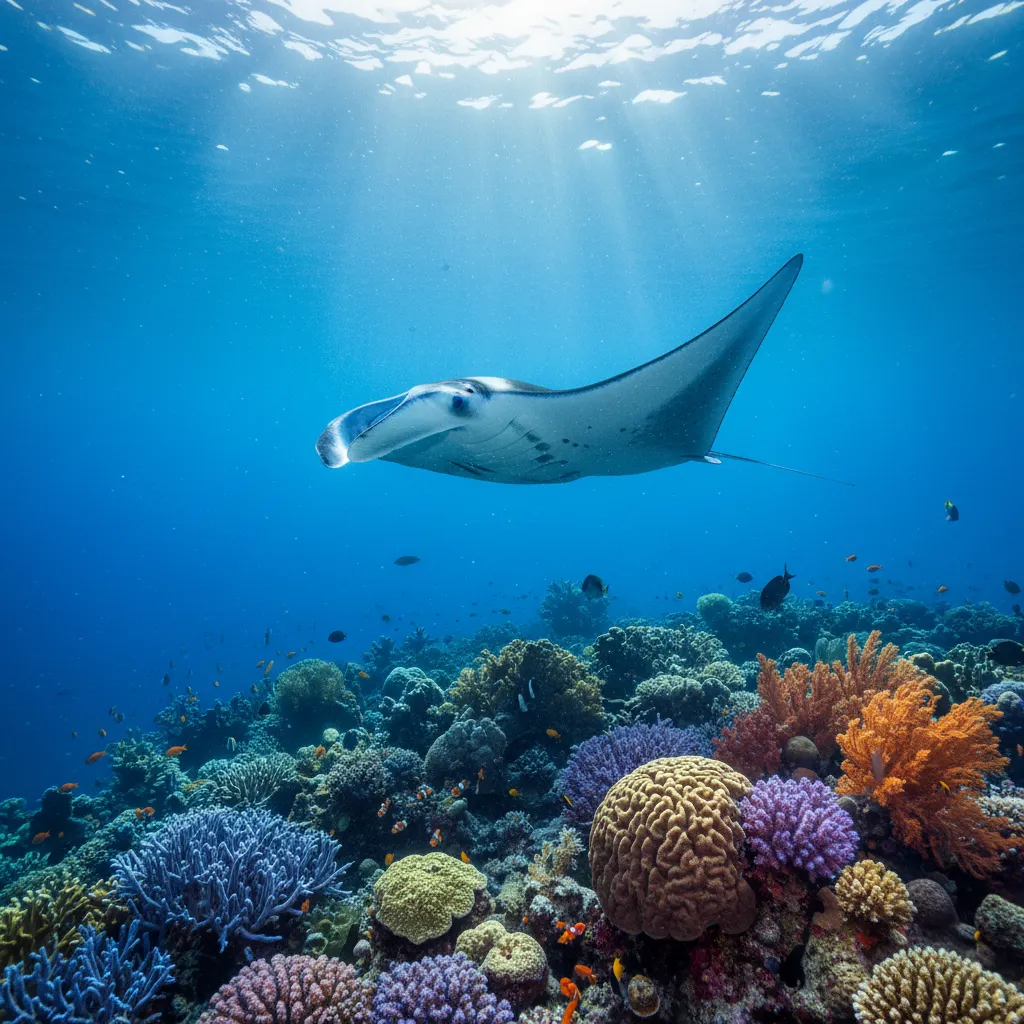
The Boulari Pass is a dynamic environment. Because it is a channel connecting the lagoon to the open ocean, the visibility is often spectacular, sometimes exceeding 40 meters on an incoming tide. Divers can expect to see not only mantas but also large schools of trevally, barracuda, and the occasional Napoleon wrasse. The depth at the cleaning stations is typically between 15 and 25 meters, making it accessible for those with a PADI Advanced Open Water certification or an Open Water certification with sufficient experience.
Navigating the Currents of the Pass
Diving in a pass requires careful timing. The best conditions occur during the “slack water” period between tides, or during an incoming tide when clear oceanic water is pushed into the lagoon. Experienced dive guides in Nouméa are experts at reading these tidal charts to ensure the safest and most visually rewarding experience. If the current is running, it can be a thrilling drift dive, where you glide along the walls of the pass watching the pelagic action unfold in the blue.
Shark Diving at Hienghène
Where can you find the best shark diving in New Caledonia? Hienghène, located on the northeast coast of the main island (Grande Terre), is famous for its dramatic underwater topography and high concentrations of reef sharks. This area is characterized by massive gorgonian fans, black coral forests, and intricate tunnel systems that provide a backdrop for encounters with Grey Reef sharks, Whitetip Reef sharks, and the occasional Hammerhead.

The most famous site in Hienghène is “The Cathedral,” an underwater structure featuring arches and chimneys that allow sunlight to filter through in ethereal beams. Diving here is a sensory experience; the contrast between the dark volcanic rock and the vibrant marine life is stunning. Reviews of Hienghène often describe it as the most “authentic” part of New Caledonia, where the lush mountains meet the sea and the diving feels like a true expedition into the unknown.
The Unique Topography of the North
Unlike the flat coral gardens found in some parts of the lagoon, Hienghène offers verticality. The drop-offs are steep, and the rock formations are riddled with caves and swim-throughs. This variety of habitat supports a different array of species, including pygmy seahorses for the macro enthusiasts and massive schools of snapper that congregate near the pinnacles. It is a destination that rewards the observant diver who looks both into the blue for sharks and into the crevices for hidden treasures.
Dive Operators and PADI Courses
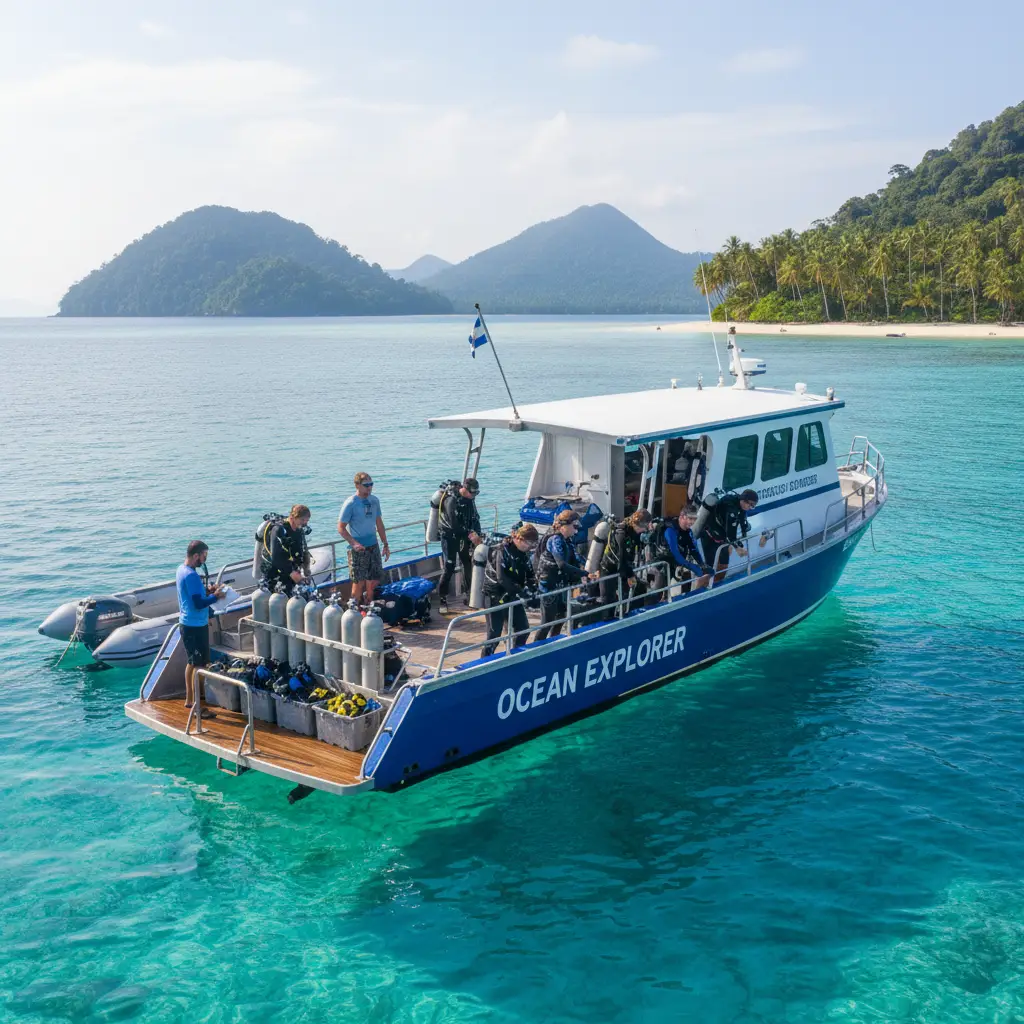
How do I choose a dive operator in New Caledonia? The country boasts a network of highly professional dive centers, most of which are PADI-affiliated. In Nouméa, operators like Abyss and IODYSSEE offer daily trips to the surrounding islets and passes. These centers are well-versed in catering to international tourists, with many staff members speaking fluent English—a crucial factor for New Zealanders who may not be fluent in French.
For those looking to advance their skills, New Caledonia is an ideal classroom. Taking a PADI Advanced Open Water course here allows you to practice deep diving and navigation in some of the clearest waters on earth. Many operators also offer the Enriched Air (Nitrox) specialty, which is highly recommended for the deeper dives at Boulari or the wreck of the Dieppoise. For beginners, the calm, shallow waters of the inner lagoon provide a safe and stress-free environment for a PADI Discover Scuba Diving experience or the full Open Water certification.
The Best Season for Diving
When is the best time to dive in New Caledonia? The diving season is year-round, but the “best” time depends on your priorities. The cool season (May to September) offers the best visibility, often reaching 50 meters in the outer passes. During this time, the water temperature drops to around 22°C-23°C, so a 5mm or 7mm wetsuit is recommended for New Zealanders used to warmer tropical climes. This is also the season for humpback whale sightings, adding an extra layer of magic to the boat trips.
The warm season (October to April) sees water temperatures rise to a balmy 28°C. This is the peak time for coral spawning and higher activity among the smaller reef fish. While visibility can be slightly reduced due to plankton blooms, these blooms are exactly what attract the manta rays in higher numbers. If your goal is to swim with mantas in Boulari Pass, the months of November through February are often considered optimal. However, this is also the cyclone season, so it is wise to keep an eye on the weather forecasts and consider travel insurance.
Logistics for Kiwi Travelers
For New Zealanders, New Caledonia is remarkably accessible. Air Calin operates regular flights from Auckland to Nouméa’s La Tontouta International Airport. Upon arrival, the transition is seamless. While French is the official language, the tourism sector is well-equipped for English speakers. It is recommended to rent a car if you plan to explore sites like Hienghène or Bourail, as the main island is large and public transport can be limited for those carrying heavy dive gear.
In terms of currency, New Caledonia uses the CFP Franc (XPF). While credit cards are widely accepted in Nouméa and by major dive operators, carrying some cash is advisable for smaller villages in the north or on the Loyalty Islands. Kiwis will find the pace of life in New Caledonia to be a pleasant mix of French sophistication and Pacific island relaxation—the perfect environment for a diving holiday.
Essential Equipment for Tropical Reef Diving
While most operators provide high-quality rental gear, many serious divers prefer to bring their own. For New Caledonia, a versatile 3mm or 5mm wetsuit is usually sufficient. If you are diving in the winter months, a hooded vest can add that extra bit of warmth for repetitive dives. A high-quality mask is essential to appreciate the legendary visibility, and a dive computer is a must for safely managing your nitrogen levels during the deeper pass dives. Don’t forget a reef-safe sunscreen to protect both your skin and the delicate coral ecosystems you’ve come to explore.