
Yes, New Zealand travelers need a power adapter for New Caledonia. While New Zealand uses Type I (angled flat pins), New Caledonia uses European-style Type E and Type F sockets with round pins. The voltage is compatible (220V in New Caledonia vs. 230V in NZ), so a simple plug shape adapter is sufficient for most modern dual-voltage electronics.
Do Kiwis Need a Power Adapter for New Caledonia?
If you are traveling from New Zealand to New Caledonia for a holiday or business trip in late 2024 or 2025, the short answer is yes: your standard New Zealand plugs will not physically fit into the wall outlets in New Caledonia.
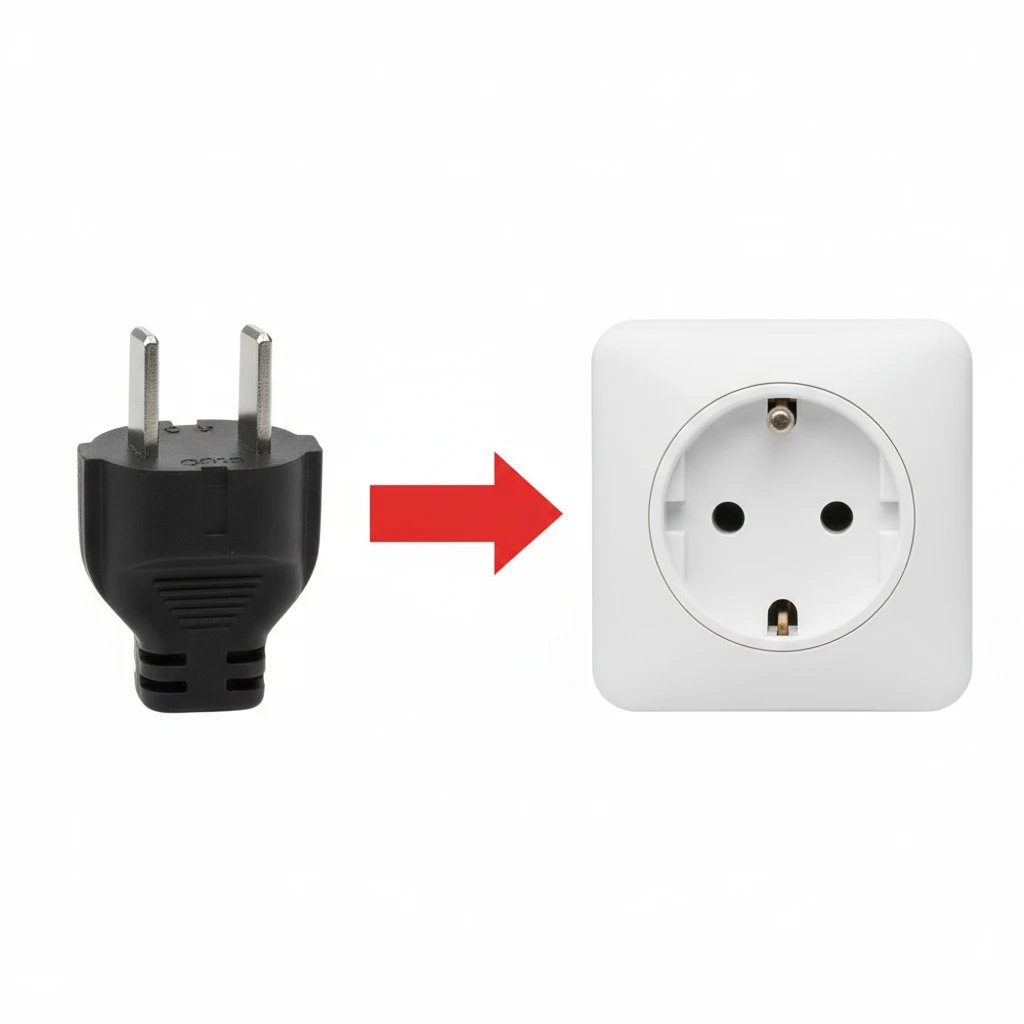
New Zealand (and Australia) utilizes the Type I plug standard, characterized by two flat pins in a V-shape, often with a third vertical grounding pin. New Caledonia, being a French overseas territory, adheres to European standards. The wall sockets there are designed for round pins, specifically Type E and Type F.
Trying to force a flat-pin NZ plug into a round-pin New Caledonian socket is impossible and dangerous. Therefore, a travel adapter is an absolute essential item for your packing list. It is important to note that you generally do not need a voltage converter (transformer), only a travel adapter that changes the shape of the plug, as the electrical current is compatible between the two nations.
Understanding New Caledonia Plug Types (E, F, and C)
To ensure you buy the correct adapter, it helps to understand exactly what you will encounter in your hotel room in Nouméa or your bungalow on the Isle of Pines. New Caledonia uses a mix of three European plug standards.
Type E (The French Standard)
This is the most common socket found in New Caledonia. It features two round holes (4.8mm diameter) spaced 19mm apart. The defining feature of the Type E socket is a protruding male earth pin that sticks out of the socket itself. Your adapter must have a corresponding female hole to accept this earth pin. If you buy a generic “European” adapter that is perfectly flat without this hole, it may not fit into a Type E socket.
Type F (The Schuko Standard)
Type F is very similar to Type E and is often found in newer installations or resorts catering to international tourists. It also has two round holes for the live and neutral pins. However, instead of a protruding earth pin, it uses two earth clips on the side of the socket. Most modern European travel adapters are hybrids (CEE 7/7) designed to work with both Type E and Type F sockets seamlessly.
Type C ( The Europlug)
You may also encounter Type C sockets, which are the older, ungrounded version of European outlets. These are narrower and intended only for low-power devices. The good news is that if you have a Type E or Type F adapter, it will usually fit into a Type C socket, provided the socket isn’t recessed too deeply. Conversely, the slim, two-pin “Europlugs” found on many phone chargers will fit into Type E, F, and C sockets.
Voltage Guide: NZ (230V) vs. New Caledonia (220V)
One of the most common concerns for travelers is whether the electricity voltage will fry their expensive electronics. For Kiwis traveling to New Caledonia, this is rarely an issue.
The Numbers
- New Zealand Voltage: Officially 230V (operating range 230-240V).
- New Caledonia Voltage: 220V.
- Frequency: Both countries operate at 50Hz.
Although there is a slight numerical difference (230V vs 220V), this falls well within the tolerance range of almost all electrical appliances. In the world of electricity, 220V, 230V, and 240V are effectively treated as the same “high voltage” standard, distinct from the 110V standard used in the USA and Japan.
Checking Your Device Labels
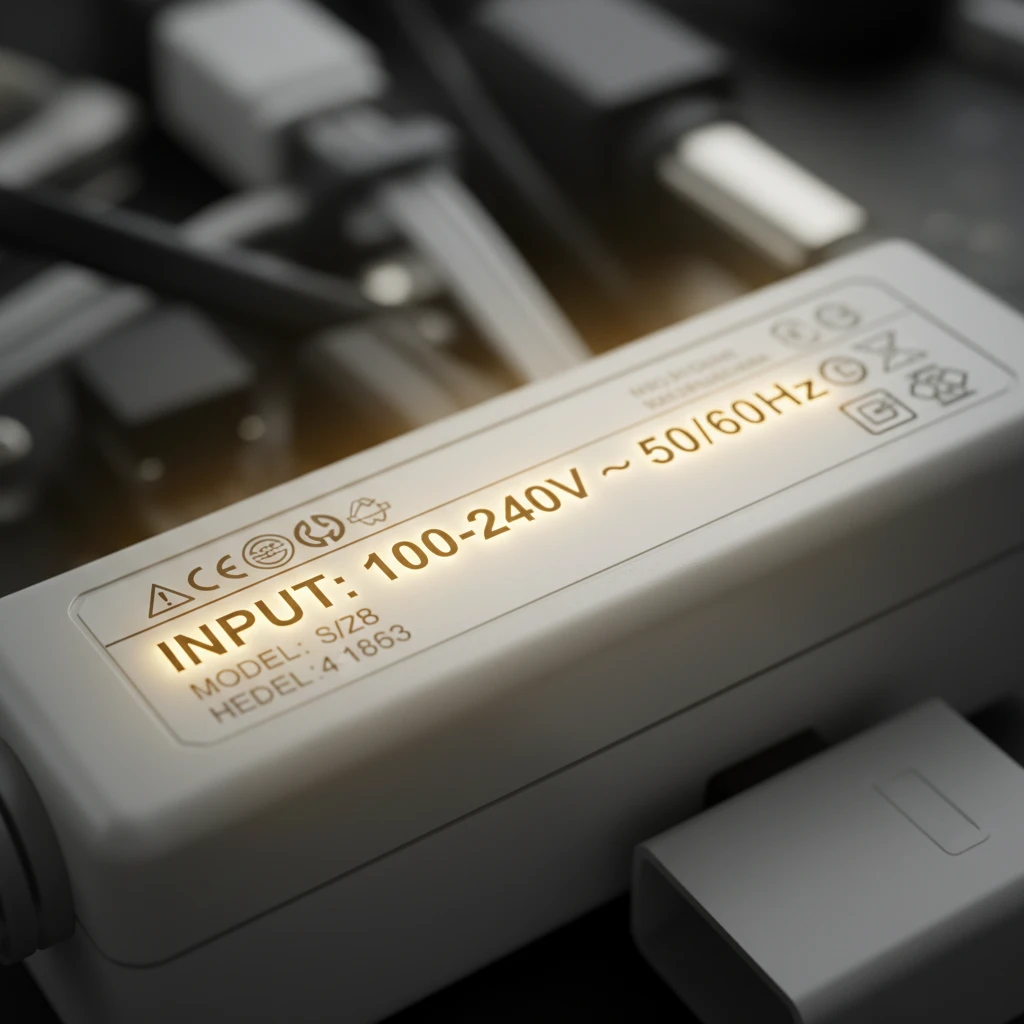
Before you travel, flip your device over and look at the fine print on the power brick or battery. You are looking for the word INPUT.
- Safe: If it says
INPUT: 100-240V ~ 50/60Hz, your device is “dual voltage” or “multi-voltage.” This covers 99% of laptops (MacBooks, Dells), smartphones (iPhones, Samsungs), camera chargers, and tablets. You only need a plug adapter. - Caution Required: If it says
INPUT: 230VorINPUT: 240Vonly, it will technically work on 220V, but might run slightly slower (rare for modern tech). - Danger: If you have US-bought electronics rated
INPUT: 110V, do NOT plug them in. They will burn out instantly.
Where to Buy Adapters in New Zealand (2025 Guide)
Don’t leave purchasing your adapter until you arrive at La Tontouta International Airport in Nouméa, where prices can be triple what you would pay at home. Here is a breakdown of where to find the best adapters in New Zealand before you fly.
1. Electronics Retailers (PB Tech, Jaycar, JB Hi-Fi)
Best for: Technical advice and specific adapters.
Jaycar Electronics is particularly good for travel accessories. Ask for a “New Zealand to Europe” adapter. Ensure it specifies compatibility with “French” or “Schuko” sockets. PB Tech often stocks high-quality adapters with built-in USB-C PD (Power Delivery) ports, allowing you to charge a laptop without bringing the bulky brick.
2. Hardware Stores (Bunnings, Mitre 10)
Best for: Basic, sturdy adapters.
Bunnings and Mitre 10 usually stock the “Jackson” or “HPM” brand travel adapters. These are often simple, white adapters. They are reliable and cheap (usually $10-$15 NZD) but rarely have built-in USB ports. Look for the package labeled “For travel to Europe/Bali/Noumea.”
3. Travel & Adventure Stores (Kathmandu, Macpac)
Best for: Universal adapters.
These stores sell premium “Universal” travel adapters that work in 150+ countries. While more expensive ($40-$60 NZD), they are a great investment if you travel globally, not just to New Caledonia. Look for models with GaN technology for faster charging in a smaller form factor.
The “Power Board” Hack
If you are traveling as a family or have multiple devices (phone, watch, camera, drone, laptop), buying 5 separate adapters is annoying and expensive. Instead, buy one high-quality NZ-to-Europe adapter and bring a standard 4-way New Zealand power board (power strip) from home.
You plug the adapter into the wall in New Caledonia, plug your NZ power board into the adapter, and voila—you have 4 NZ outlets ready for all your devices.

Charging Strategies for Nouméa and the Islands
Power availability can vary depending on where you are staying in New Caledonia.
Luxury Resorts & Nouméa Hotels
In high-end hotels like the Le Méridien or Chateau Royal, you will often find “multi-standard” sockets near the desk that might accept US or NZ plugs, or built-in USB-A and USB-C wall ports. However, bedside lamps and bathroom sockets will almost always be the standard Type E/F. Never rely on the hotel having a loaner adapter; they run out quickly.
Gites and Tribal Stays (Lifou, Maré, Isle of Pines)
If you are venturing to the Loyalty Islands or staying in traditional Kanak accommodation (gites), power outlets may be sparse. You might find only one outlet in the entire bungalow, often occupied by a fan or fridge. In these scenarios, a power bank (20,000mAh recommended) is crucial for keeping phones charged overnight. The wiring in older rural buildings can sometimes be loose, so a heavy adapter might fall out of the wall—bring a bit of duct tape just in case.
Cruises
If you are visiting New Caledonia via a cruise ship (P&O, Carnival, Royal Caribbean) departing from Auckland, the ship usually uses the power standard of its country of origin or a mix (often US/EU sockets). However, you will still need the Type E/F adapter if you plan to charge your phone at a cafe on shore.
Travel Electronics Safety Checklist
Before you depart, run through this final safety check to ensure your gear survives the trip.
- High Wattage Appliances: Be very careful with hair straighteners and hair dryers brought from NZ. While the voltage is fine, these devices draw high current. Ensure your travel adapter is rated for at least 10 Amps. Cheap adapters rated for 2.5 Amps will melt if used with a hair dryer.
- Surge Protection: Island power grids can be less stable than the grid in New Zealand, with occasional surges or brownouts during tropical storms. Using an adapter with built-in surge protection is a smart move for protecting laptops.
- Check the Earth Pin: If you have a device that requires an earth connection (a 3-pin NZ plug), you must use an adapter that connects the earth pin. Do not use a 2-pin adapter for a 3-pin device, as it bypasses the safety grounding.
Frequently Asked Questions
Can I use an Australian power plug in New Caledonia?
No. Australian plugs are identical to New Zealand plugs (Type I). They have flat angled pins and will not fit into the round-pin sockets used in New Caledonia without an adapter.
Is the electricity in New Caledonia the same as NZ?
It is very similar. New Caledonia is 220V and NZ is 230V. This small difference is negligible for most consumer electronics, meaning your devices will work safely without a voltage converter.
Do I need a voltage converter for New Caledonia?
Likely not. Check your device label. If it says “Input: 100-240V”, you do not need a converter. You only need a converter if you are bringing older specialized equipment that is strictly rated for a specific voltage different from 220V.
Will my NZ hair straightener work in New Caledonia?
Yes, provided it is compatible with 220V (most are). However, you must use a high-quality adapter rated for high wattage (10A or higher). Do not use cheap, flimsy adapters for heat-generating appliances.
Where can I buy a travel adapter in Nouméa?
If you forget yours, you can buy one at “Casino” or “Carrefour” supermarkets in Nouméa, or at electronics stores like “Pulsat.” However, it is harder to find “Female NZ to Male EU” adapters there than it is to buy them in NZ before you leave.
What is the difference between Type E and Type F plugs?
Type E (French) has a grounding pin sticking out of the socket. Type F (Schuko) has grounding clips on the sides. New Caledonia uses mostly Type E, but modern adapters usually fit both.