
The Port Moselle Market in Nouméa is open daily from Tuesday to Sunday, serving as the city’s primary fresh food hub. The official Noumea markets opening hours are from 5:00 AM to 11:30 AM. For the widest selection of seafood and produce, visitors are strongly advised to arrive before 8:00 AM. The market is closed on Mondays.
Discovering the Heart of Nouméa: Port Moselle Market
For travelers venturing from New Zealand to the tropical shores of New Caledonia, the Port Moselle Market (Marché de Port Moselle) is more than just a place to buy groceries; it is a cultural epicenter. Located beside the marina with a view of the bobbing yachts, this market offers a sensory explosion of colors, scents, and sounds that define the unique blend of Melanesian and French cultures found in Nouméa.
Understanding the rhythm of the market is essential for any visitor. Unlike the all-day supermarkets Kiwis might be used to back home, the Port Moselle Market operates on a strict morning schedule. It is the lifeblood of the city’s culinary scene, where restaurateurs, locals, and tourists converge to secure the freshest catch and the ripest fruits. Whether you are a cruise ship passenger docking for the day or a long-stay visitor in an apartment hotel, this guide covers everything you need to navigate the stalls like a local.

Noumea Markets Opening Hours & Best Times to Visit
One of the most frequent questions travelers ask is regarding the specific noumea markets opening hours. Precision is key here, as arriving late often means missing out on the best experiences.
When does the market open?
The market officially opens its gates at 5:00 AM. While this may seem incredibly early for a holiday schedule, this is when the magic happens. The local fishermen unload their catch, and the farmers set up their most pristine produce. The market remains open until 11:30 AM, but the energy shifts significantly throughout the morning.
Why is early morning the best time to visit?
To experience the market at its peak, aim to arrive between 6:00 AM and 7:30 AM. By 9:00 AM, many of the premium fish options (such as specific cuts of tuna or the largest prawns) may be sold out. By 11:00 AM, vendors begin packing up, and the vibrant atmosphere starts to wind down. If you are visiting during the hotter months (December to March), the early morning also offers a respite from the midday heat, allowing you to browse the outdoor stalls in comfort.
The Famous Fish Market: A Seafood Paradise
For seafood lovers, the separate pavilion dedicated to the fish market is the undisputed highlight of Port Moselle. New Caledonia boasts one of the world’s largest lagoons, and the bounty displayed here is world-class.
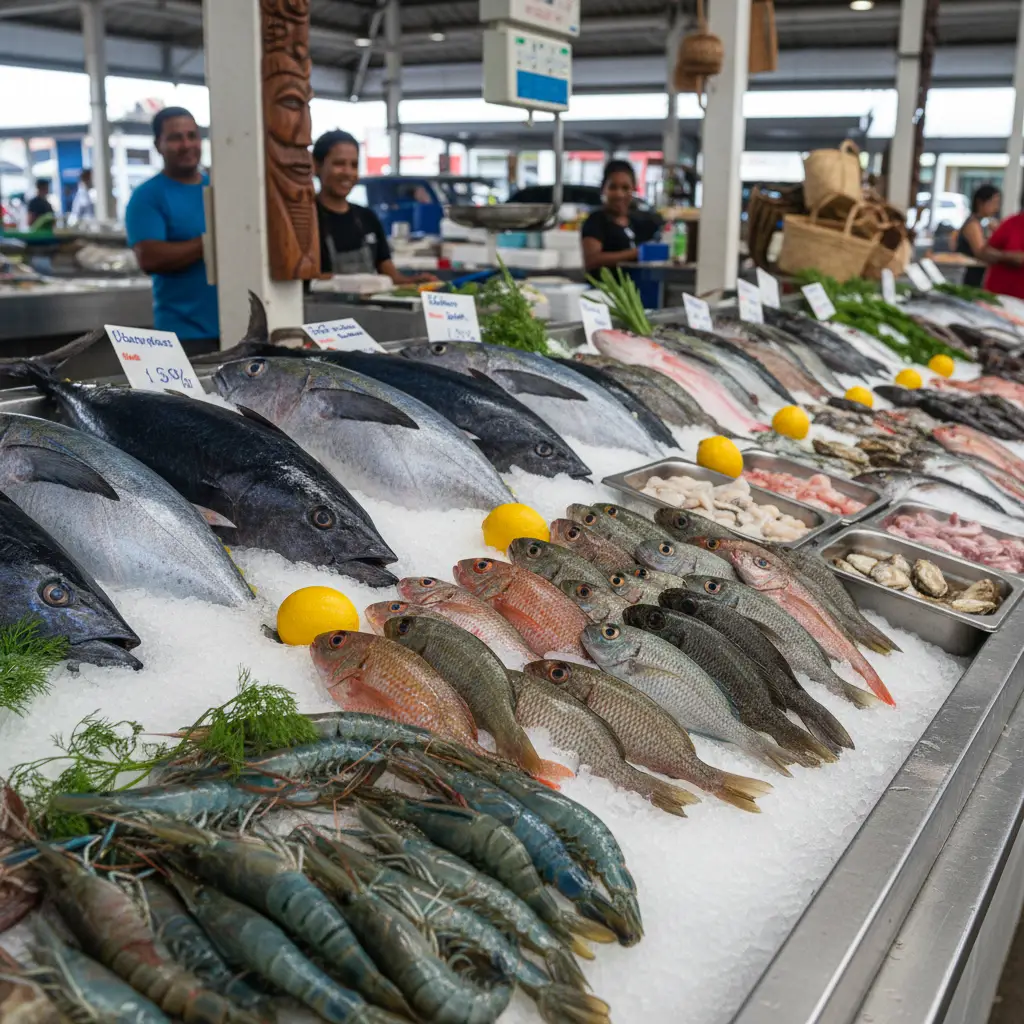
Upon entering the fish pavilion, you are greeted by rows of stainless steel tables laden with ice and glistening catch. The variety is staggering compared to what you might find in a standard NZ fishmonger. You will see whole Yellowfin Tuna, Mahi Mahi (Dolphinfish), Wahoo, and various reef fish boasting vibrant colors. The prices are generally fixed and displayed per kilogram.
The Famous Blue Prawns
You cannot visit the Port Moselle Market without noticing the “Crevettes Bleues” (Blue Prawns). These are a delicacy unique to New Caledonia, known for their sweet, delicate flavor and distinctive blue hue when raw. They are farmed sustainably in the pristine waters of the lagoon and are highly sought after by chefs worldwide. Buying a kilo of these to cook at your accommodation is a culinary must-do.
Buying Sashimi
Given the French and Japanese influences in New Caledonia, sashimi is incredibly popular. You can purchase high-grade tuna pre-sliced or in blocks. The freshness is unparalleled, often caught just hours prior. It makes for an excellent, healthy breakfast or lunch option if you have a cooler bag.
Fresh Produce: A Fusion of French and Pacific Flavors
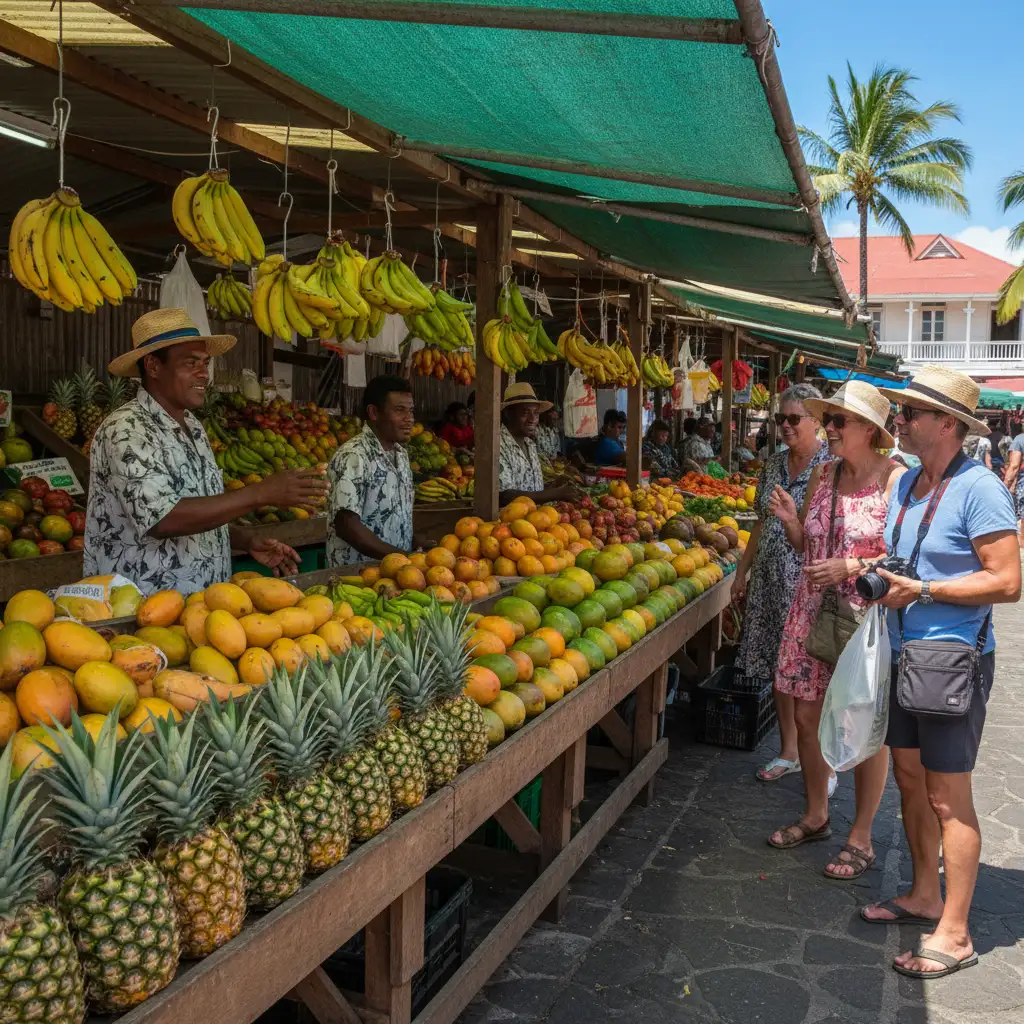
The fruit and vegetable section is where the island’s diversity truly shines. Here, you will find Kanak women selling traditional tubers like yams, manioc, and taro, sitting alongside stalls overflowing with tropical fruits and French-style market gardens.
The produce available changes with the seasons, ensuring that everything you buy is at its peak flavor. In the summer months, look for sweet, juicy lychees, mangoes, and dragon fruit. The pineapples from the Isle of Pines are legendary—smaller than the ones found in New Zealand supermarkets, but significantly sweeter and more fragrant. You will also find an abundance of fresh herbs, salad greens, and tomatoes, catering to the French palate.
The French Connection: Charcuterie and Bakery
It wouldn’t be a French territory without excellent bread and cheese. Interspersed among the produce or in the surrounding shops, you will find vendors selling terrines, rillettes, and cured meats. While you cannot take these back to New Zealand due to strict biosecurity laws, they are perfect for a picnic lunch on the Baie des Citrons beach.
The Weekend Experience: Café Culture and Live Music
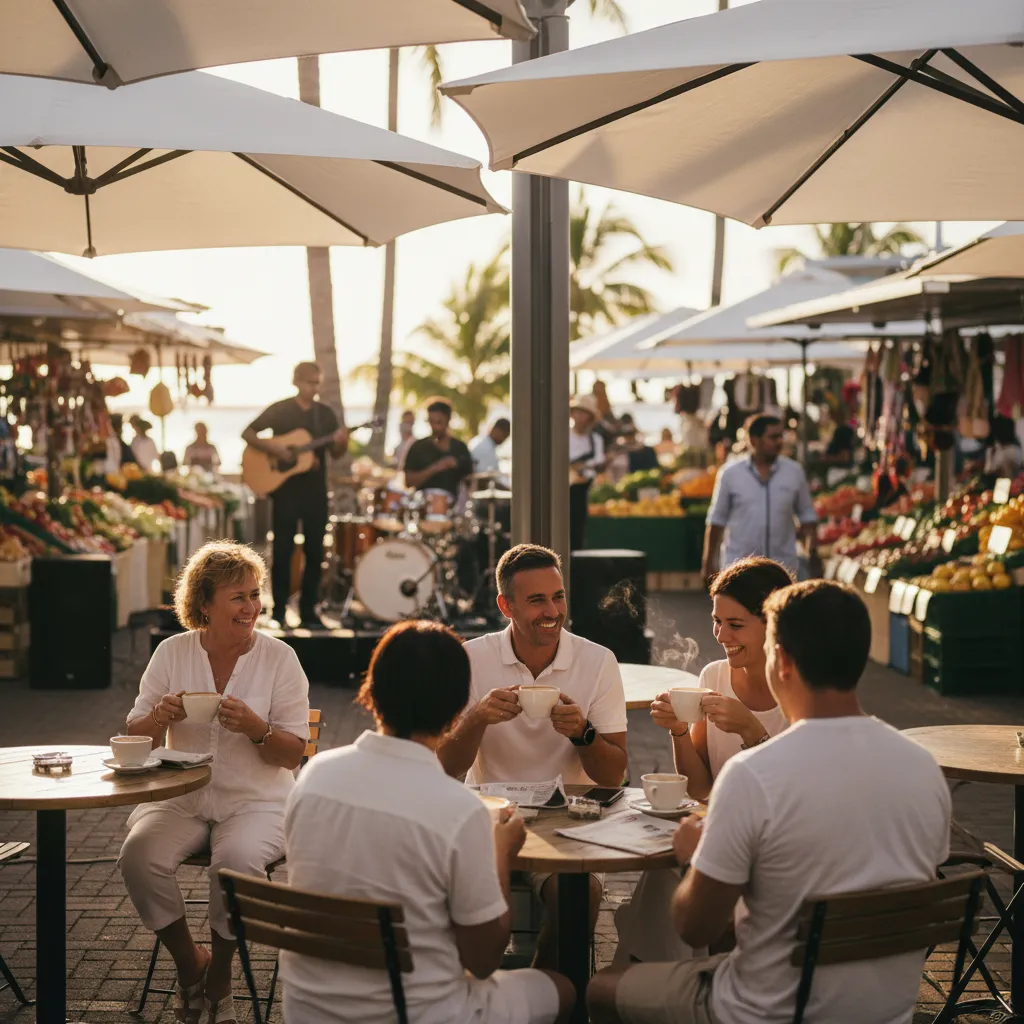
While the market is functional during the week, Saturday and Sunday mornings transform it into a social event. This is when the “weekend vibes” truly kick in. The central kiosk, a small café pavilion in the heart of the market, becomes the meeting point for Nouméa’s residents.
Locals gather here to sip on a “grand café” (large coffee) or an espresso, accompanied by fresh croissants or “pain au chocolat” bought from the nearby bakery stalls. On weekends, you will often find a local band playing live music—ranging from traditional Kanak string bands to French chanson or reggae. The atmosphere is festive, relaxed, and incredibly welcoming.
If you are traveling with family, the weekend is the best time to visit. The crowds are denser, but the energy is infectious. It provides a fantastic opportunity to people-watch and hear the melodic mix of French and Drehu languages being spoken around you.
Arts, Crafts, and Souvenirs
Beyond the food, Port Moselle Market is an excellent location to purchase authentic souvenirs. Unlike the generic trinket shops found in some tourist hubs, the market features artisans selling their own creations.
Popular items include:
- Pareos (Sarongs): Hand-dyed fabrics with tropical prints are a staple. They are lightweight, practical for the beach, and make great gifts.
- Tribal Carvings: Look for “flèche faîtière” (rooftop spire) replicas or intricate wooden sculptures representing Kanak totems.
- Jewelry: Black pearls are available, though ensure you are buying from a reputable stall. You will also find beautiful handmade jewelry using seeds, shells, and sea glass.
- Niaouli Products: The Niaouli tree is native to New Caledonia (similar to Tea Tree). Essential oils, balms, and soaps made from Niaouli are famous for their healing properties and make for easy-to-pack gifts.
Essential Tips for New Zealand Travelers
To ensure a smooth experience at the Port Moselle Market, keep these practical tips in mind:
Currency and Payment
The currency used is the Pacific Franc (XPF or CFP). While some larger vendors might accept credit cards, cash is king at the market. It is highly recommended to withdraw cash from an ATM before you arrive. Do not expect to pay in New Zealand Dollars (NZD) or Australian Dollars (AUD); vendors will generally not accept foreign currency, or the exchange rate offered will be very poor.
Language Barrier
French is the official language. While many vendors in the tourist areas speak some English, a friendly “Bonjour” (Hello) and “Merci” (Thank you) go a long way. If you have specific dietary questions, having a translation app on your phone can be helpful.
Biosecurity Reminders
This is critical for Kiwis: You cannot take fresh fruit, vegetables, honey, or meat products back into New Zealand. Enjoy the fresh produce while you are in Nouméa, but make sure your bags are cleared of these items before you fly home to avoid hefty fines at the NZ border. Processed and packaged items (like chocolates or vanilla beans) are usually fine, but always declare them.
Getting There
The market is located at 50 Avenue du Maréchal Foch. It is easily walkable from the city center (Place des Cocotiers). If you are staying in the Anse Vata or Baie des Citrons hotel districts, you can take the local bus (Tanéo network) or a water taxi. There is also ample parking if you have rented a car, but it fills up quickly on weekends.
Is the Port Moselle Market open on Mondays?
No, the Port Moselle Market is closed on Mondays. It operates from Tuesday to Sunday, 5:00 AM to 11:30 AM.
Can I pay with credit cards at the market?
Most small stalls operate on a cash-only basis (XPF). However, some larger souvenir vendors and the central café may accept credit cards. It is best to carry local currency.
How far is the market from the cruise ship terminal?
The market is very close to the cruise ship terminal. It is approximately a 10-15 minute easy walk from where the tenders drop passengers off at the Ferry Terminal.
What is the best day to visit the market?
Sunday is generally considered the best day for atmosphere, as there is often live music and a bustling crowd. However, for the best selection of fish with fewer crowds, Tuesday or Wednesday mornings are excellent.
Are there toilets available at the market?
Yes, there are public restrooms located within the market complex. They generally require a small coin fee for entry, so keep some loose change handy.
Can I buy cooked food at the market?
Yes, there are stalls selling cooked food, including Vietnamese snacks (nems), pastries, and sandwiches, making it a great spot for breakfast or an early lunch.