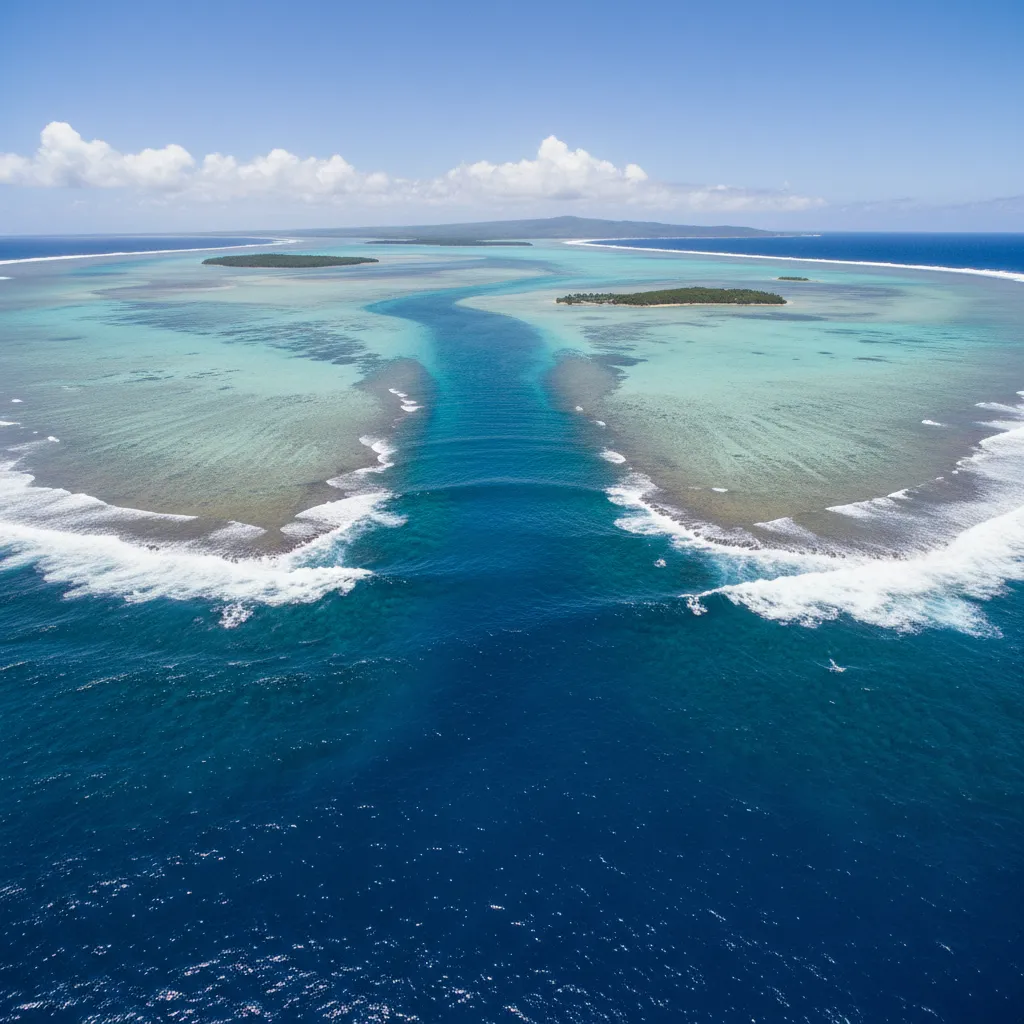
Ouano features a distinct reef pass setup located approximately 3 kilometers offshore, necessitating boat access. The primary surf spots map consists of a high-quality Left and a hollow Right on opposite sides of the pass. These breaks rely on trade wind swells and are best accessed via local surf taxi services from the Ouano Wharf.
For New Zealand surfers looking beyond the crowded line-ups of Raglan or Piha, New Caledonia offers a tantalizingly close tropical escape. Specifically, the Ouano Peninsula—situated about 90 minutes north of Noumea—provides a perfect balance of consistency, power, and accessibility. Unlike the more commercialized zones, Ouano retains a raw, authentic charm that appeals to the adventurous Kiwi spirit. However, surfing here requires logistical planning, particularly regarding reef transport and tides. This guide covers everything from the surf spots map to accommodation logistics.
Understanding the Ouano Surf Spots Map
When visualizing the Ouano surf spots map, it is crucial to understand that you are dealing with an offshore barrier reef system. Unlike beach breaks in New Zealand where you can simply check the waves from the car park, the action at Ouano happens roughly 15 to 20 minutes out to sea by boat. The reef pass is a wide channel allowing water to flush out of the lagoon, creating distinct peaks on either side.
The Left (La Gauche)
The Left is generally considered the main attraction at Ouano. It is a long, walling wave that can handle significant size. On a standard southeast trade swell—common during the winter months when Kiwis often escape the cold—the Left offers a steep drop followed by a workable face. It is less hollow than the Right but offers a longer ride, often compared to a tropical version of Stent Road but with warmer water and sharper coral below. It holds size well up to double overhead. At lower tides, the inside section becomes shallow and famously sharp (