
Converting NZ Dollars to CFP Franc (XPF) requires understanding that the XPF is pegged to the Euro, meaning the rate fluctuates based on the NZD/EUR relationship. For the best value, travelers should avoid exchanging cash in New Zealand and instead withdraw funds directly from ATMs in New Caledonia using a card with low international transaction fees.
Traveling from New Zealand to the French Pacific offers a unique blend of Melanesian culture and French sophistication. However, the currency difference can be a significant hurdle for Kiwi travelers. Unlike the Australian Dollar or US Dollar, the CFP Franc (XPF) is a niche currency with specific banking rules and exchange behaviors. This comprehensive guide will navigate the complexities of the NZ dollars to CFP franc exchange, ensuring you have more money to spend on baguettes, snorkeling, and excursions in Nouméa.
What is the CFP Franc and How Does the Exchange Rate Work?
The CFP Franc (Cours de Franc Pacifique), denoted by the ISO code XPF, is the currency used in the French overseas collectivities of New Caledonia, French Polynesia (Tahiti), and Wallis and Futuna. For a New Zealander, understanding the mechanics of this currency is the first step to financial savvy while abroad.
The most critical factor influencing the NZ dollars to CFP franc rate is the “Euro Peg.” Unlike the NZ Dollar, which floats freely on the global market, the CFP Franc has a fixed exchange rate with the Euro. The rate is set at:
- 1,000 XPF = 8.38 Euros (approx)
- 1 Euro = 119.33 XPF (fixed)
Because of this fixed relationship, the value of your NZ Dollars in Nouméa depends entirely on how the NZ Dollar is performing against the Euro. If the NZ Dollar strengthens against the Euro, you get more XPF. If it weakens, your holiday becomes more expensive. This adds a layer of predictability; if you track the NZD/EUR rates, you effectively track the NZD/XPF rates.
Historical Context and Denominations
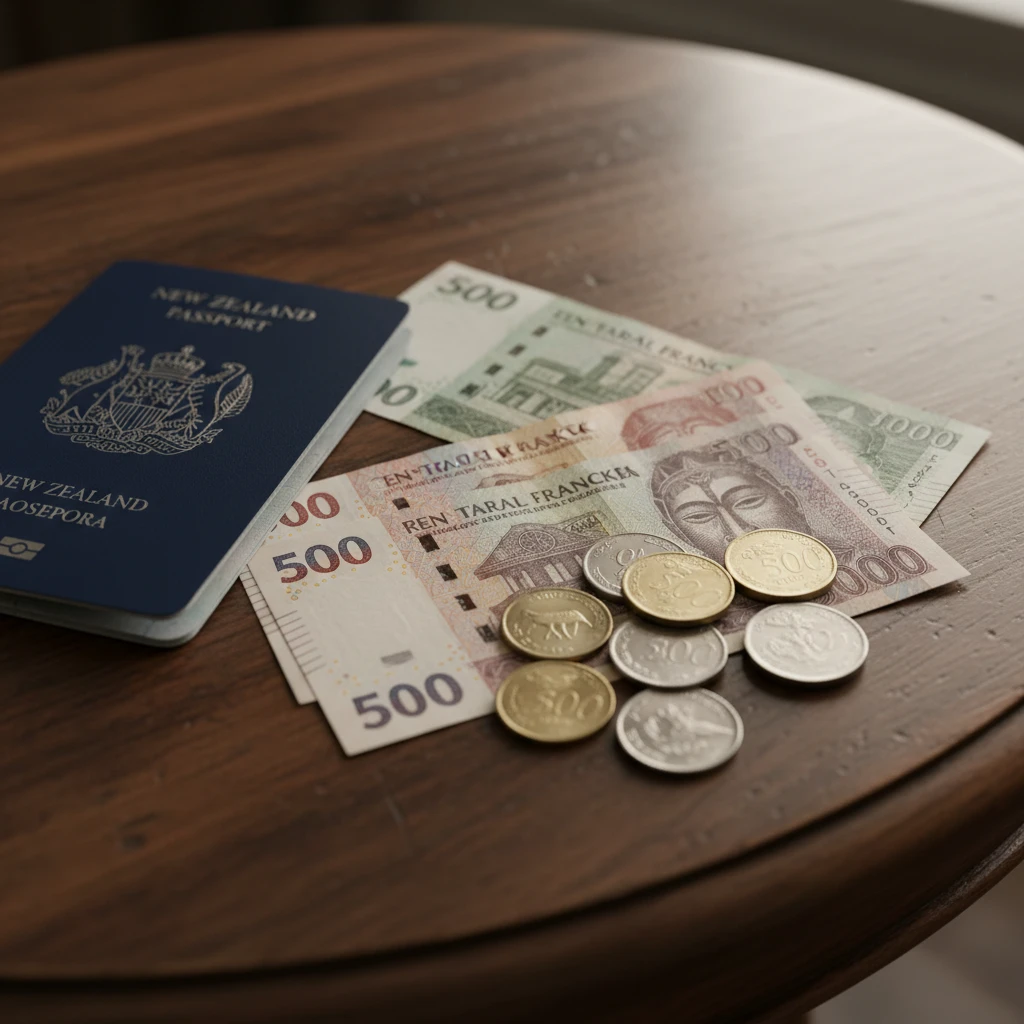
It is also helpful to recognize the currency physically before you arrive. In recent years, the overseas issuing institute (IEOM) introduced new, modern banknotes that are smaller and easier to handle than the old oversized notes. The coins are distinctively heavy and feature local flora and fauna.
Common banknotes include:
- 500 Francs
- 1,000 Francs
- 5,000 Francs
- 10,000 Francs (The highest denomination, roughly equivalent to $140-$150 NZD depending on rates)
Where is the Best Place to Exchange NZ Dollars to CFP Francs?
One of the most common mistakes Kiwi travelers make is panic-buying foreign currency before leaving Auckland, Wellington, or Christchurch. While it feels safer to have cash in hand, it is rarely the most economical choice for this specific currency.
Should You Buy XPF in New Zealand?
Generally, no. Most New Zealand banks and airport exchange kiosks (like Travelex) consider the CFP Franc an “exotic” currency. This means they do not hold large stocks of it, and the “spread” (the difference between the market rate and the rate they sell to you) is significantly wider than for major currencies like USD or GBP.
If you exchange money at Auckland International Airport before departure, you may lose between 10% to 15% of your value compared to the mid-market rate. If you absolutely must carry cash upon arrival, order a small amount (e.g., 5,000 XPF) from your local bank branch a week in advance to cover initial taxi fares, but do not convert your entire travel budget here.
Exchanging at La Tontouta International Airport
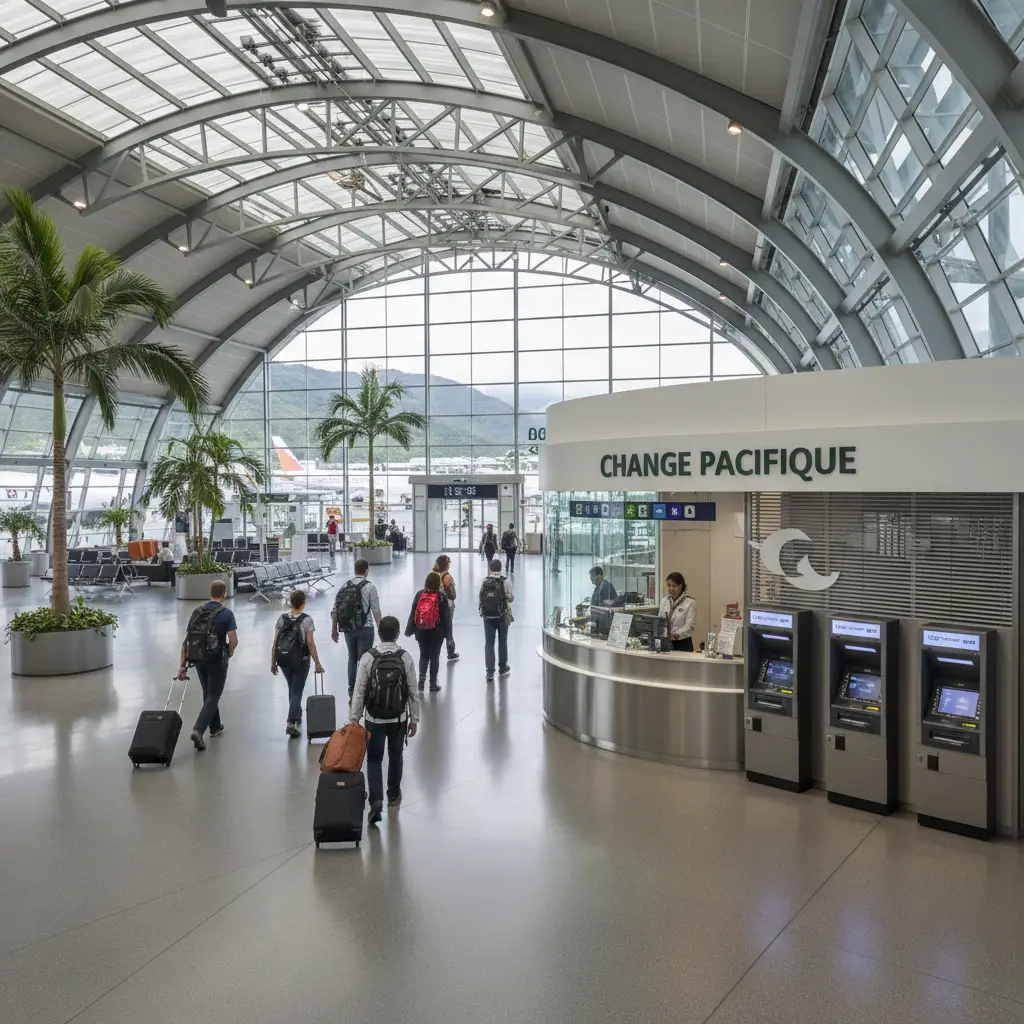
Upon arrival at La Tontouta (New Caledonia’s main international airport), you will find exchange bureaus (BCI – Banque Calédonienne d’Investissement). The rates here are typically better than in New Zealand but worse than in downtown Nouméa banks. The convenience fee is high.
However, the airport does have ATMs. Using an ATM at the airport upon arrival is often the superior strategy, provided your NZ bank card works (which most do).
Banks in Nouméa
If you bring NZD cash to exchange in Nouméa, you can visit local banks such as BNC (Banque de Nouvelle-Calédonie), BCI, or Société Générale. Note that banks in New Caledonia have restricted opening hours compared to NZ. They often close for a long lunch break (often 12:00 PM to 1:30 PM) and may not be open on Saturday afternoons or Mondays.
Pro Tip: Many hotels will exchange money, but their rates are notoriously poor. Only use hotel exchange services in an emergency.
Using NZ Bank Cards and ATMs in New Caledonia
The most efficient method for accessing funds is utilizing the local ATM network. New Caledonia has a modern banking infrastructure, and ATMs (Distributeurs de billets) are widely available in Nouméa and major towns like Bourail and Koné. They become scarcer in the Loyalty Islands (Lifou, Mare, Ouvéa) and Isle of Pines, so stock up on cash before heading to the islands.
Visa vs. Mastercard vs. EFTPOS
Visa and Mastercard are universally accepted. If your NZ bank card has a Visa or Mastercard logo, you will be able to use it at almost all ATMs and point-of-sale terminals in hotels, supermarkets (like Carrefour or Casino), and larger restaurants.
Standard NZ EFTPOS cards (without a chip and Visa/Mastercard functionality) will not work. You must have a debit or credit card.
Understanding the Fees
When you withdraw XPF from an ATM using your NZ card, you are usually hit with two or three fees:
- NZ Bank International Transaction Fee: Usually 2% – 3% of the transaction amount.
- NZ Bank ATM Fee: A flat fee (e.g., $5 NZD) per withdrawal.
- Local ATM Access Fee: Some New Caledonian banks may charge a fee for using a foreign card, though this is less common than in the US or Thailand.
To minimize these costs, Kiwi travelers are increasingly turning to travel cards like Wise (formerly TransferWise) or Revolut. These cards allow you to hold multiple currencies or convert at the mid-market rate with very low fees. While you cannot hold XPF directly in a Wise account (as of late 2023), the auto-conversion fee from NZD balance to XPF cash withdrawal is significantly cheaper than traditional bank rates.

Practical Budgeting: How Far Does the NZ Dollar Go?
New Caledonia is often referred to as the “Paris of the Pacific,” and unfortunately, this nickname extends to the prices. It is generally more expensive than New Zealand. When calculating your NZ dollars to CFP franc requirements, you must account for the high cost of imported goods.
Common Price Benchmarks
To help you budget, here are approximate costs (subject to exchange rate fluctuation):
- Espresso Coffee: 300 – 500 XPF ($4.50 – $7.50 NZD)
- Local Beer (Number One): 600 – 900 XPF in a bar ($9 – $13.50 NZD)
- Baguette from a bakery: 100 – 140 XPF ($1.50 – $2.00 NZD) – This is one of the few things cheaper than in NZ!
- Main Course at a nice restaurant: 2,500 – 4,000 XPF ($37 – $60 NZD)
- Taxi from Airport to Nouméa (50km): 10,000 XPF ($150 NZD) – Take the shuttle bus (navette) instead for around 3,000 XPF.
Because food is expensive, many Kiwi travelers opt to stay in apartment-style accommodation (like the options on Anse Vata) and cook some meals using ingredients from local supermarkets or the Port Moselle Market.

Tipping Culture in Nouméa
Once you have successfully converted your NZ Dollars to CFP Francs, you need to know how to spend them culturally appropriately. A common source of anxiety for travelers is tipping.
Service Compris
In New Caledonia, tipping is not mandatory and is not part of the standard culture. This follows the metropolitan French system.
Restaurant bills typically include “Service Compris” (service included). The price you see on the menu is the price you pay. Staff are paid a living wage and do not rely on tips for their income.
However, the tourism industry has softened this rule slightly. If you receive exceptional service, leaving small change or rounding up the bill is appreciated, though never expected. For example, if a coffee costs 450 XPF and you leave a 500 XPF coin, the server will likely thank you, but they won’t be offended if you wait for your 50 Francs change.
Currency Safety Tips
While New Caledonia is generally safe, petty crime can occur. When carrying your exchanged XPF:
- Don’t carry large wads of 10,000 Franc notes. Break them at a supermarket or hotel reception when possible.
- Use the safe in your hotel room.
- Be aware that smaller vendors in the Loyalty Islands or at the Port Moselle market may not have EFTPOS facilities; cash is king in these areas.
Final Thoughts for the Kiwi Traveler
Getting the best value out of your NZ dollars to CFP franc conversion comes down to preparation. Avoid the high-fee traps of exchanging cash in New Zealand. Instead, rely on the convenience and better rates of ATMs upon arrival in Nouméa. Use a travel-friendly debit card, budget for “European” prices, and enjoy the unique blend of French and Pacific culture without stressing over every transaction.
People Also Ask
Can I use NZ dollars in New Caledonia?
No, NZ Dollars are not legal tender in New Caledonia. You cannot use them in shops, restaurants, or taxis. You must convert your money to CFP Francs (XPF). While some tourist-heavy operators might accept them in an emergency, the exchange rate offered will be extremely poor.
Is it better to exchange money in NZ or New Caledonia?
It is generally better to exchange money in New Caledonia, specifically by using ATMs to withdraw cash. New Zealand banks often charge high fees and offer poor rates for XPF because it is considered a minor currency. Withdrawing cash upon arrival ensures a rate closer to the mid-market rate.
What is the best currency to take to New Caledonia?
The best strategy is to take a Visa or Mastercard debit card to withdraw CFP Francs directly. If you want to carry backup cash to exchange, Euros are the easiest to exchange due to the fixed peg, but US Dollars, Australian Dollars, and NZ Dollars can also be exchanged at banks in Nouméa.
How much is a coffee in Nouméa in NZ dollars?
A standard espresso or long black in a café in Nouméa typically costs between 300 and 500 XPF. Depending on the exchange rate, this equates to approximately $4.50 to $7.50 NZD. Prices in tourist hubs like Anse Vata or Baie des Citrons will be at the higher end.
Do New Caledonia ATMs accept NZ cards?
Yes, ATMs in New Caledonia accept New Zealand bank cards provided they have a Visa, Mastercard, Maestro, or Cirrus symbol. Standard EFTPOS-only cards (non-chip, non-debit) will not work. Always notify your bank of your travel plans to prevent your card from being blocked for suspicious activity.
Is the CFP Franc pegged to the Euro?
Yes, the CFP Franc (XPF) is pegged to the Euro at a fixed rate of 1,000 XPF = 8.38 Euros. This provides economic stability for the French Pacific territories. Consequently, the XPF fluctuates against the NZ Dollar in exact correlation with the Euro’s fluctuation against the NZ Dollar.