
New Caledonia is the ultimate close-to-home exotic escape for New Zealanders, located just under three hours from Auckland. Offering a unique blend of French sophistication and Melanesian tradition, this South Pacific archipelago features the world’s largest lagoon, gourmet cuisine, and diverse landscapes ranging from arid plains to tropical pine forests.
Why New Caledonia is the Perfect Escape for Kiwis
For New Zealanders accustomed to the rugged beauty of Aotearoa, New Caledonia offers a fascinating mirror image with a distinct European twist. It is often described as “Paris in the Pacific,” but that moniker only scratches the surface. The appeal for the NZ market lies in the incredible contrast: you can board a plane in Auckland and, in less time than it takes to fly to Queenstown, land in a territory where you pay in Francs, drive on the right, and eat authentic croissants.
Unlike other Pacific neighbors like Fiji or Rarotonga, which are heavily geared towards resort-style relaxation, New Caledonia invites exploration. It is a developed territory with infrastructure comparable to Europe, meaning well-maintained roads and high standards of healthcare, yet it retains a wild, untamed heart. For Kiwis who love the outdoors, the biodiversity is staggering. The lagoon is a UNESCO World Heritage site, teeming with marine life, while the interior of the main island offers red-earth hiking trails that feel prehistoric.

Overview of Regions: Grande Terre, Isle of Pines, Loyalty Islands
New Caledonia is an archipelago, but most travelers will focus on three distinct areas. Understanding the geography is crucial for planning an itinerary that balances relaxation with adventure.
Grande Terre: The Mainland
Grande Terre is the third largest island in the Pacific (after Papua New Guinea and New Zealand). It is long and narrow, divided by a central mountain range.
- Nouméa: The capital is cosmopolitan and vibrant. It is the culinary hub, featuring French bistros, luxury boutiques, and the stunning Baie des Citrons. It serves as the base for most arrivals.
- The West Coast: This is “Cowboy Country.” The landscape here is arid, flat, and dominated by livestock farming. It is home to the Broussards (bushmen) and offers a stark contrast to the tropical east.
- The East Coast: Lush, tropical, and humid. The East Coast is the heart of Kanak culture. The scenery here is dramatic, with waterfalls cascading from high mountains directly into the sea. Driving the coastal roads here is reminiscent of the road to Hana in Maui.
- The Great South: Known for its red soil (rich in nickel) and the Blue River Provincial Park. It looks almost Martian and offers some of the best hiking and kayaking on the mainland.
The Isle of Pines (L’Île-des-Pins)
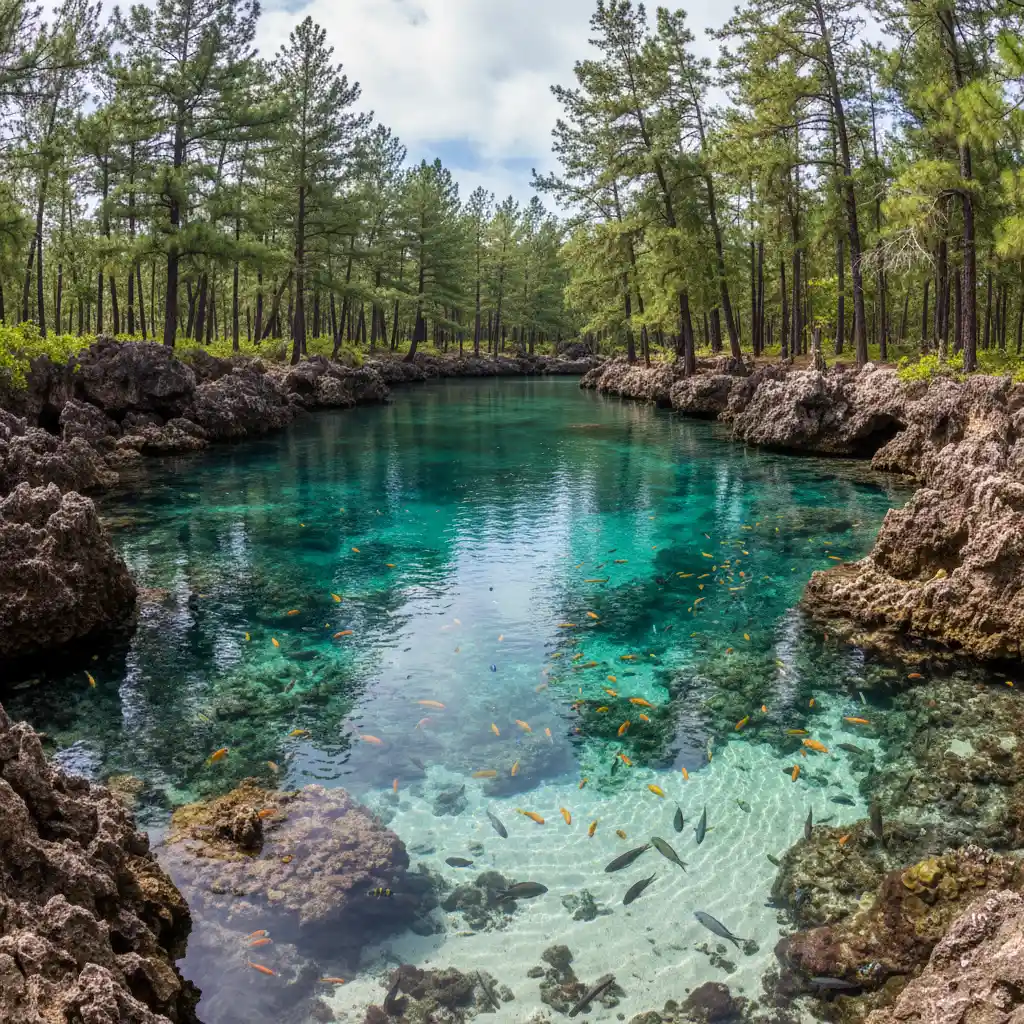
Often called “The Closest Island to Paradise,” the Isle of Pines is famous for its tall, columnar Araucaria pines that line the white sandy bays. Located a short 20-minute flight or 2.5-hour ferry ride from Nouméa, it is essential for any first-time visitor. The natural swimming pool in Oro Bay is the headline attraction—a natural aquarium separated from the ocean by a coral reef.
The Loyalty Islands
Further east lie the Loyalty Islands: Lifou, Maré, and Ouvéa. These are uplifted coral atolls, meaning they lack the rivers and mountains of Grande Terre but boast spectacular beaches and caves.
- Ouvéa: Famous for the 25km-long Fayaoué Beach, a continuous stretch of blindingly white sand.
- Lifou: The largest and most populated, offering a mix of cliffs, beaches, and vanilla plantations.
- Maré: The wildest of the three, known for its rugged scenery, avocado festivals, and deep “trou de bone” (sinkholes).
Best Time to Visit: Hiking vs. Snorkeling
New Caledonia enjoys a semi-tropical climate, but seasons are distinct enough to impact your holiday plans. As a New Zealander, you are used to changeable weather, but the tropical humidity is a different factor to consider.
Shoulder Season (April-May & September-November)
Verdict: Best Overall.
These months offer the “Goldilocks” weather. Temperatures hover around 24°C to 27°C, humidity is manageable, and the trade winds provide a cooling breeze. This is the ideal time for combining hiking in the Great South with swimming in the Loyalty Islands.
Cool Season (June to August)
Verdict: Best for Hiking and Active Travel.
While locals might wear puffer jackets, Kiwis will find the 20°C–23°C days pleasant. It is too cool for all-day sunbathing for some, but perfect for tackling the GR NC1 hiking trail or exploring the capital without breaking a sweat. The water is cooler, so bring a wetsuit if you plan on extended snorkeling sessions.
Hot Season (December to March)
Verdict: Best for Heat Lovers (with Caution).
Temperatures climb above 30°C with high humidity. This is also cyclone season. While resorts are cheaper and the water is bath-warm (perfect for divers), the risk of tropical storms and heavy rain is higher. If you visit during this time, travel insurance is non-negotiable.
Getting Around: Self-Drive Tips and Island Hopping Logistics
Transport in New Caledonia is reliable, but it requires planning. Unlike Southeast Asia, you cannot simply hail a cheap tuk-tuk.
Driving in New Caledonia
For New Zealanders, the biggest adjustment is driving on the right-hand side of the road. However, because the roads are generally wide and traffic outside Nouméa is light, the transition is usually smooth.
Critical Driving Rules:
- Priority to the Right (Priorité à droite): This is the most important rule. Unless marked otherwise, you must give way to traffic coming from your right at intersections. This applies even if you are on a main road and they are exiting a side street, although major highways usually have priority signage.
- Speed Limits: Generally 110km/h on highways, 50km/h in towns, and 30km/h in school zones. Police use radar frequently.
- Manual Transmission: Many rental cars are manual (stick shift). If you require an automatic, book well in advance.
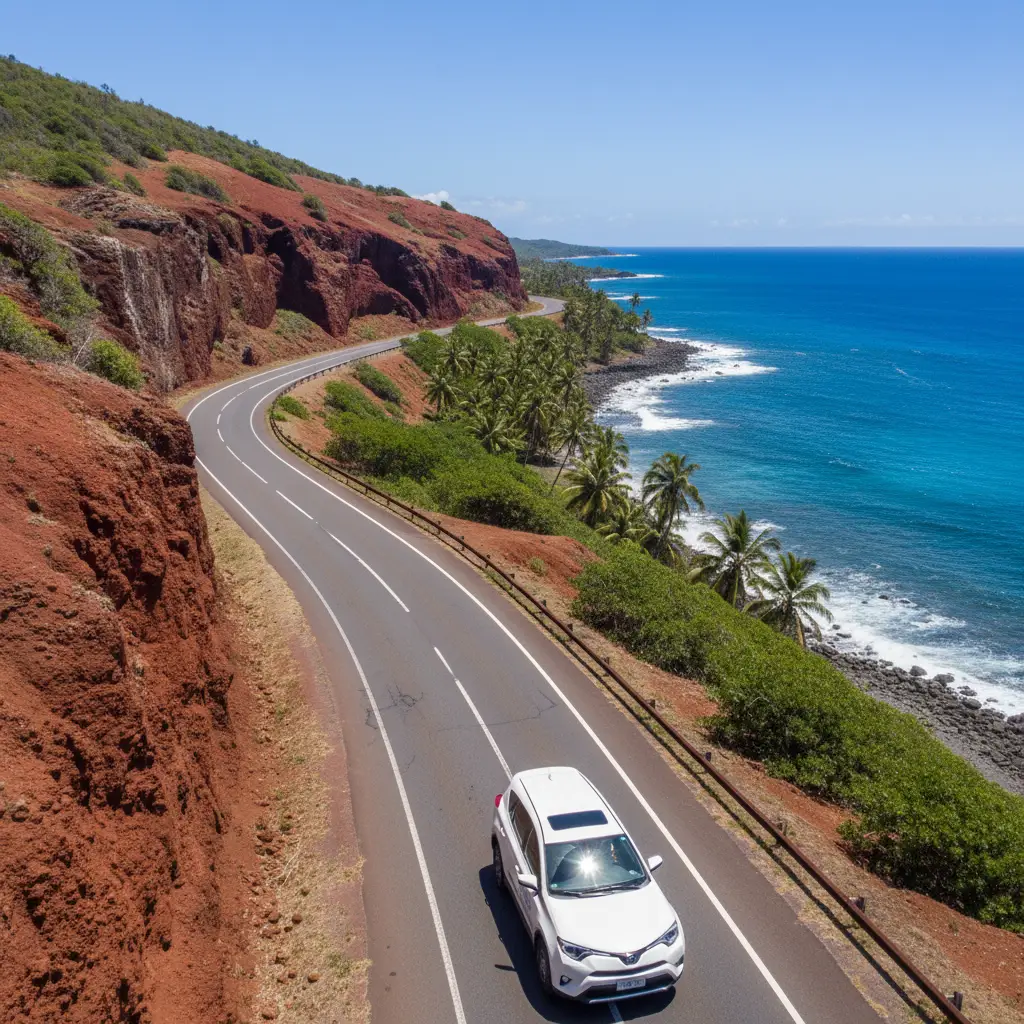
- Road Conditions: Main roads are sealed and excellent. However, exploring the “loop” roads on the East Coast or mountain passes may involve gravel. A compact SUV is recommended over a small hatchback for comfort.
Domestic Flights and Ferries
Air Calédonie: This is the domestic carrier (distinct from Aircalin, the international carrier). Flights from Nouméa-Magenta airport (a smaller city airport, not the international Tontouta airport) to the islands take 20–40 minutes. Tip: Baggage allowances are stricter on domestic flights (often 10kg or 20kg depending on ticket class). If you are bringing dive gear, pre-purchase extra allowance.
Betico Ferry: The “Betico” is a high-speed catamaran servicing the Isle of Pines and Loyalty Islands. It is cheaper than flying and offers a scenic journey, but it can be rough. If you are prone to seasickness, take medication or opt for the flight.
Cultural Etiquette and Kanak Traditions
New Caledonia is a unique blend of French administration and Kanak indigenous culture. Respecting local customs will enrich your experience and open doors to genuine interactions.
Understanding “La Coutume” (Custom)
If you venture outside of hotels and into tribal areas (tribus), or if you wish to visit specific sites located on clan land, you must perform “La Coutume.” This is a gesture of respect and a request for hospitality.
How to do it: You present a small gift to the chief or the representative of the tribe. Traditionally, this includes a piece of manou (fabric), a small amount of money (500-1000 XPF), and perhaps a pack of tobacco. You explain who you are and that you wish to visit their land respectfully. In return, your host will welcome you, placing you under their protection.
Language
French is the official language. While English is spoken in major hotels, it is less common in rural areas and small shops. Kiwis are encouraged to learn a few basics. A simple “Bonjour” (Hello) when entering a shop and “Merci” (Thank you) goes a long way. The locals appreciate the effort, even if your accent is heavy.
Dress Code and Manners
- Modesty: While topless sunbathing might be seen on some Nouméa beaches (due to French influence), it is strictly offensive in tribal areas and on the Loyalty Islands. Always wear a t-shirt and shorts when walking through villages. Swimwear is for the beach only.
- Sacred Sites: Many totems, rocks, and banyan trees are sacred (tabu). Never touch or photograph them without asking permission first.

People Also Ask
Do New Zealand citizens need a visa for New Caledonia?
No. New Zealand passport holders do not need a visa for tourist stays of up to three months. You must have a passport valid for at least three months beyond your intended departure date and proof of onward travel.
What currency is used in New Caledonia?
The currency is the Pacific Franc (XPF or CFP). It is pegged to the Euro (1 Euro = 119.33 XPF). It is different from the Tahitian Franc, though they have the same value. Credit cards are widely accepted in Nouméa, but cash is essential for tribal areas and smaller islands.
Is New Caledonia expensive for New Zealanders?
Yes, generally. Costs are comparable to New Zealand or slightly higher, particularly for food and accommodation. It is not a budget destination like Bali. However, you can save money by shopping at supermarkets (French wine and cheese are reasonably priced) and staying in gites (homestays).
Can I use my NZ driver’s license in New Caledonia?
Yes, a full New Zealand driver’s license is accepted. You do not strictly need an International Driving Permit if your license is in English, but it is always a good backup to have. Remember to drive on the right side of the road.
Are there sharks in New Caledonia?
Yes, sharks are present in the lagoon. While attacks are rare, there have been incidents. Authorities may close beaches if sharks are sighted. Always swim in designated areas, avoid swimming at dusk or dawn, and adhere to local warnings and flag systems at beaches.
What is the flight time from Auckland to Nouméa?
The flight time is approximately 2 hours and 50 minutes to 3 hours. Both Air New Zealand and Aircalin operate direct flights between Auckland International Airport and La Tontouta International Airport.