Isle of Pines snorkeling spots DIY involves accessing premier locations like Kanumera Bay and the Piscine Naturelle independently. Travelers can walk 10 minutes from the Kuto tender wharf to snorkel Kanumera’s coral reefs or hire local taxi boats to reach the Natural Pool, bypassing expensive cruise excursions for a personalized underwater experience.
For New Zealand travelers heading to the tropical paradise of New Caledonia on a cruise, the allure of the Loyalty Islands and the Isle of Pines is undeniable. However, the cost of shore excursions offered by major cruise lines can be prohibitive. Fortunately, both Lifou and the Isle of Pines are incredibly accessible for the independent traveler. With a bit of planning, you can experience world-class snorkeling, pristine beaches, and local culture for a fraction of the price.
What are the best Isle of Pines snorkeling spots DIY?
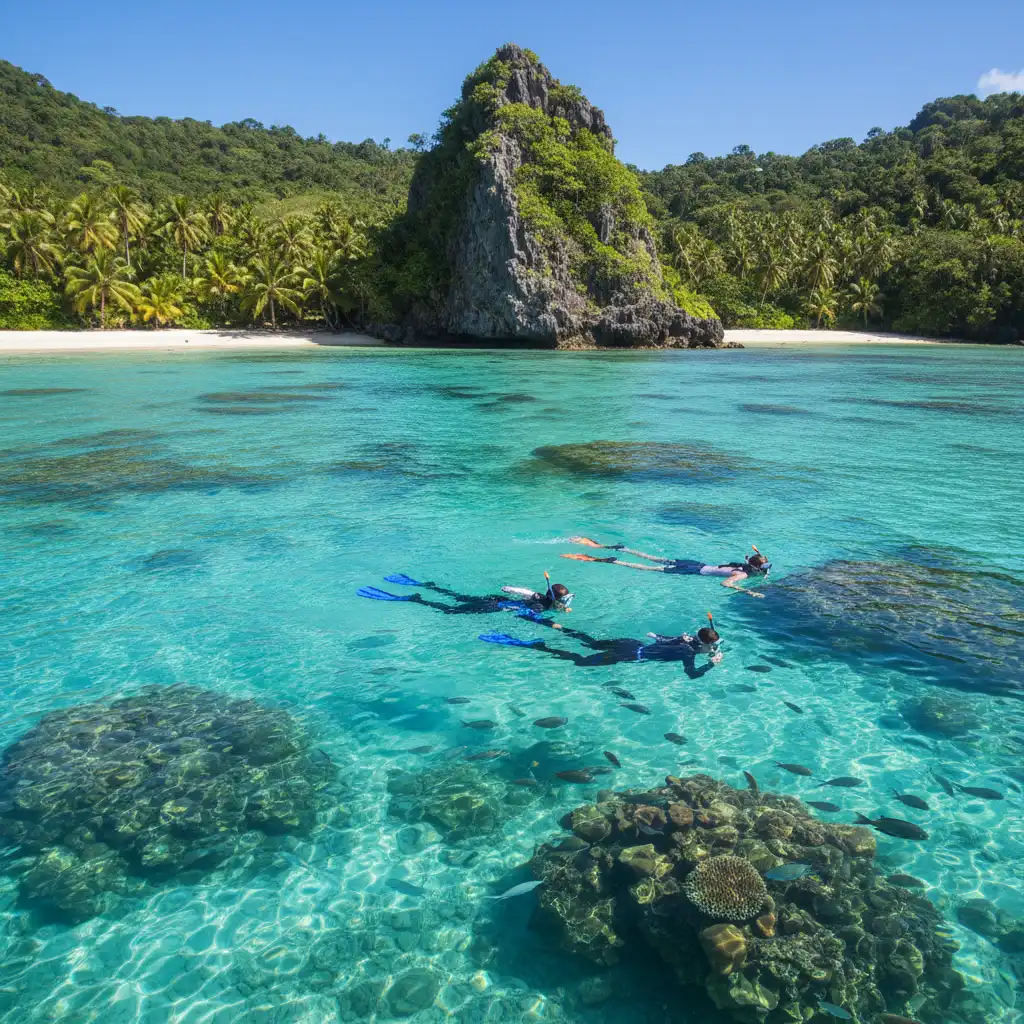
When your cruise ship drops anchor at Kuto Bay, you are stepping onto one of the most beautiful islands in the Pacific. For those seeking Isle of Pines snorkeling spots DIY, you have two primary options: the accessible Kanumera Bay and the famous, albeit further afield, Piscine Naturelle (Natural Pool).
Choosing to explore these areas independently allows you to escape the regimented schedule of a tour group. You can spend as long as you like floating above the coral, take photos without a crowd, and engage with local vendors directly. The underwater visibility in the Isle of Pines is legendary, often exceeding 20 meters, revealing a kaleidoscope of tropical fish, sea snakes, and vibrant coral gardens.
How to walk to Kanumera Bay from the Tender Wharf
Kanumera Bay is arguably the best value DIY snorkeling spot in the South Pacific. It requires zero transport costs and offers exceptional marine biodiversity.
The Route
Upon disembarking your tender boat at the Kuto wharf, you will find yourself on a long stretch of white sand (Kuto Beach). To reach Kanumera Bay:
- Walk off the wharf and head straight towards the road.
- Turn left and follow the road that runs parallel to Kuto Beach.
- After approximately 300 meters, you will see a narrow isthmus of land separating Kuto Bay (on your left) and Kanumera Bay (on your right).
- Cross through the trees or follow the road for another 2 minutes.
- You will arrive at the stunning Kanumera Bay. Total walking time is less than 10 minutes.
The Sacred Rock (Rocher de Kanumera)
The centerpiece of Kanumera Bay is a large limestone rock connected to the beach by a sandbar. Important Cultural Note: This rock is sacred to the local Kanak people. While it is tempting to climb it for a photo, it is strictly forbidden and considered disrespectful. You may snorkel around the rock, but do not step on it.
Snorkeling Conditions
The best snorkeling is found around the base of the sacred rock. Here, the coral is vibrant, and the fish are accustomed to humans. Expect to see Parrotfish, Moorish Idols, and the banded sea krait (a docile sea snake). The water is generally calm, making it safe for children and beginners, provided you wear reef shoes to protect against sharp coral and stonefish.
Is the Natural Pool doable on a cruise stop?
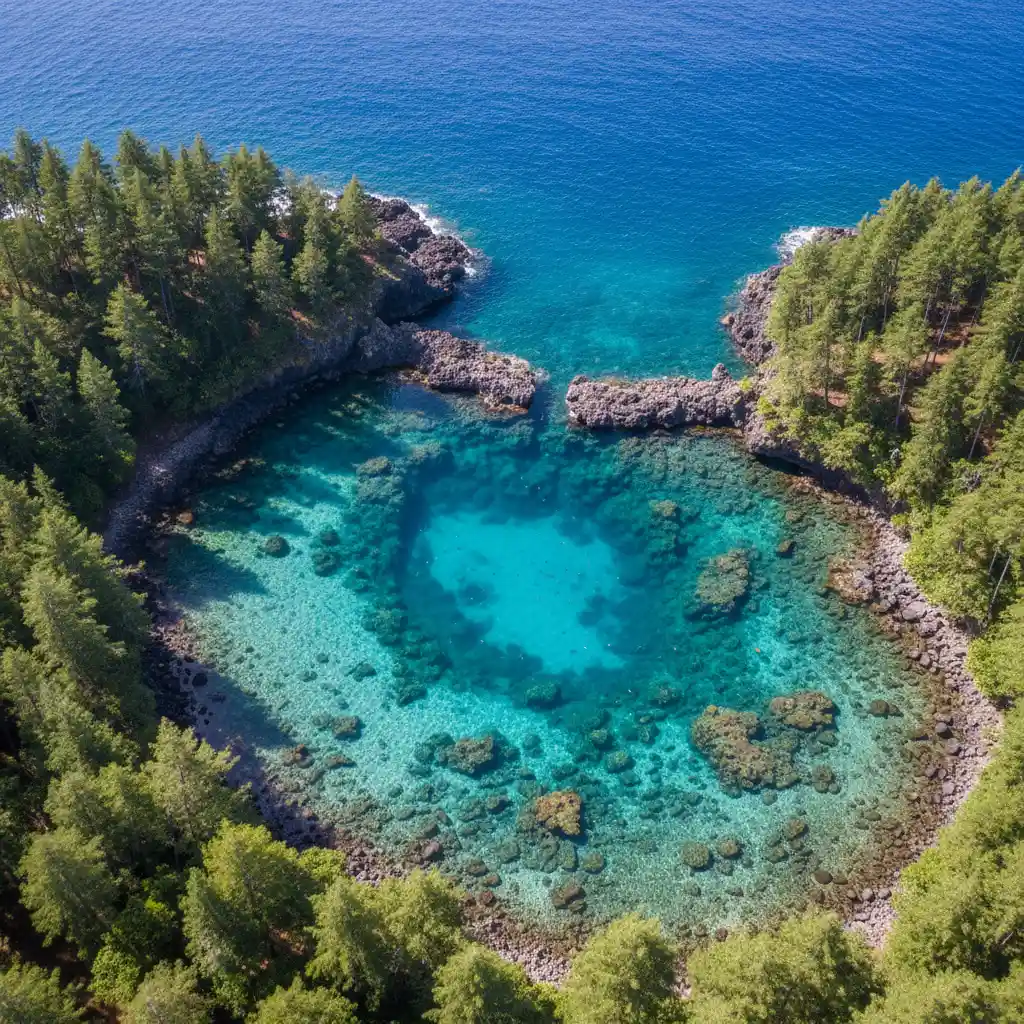
The Piscine Naturelle (Natural Pool) is the poster child of New Caledonia tourism. It is a natural aquarium separated from the ocean by a coral reef, resulting in crystal clear, calm water teeming with fish. Many cruisers worry that it is too far to do DIY, but it is entirely possible if you manage your time well.
Option 1: Local Shuttle Vans
As you exit the wharf area, you will see local drivers offering transfers. A return trip to the drop-off point for the Natural Pool usually costs between 2,000 and 3,000 XPF (approx. $30-$45 NZD). The drive takes about 45 minutes each way.
Once dropped off, you must walk approximately 15-20 minutes along a jungle path and wade through a shallow river (La Rivière de Sable) to reach the pool. Ensure you arrange a firm pick-up time with your driver to get back to the ship—aim to be back at least 90 minutes before the last tender.
Option 2: Traditional Outrigger (Pirogue)
This is the scenic route but requires pre-booking or catching an early operator at St. Joseph’s Bay. It involves a sailing trip through Upi Bay followed by a walk to the pool. For a strict cruise schedule, the shuttle van is the safer DIY bet to ensure you don’t miss the boat.
Entry Fees
Access to the Natural Pool is not free. There is a customary entry fee of roughly 200-500 XPF payable in cash at the entrance to the path. Always carry small denominations of Pacific Francs.
Lifou DIY: Walking to Jinek Bay Marine Reserve
Moving north to the Loyalty Islands, Lifou offers a different but equally spectacular experience. The ship anchors at Easo, and the primary DIY attraction is the Jinek Bay Marine Reserve.
The Walk from Easo
Jinek Bay is located on the opposite side of the small peninsula from where the tenders land. The walk is straightforward:
- From the wharf, walk up the hill past the small market stalls.
- Follow the road as it curves past the Notre Dame de Lourdes church path (you can visit the church later for a view).
- Continue on the road for about 10-15 minutes.
- You will see signs for Jinek Bay on your left. A wooden staircase leads down to the water.
The total walk is about 15-20 minutes on paved roads. It can be hot, so bring water and a hat.
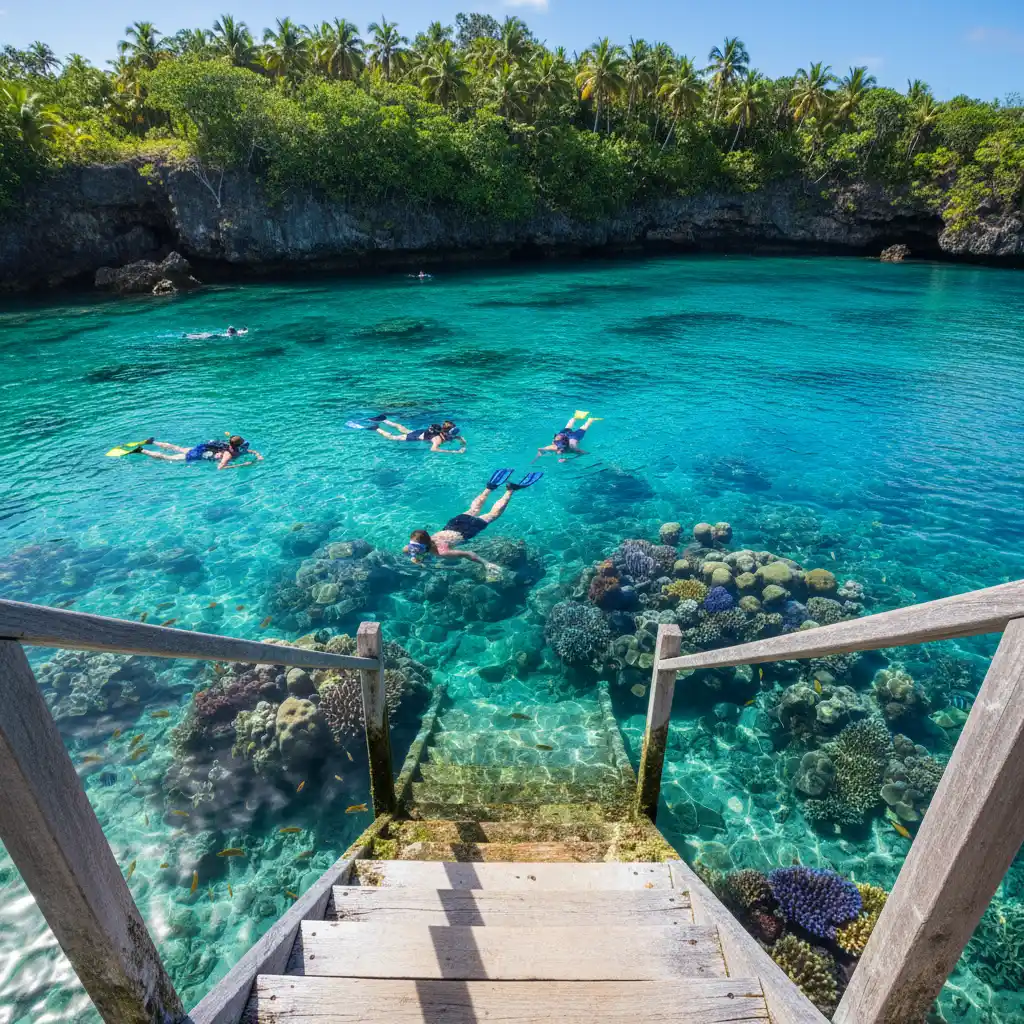
Understanding Jinek Bay Entry Fees and Passes
In recent years, to protect the coral from over-tourism, the local tribe has implemented a pass system for Jinek Bay. This is a critical detail for DIY travelers.
The Pass System
You cannot simply jump in the water anymore. You must purchase a pass, usually costing around $15-$20 NZD (payable in XPF or sometimes AUD/NZD depending on the vendor). The number of snorkelers allowed in the water at one time is capped.
Pro Tip: Head to Jinek Bay immediately upon disembarking. Passes are sold on a first-come, first-served basis. If you wait until the afternoon, they may be sold out. The pass grants you access to the wooden platforms and ladders, which protect the coral from being trampled.
Alternative: Luengoni Beach
If Jinek is full, you can negotiate with a local taxi driver to take you to Luengoni Beach on the south side. It has some of the whitest sand in the world and decent snorkeling, though it requires a 20-minute drive and a fare negotiation.
Local Food Stalls and Currency Tips for Kiwis
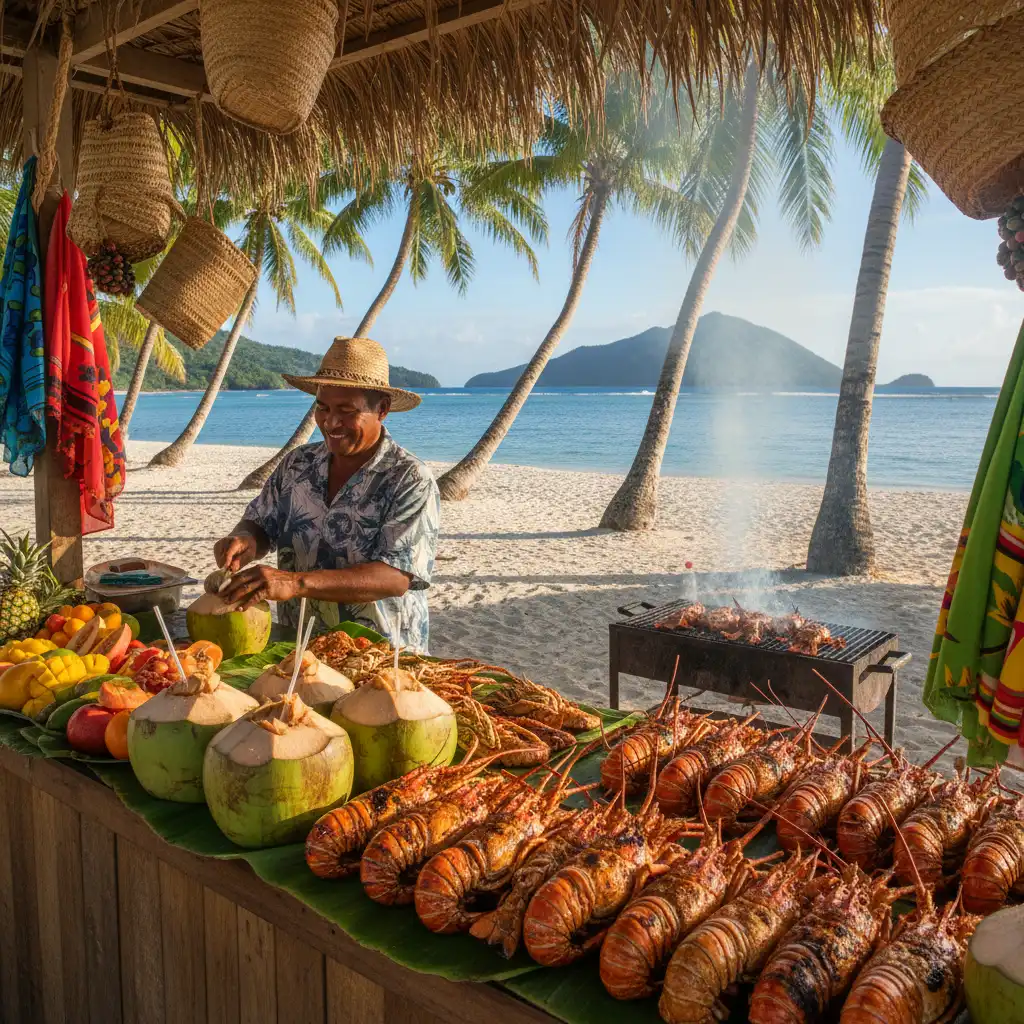
Part of the DIY charm is eating local. Both Lifou and Isle of Pines have market stalls set up near the tender wharves specifically for cruise ship days.
What to Eat
- Isle of Pines (Kuto): Look for stalls selling Bougna (a traditional dish of yams, taro, and chicken/fish wrapped in banana leaves), though this often requires pre-ordering. More commonly, you will find baguettes filled with chicken or steak, grilled lobster (expensive but delicious), and fresh coconuts.
- Lifou (Easo): The market at the base of the wharf offers fresh fruit, skewers, and island fries.
Currency Advice for New Zealanders
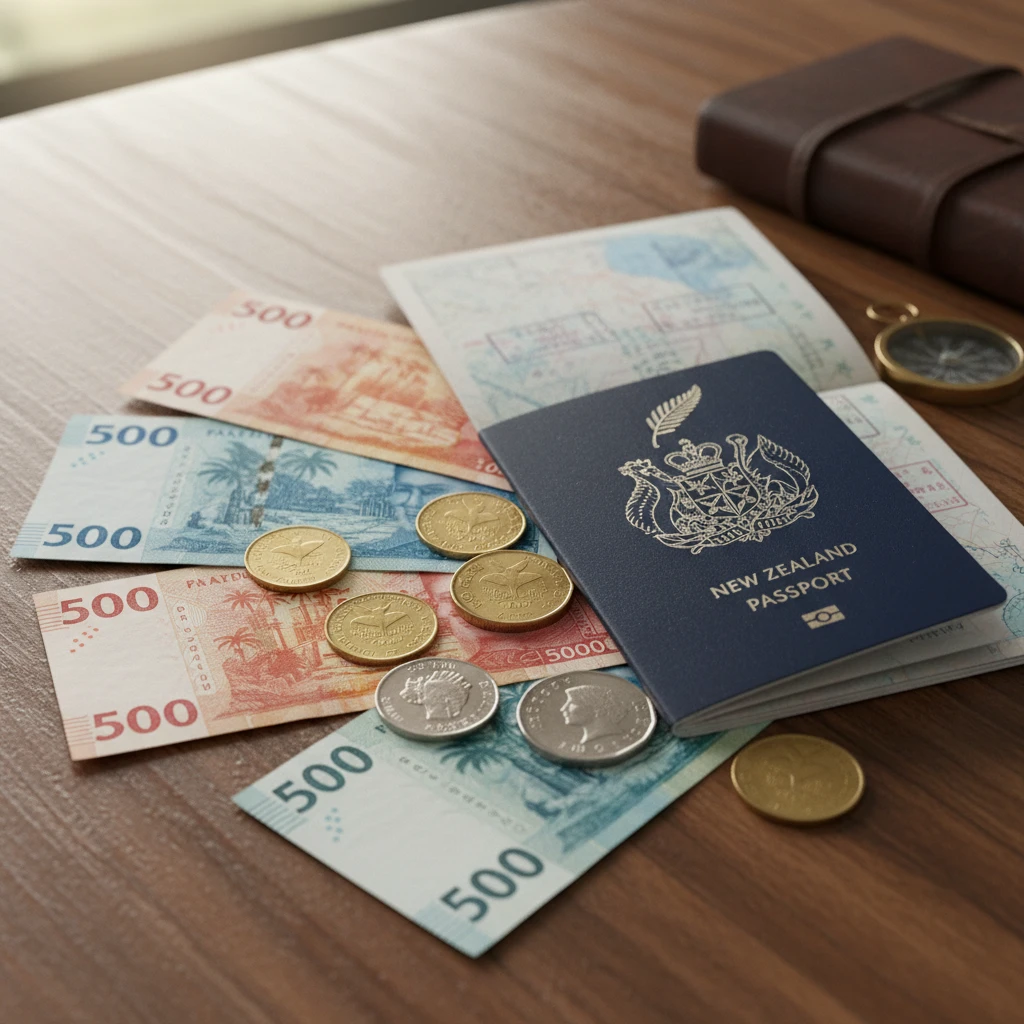
The currency is the Pacific Franc (XPF or CFP). While some stalls accept AUD or USD, the exchange rate they offer will be poor. They rarely accept NZD cash.
Recommendation: Withdraw XPF from an ATM in Noumea if that is your first port, or exchange currency in New Zealand before you leave. There are no ATMs near the beaches in Isle of Pines or the immediate wharf area of Lifou. Cash is King for DIY travel here.
Essential DIY Packing List
To successfully execute a DIY snorkeling day, you need to be self-sufficient. Cruise ships provide towels, but you should bring the following:
- Reef Shoes: Essential. Both Kanumera and Jinek have sharp coral and rock entry points.
- Own Snorkel Gear: While you can rent gear, it is expensive and hygiene can be questionable. Bringing your own mask and tube ensures a better fit.
- Reef-Safe Sunscreen: New Caledonia is protective of its lagoon. Use biodegradable sunscreen to avoid damaging the coral.
- Waterproof Phone Case: For keeping your cash and sea pass dry while you swim.
By following this guide, you can enjoy the majestic underwater world of New Caledonia on your own terms, saving money while gaining a more authentic connection to the islands.
How much is the ferry to Isle of Pines from Noumea?
The Betico 2 ferry runs from Noumea to Isle of Pines. Tickets generally cost between 5,000 and 9,000 XPF one way, depending on the class of seat. The journey takes about 2.5 hours. However, most cruise passengers arrive directly at the island via their ship.
Do I need a visa for New Caledonia from New Zealand?
New Zealand passport holders do not need a visa for short tourist stays (up to 3 months) in New Caledonia. Ensure your passport has at least 3 months of validity past your departure date.
Is it safe to snorkel alone in Isle of Pines?
Generally, yes, especially in Kanumera Bay where the water is calm and shallow. However, always swim with a buddy if possible, be aware of currents near the channel edges, and watch out for sea snakes (which are venomous but very docile).
Can I use my credit card at Jinek Bay?
It is very unlikely. The pass system and local stalls usually operate on a cash-only basis (XPF). Always carry cash when venturing away from the main cruise terminal shops.
What is the best time of year to snorkel in New Caledonia?
The best time is during the warmer months from October to May. The water is warmest (24-28°C) in February and March. The cooler months (June-August) are still swimmable but a wetsuit top is recommended.
Are there sharks in Isle of Pines?
Yes, reef sharks are common in New Caledonia’s lagoon. They are typically Blacktip or Whitetip reef sharks and are generally not aggressive toward snorkelers. They are a sign of a healthy ecosystem.