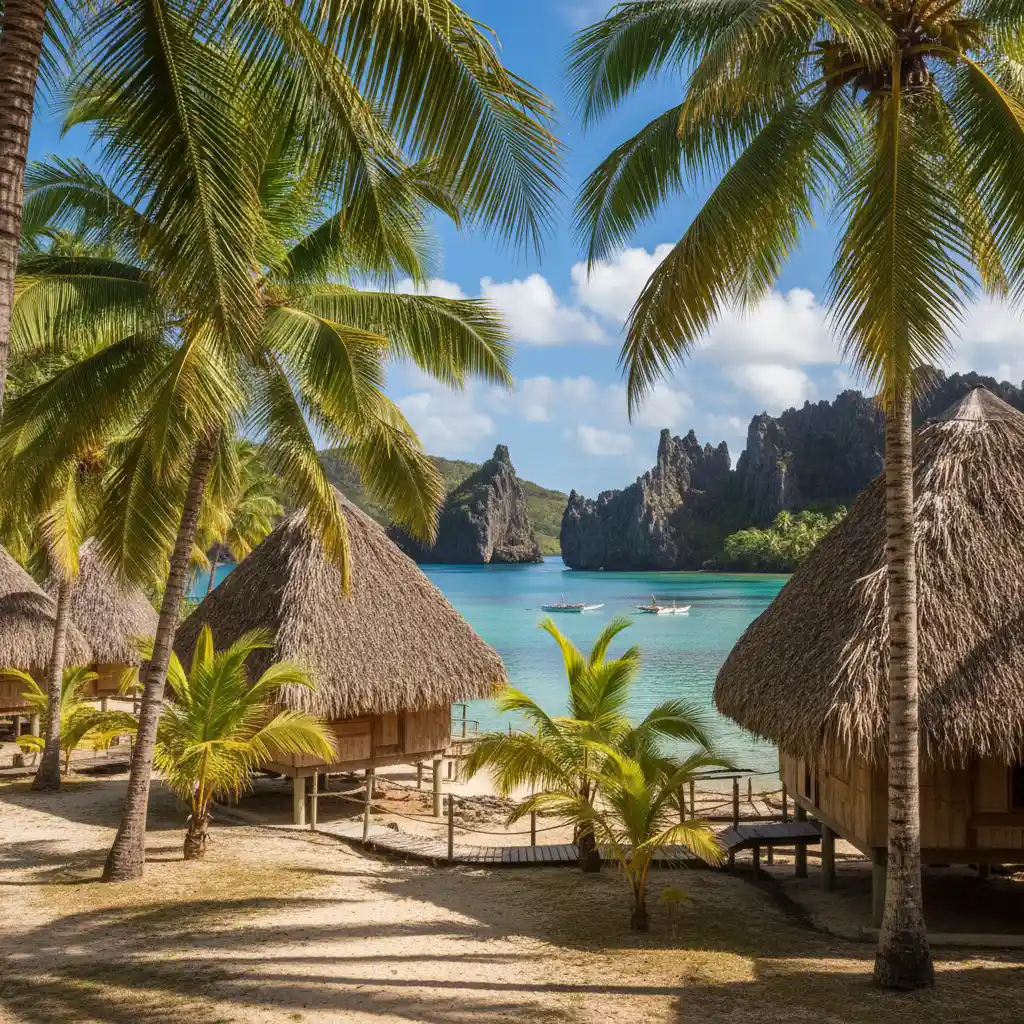
When looking for what to see in Hienghène, the primary attractions are the dramatic limestone formations known as the Brooding Hen and the Sphinx. Visitors should also explore the towering Linderalique Rocks via kayak, engage with Kanak history at the Goa Ma Bwarhat Cultural Centre, and visit the local market for authentic produce and crafts.
Located on the rugged North East Coast of New Caledonia, Hienghène is often cited as the visual and cultural jewel of the Grande Terre. For New Zealand travellers seeking an experience far removed from the bustling streets of Nouméa, this region offers a prehistoric landscape where black limestone cliffs plunge into an emerald lagoon. It is a place where nature and Kanak tradition are inextricably intertwined.
The Brooding Hen and The Sphinx
The most iconic answer to “what to see in Hienghène” is undoubtedly the pair of rock formations guarding the bay. These natural sculptures are not merely tourist photo opportunities; they are significant landmarks deeply rooted in local mythology.

What is the Brooding Hen?
The Brooding Hen (Poule Couveuse) is a massive limestone formation rising out of the bay that, from specific angles, bears an uncanny resemblance to a hen sitting on her nest. The best vantage point is the Belvedere, a purpose-built lookout located just south of the village on the main road. From here, the silhouette is unmistakable. The geological composition is black limestone, which contrasts sharply with the vibrant blues of the Hienghène river mouth and the surrounding lagoon.
Locating the Sphinx
Directly opposite the Hen, on the other side of the bay, lies the Sphinx. This formation requires a bit more imagination but is equally impressive. It appears as a guardian figure looking out towards the open ocean. Together, these two rocks create a dramatic gateway to the village. For photographers, the best time to visit the Belvedere is mid-morning when the sun illuminates the face of the rocks, or at sunset when the silhouettes become stark against a purple sky.
The Linderalique Rocks: A Geological Marvel
While the Hen gets the fame, the Linderalique Rocks (Falaises de Lindéralique) provide the scale. These are a series of sharp, jagged limestone cliffs that shoot vertically out of the water, reaching heights of up to 60 metres. They act as a fortress wall separating the lagoon from the dense tropical vegetation of the mainland.

How to best experience the Linderalique Rocks?
Viewing these rocks from the road offers a panoramic perspective, but the most immersive way to see them is from the water. The cliffs are riddled with caves and grottos that are inaccessible by land. Several operators in Hienghène offer boat tours or kayak rentals. Paddling silently at the base of these monolithic black walls allows you to appreciate the sheer silence and majesty of the area. The water here is often calm, protected by the reef, making it safe for families and novice kayakers.
The geology here dates back to the Eocene period. The erosion caused by rain and sea spray over millions of years has carved the limestone into razor-sharp pinnacles, known locally as “tsingy” (similar to formations found in Madagascar). This distinctive landscape is unique to this specific region of New Caledonia.
Goa Ma Bwarhat Cultural Centre
Hienghène is not just a geological wonder; it is a stronghold of Kanak culture. To truly understand the region, a visit to the Goa Ma Bwarhat Cultural Centre is essential. Located in the heart of the village, this centre serves as a bridge between the local tribes and visitors.
What can visitors learn at the Cultural Centre?
The centre is a hub for artistic expression and cultural preservation. Here, you will find exhibitions of traditional Kanak sculptures, totems, and paintings. It is an excellent place to learn about the “Coutume” (customary gesture), a vital protocol in Kanak society involving the exchange of gifts (usually fabric and tobacco) to show respect to the tribal chief.
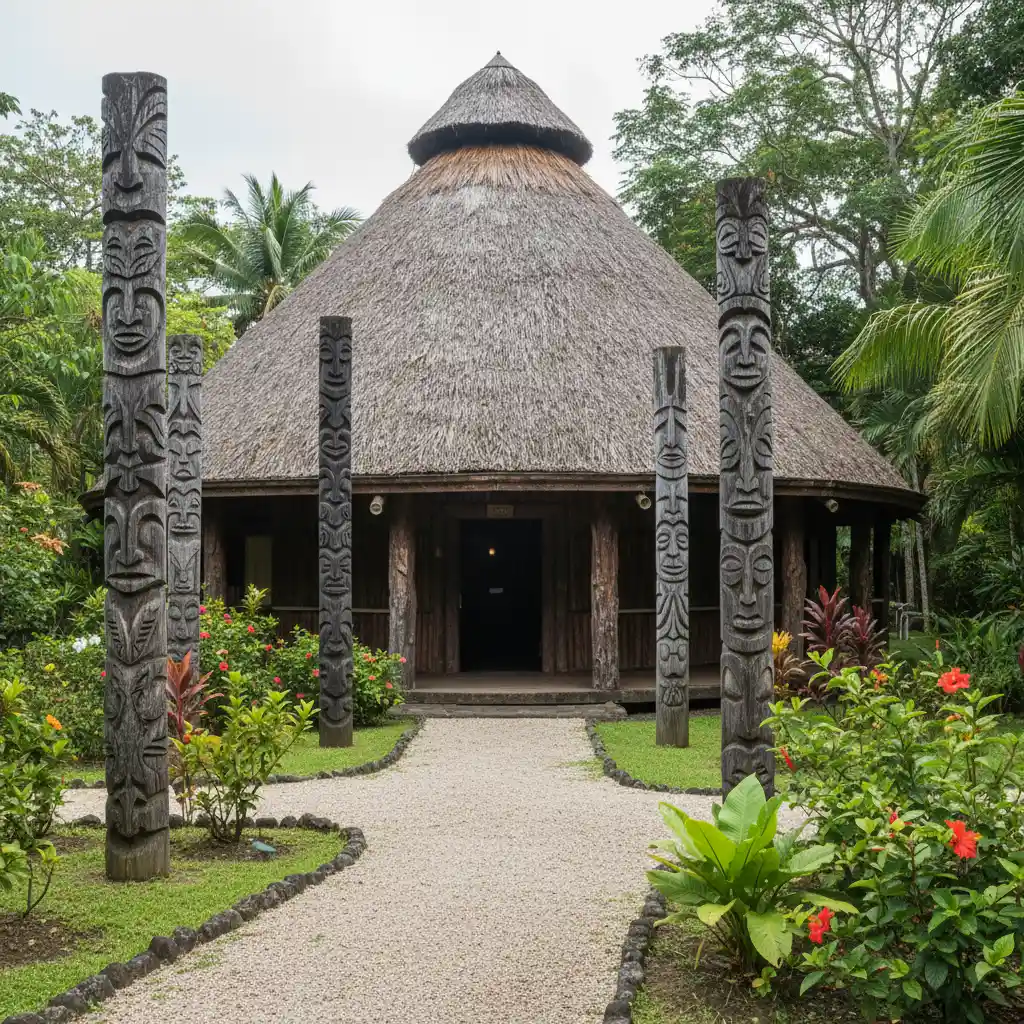
The centre frequently hosts workshops where you can watch local artisans carving wood or weaving pandanus leaves. Engaging with the staff here provides context to the landscape you are exploring; for the Kanak people, every rock, river, and mountain in Hienghène has a name and a legend attached to it. The centre also acts as a tourist office of sorts, providing information on which tribes welcome visitors for homestays or guided hikes.
Visiting the Local Market
For a taste of daily life, the Hienghène market is a vibrant stop. While smaller than the markets in Nouméa, it is far more authentic and focused on local sustenance rather than souvenirs.
When is the best time to visit the market?
The market is typically busiest on Tuesday and Friday mornings. It is located near the village centre. Visitors from New Zealand will recognise some produce but will be introduced to the staples of the Melanesian diet. You will find mounds of yams, taros, and manioc, alongside freshly caught lagoon fish and mangrove crabs.
This is also the best place to buy fresh tropical fruit—bananas, papayas, and pineapples are abundant and incredibly flavourful. Occasionally, you may find local women selling prepared dishes, such as “Bougna” (meat and root vegetables wrapped in banana leaves and cooked in earth ovens), though this is often reserved for pre-ordered tribal meals. Bring cash (Pacific Francs), as electronic payment is rarely available at market stalls.
Adventure Activities: Diving and Kayaking
Beyond sightseeing, Hienghène is an active destination. The marine environment here is pristine, benefiting from lower boat traffic than the south.
Scuba Diving the North East Coast
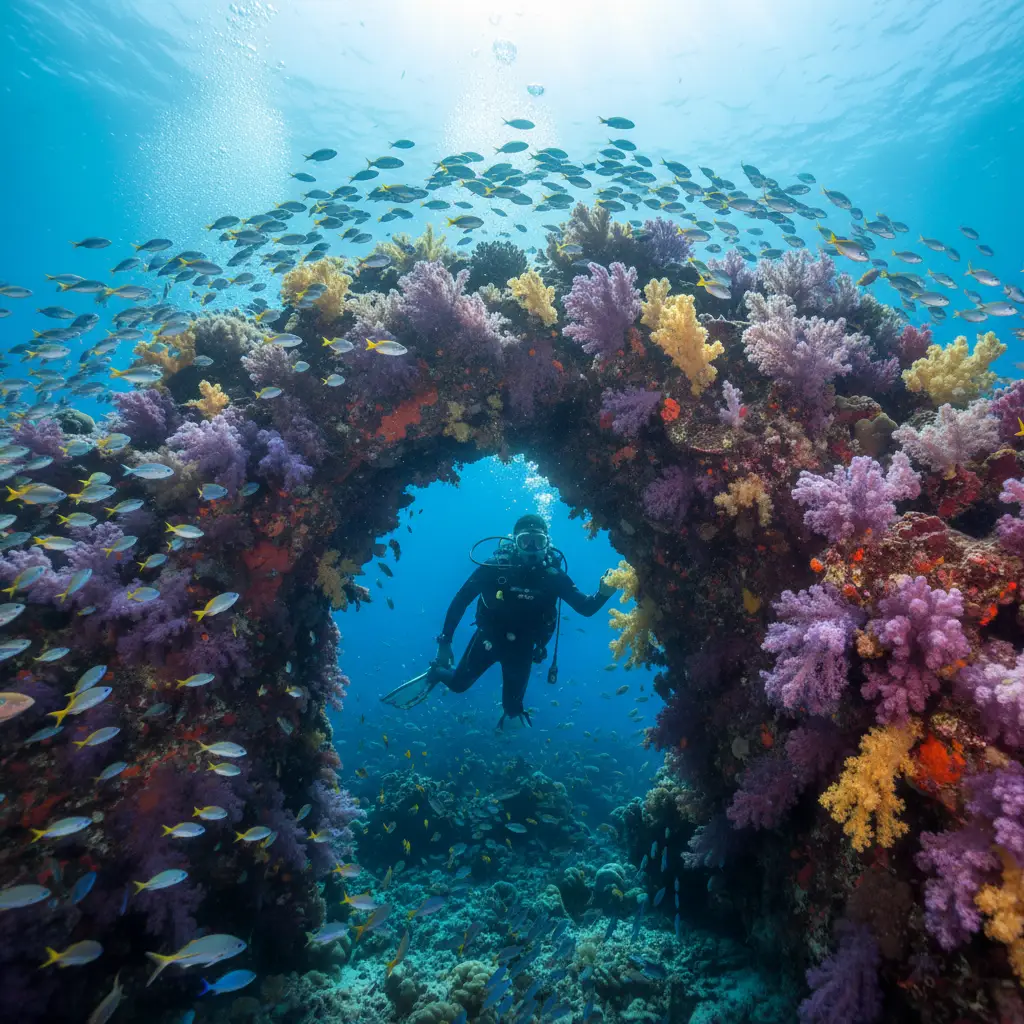
The immense barrier reef off Hienghène offers spectacular diving. While the reef here is exceptional, many travelers also enjoy the Best Snorkeling Spots Near Nouméa during their stay in the south. The most famous dive centre in the region is Babou Côté Océan. They offer excursions to the Hiengu Reef, known for its architectural underwater landscapes—arches, canyons, and tunnels that mirror the geography above water. The biodiversity is high, with frequent sightings of sharks, rays, and turtles. The visibility is generally excellent, often exceeding 30 metres.
River and Lagoon Kayaking
If diving isn’t your preference, kayaking the Hienghène River is a serene alternative. You can paddle from the river mouth upstream, moving from the open lagoon environment into the quiet mangrove forests. The transition in vegetation is striking. This is a birdwatcher’s paradise, with kingfishers and herons commonly spotted along the banks. Rentals are available from the Koulnoué Village or Babou Côté Océan.
Logistics: Getting There and Where to Stay
For New Zealand travellers, the journey to Hienghène is part of the adventure. It requires navigating the Grande Terre, offering a road trip experience through changing ecosystems.
How to get to Hienghène from Nouméa?
Hienghène is approximately a 5-hour drive (380 km) from Nouméa. To ensure a smooth transition from your flight, it is recommended to review Arrival Logistics: Tontouta Airport to Noumea. The most scenic route involves driving north up the West Coast to Koné, and then taking the famous Koné-Tiwaka Road across the central mountain chain. This road is an engineering marvel and a scenic highlight in itself, winding through lush rainforests and passing majestic waterfalls before descending to the East Coast.
Road conditions are generally good, but caution is advised during heavy rains as the Tiwaka River can rise quickly. Rental cars are essential, and a vehicle with higher clearance (like a small SUV) is recommended for comfort, though a standard car can handle the main roads.
Accommodation Options
Accommodation in Hienghène is limited, so booking in advance is crucial, especially during school holidays. When exploring New Caledonia, some travelers also compare these local lodges to Ouvea Accommodation & Resorts for a variety of island experiences.
- Koulnoué Village: The primary hotel in the area, offering bungalow-style accommodation, a swimming pool, and a restaurant. It was formerly a Club Med and retains a resort-style layout.
- Ka Waboana Lodge: Located in the centre of the village, offering a more intimate, guesthouse feel.
- Tribal Homestays (Accueil en Tribu): For a truly immersive experience, staying within a tribe is recommended. This usually involves simple accommodation in a traditional hut (case) and shared meals with the host family. This must be arranged via the tourism office or cultural centre.
People Also Ask
How long does it take to drive from Nouméa to Hienghène?
The drive typically takes between 5 to 6 hours. It is recommended to stop in Bourail or Koné for a break. The route via the Koné-Tiwaka road is paved and scenic, but winding.
Is it safe to swim in Hienghène?
Yes, swimming is generally safe in the lagoon and designated beach areas. However, visitors should always be aware of currents near the river mouth and avoid swimming at dusk or dawn. Always ask locals about current conditions.
What is the best time of year to visit Hienghène?
The best time to visit is during the cooler, drier months from May to October. The warm season (November to March) can be hot and humid with a higher chance of tropical rain, though the vegetation is at its most lush.
Do I need to speak French to visit Hienghène?
While English is spoken at major hotels like Koulnoué Village and by dive operators, a basic command of French is very helpful for interacting with locals at the market and in shops. A translation app is recommended.
Are there ATMs in Hienghène?
Yes, there is an OPT (Post Office) in the village which usually has an ATM. However, machines can sometimes be out of order or out of cash, so it is highly advisable to withdraw sufficient cash in Koné or Nouméa before arriving.
Can I hike the Brooding Hen?
You cannot hike up the rock formation itself as it is steep and protected. However, there are several hiking trails nearby, including the walk to the Ga Wiva view point, which offers spectacular views over the bay and the rock.