
Hienghène is a visually striking district on the northeast coast of New Caledonia, renowned for its dramatic black limestone karst formations, including the iconic Brooding Hen and Sphinx. As a stronghold of Kanak culture and biodiversity, it offers travelers a blend of lush tropical landscapes, cascading waterfalls like Tao, and authentic tribal experiences.
What Makes Hienghène the Jewel of the East Coast?
For travelers arriving from New Zealand, the transition from the arid landscapes of New Caledonia’s West Coast to the lush, tropical vibrancy of the East Coast is nothing short of startling. Hienghène (pronounced Yee-eng-hen) stands as the undisputed highlight of this region. Located approximately five hours north of Nouméa, this area is defined by its dramatic contrast between the azure lagoon and the jagged, black limestone cliffs that rise vertically from the water.
Unlike the tourist-heavy beaches of the south, Hienghène offers a raw, prehistoric atmosphere often compared to a tropical version of Jurassic Park. The region is dominated by Mount Panié, the highest peak in New Caledonia, which traps moisture from the trade winds, creating a verdant microclimate teeming with endemic flora. This geographical isolation has allowed the region to maintain a serene, untouched quality that appeals to the adventurous spirit of Kiwi travelers looking for more than just a resort stay.
The Brooding Hen (Poule Couveuse): Nature’s Sculpture
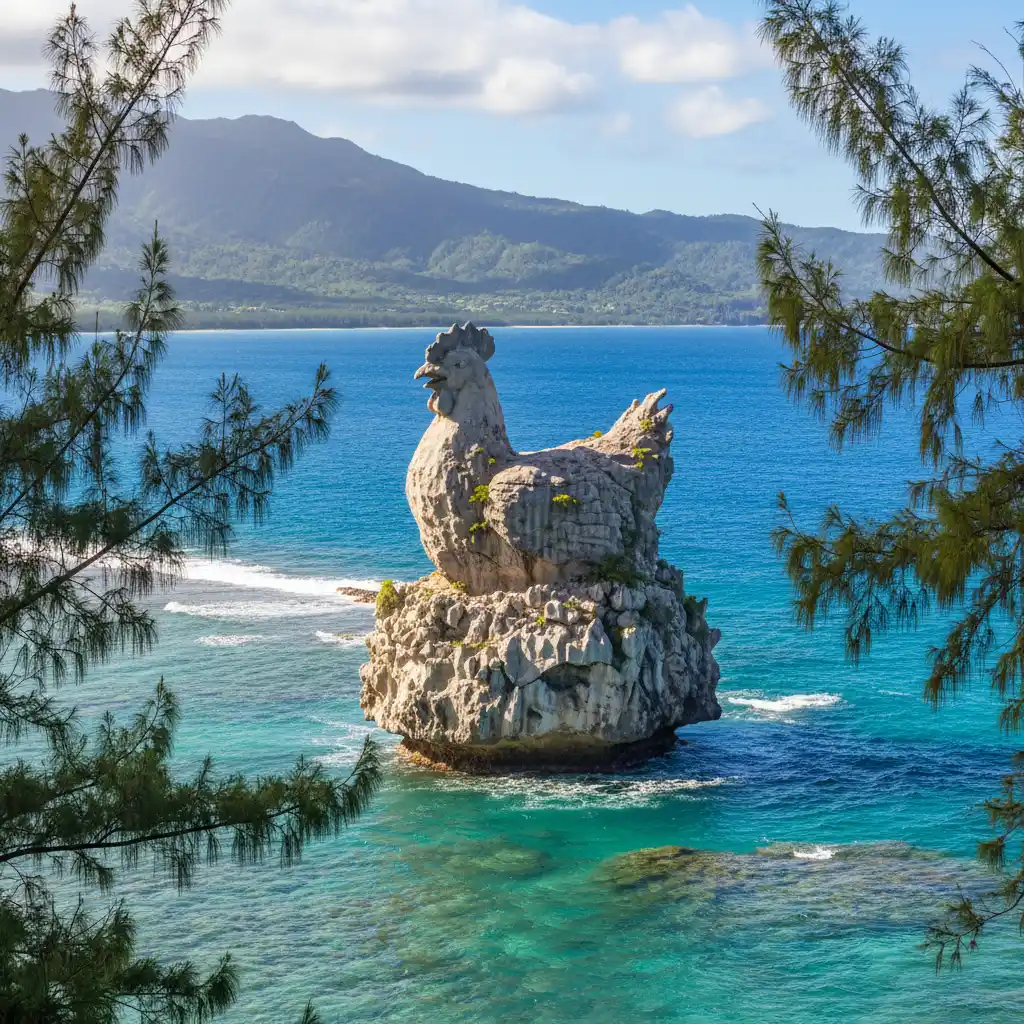
No trip to Hienghène New Caledonia is complete without witnessing the village’s most famous landmark: The Brooding Hen. Known locally as the Poule Couveuse, this massive limestone formation sits in the bay just outside the village entrance. From the designated viewpoint (Belvedere) on the southern approach to the town, the rock bears an uncanny resemblance to a hen settling down on her nest.
Geologically, the Hen is a remnant of ancient coral reefs that were uplifted and subsequently eroded by wind and rain over millions of years. The black color of the rock, characteristic of the Linderalique formation, contrasts sharply with the vibrant greens of the mangroves at its base and the shifting blues of the Pacific Ocean. The formation is not just a geological oddity; it holds significant cultural value to the local Kanak clans, featuring in numerous legends and oral histories that define the spiritual landscape of the area.
How to Best View the Brooding Hen
While the formation is visible from sea level, the best vantage point is the roadside lookout point located just south of the Hienghène bridge. This spot offers a panoramic view that includes not only the Hen but also the Sphinx—another rock formation on the opposite side of the bay. For photographers, late afternoon provides the best lighting, as the sun illuminates the face of the rock while casting dramatic shadows across the bay’s calm waters.
Linderalique Rocks: The Black Cliffs
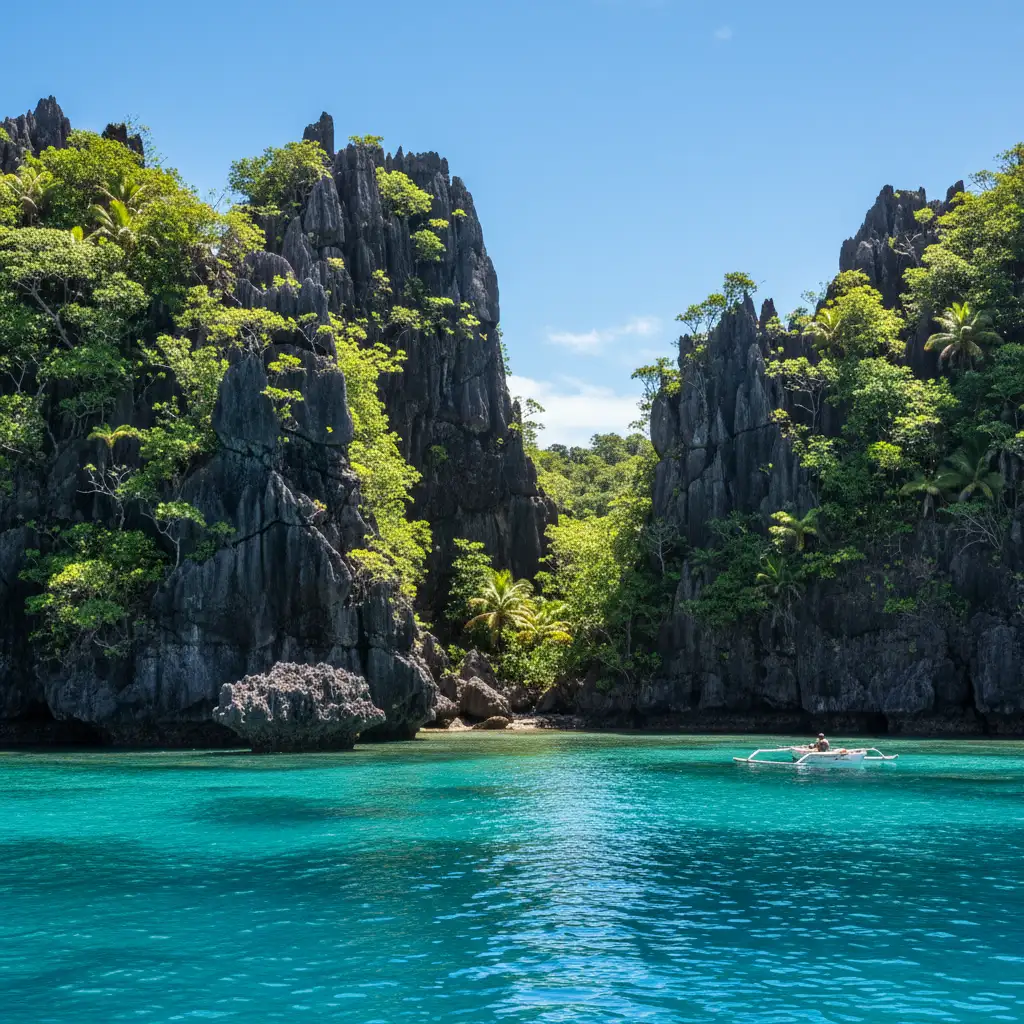
Just south of the main village lies one of the most impressive geological sites in the Pacific: the Linderalique Rocks. These massive cliffs of black limestone soar up to 60 meters high, creating a formidable wall that separates the lagoon from the mainland. The sharp, jagged peaks of these cliffs are often shrouded in mist during the early morning, adding to the mystical allure of the region.
For the active traveler, simply driving past these rocks is not enough. The calm waters at the base of the cliffs are ideal for kayaking. Renting a kayak allows you to paddle through the labyrinth of rocks, exploring hidden caves and secluded inlets that are inaccessible by land. The silence in these corridors of stone is profound, broken only by the sound of your paddle and the call of seabirds.
Hiking the Linderalique
There are also trails that wind around the base and even up to the ridges of these formations. Hiking here requires sturdy footwear, as the limestone can be razor-sharp. The vegetation clinging to these rocks includes rare species of cycads and Araucaria pines, ancient plant lineages that have survived here since the time of the dinosaurs.
Tao Waterfalls: The Cascade of the North
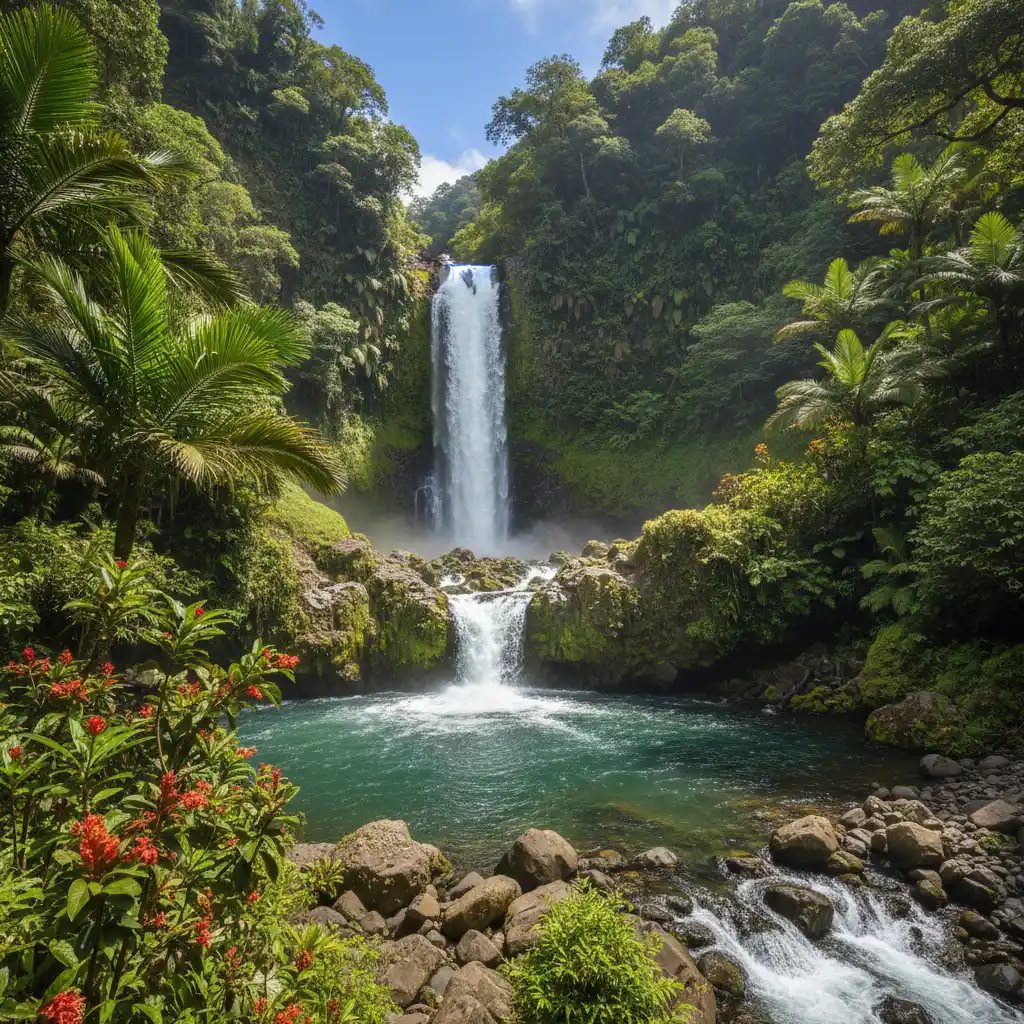
Driving north from Hienghène towards the Ouaième River, the landscape becomes even more vertical. Here, the Mont Panié massif crashes into the sea, and tumbling down its slopes is the magnificent Tao Waterfall (Cascade de Tao). Visible from the road, the falls drop over 100 meters in a series of steps, surrounded by dense rainforest.
To reach the base of the falls, visitors must cross private land (a small custom fee is often requested, usually around 200-500 XPF, or a gesture of respect). The walk is short but steep, leading to a refreshing pool at the bottom of the main drop. The water is cool and crystal clear, originating from the cloud forests high above on New Caledonia’s tallest mountain.
This area is historically significant as well; it is the spot where the first missionaries landed in the region. However, for most visitors, the primary draw is the raw power of nature. Standing at the base of the falls, with the mist spraying your face and the jungle canopy overhead, is a humbling experience that highlights the wild beauty of the North Province.
Driving the Scenic Coastal Road
The drive to Hienghène and further north to the Tao Waterfalls is widely considered one of the most beautiful road trips in the South Pacific. For New Zealanders accustomed to the scenic drives of the South Island, this route offers a tropical counterpart that is equally breathtaking. The road hugs the coastline, winding between the mountains and the sea, passing through small tribal villages (tribus) where roadside stalls sell fresh fruit, carved soapstone, and flowers.
Crossing the Ouaième River
A highlight of the drive north of Hienghène is the crossing of the Ouaième River. There is no bridge here. Instead, vehicles must use the historic Bac de la Ouaïème, the last remaining ferry of its kind in New Caledonia. This ferry operates 24/7 and is free of charge. It is not mechanically driven but is instead pulled across the river by a cable system.
The crossing takes only a few minutes, but it feels like a journey back in time. The ferry operators are local residents, and the slow pace of the crossing forces travelers to pause and appreciate the stunning scenery of the river mouth opening into the ocean. It is a mandatory stop for anyone heading to the Tao Waterfalls and adds a layer of adventure to the journey.

The Cultural Heart of the East Coast
Hienghène is more than just a scenic destination; it is a stronghold of Kanak culture. The region was the home of Jean-Marie Tjibaou, the charismatic leader of the Kanak independence movement, and his influence is still deeply felt here. The Cultural Centre Goa Ma Bwarhat in the village serves as a hub for local arts and history, offering visitors insight into the clan structures and traditions of the area.
For an immersive experience, New Zealand travelers are encouraged to opt for an “Accueil en Tribu” (Tribal Stay). This involves staying in a traditional hut within a local village. It provides a unique opportunity to engage with local families, share a meal (often the traditional Bougna, cooked in earth ovens), and learn about the custom gestures (La Coutume) that govern social interactions in Kanak society. It is a respectful and enriching way to understand the deep connection the people have with this land.
Practical Guide for New Zealand Travelers
Planning a trip to Hienghène requires some logistical preparation, as it is far removed from the conveniences of Nouméa.
- Getting There: The drive from Nouméa takes approximately 5 to 6 hours. The most scenic route involves crossing the central mountain range via the Col des Roussettes to Bourail, then heading up the East Coast road. Alternatively, you can fly from Nouméa-Magenta to Touho airport, which is about an hour’s drive south of Hienghène.
- Best Time to Visit: The cooler months from May to October are ideal for hiking and exploring. However, the waterfall is most impressive during the wet season (December to March), though humidity is higher.
- Currency & Payments: The currency is the Pacific Franc (XPF). While the main hotels accept credit cards, cash is essential for small shops, roadside stalls, and tribal stays. ATMs are available in Hienghène village, but they can occasionally be out of service, so bring cash from Nouméa.
- Language: French is the official language. English is spoken at major hotels, but less so in rural areas. Learning a few basic French phrases and the local greeting “Bozu” will go a long way.
People Also Ask
How do you pronounce Hienghène?
Hienghène is pronounced roughly as “Yee-eng-hen.” The ‘H’ is aspirated, and the ‘en’ sounds similar to the ‘en’ in ‘when’ but nasalized, typical of the French language.
Is it safe to drive to Hienghène from Nouméa?
Yes, the roads are generally paved and in good condition. However, the East Coast road can be winding and narrow in places. Avoid driving at night due to lack of street lighting and wandering livestock.
Can you swim near the Brooding Hen?
Yes, you can swim in the bay, but it is best to access the water from the designated beaches or by renting a kayak. Always be aware of currents and local advice regarding water safety.
How much time should I spend in Hienghène?
A minimum of 2 nights is recommended to see the main sights like the Brooding Hen and Tao Waterfalls. 3 to 4 nights allow for a more relaxed pace and time for a tribal homestay.
What is the Bac de la Ouaïème?
The Bac de la Ouaïème is the last operating river ferry in New Caledonia. It crosses the Ouaïème River north of Hienghène, operates 24/7, is free of charge, and is an essential link on the road to Tao Waterfalls.
Are there hotels in Hienghène?
Yes, the main hotel is the Koulnoué Village (formerly Club Med). There are also guesthouses (gîtes) and tribal homestays (accueil en tribu) which offer more authentic accommodation experiences.