GT fishing in New Caledonia offers anglers access to the world’s largest lagoon, teeming with monster Giant Trevally often exceeding 40 kilograms. Renowned for its pristine flats and aggressive reef drop-offs, this French Pacific territory provides year-round topwater action just a short flight from New Zealand, making it the premier destination for chasing trophy Geets on poppers.
For the dedicated saltwater angler, few destinations rival the sheer ferocity and visual spectacle of New Caledonia. Located less than three hours from Auckland, this archipelago is not merely a tropical getaway; it is a battleground where heavy tackle is pushed to its absolute limit. With a UNESCO World Heritage-listed lagoon surrounding the main island (Grande Terre), the habitat is perfectly engineered for Caranx ignobilis—the Giant Trevally.
For Kiwi anglers accustomed to the Kingfish of the Hauraki Gulf or the Ranfurly Banks, the GT presents a different class of challenge. It is a brute force brawler that dictates the terms of engagement. This guide explores the prime locations, the necessary heavy artillery, and the tactical nuances required to land a trophy GT in New Caledonia waters.
Top Reefs for Giant Trevally in New Caledonia
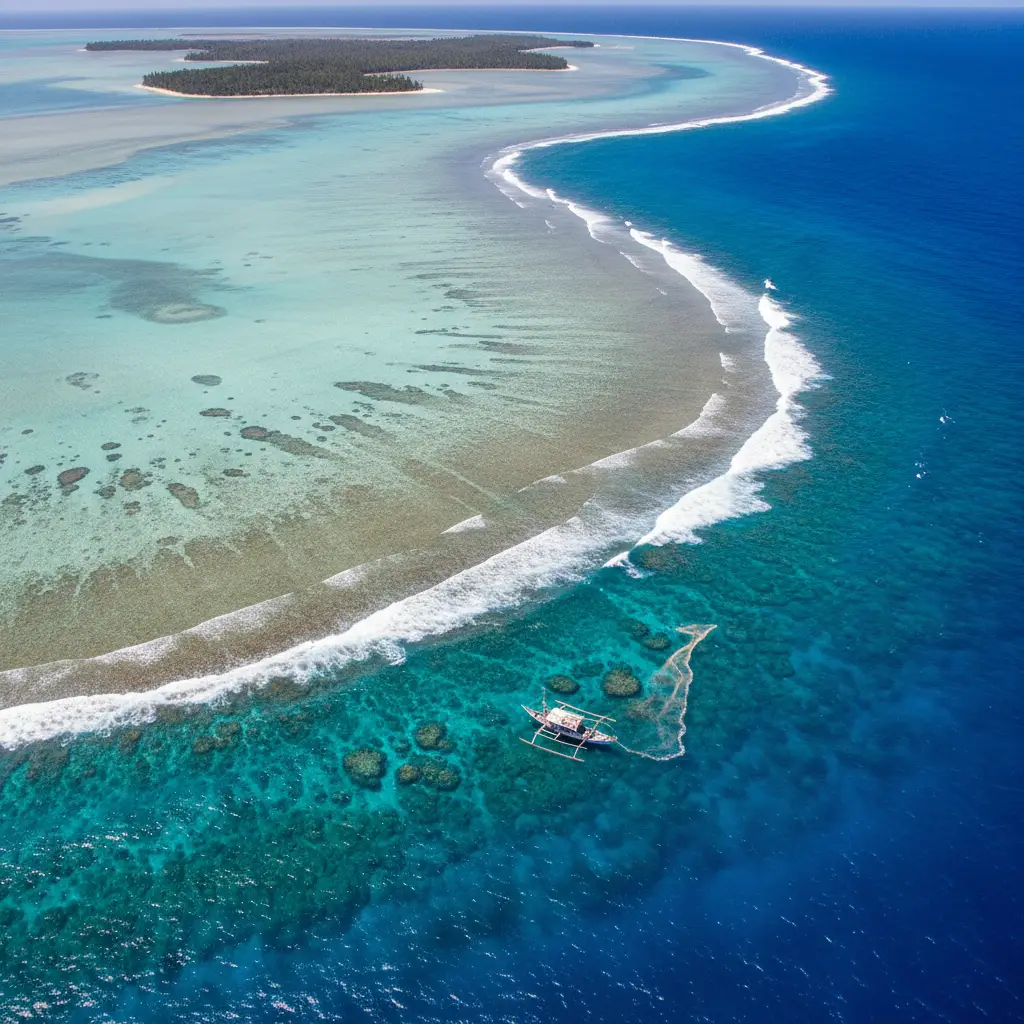
New Caledonia’s geography is defined by its massive barrier reef, the second longest in the world. However, not all reef sections are created equal. The most productive GT fishing occurs where strong currents meet structure, concentrating baitfish and creating ambush points for large predators.
The Northern Province: Boat Pass and Poingam
For those willing to travel to the northern tip of Grande Terre, the rewards are often legendary. The area known as “Boat Pass” separates the main island from the Belep Islands. The tidal movement here is immense, creating river-like currents that sweep across the shallow flats.
This is prime territory for sight-casting. Unlike deep-water jigging, fishing in the north often involves spotting cruising GTs in water less than three meters deep. The fish here are known for their aggression and size, with 30kg+ specimens being a standard encounter. The isolation of the north means fishing pressure is minimal, resulting in fish that are less shy and more willing to smash a surface lure.
Isle of Pines (Île des Pins)
Located to the south, the Isle of Pines is famous for its turquoise waters and Araucaria trees, but for anglers, it is famous for the size of its fish. The reef passes surrounding the island are deep and rugged. Here, the strategy shifts from flats fishing to working the edges of the drop-offs.
The southern currents bring nutrient-rich water from the deep ocean, fueling a food chain that supports massive GTs. It is not uncommon to hook fish in the 40kg to 50kg range here. The “Gadji” pass is a notable hotspot, though it requires an experienced skipper to navigate the swells safely while positioning the boat for the perfect cast.
The West Coast: Bourail and La Foa
Closer to Noumea but still offering exceptional action, the passes off Bourail offer a mix of reef edge popping and lagoon shallow work. The Green Island (Île Verte) area is a sanctuary, but the surrounding authorized zones hold excellent fish. This area is particularly popular for anglers who want a mix of GT fishing and other species like Dogtooth Tuna and Spanish Mackerel.
Popper Fishing Techniques for NC Waters
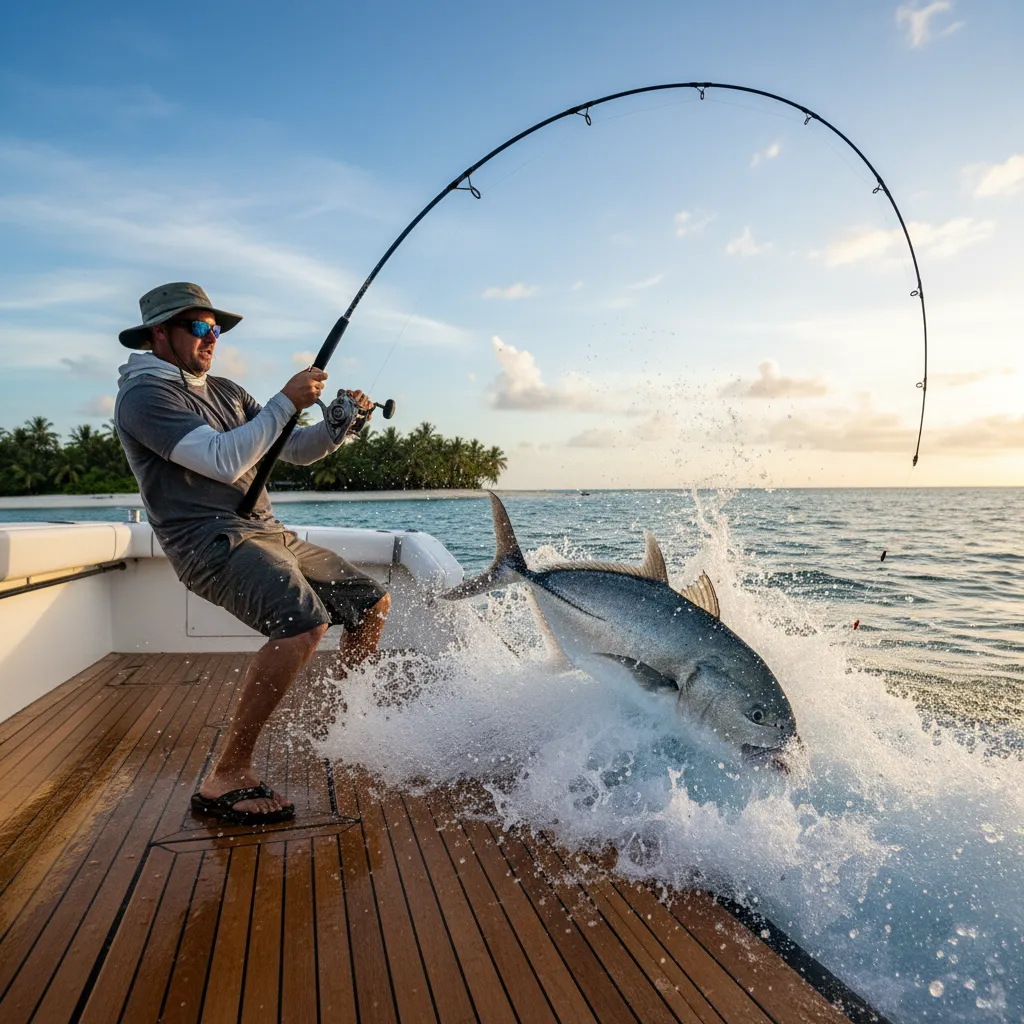
Success in GT fishing New Caledonia relies heavily on technique. These fish are apex predators, but they can be surprisingly discerning. The “splash and dash” approach doesn’t always work; you need to tailor your presentation to the conditions.
The “Bloop” vs. The “Skitter”
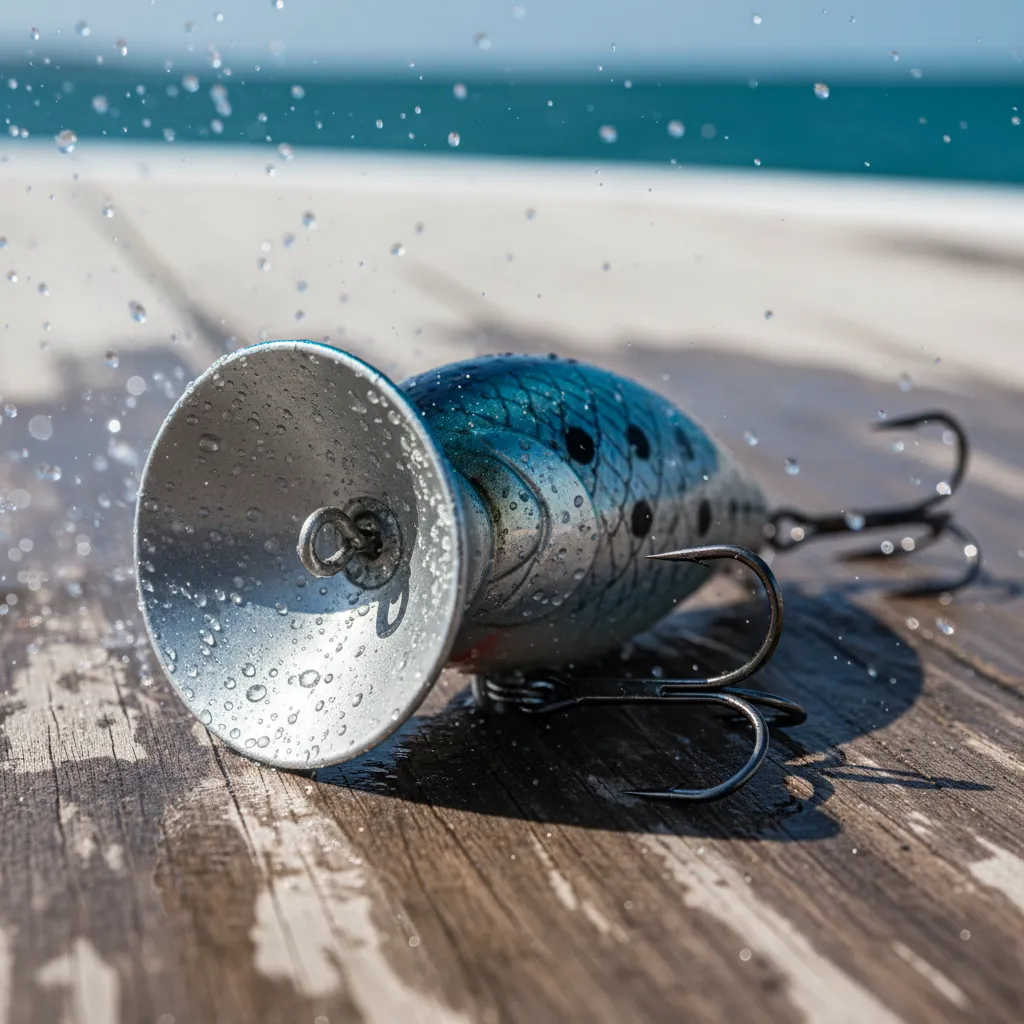
The standard technique involves using large cup-faced poppers (150g to 200g). The goal is to create a massive displacement of water—a loud “bloop”—followed by a pause. This mimics a distressed baitfish struggling on the surface. In the chop of the outer reef, the noise is essential to draw fish up from the depths.
However, on the calm flats of the Northern Province, a massive splash can spook wary fish. Here, stickbaits are often more effective. A floating stickbait worked with a “walk-the-dog” action (side-to-side movement) presents a more natural profile. The retrieve should be fast and erratic. If a GT follows but doesn’t strike, speed up. Stopping the lure usually causes the fish to lose interest, as natural prey never stops running when hunted.
Reading the Tides
New Caledonia has significant tidal variances. The most productive fishing almost always occurs during the push of the incoming tide. As the water rises, GTs move from the deep drop-offs onto the reef flats to hunt crabs, eels, and baitfish. The first two hours of the incoming tide are the “golden hours.” Conversely, during the outgoing tide, focus your efforts on the mouths of the reef passes where water drains out, carrying baitfish into the waiting jaws of predators.
Essential Gear for the Kiwi Angler
You cannot bring a knife to a gunfight, and you cannot bring Snapper gear to a GT fight. The power of a New Caledonia GT is difficult to overstate. If there is a weak link in your system, they will find it.
Rod and Reel Selection
For New Zealanders traveling over, it is highly recommended to bring your own specialized gear, as rental equipment varies in quality.
- Rods: Look for 8ft to 8ft 6in popping rods rated for PE8 to PE10 line. Brands like Ripple Fisher, Carpenter, or the high-end Shimano/Daiwa ranges are standard. You need a rod with a soft enough tip to work the lure but immense backbone to turn a fish away from the coral.
- Reels: High-speed spinning reels are non-negotiable. A Shimano Stella SW 14000/18000 or Daiwa Saltiga 14000/18000 is required. The high gear ratio (HG or XG) is crucial for picking up line quickly between pops.
Terminal Tackle
- Main Line: PE8 to PE10 (approx. 100lb to 130lb braid).
- Leader: 170lb to 200lb twisted nylon or fluorocarbon shock leader. The coral in New Caledonia is razor sharp; do not go light here.
- Connections: The FG knot is the only knot you should trust for connecting braid to leader. For lure connections, use high-quality ball bearing swivels and split rings rated to 300lb+.
- Hooks: Barbless hooks are strongly encouraged (and mandated by some charters). They ensure a better hookset penetration on the hard jaw of a GT and make releasing the fish much safer for both the angler and the fish. Owner ST-76 or BKK GT Rex trebles, or large inline singles, are the industry standard.
Safety on the Outer Reefs
The beauty of the New Caledonia lagoon belies its dangers. When you are wading the flats or fighting fish on the reef edge, situational awareness is critical.
Shark Awareness
New Caledonia has a healthy population of sharks, including Bull Sharks and Tiger Sharks. When wading the flats, always fish with a partner. If you hook a fish, land it as quickly as possible. Prolonged fights distress the fish and send vibrations that attract sharks. If a shark appears, do not attempt to land the fish; break the line if necessary to avoid a frenzy near your legs.
Reef Walking Gear
The coral structures are unforgiving. Standard wetsuit booties are insufficient. You need sturdy reef boots with thick, puncture-resistant soles. A slip on the outer reef can result in severe lacerations and infection. Additionally, always wear polarized sunglasses not just for spotting fish, but to spot deep holes in the reef flat while walking.
Record Catches and Local Legends
New Caledonia holds a mythical status in the GT popping community. While the average fish might sit in the 20-25kg range, the territory is famous for its “dinosaurs.”
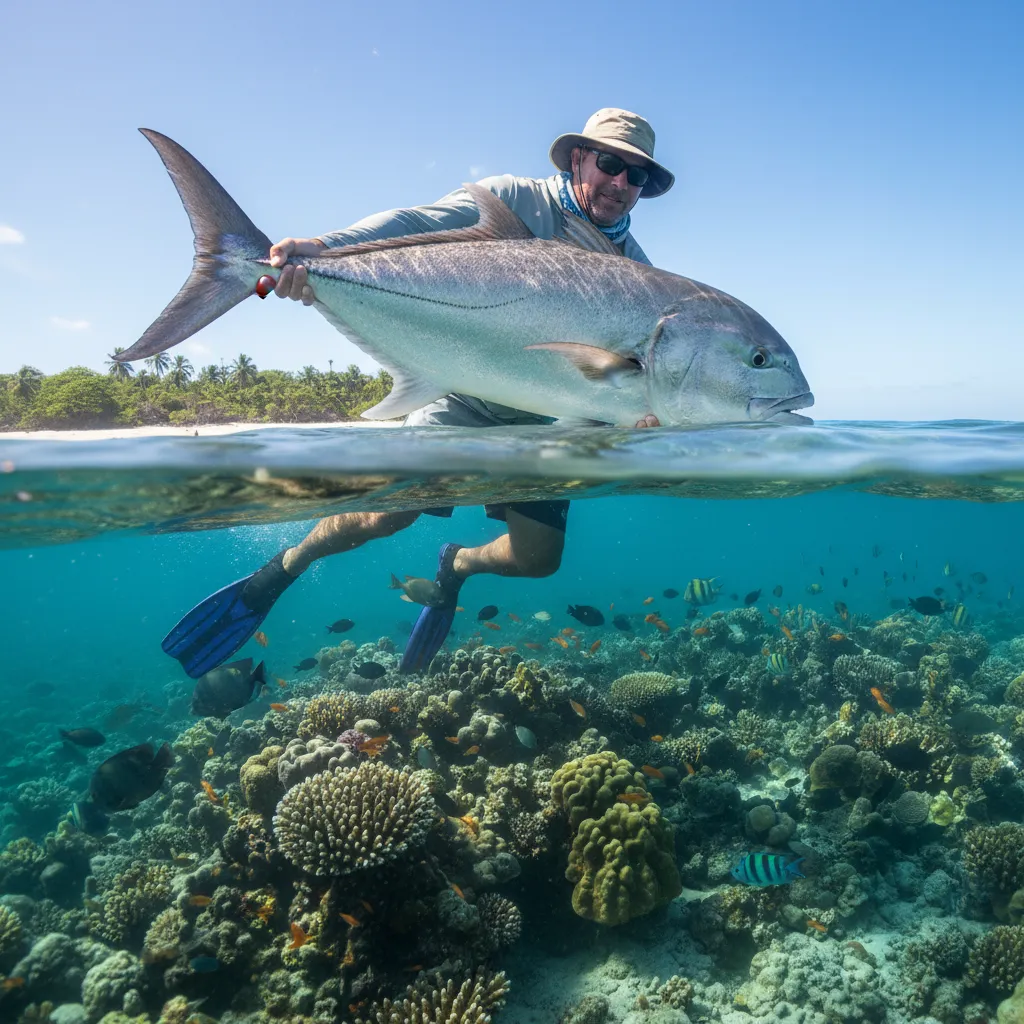
Local legends speak of the “Grandmother” fish—GTs that have lived on the reef for decades, learning to avoid boats. In recent years, verified catches exceeding 50kg (110lbs) have been recorded off the Isle of Pines and the northern reefs. These fish are shaped like beer kegs, with a girth that matches their length.
The local charter culture is strictly catch-and-release for GTs. This conservation mindset has allowed the population of trophy fish to remain stable despite the sport’s growing popularity. When you land a big GT in New Caledonia, you are often handling a fish that is older than you are. Treat it with respect: keep it in the water as much as possible, support its belly during photos, and revive it fully before release.
Logistics: Getting There from NZ
For New Zealand travelers, New Caledonia is arguably the most accessible world-class tropical fishery.
- Flights: Aircalin and Air New Zealand operate direct flights from Auckland (AKL) to Noumea (NOU). The flight time is approximately 3 hours.
- Luggage: Rod tubes are generally treated as oversized luggage. Ensure your rod tube is a hard-case PVC model (like a Bazuka) and lock it. Check with the airline regarding length restrictions, though most popping rods (breaking down to approx. 1.9m packed) fit within standard sporting allowance.
- Seasonality: GTs are present year-round. However, the warmer months (October to April) are generally preferred for topwater action. The trade winds can be strong, so flexibility in your itinerary is key.
People Also Ask
What is the best time of year for GT fishing in New Caledonia?
While GT fishing is a year-round activity in New Caledonia, the peak season is generally from October to April. These summer months offer warmer water temperatures which tend to make the fish more aggressive on the surface. However, anglers should be aware of the cyclone season (January to March) and check weather forecasts. The winter months (June-August) can also be productive but may experience stronger trade winds.
Do I need a fishing license in New Caledonia?
Generally, recreational fishing in the sea does not require a license for tourists, but strict regulations apply regarding protected areas (marine reserves) and protected species. If you are fishing with a registered charter operator, they will handle all regulatory compliance and ensure you are fishing in authorized zones. Always check local rules if fishing unguided.
Can I bring my own fishing gear from New Zealand?
Yes, bringing your own gear is highly recommended. While top-tier charters provide equipment, many anglers prefer their own setups. Ensure your rod tube meets airline specifications (Aircalin and Air NZ are accustomed to this). Be sure to clean all gear thoroughly to meet biosecurity standards upon returning to New Zealand.
Is it safe to eat the fish in New Caledonia?
Ciguatera (a foodborne illness caused by eating reef fish containing toxins) is a risk in New Caledonia, particularly with large predatory reef fish like Barracuda, Grouper, and sometimes Trevally. Since GTs are almost exclusively a sport fish and released, this isn’t usually an issue. For table fish, rely on the advice of local skippers who know which species and areas are safe.
What other fish can I catch besides GT?
The lagoon is incredibly diverse. While targeting GTs, you will often encounter Spanish Mackerel, Dogtooth Tuna, Coral Trout, Red Bass, and Bluefin Trevally. On the flats, you may also find Bonefish, although they are less commonly targeted than the trevally species.
How much does a GT fishing charter cost in New Caledonia?
Costs vary depending on the vessel and location. A full-day charter for a specialized GT popping boat typically ranges from 100,000 to 160,000 XPF (approx. $1,500 – $2,400 NZD). This usually covers the boat, skipper, and fuel for up to 3-4 anglers. It is a premium experience, but the cost can be split among the group.