
Events in New Caledonia offer a vibrant fusion of French sophistication and Kanak tradition, ranging from the patriotic Bastille Day parades in Nouméa to the culturally rich Avocado Festival on Maré. Travelers can experience unique celebrations like the Giant Omelette Festival, international sporting marathons, and seasonal harvest feasts throughout the year.
For New Zealand travelers seeking a cultural escape, New Caledonia represents the closest taste of France, located just a three-hour flight from Auckland. Beyond the turquoise lagoons and French pastries, the archipelago’s calendar is punctuated by a diverse array of festivals that showcase the unique blend of Melanesian heritage and European influence. Whether you are looking to witness a rodeo in the bush or taste a 7,000-egg omelette, timing your visit around these events transforms a standard holiday into an immersive cultural deep dive.
What is Bastille Day in New Caledonia?
Celebrated annually on July 14th, Bastille Day (La Fête Nationale) is one of the most significant events in New Caledonia, mirroring the grandeur found in Paris but set against a tropical backdrop. For Kiwis visiting during the New Zealand school holidays, this offers a unique opportunity to experience French patriotism without the long-haul flight to Europe.
The festivities typically commence on the evening of July 13th with a spectacular lantern parade (retraite aux flambeaux) winding through the streets of Nouméa to the Place des Cocotiers. This is a family-centric event where children and adults alike march with glowing lanterns, accompanied by marching bands and military regiments.
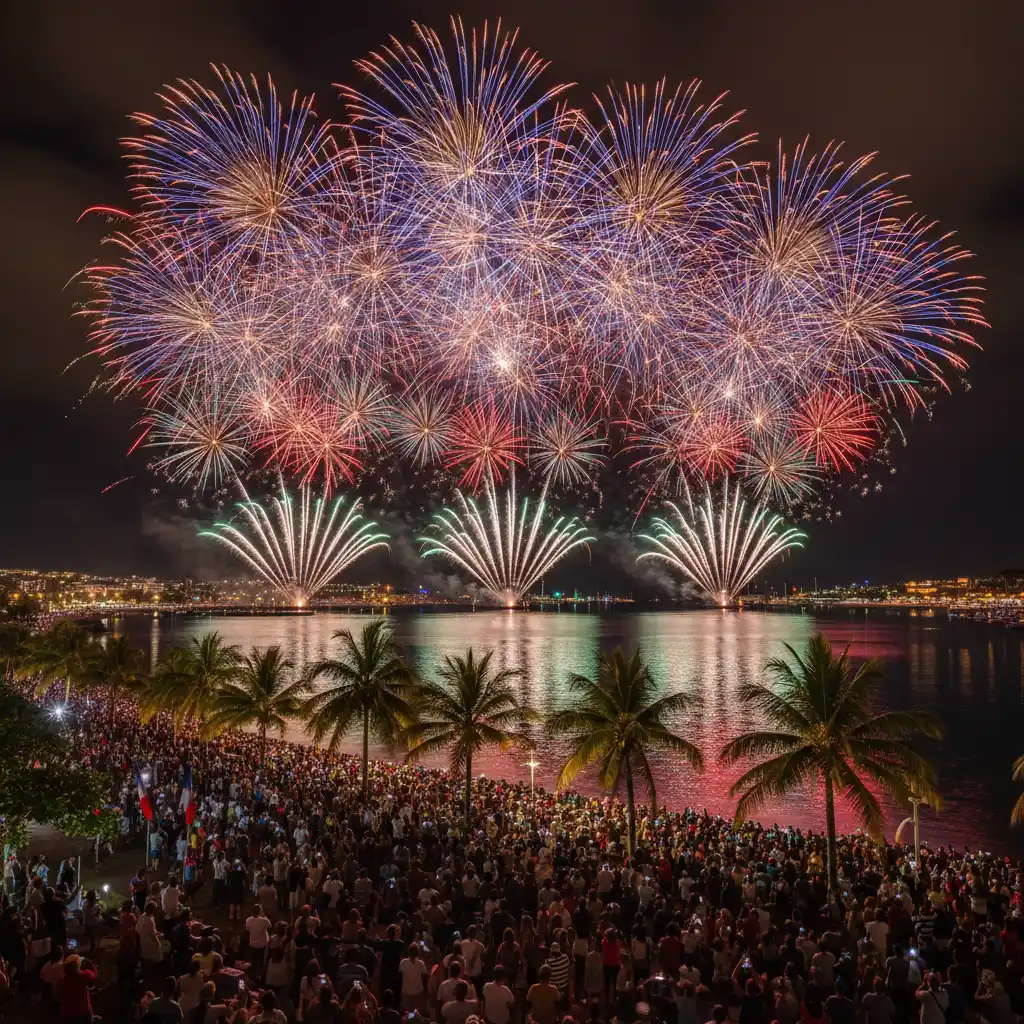
On the morning of July 14th, a military parade takes place along the Avenue du Maréchal Foch. Visitors can witness the pomp and circumstance of the French armed forces, the Foreign Legion, and local police units. The highlight for many tourists, however, is the evening fireworks display at the Baie de la Moselle. It is widely considered one of the finest pyrotechnic displays in the South Pacific, illuminating the lagoon in tricolor brilliance.
Key Highlights for Travelers:
- The Public Ball: Following the fireworks, public dances (bals populaires) are held in various districts, offering a mix of French pop, Tahitian beats, and local Kaneka music.
- Culinary Delights: Street vendors sell crêpes, churros, and local delicacies, creating a carnival atmosphere.
What is the Giant Omelette Festival in Dumbéa?
If you are looking for the definition of “quirky,” the Giant Omelette Festival (Fête de l’Omelette Géante) in Dumbéa is unrivaled. Held annually around Easter (usually April), this event is part of a global fraternity known as the “Confrérie des Chevaliers de l’Omelette Géante” (Brotherhood of the Knights of the Giant Omelette).
The legend dates back to Napoleon Bonaparte, who reportedly enjoyed an omelette in a southern French town so much that he ordered the townspeople to gather all their eggs to feed his army. In New Caledonia, this tradition has been adopted with fervor in the town of Dumbéa, located just 20 minutes north of Nouméa.
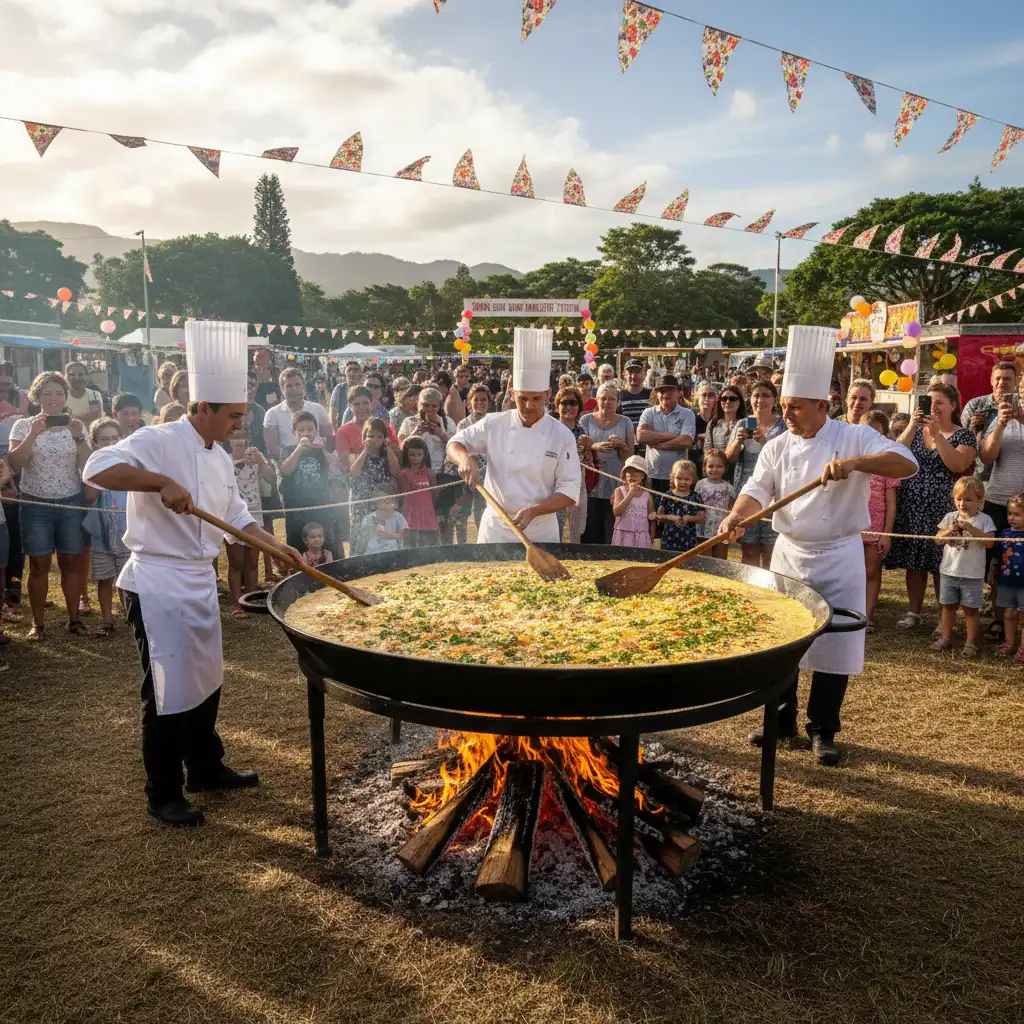
The statistics of the event are staggering. Approximately 7,000 fresh eggs are cracked into a pan measuring several meters in diameter. A team of “Grand Masters,” dressed in traditional yellow hats and robes, wield massive wooden paddles to whisk and cook the eggs over an open wood fire. The result is shared freely with the thousands of spectators who gather for the spectacle.
Beyond the culinary feat, the festival features a country fair atmosphere with live music, dance performances, and stalls selling local crafts and produce. It is an excellent day trip for families and provides a jovial insight into the Caldoche (local European settler) community spirit.
How to Experience the Avocado Festival on Maré
For a deep dive into Kanak culture and tribal hospitality, the Avocado Festival (Fête de l’Avocat) on Maré Island is essential. Held every May in the Nece tribe district, this event celebrates the harvest of the island’s most famous export: giant, buttery avocados that are renowned throughout the Pacific.
Maré is the wildest of the Loyalty Islands, and this festival is as much about cultural exchange as it is about agriculture. Visitors from the main island (Grande Terre) and international tourists are welcomed into the tribe. The event opens with a traditional “Coutume” (customary gesture), where gifts are exchanged between the visitors and the tribal chiefs to ask for permission to enter and to show respect.

During the festival, you can purchase avocados of impressive size and quality, along with yams, bananas, and seafood. However, the true value lies in the immersion. Visitors can stay in “Accueil en Tribu” (tribal homestays), sleeping in traditional huts and sharing meals with local families. It is a rare opportunity to disconnect from the modern world and connect with the Nengone people.
Activities at the Festival:
- Island Tours: Guided visits to the natural aquarium, the Bone Hole, and the warrior’s leap.
- Tasting: Sampling various avocado-based dishes and the traditional Bougna (meat and root vegetables wrapped in banana leaves and cooked underground).
- Music and Dance: Traditional Kanak dance troupes perform throughout the weekend.
What is the New Caledonia International Marathon?
For the active traveler, the New Caledonia International Marathon (Marathon International de Nouvelle-Calédonie) is a highlight of the sporting calendar, typically held in August. This event attracts runners from across the globe, with a strong contingent always arriving from Japan, Australia, and New Zealand.
The course is celebrated for its scenic beauty. The route generally follows the bays of Nouméa, taking runners past the Baie des Citrons and Anse Vata, offering panoramic views of the lagoon and the surrounding islets. The flat terrain makes it a fast course, ideal for those looking to set a personal best in a tropical environment.

The event is known for its festive atmosphere. French fanfare bands often play along the route, and the finish line is a celebration of camaraderie. In addition to the full marathon, there is usually a half-marathon and a 10km run, making the event accessible to runners of various fitness levels.
Foire de Bourail: The Broussard Experience
While not in the initial outline, no guide to events in New Caledonia is complete without mentioning the Foire de Bourail (Bourail Fair). Held in mid-August, this is the most authentic display of the “Broussard” (bushman) lifestyle. It is New Caledonia’s answer to the American rodeo or the Australian outback show.
Located in Bourail, about a two-hour drive north of Nouméa, the fair attracts tens of thousands of visitors. The main attraction is the rodeo, where cowboys compete in bull riding and horse riding events. It highlights the strong cattle ranching history of the West Coast.
For New Zealanders, who have a strong agricultural heritage, the Foire de Bourail offers a fascinating parallel. You will see livestock judging, lumberjack competitions, and equestrian shows. It provides a stark contrast to the French Riviera vibe of Nouméa and the tribal atmosphere of the Loyalty Islands, showcasing the rugged, frontier spirit of the territory.
The Festival of the Yam: Sacred Kanak Tradition
The yam is not merely a food source in Kanak society; it is a sacred tuber that symbolizes manhood, hierarchy, and the cycle of life. The Festival of the Yam (Fête de l’Igname) marks the beginning of the harvest, usually occurring between February and April, depending on the region and the tribe.
Unlike the public spectacles of Bastille Day, Yam Festivals are deeply spiritual. The first yams are never eaten but are offered to the high chiefs and the ancestors. These ceremonies signal that the harvest can begin and that weddings and other alliances can take place.
While some parts of the ceremony are private, many tribes, particularly in the simpler tourism regions, open parts of the celebration to respectful visitors. It is a time of feasting, where the New Yam is blessed and shared. Tourists wishing to witness this should engage a local guide to ensure they follow proper protocol and respect the solemnity of the occasion.
Planning Your Trip from New Zealand
Attending these events requires some logistical foresight, especially given the popularity of certain festivals.
Flights and Connectivity
Aircalin and Air New Zealand operate flights between Auckland and Nouméa (La Tontouta International Airport). The flight time is approximately 3 hours. For events on the Loyalty Islands (like the Avocado Festival on Maré), you will need to book domestic flights with Air Calédonie (departing from Magenta Airport in Nouméa) well in advance, as planes are small and fill up quickly during festival weekends.
Accommodation
During Bastille Day and the Marathon, hotels in Nouméa (such as Le Méridien or Chateau Royal) can reach high occupancy. For the Giant Omelette Festival, staying in Nouméa is feasible as Dumbéa is a short commute. However, for the Avocado Festival on Maré or the Bourail Fair, accommodation is limited. On Maré, tribal homestays (Accueil en Tribu) are the most authentic option but require booking through local tourism offices or specialized travel agents.
Language and Currency
While English is spoken in major hotels, French is the official language. Knowing a few phrases is appreciated. The currency is the Pacific Franc (XPF/CFP), which is pegged to the Euro. New Zealand travelers should exchange currency upon arrival or withdraw from ATMs in Nouméa, as cash is king at rural festivals.
People Also Ask
What is the best month to visit New Caledonia for events?
July and August are arguably the best months. The weather is cooler and drier (around 20-24°C), and the calendar is packed with major events like Bastille Day, the Bourail Fair, and the International Marathon.
Is Bastille Day a public holiday in New Caledonia?
Yes, July 14th is a public holiday. Banks, government offices, and many businesses will be closed. However, restaurants and tourist attractions generally remain open to accommodate the celebrations.
How do I get to the Giant Omelette Festival from Noumea?
The festival is held in Dumbéa, which is about a 20-minute drive from downtown Nouméa. You can rent a car, take a taxi, or use the Karuïa bus network. During the festival, parking can be tight, so arriving early is recommended.
What is the traditional food served at New Caledonia festivals?
The most iconic dish is “Bougna,” a combination of chicken, lobster, or fish with yams, taro, and sweet potatoes, wrapped in banana leaves and cooked in an earth oven. You will also find venison, seafood, and French pastries.
Do I need to speak French to enjoy events in New Caledonia?
While not strictly necessary for major tourist events, speaking some French enhances the experience significantly, especially at local fairs like the Avocado Festival or Bourail Fair where English speakers are fewer.
Are New Caledonia festivals family-friendly?
Absolutely. Events like the Giant Omelette Festival and Bastille Day are designed with families in mind, featuring parades, kids’ activities, and a safe, communal atmosphere.