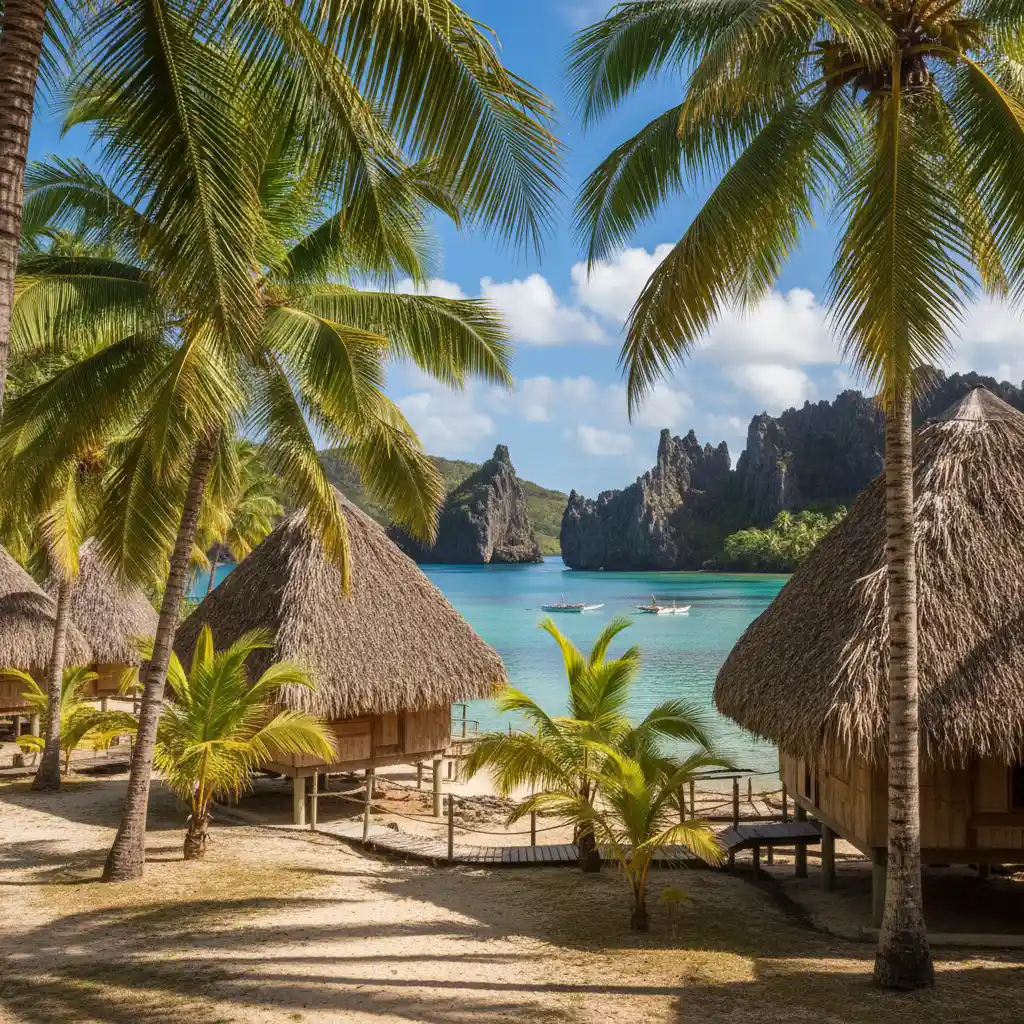
A New Caledonia east coast drive is a scenic route through lush, tropical landscapes, characterized by winding coastal roads and river crossings. It offers travelers a glimpse into authentic Kanak culture, featuring dramatic limestone formations like the Sphinx in Hienghène and the unique Bac de la Ouaième ferry, the territory’s last remaining river ferry.
What are the road conditions like on a New Caledonia east coast drive?
Driving along the east coast of Grande Terre, New Caledonia’s main island, is a starkly different experience from the flat, dry plains of the west. For New Zealanders used to the winding roads of the Coromandel or the West Coast of the South Island, the topography will feel somewhat familiar, though the climate is decidedly more tropical. The roads are generally well-sealed, but they are notoriously narrow and serpentine as they hug the mountain ranges that drop sharply into the Pacific Ocean.
The main artery, the RPN3, winds through dense rainforests and over steep mountain passes known as ‘cols.’ These passes, such as the Col d’Amieu or the Col de Petchecara, offer breathtaking panoramic views but require focused concentration. Drivers should expect sharp hairpin turns and significant elevation changes. Because the terrain is prone to heavy tropical rainfall, road surfaces can become slick, and occasional debris like fallen branches or small rocks may be present after a storm.

Another factor to consider is the presence of livestock and wildlife. It is not uncommon to encounter cows or horses wandering near the road edge in more rural sections. Furthermore, while the roads are paved, they often lack the wide shoulders found on New Zealand highways. If you need to pull over to admire the view, ensure you find a designated lookout or a wide enough verge to avoid obstructing local traffic, which can include large logging trucks or mining vehicles in certain sectors.
Navigating the Mountain Passes (Cols)
The ‘cols’ are a highlight of any New Caledonia east coast drive. They serve as the gateways between the west and east coasts. When ascending or descending these passes, utilize your engine braking to prevent brake fade, especially if you are driving a manual transmission vehicle—though most rentals in New Caledonia are modern automatics. The descent into places like Canala or Houaïlou provides some of the most dramatic vistas in the South Pacific, where the emerald green of the jungle meets the deep blue of the reef-protected lagoon.
How does the Ouaieme Ferry (Bac de la Ouaieme) work?
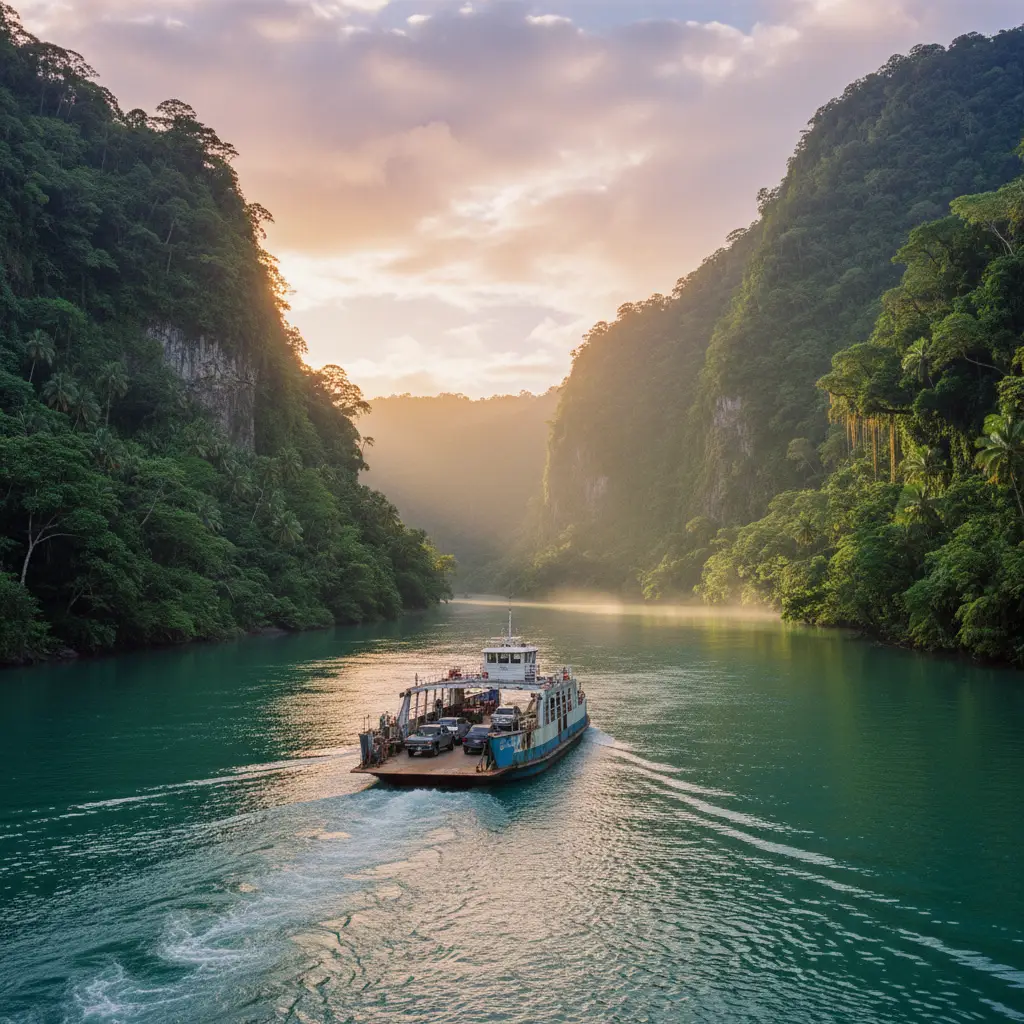
One of the most iconic experiences of the northern east coast is crossing the Ouaième River. Located just north of Hienghène, the Bac de la Ouaième is the last remaining river ferry in New Caledonia. It is a fundamental part of the journey for those heading toward Poum or the Tao Waterfall. Unlike modern bridges, this ferry preserves the tranquility of the region and serves as a symbolic entry point into the more remote, traditional Kanak lands.
The ferry operates 24 hours a day, 7 days a week, and is free of charge. There is no fixed schedule; the ferryman simply shuttles back and forth as vehicles arrive. When you approach the riverbank, you may see a small queue of cars. Simply wait your turn, and the ferryman will signal when it is safe to drive onto the platform. The crossing itself takes only a few minutes, but it offers a moment of profound stillness, surrounded by the towering cliffs of the Mont Panie range, the highest peaks in New Caledonia.
Etiquette and Expectations at the Ferry
While the service is free, it is common courtesy to acknowledge the ferryman with a friendly ‘Bonjour.’ During periods of extreme weather or heavy flooding, the ferry service may be temporarily suspended for safety reasons. It is always wise to check local weather reports if there has been a tropical depression in the area. For travelers coming from New Zealand, the slow pace of the ferry is a perfect reminder to shift into ‘island time’ and appreciate the natural surroundings rather than rushing to the next destination.
What can you expect from the scenery and roadside fruit stalls?
The aesthetic of the east coast is defined by its humidity and fertility. The landscape is a vibrant tapestry of coconut palms, giant ferns, and bougainvillea. As you drive, you will pass through numerous Kanak villages (tribus), where the gardens are meticulously maintained. One of the most charming aspects of the New Caledonia east coast drive is the prevalence of roadside fruit stalls.
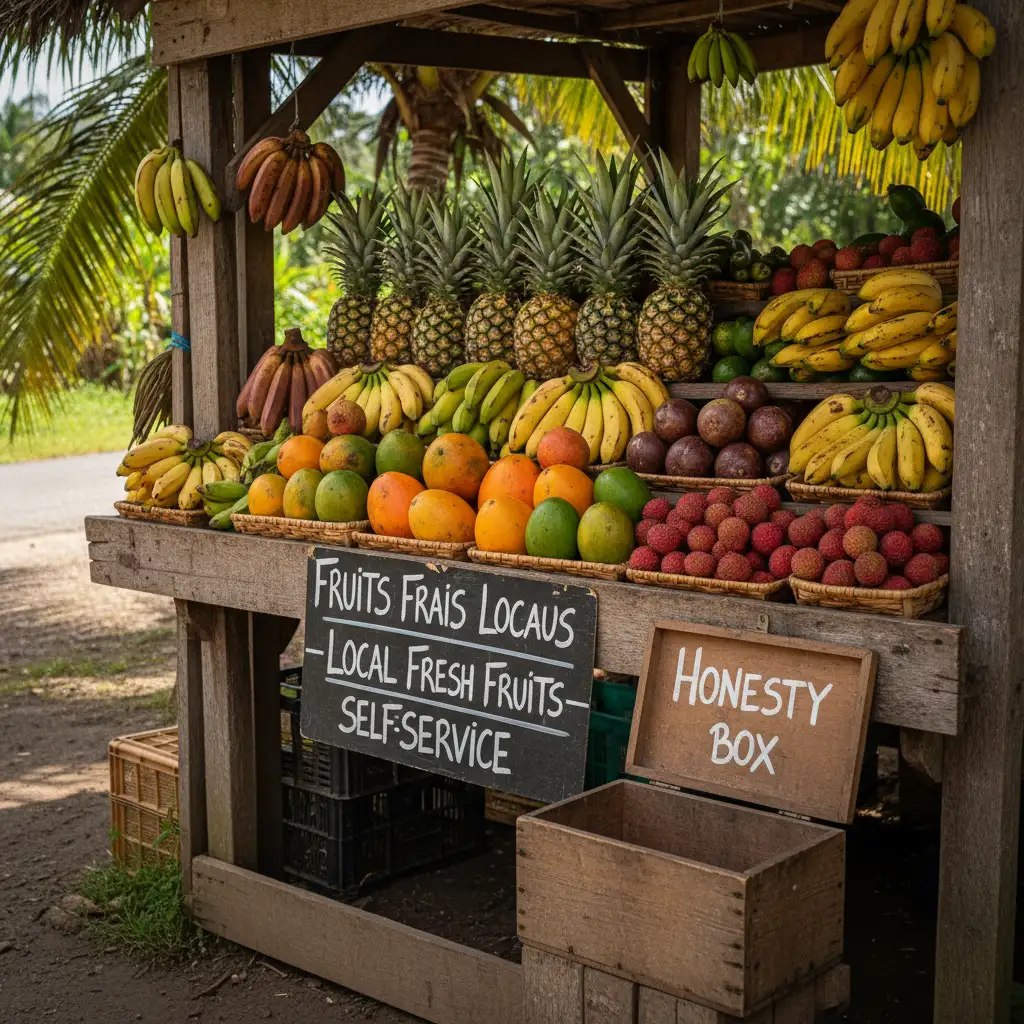
These stalls are usually unmanned and operate on an ‘honesty box’ system. You will find a variety of seasonal tropical fruits such as bananas, pineapples, passionfruit, pomelos, and sometimes even local honey or tubers like yams and taro. The prices are usually written on a small chalkboard or piece of cardboard. For New Zealanders, this is a nostalgic experience similar to the fruit stalls of Central Otago or the Bay of Plenty, but with a distinctly Melanesian flavor.
Identifying Local Produce
Don’t miss the opportunity to try the ‘Achards,’ which are pickled vegetables or fruits in a spicy oil, often sold in jars at these stalls. They are a staple of New Caledonian cuisine and reflect the island’s diverse heritage. Also, look out for the ‘Lychee’ season (typically around December), where the east coast becomes a hub for these sweet, red fruits. Buying from these stalls directly supports the local village economies and provides you with the freshest possible snacks for your road trip.
What safety advice should you follow for remote driving?
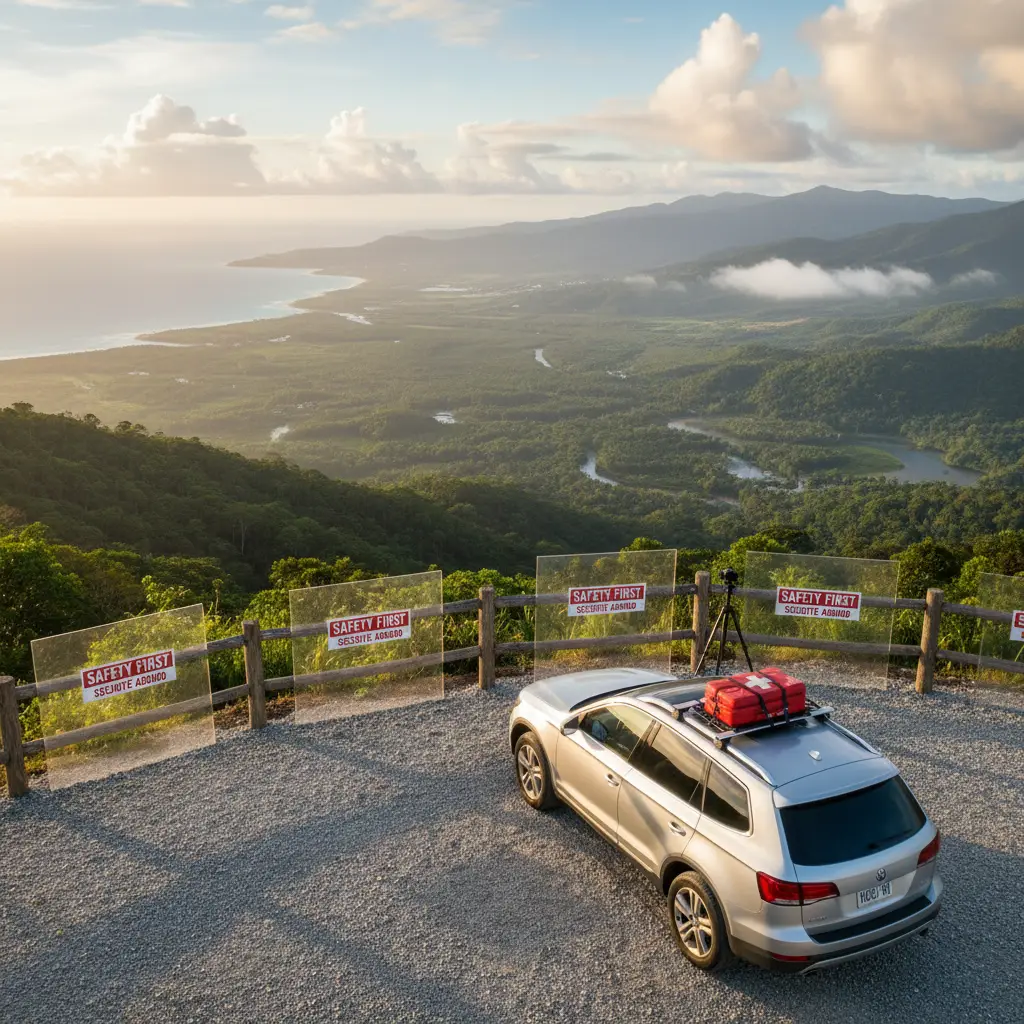
While New Caledonia is a safe destination, the remote nature of the east coast requires some preparation. Fuel stations can be sparse once you leave the main hubs of Poindimié or Hienghène. A golden rule for the New Caledonia east coast drive is to never let your fuel tank drop below half. Most petrol stations accept credit cards, but having cash (Pacific Francs – XPF) is essential for smaller villages or in case of technical issues with card readers.
Mobile phone coverage can be spotty in the valleys and between mountain ranges. It is highly recommended to download offline maps (such as Google Maps or Maps.me) before you depart from Nouméa. Additionally, ensure your rental car comes with a spare tire and that you know how to change it, as help may be a long wait away in the more isolated stretches of the RPN3.
Emergency Contacts and Driving Laws
In New Caledonia, you drive on the right-hand side of the road—the opposite of New Zealand. This requires constant vigilance, especially when turning at intersections or exiting roundabouts. The speed limit is generally 110 km/h on main highways (though there are few of these on the east coast) and 50 km/h within villages. Be aware that gendarmes (police) frequently conduct speed checks. In case of an emergency, the number for the police is 17, and for medical emergencies, it is 15.
How to plan your itinerary for the East Coast?
A successful New Caledonia east coast drive typically starts by crossing the island from the west. A popular route is to drive from Nouméa to Bourail, then head across the ‘transversale’ road to Houaïlou. From there, you can head north toward Poindimié and Hienghène. This journey allows you to see the transition from the dry savannah to the tropical rainforest.
Ideally, allow at least three to four days to explore the east coast. This gives you enough time to go diving in the protected lagoons of Poindimié, hike the trails around Hienghène to see the ‘Sphinx’ and ‘Lindéralique’ limestone cliffs, and visit the Tao Waterfall. For New Zealand travelers, the flight into La Tontouta International Airport is short, making a week-long car rental a very feasible and rewarding holiday option.
What is the importance of ‘La Coutume’ (The Custom)?
Much of the land on the east coast is customary Kanak land. If you wish to leave the main road to visit a waterfall, a beach, or a specific natural landmark that isn’t a designated public park, it is polite (and often required) to perform ‘La Coutume.’ This involves meeting a local leader or the owner of the land and offering a small gift—usually a 1,000 XPF note, a piece of cloth (manou), or some tobacco—as a sign of respect and a request for permission to visit.
This cultural practice is a beautiful way to connect with the local people and ensure that tourism remains respectful and sustainable. Most locals are incredibly welcoming and will appreciate the gesture, often sharing stories or directions that you won’t find in any guidebook. Always ask before taking photos of people or their homes, as privacy is highly valued in the ‘tribus.’
Is it safe to drive at night on New Caledonia’s east coast?
It is generally discouraged to drive at night outside of urban areas. The roads are unlit, winding, and prone to stray livestock. Additionally, visibility can be severely reduced by sudden tropical downpours.
Do I need a 4WD for the east coast drive?
A standard 2WD vehicle is sufficient for the main sealed roads. However, if you plan on exploring rugged inland tracks or specific mountain viewpoints, a 4WD offers better clearance and traction.
What currency should I carry for the road trip?
The local currency is the Central Pacific Franc (XPF). While hotels and large petrol stations take cards, you will need cash for roadside stalls, small grocery stores, and performing ‘La Coutume.’
Can I use my New Zealand driver’s license?
Yes, a valid New Zealand driver’s license is accepted for tourists in New Caledonia. Just remember that you will be driving on the right side of the road.
What is the best time of year for a New Caledonia east coast drive?
The cool, dry season from May to October is ideal. The temperatures are pleasant (20-25°C), and there is less risk of heavy rain affecting road conditions or ferry services.
Are there many places to eat along the east coast?
Dining options are more limited than in Nouméa. Most travelers eat at their ‘gîtes’ (guesthouses) or hotels, which often serve excellent local seafood and French-inspired cuisine. It is wise to stock up on snacks in larger towns.