To book a surf boat transfer in New Caledonia, identify licensed operators at Port Moselle, such as Taxi Boat Nouméa or Dal’Océan. Reservations are best made 24 hours in advance via WhatsApp or phone. Costs typically range from 3,000 to 6,000 XPF per person for shared rides to barrier reef passes like Dumbéa or Boulari.
New Caledonia offers some of the most pristine, uncrowded reef breaks in the South Pacific, located just a short flight from Auckland. However, unlike the beach breaks of Raglan or Mount Maunganui, the premier waves in New Caledonia break on the barrier reef, often 15 to 20 kilometers offshore. You cannot paddle out from the beach. Consequently, understanding how to reliably book a surf boat transfer in New Caledonia is the single most critical logistical step for your surf trip.
For New Zealanders accustomed to jumping in the car and checking the surf, the logistics here require a shift in mindset. You are relying on maritime transport to drop you in the middle of the ocean and, more importantly, pick you up. This guide covers everything from selecting licensed taxi boats to understanding the cost structures and safety protocols required for a successful strike mission to the lagoon.
Top Licensed Taxi Boats and Operators
When looking to book a surf boat transfer in New Caledonia, the distinction between a licensed operator and an informal ride is vital. Licensed boats carry specific insurance, mandatory safety gear, and captains who know the treacherous coral passes intimately. For a Kiwi traveler, reliability is key; you do not want to be left floating at ‘Secrets’ or ‘Dumbéa’ pass with the sun going down.
Identifying Legitimate Services
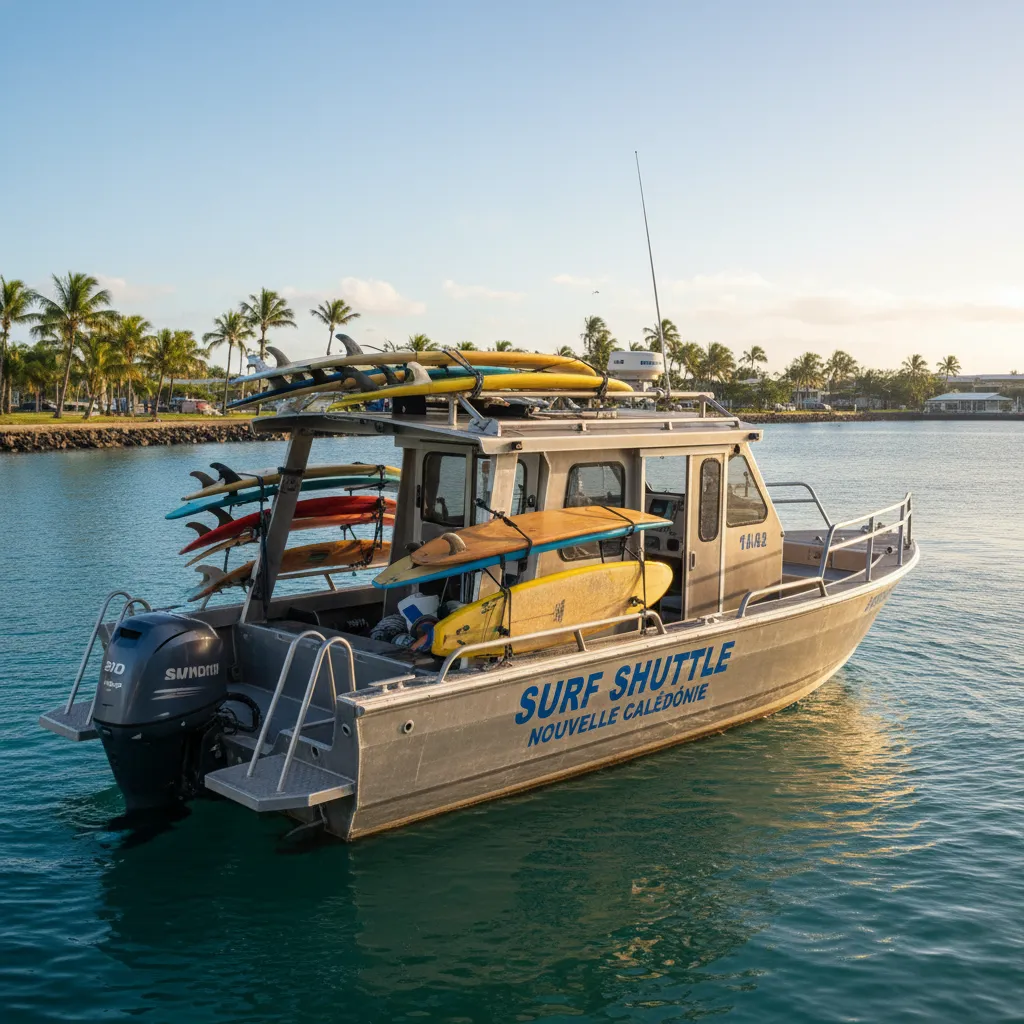
Most legitimate surf transfers operate out of Nouméa, specifically Port Moselle. These vessels are typically rigid-hulled inflatable boats (RIBs) or aluminium taxi boats designed to handle the chop of the lagoon. Look for operators that specifically advertise “Taxi Boat” or “Navette” services. The most established operators have a physical presence or clear signage at the marina.
Recommended Operators
While ownership changes, several entities have established a strong reputation for serving the surfing community:
- Taxi Boat Nouméa: One of the most recognizable services. They run scheduled shuttles to islets like Îlot Canard and Îlot Maître, but they also specialize in surfer drop-offs to the outer reef. They are known for punctuality.
- Dal’Océan: Often favored for charters, they provide tailored trips to specific breaks. Their captains are usually knowledgeable about wind conditions and swell direction, helping you choose the right pass for the day.
- Wakame Surf: A surf-specific charter often run by surfers for surfers. They understand the need for tide timing and wind shifts better than a general tourist water taxi.
When you book a surf boat transfer in New Caledonia with these groups, you are paying for their local knowledge of the reef passes. The barrier reef is complex, and navigating the cuts in the coral requires experience.
Cost Breakdown: Per Person vs. Private Charter
Understanding the pricing model is essential for budgeting your trip. New Caledonia is not a budget destination, and prices are comparable to or slightly higher than New Zealand marine charters. The currency used is the Pacific Franc (XPF). As a rough conversion guide for Kiwis, 1,000 XPF is approximately $15 NZD (subject to exchange rate fluctuations).
Shared Transfer (The “Taxi” Model)
This is the most common method for solo surfers or small groups (2-3 people). You pay a “seat” price.
- Typical Cost: 3,000 to 6,000 XPF ($45 – $90 NZD) per person, return trip.
- Pros: Cost-effective for solo travelers.
- Cons: You operate on the boat’s schedule. You may have to wait for other passengers or drop-offs at tourist islets before heading to the reef.
- Note: Most operators require a minimum of 2 or 3 passengers to make the run to the outer reef financially viable. If you are alone, you might have to pay for two seats or wait for another group.
Private Charter (The “Strike Mission” Model)
For a group of 4 to 8 Kiwis heading over for a dedicated surf trip, chartering the entire boat is the superior option.
- Typical Cost: 40,000 to 80,000 XPF ($600 – $1,200 NZD) for a half-day or full-day rental.
- Pros: Total freedom. You choose the departure time, you can switch breaks if the wind turns, and the boat often stays with you (or nearby) rather than dropping you off and leaving.
- Value: If you split a 50,000 XPF charter among 5 surfers, the cost is 10,000 XPF each. While more expensive than a taxi, the ability to chase the best waves across different passes is worth the premium.
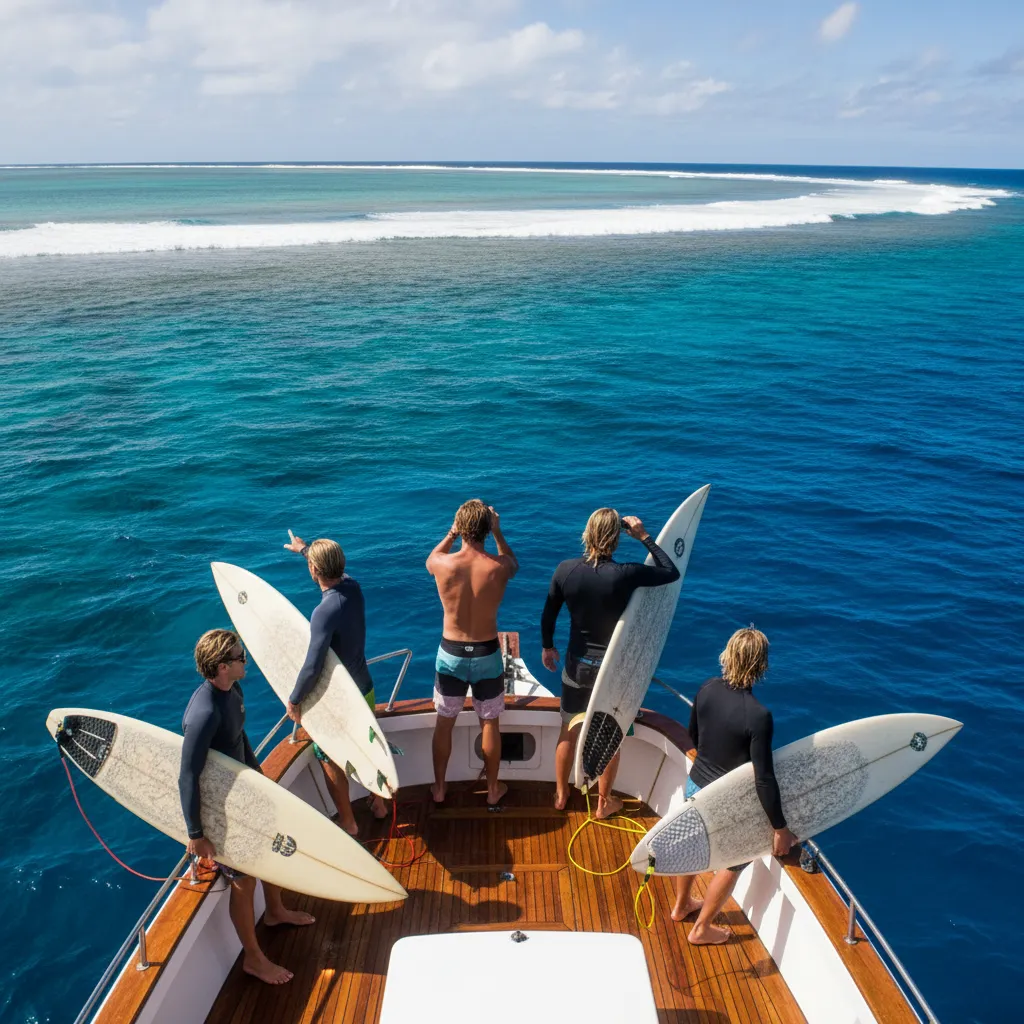
Booking Procedures: Phone, Online, and WhatsApp
The digital infrastructure for booking marine transport in New Caledonia is improving, but it often retains a relaxed “island time” approach. Do not expect instant automated confirmations like you might find with Uber.
The WhatsApp Ecosystem
Surprisingly, WhatsApp is the most effective tool to book a surf boat transfer in New Caledonia. Most captains and operators manage their bookings directly via text.
- Find the Number: Look for the operator’s Facebook page (very popular in NC) to find their current WhatsApp number.
- Send a Detailed Request: Send a message in simple English or French (Google Translate is your friend). Include: Date, Time, Number of Surfers, Board Bag sizes (if excessive), and Desired Destination (e.g., “Pass de Dumbéa”).
- Wait for Confirmation: You will usually get a reply within a few hours.
Phone vs. Online Booking
Phone: Calling is effective if you speak basic French. If you don’t, it can be a struggle. WhatsApp allows for translation and a written record of the agreement.
Online Forms: Some larger tourism websites offer booking forms, but these are often third-party agents. Booking directly with the captain ensures your request doesn’t get lost in translation.
Payment Methods
Cash is king on the wharf. While some operators have mobile EFTPOS terminals, signal issues at sea or on the dock can cause failures. Always carry enough XPF cash to cover the fare. If you are booking a large private charter, they may request a deposit via bank transfer or credit card link beforehand.
Key Departure Points for Main Breaks
Knowing where to meet your captain is crucial. Nouméa is a peninsula, and traffic can be heavy during rush hour.
Port Moselle (Nouméa)
This is the central hub. 90% of surf transfers depart from here. It is located near the city market. There is usually a specific pontoon designated for “Taxi Boats” (often Pontoon K or near the capitainerie). Confirm the exact pontoon number when you book.
- Access to: Dumbéa Pass, Boulari Pass, Annibal.
- Travel Time to Reef: 20 to 40 minutes depending on sea state.
Port Brunelet
Located near the yacht club, some private charters operate from here. It is quieter than Moselle but requires specific arrangement for access.
Ouano (La Foa)
For surfers venturing north of Nouméa to the famous Ouano lefts, the departure point is the wharf at the Ouano peninsula. This is a rural area about 1.5 hours drive from Nouméa. You generally cannot find a “taxi” here on demand; trips to the Ouano reef must be pre-arranged with local operators or the surf camp in the area.
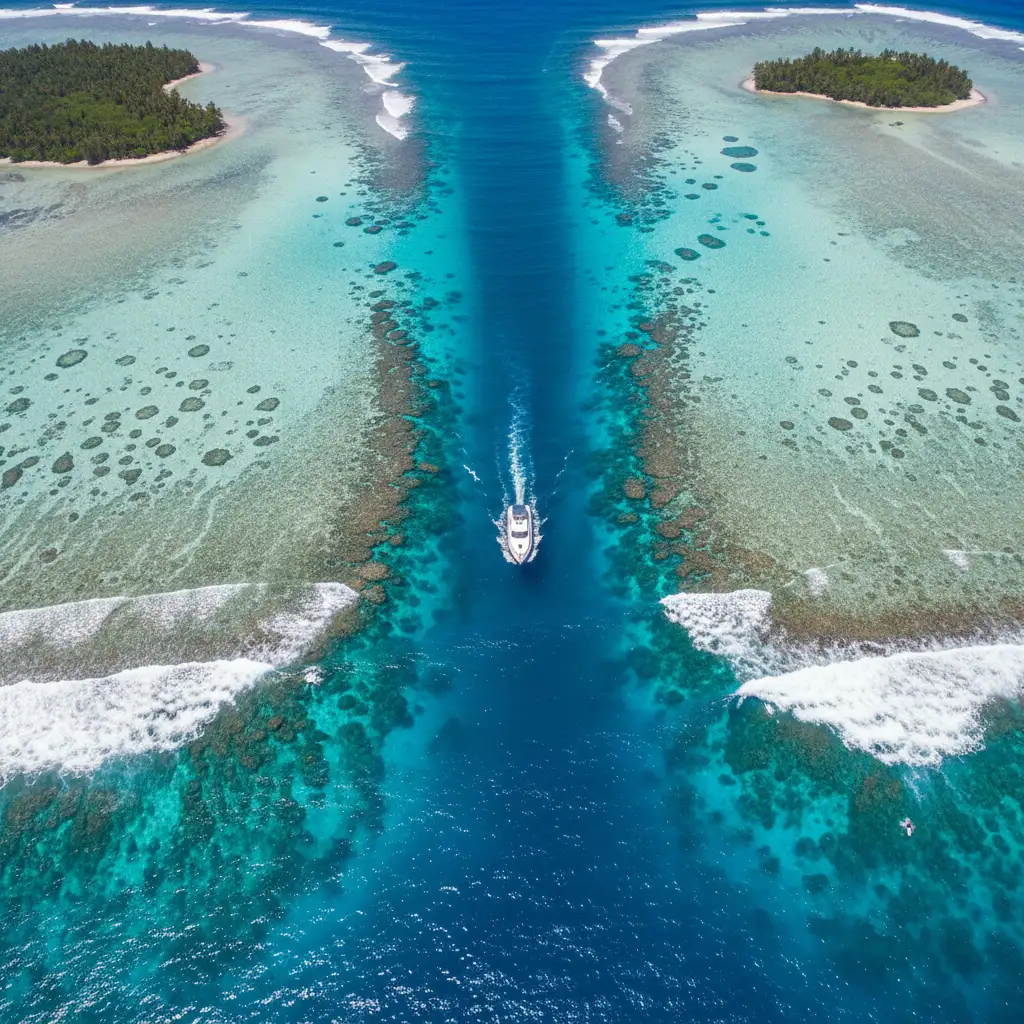
Safety Equipment and On-Board Protocols
The New Caledonia lagoon is the largest in the world, and conditions can change rapidly. When you book a surf boat transfer in New Caledonia, you are entering a regulated maritime environment.
Mandatory Gear
Licensed boats must carry life jackets for all passengers, VHF radio, flares, and a first aid kit. Before departing, ensure you see where the life jackets are stowed. If the boat looks dilapidated or lacks a radio, do not board. The reef is far from help.
The “Drop-Off” Protocol
If you are doing a drop-off (where the boat leaves you at the waves and returns later), strict protocols are necessary:
- Set a Hard Pick-Up Time: Agree on a specific time for retrieval.
- Buffer Time: Ensure the captain knows to wait at least 15-20 minutes if you aren’t at the exact spot (drift happens).
- Emergency Communication: It is highly recommended to carry a waterproof pouch with a mobile phone (coverage exists at some passes) or a PLB (Personal Locator Beacon) if you are being left alone at an outer reef.
Best Times for Kiwi Surfers to Visit
While you can surf year-round, the consistency varies. Understanding the seasons will help you decide when to book your transfer.
Winter (May to September)
This is the prime swell season. Low pressure systems from the Tasman Sea (the same ones that hit the West Coast of NZ) pump swell up to New Caledonia. The wind is generally consistent trade winds (Southeast), which are offshore for the main left-hand passes like Dumbéa and Ouano.
Summer (November to March)
Swells are smaller and less consistent, often driven by cyclones. The winds are lighter, which opens up different breaks that might be blown out in winter. However, the heat can be intense, and cyclone risk is real.
Frequently Asked Questions
How much does a surf boat transfer cost in New Caledonia?
A standard return trip via a shared taxi boat typically costs between 3,000 XPF and 5,000 XPF ($45-$75 NZD) per person. Private charters for a half-day can range from 40,000 XPF to 60,000 XPF depending on the vessel size and distance to the reef.
Can I take my own surfboard on the public ferries in Noumea?
Generally, the large public ferries to tourist islands like Îlot Maître allow surfboards, but they do not go to the surf breaks on the barrier reef. You must book a specific taxi boat or charter to reach the surf passes.
Do I need to book surf transfers in advance?
Yes, booking at least 24 hours in advance is highly recommended, especially on weekends when locals fill up the boats. For private charters, try to book a week in advance.
What is the best surf break near Noumea?
The most accessible and popular break is the Dumbéa Pass (often called “The Pass”). It is a high-performance left-hander that handles large swells. Boulari Pass is another option but is often more exposed to wind.
Is it safe to surf the outer reefs in New Caledonia?
The waves are powerful and break over sharp coral. It is recommended for intermediate to advanced surfers. Sharks are present in the lagoon; always surf with a buddy, avoid murky water, and adhere to local advisories regarding shark activity.
Do boat operators speak English?
Many operators in the tourism sector speak basic English, but proficiency varies. It is helpful to have your destination and pick-up times written down or sent via text/WhatsApp to avoid miscommunication.