To see the Heart of Voh in New Caledonia, you can book a microlight flight from Koné for the most iconic aerial perspective, hike the Mount Katépaï trail for a budget-friendly panoramic overlook, or join a guided 4×4 tour. This natural mangrove formation is best viewed from altitude to appreciate its distinct heart shape.
The Arthus-Bertrand Legacy: Why the Heart of Voh is Famous
The Heart of Voh, or Cœur de Voh, gained international stardom not through human architecture, but through the lens of French photographer Yann Arthus-Bertrand. In 1990, his photograph of this natural phenomenon was featured on the cover of his world-renowned book, “The Earth from Above” (La Terre vue du ciel). For many New Zealanders, this image represents the quintessential mystery of the South Pacific—a perfect, naturally occurring heart shape formed by the Avicennia marina mangroves against the salt flats of the Voh commune.

What makes this site so compelling is its organic origin. Unlike the man-made Palm Islands of Dubai, the Heart of Voh was created entirely by nature. The varying salinity levels and water depths in the mangrove swamp caused different species of trees and vegetation to grow at different heights and densities, naturally carving out a heart-shaped clearing. This geological and botanical fluke has become the symbol of New Caledonia’s commitment to preserving its unique biodiversity. For the Kiwi traveler, it is a reminder that even in a world of digital perfection, nature still holds the most impressive designs.
Booking a Microlight Flight from Koné: The Ultimate View
How to see the Heart of Voh in its most perfect form? The answer is undeniably from the air. Because the “heart” is a flat formation within a massive mangrove swamp, standing at sea level reveals nothing but a wall of tangled roots and green leaves. To see the geometry that Arthus-Bertrand captured, you must gain significant elevation.
Most aerial tours depart from the Koné airfield, located about 30 minutes south of Voh. These flights are typically conducted in microlights (ULMs), which are small, two-seater aircraft that provide an intimate and unobstructed view of the landscape. For New Zealand visitors, the experience is similar to scenic flights over the Southern Alps, but with the warm breeze of the tropics and the vibrant blues of the world’s largest lagoon.
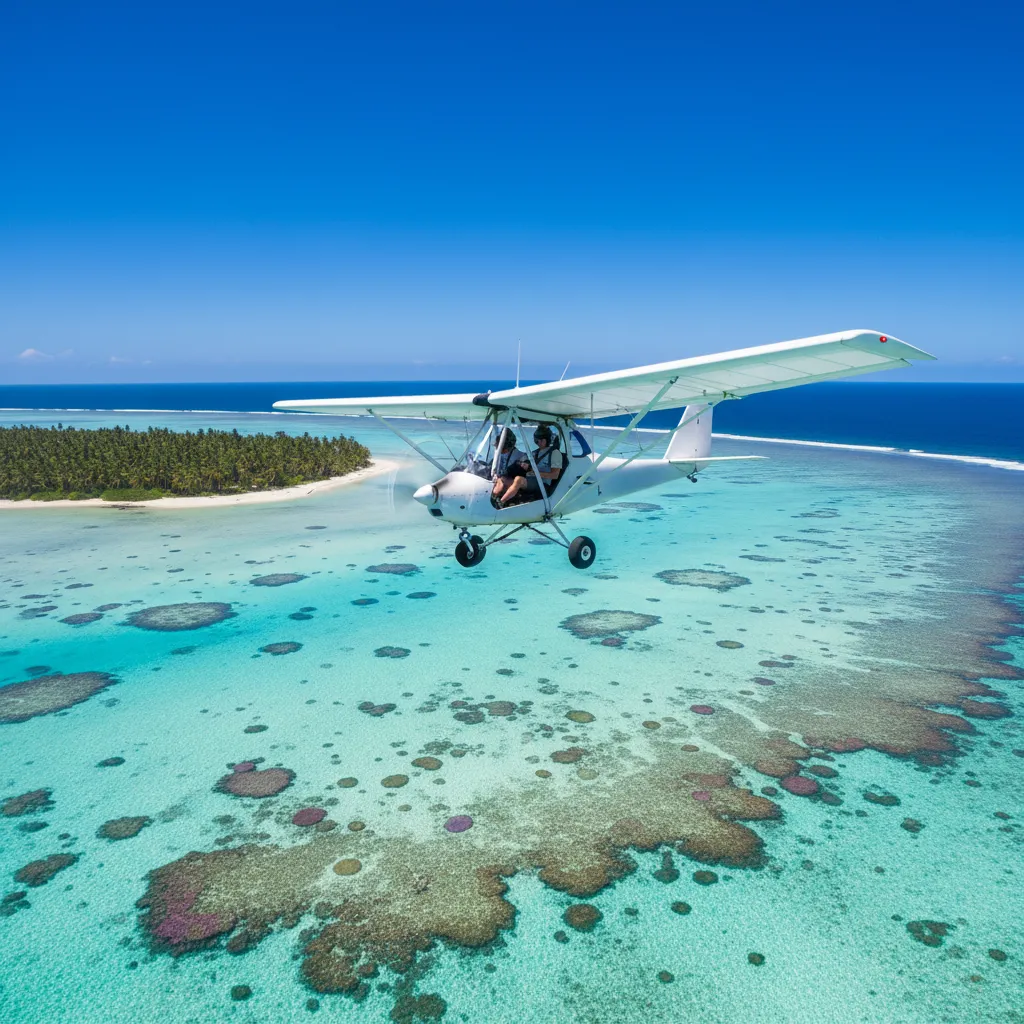
When booking your flight, typically through local operators like Hibis Air, you can choose between various flight durations. A 45-minute flight usually covers the Heart of Voh, the Blue Hole of Oundjo (a stunning natural deep-sea hole in the reef), and the magnificent barrier reef itself. The sensation of flying in a microlight is unparalleled; with the pilot right beside you and a panoramic canopy, you feel fully immersed in the environment. It is highly recommended to book these flights at least two weeks in advance, especially during the peak New Zealand winter escape months (June to August), as availability is limited.
Hiking Mount Katépaï vs. 4×4 Access
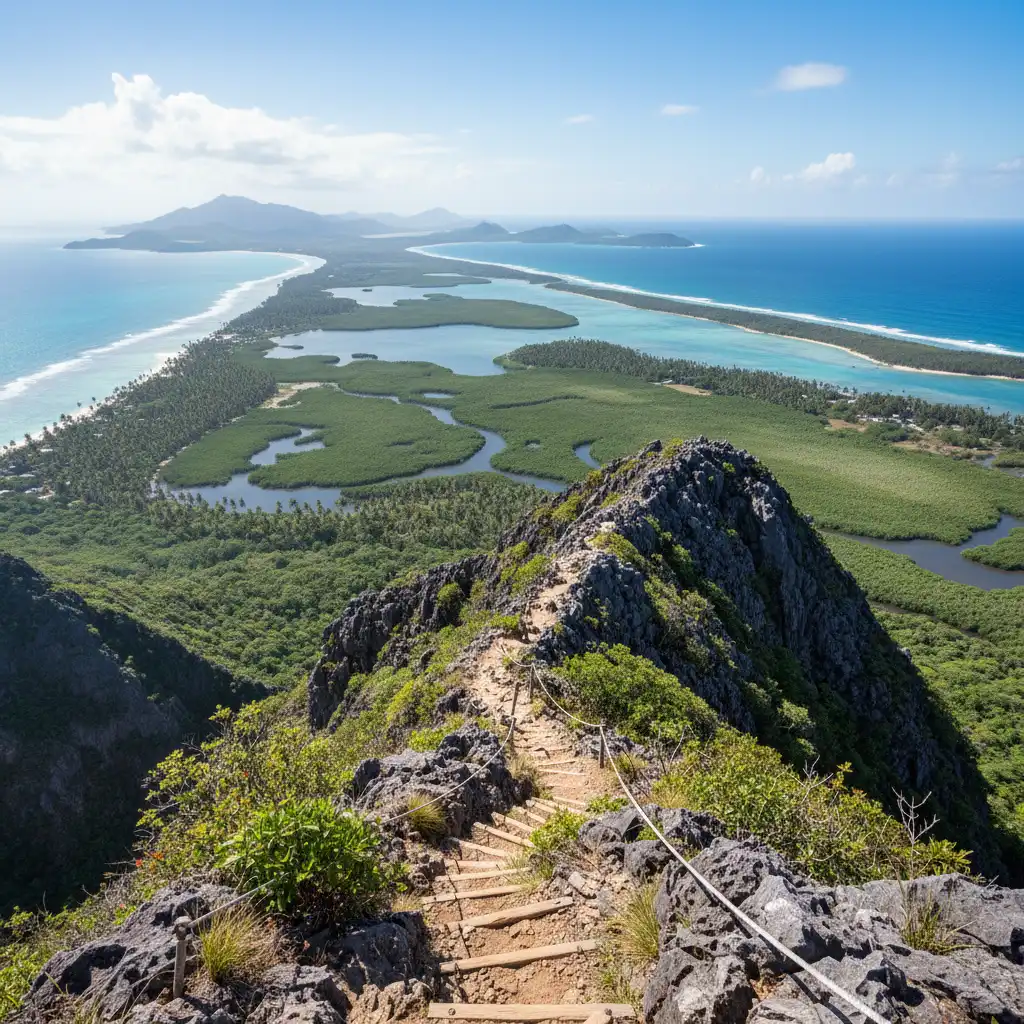
For those who prefer to keep their feet closer to the ground, or for travelers on a stricter budget, the Mount Katépaï viewpoint offers a terrestrial alternative. While you won’t see the perfectly symmetrical “top-down” heart seen in photographs, the side-on perspective from the mountain is still breathtaking and allows you to appreciate the sheer scale of the Voh valley.
The hike to the viewpoint is moderately challenging. The trail starts near the village of Voh and ascends approximately 400 meters. The path is often rocky and exposed to the sun, so New Zealand hikers should prepare as they would for a summer trek in the Tongariro National Park—plenty of water, high-SPF sunscreen, and a good hat are essential. The round trip takes roughly 2.5 to 3 hours. As you ascend, the vista opens up to reveal the red earth of the northern province clashing beautifully with the emerald green of the mangroves and the sapphire blue of the Pacific Ocean.
If hiking in the tropical heat sounds too strenuous, 4×4 tours are the preferred method for many. Local guides operate rugged off-road vehicles that can navigate the steep, winding tracks of Mount Katépaï. This option is particularly good for families or those with limited mobility. A 4×4 tour often includes cultural storytelling, where guides explain the significance of the land to the local Kanak people, adding a layer of depth to the visual spectacle that a solo hike might miss.
Best Time for Visibility and Tides
Timing is everything when planning how to see the Heart of Voh. The appearance of the heart changes significantly based on the tides and the time of day. To see the most vibrant contrast between the green mangroves and the surrounding tan-colored salt flats (the “tanne”), it is best to visit during low tide. When the tide is high, water covers the salt flats, softening the edges of the heart and reducing the color contrast that makes the formation pop in photos.
Regarding the time of day, early morning (between 7:00 AM and 9:00 AM) is widely considered the golden window. At this hour, the air is still clear, the heat is manageable, and the morning sun illuminates the mangroves without the harsh glare of midday. For photographers, this side-lighting emphasizes the textures of the trees and the ripples in the water. Furthermore, morning weather in the Northern Province tends to be more stable, with fewer clouds obstructing the view from a microlight or the mountain peak.
Planning Your Trip from New Zealand
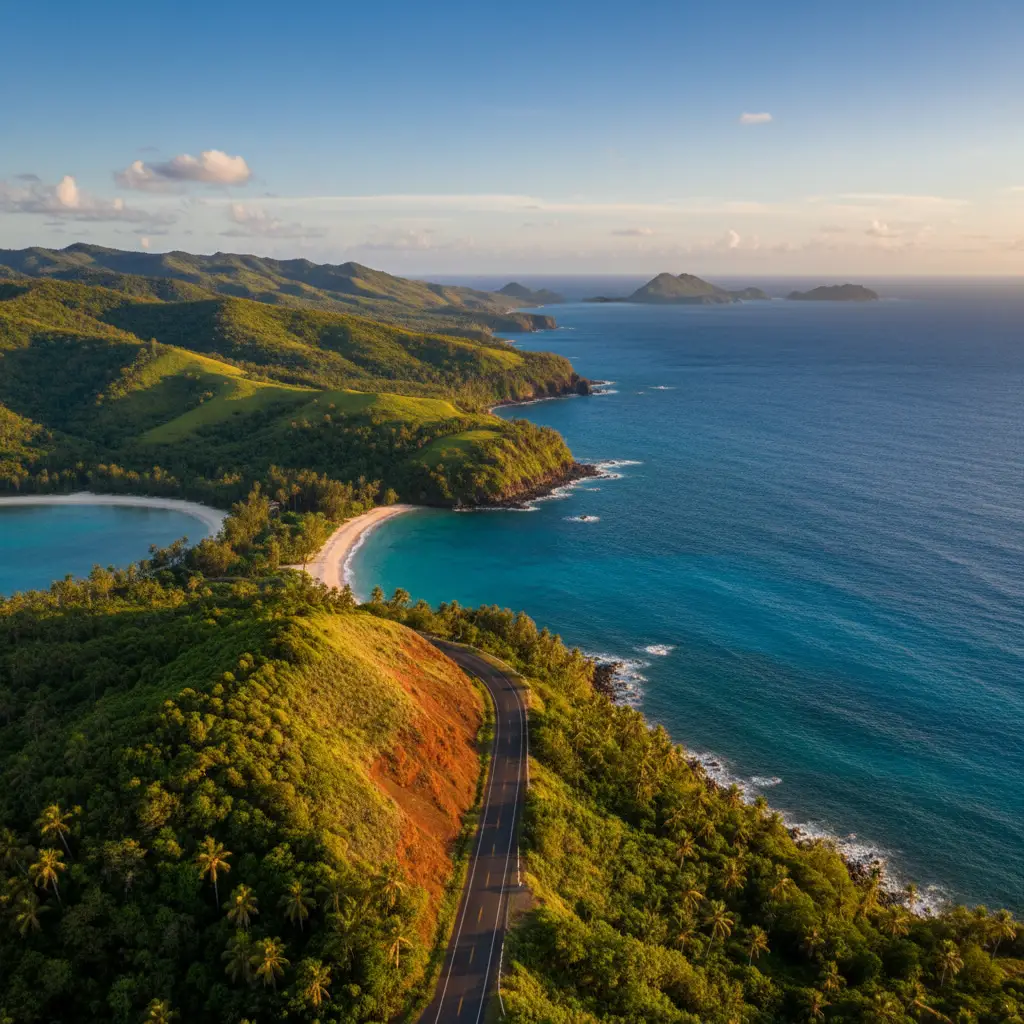
For New Zealanders, New Caledonia is a remarkably accessible “French” getaway, located just under three hours from Auckland. To reach Voh, you will first land at La Tontouta International Airport near Nouméa. From there, the journey to the North begins. Voh is approximately a 4-hour drive from Nouméa. Most travelers choose to rent a car at the airport, which provides the freedom to explore the West Coast’s “Cowboy Country” at their own pace.
The drive north on Route Territoriale 1 (RT1) is a scenic experience in itself, passing through rolling grasslands and niaouli forests that look surprisingly like parts of Northland, yet with a distinctively tropical, New Caledonian twist. It is advisable to spend at least two nights in the Koné or Voh area. This allows for one morning dedicated to a microlight flight and another for the hike or 4×4 tour, providing a buffer in case of inclement weather.
The Ecology of the Mangroves: A Natural Wonder
Beyond its visual appeal, the Heart of Voh is a critical ecological site. The mangroves of New Caledonia act as a natural filter for the lagoon and a nursery for countless marine species. The specific species forming the heart, *Avicennia marina*, is particularly hardy, able to withstand high salinity levels that would kill other trees. The “heart” shape is essentially a clearing where the salinity became too high even for these resilient mangroves, creating a natural border.
Understanding this delicate balance adds to the awe of the site. As climate change and rising sea levels threaten coastal ecosystems globally, the Heart of Voh stands as a fragile masterpiece. New Caledonian authorities have implemented strict protections to ensure that tourism does not disrupt the natural processes that created the heart. When visiting, whether by air or land, travelers are encouraged to follow the “Leave No Trace” principles to preserve this icon for future generations of Kiwis and world travelers alike.
Where to Stay in Koné
Koné is the administrative capital of the North Province and the best base for your Voh adventure. Options range from the comfortable Hotel Hibiscus, which is famous for its lush gardens and proximity to the microlight takeoff point, to the more modern Koniambo Hotel. Staying in Koné allows you to experience the local pace of life, which is significantly slower and more relaxed than the bustling capital of Nouméa. You will find local markets, French bakeries (boulangeries) offering fresh croissants, and a unique blend of Kanak and French culture that defines the region.
Photography Tips for the Heart
If you are taking a microlight flight, photography can be tricky due to the movement of the plane and the glass canopy. Use a fast shutter speed (at least 1/1000s) to combat engine vibration. If possible, wear dark clothing to minimize reflections on the aircraft’s window. For those on the ground at Mount Katépaï, a polarising filter is your best friend; it will cut through the haze and make the blues of the lagoon and greens of the heart look much more saturated and true to life.
People Also Ask
Where exactly is the Heart of Voh located?
The Heart of Voh is located on the northwest coast of Grande Terre, New Caledonia’s main island. It is situated in the commune of Voh, approximately 300 kilometers north of the capital city, Nouméa.
Can you walk inside the Heart of Voh?
No, walking inside the Heart of Voh is not recommended and largely impossible due to the dense, swampy nature of the mangrove forest and the protected status of the area. The formation is meant to be viewed from a distance to protect the ecosystem.
How much does a microlight flight cost?
A microlight flight over the Heart of Voh typically costs between 15,000 and 22,000 CFP (approximately $200 to $300 NZD), depending on the duration of the flight and the operator.
Is it worth visiting the Heart of Voh?
Yes, it is widely considered one of the most unique natural landmarks in the South Pacific. For photography enthusiasts and nature lovers, the combination of the aerial view and the cultural experience of the North Province is highly rewarding.
How long is the hike to the viewpoint?
The hike to the Mount Katépaï viewpoint takes about 1.5 hours to ascend and 1 hour to descend. It is a 2.5 to 3-hour round trip depending on your fitness level and how long you spend at the top.
Do I need a guide to see the Heart of Voh?
You do not strictly need a guide to hike Mount Katépaï, as the trail is marked. However, a guide is required for 4×4 tours, and a pilot is obviously necessary for microlight flights. Guides offer valuable local context and history.