
Getting around the Nouméa bus system involves using the Tanéo network, a modern public transport service covering the Greater Nouméa area. Visitors can travel via the high-frequency Néobus or regular lines using a rechargeable Pass Tanéo or mobile app. The system efficiently connects major tourist hubs like Anse Vata and Baie des Citrons.
How to use the Tanéo bus network
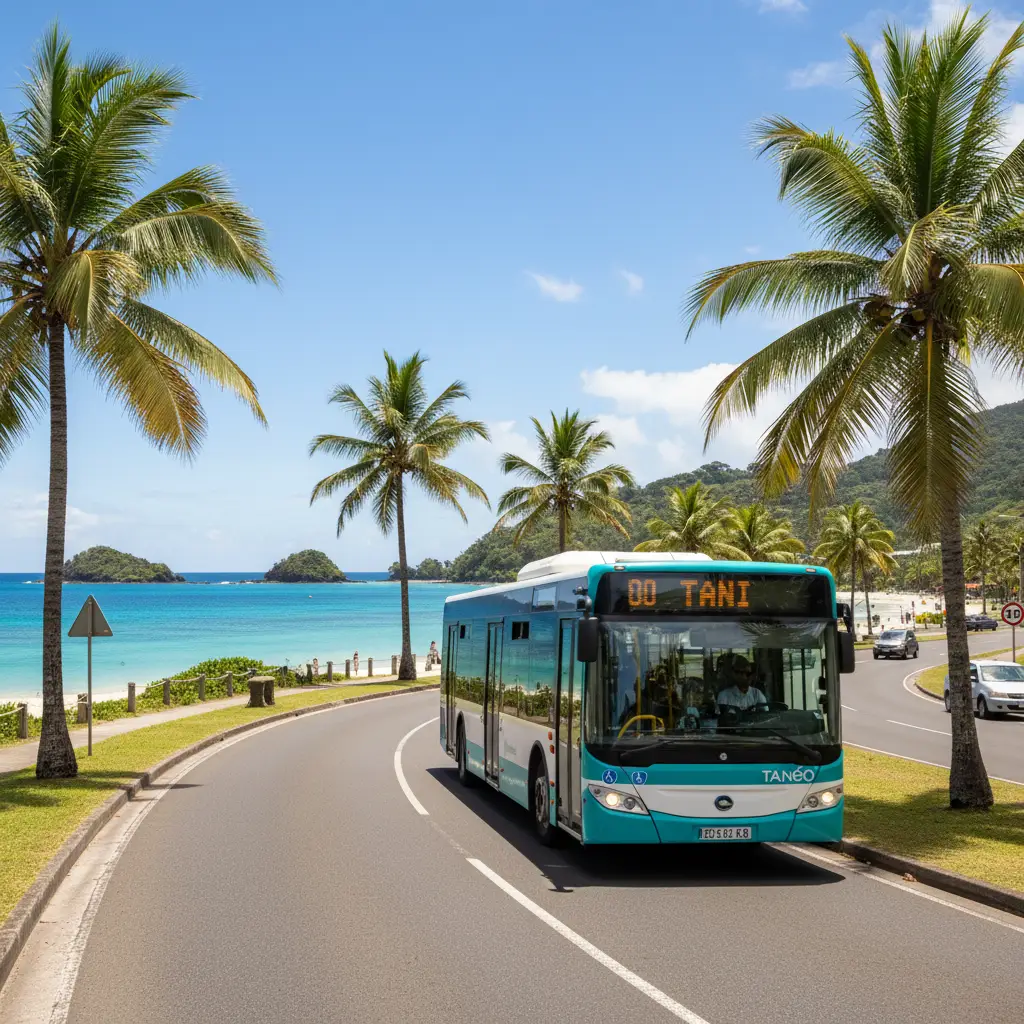
For many New Zealanders arriving in New Caledonia, the first point of contact with the local infrastructure is the vibrant, turquoise-and-white Tanéo bus system. Launched in late 2019, this network completely revolutionized how residents and tourists navigate the capital. Gone are the days of the fragmented ‘Karouïa’ and ‘CarSud’ lines; today, Tanéo offers a unified, high-tech solution that is both affordable and reliable.
The Néobus: Nouméa’s Rapid Transit
The crown jewel of the network is the Néobus (Line L1). This is a Bus Rapid Transit (BRT) system that operates on its own dedicated lanes, ensuring it bypasses the peak-hour traffic that can often congest the narrow streets of the city center. For tourists, the Néobus is particularly useful for traveling from the outlying suburbs into the heart of the city, near the Place des Cocotiers.
Ticketing and the Pass Tanéo
Navigating the ticketing system is straightforward once you understand the local terminology. You cannot pay with cash directly to the driver. Instead, you have three primary options:
- Pass Tanéo: A rechargeable smart card available at ‘Espace Tanéo’ offices or automated kiosks. This is the most cost-effective method for those staying more than a few days.
- Ticket Secours: A single-trip ticket purchased at ticket vending machines (TVMs) located at major stops.
- Mobile App: The Tanéo app allows you to purchase digital tickets and track bus locations in real-time—a feature highly recommended for Kiwis used to the Auckland Transport or Metlink apps.
The cost of a single trip is approximately 300 XPF (roughly $4.50 NZD) if bought at a machine, but significantly cheaper if using a pre-loaded pass. Remember to validate your card or ticket upon boarding at the electronic readers.
Key Routes for Tourists
For those staying in the popular hotel districts, Line N4 and Line N3 are essential. These routes connect the cruise ship terminal (Gare Maritime) and the city center (Place des Cocotiers) with the beach zones of Baie des Citrons and Anse Vata. During the day, buses typically run every 15 to 20 minutes, though service frequency decreases in the evenings and on Sundays.
The ‘Petit Train’ for tourists
If the Tanéo system is the functional backbone of Nouméa, the ‘Petit Train’ (Little Train) is its charming, leisure-oriented counterpart. This bright yellow, tractor-pulled train is a staple of the Nouméa tourism scene, specifically designed to give visitors a comprehensive overview of the city’s highlights without the need for strenuous walking.

Route and Experience
The Petit Train typically departs from the Anse Vata bay area, near the major resorts. The guided tour lasts about two hours and takes passengers through a scenic loop that includes the Ouen Toro lookout—offering 360-degree views of the lagoon and the surrounding islands—the historic city center, and the various bays (Baie des Orphelins, Baie des Citrons). It is an excellent way for first-time visitors from New Zealand to orient themselves before exploring on foot or by bus.
Booking and Practicalities
The train is particularly popular on days when cruise ships are in port, so booking in advance is highly recommended. Commentary is usually provided in both French and English, making it accessible for Kiwi travelers. It is important to note that the Petit Train is a ‘loop’ service; it is not a hop-on-hop-off bus. You stay on for the duration of the tour, making it a sightseeing activity rather than a primary mode of point-to-point transport.
Taxi boat services to nearby islands
Nouméa’s greatest asset is its proximity to the world’s largest coral lagoon. While the city beaches are beautiful, the true ‘Postcard New Caledonia’ experience is found on the tiny islets scattered just offshore. This is where the taxi boat system becomes indispensable.
Main Departure Points
Most taxi boats operate from the beach at Anse Vata. You will see several small kiosks and signs along the promenade representing different companies. The most frequent services run to Île aux Canards (Duck Island) and Îlot Maître.
- Île aux Canards: A mere 5-minute boat ride. This is the perfect spot for snorkeling, with a marked underwater trail.
- Îlot Maître: About a 15-minute ride. Home to a luxury resort and famous for the sea turtles that frequent its shallow waters.
- Îlot Phare Amédée: While technically served by larger tour operators, some private taxi boats can be chartered for the longer journey to this iconic lighthouse island.
How to Book a Taxi Boat
Booking is generally done on the spot or via WhatsApp/phone. You agree on a return time with the skipper, and they will be there to collect you. Prices range from 1,500 XPF to 3,500 XPF ($22 – $52 NZD) depending on the destination and the operator. It is a highly efficient system that allows for maximum flexibility compared to large group tours.
Walking distances between beaches
One of the delights of Nouméa is its pedestrian-friendly coastline. The city is built around a series of bays, and a well-maintained promenade connects them, offering stunning sunset views and plenty of places to stop for a ‘citron pressé’ or a glass of French wine.
Baie des Citrons to Anse Vata
The most common walk for tourists is between the Baie des Citrons (Lemon Bay) and Anse Vata. This stretch is approximately 1.5 kilometers long and takes about 15 to 20 minutes at a leisurely pace. The path is flat, paved, and follows the curve of the coastline, passing the Rocher à la Voile (Sailing Rock) which marks the transition between the two bays.
The Promenade Pierre Vernier
For those who enjoy a longer stroll or a morning jog, the Promenade Pierre Vernier is the place to be. This 4-kilometer track is lined with coconut palms and is a favorite for local fitness enthusiasts. It stretches from the foot of Ouen Toro around to the Sainte-Marie bay. Walking from the heart of Anse Vata to the end of this promenade and back is a solid 1.5 to 2-hour activity.
City Center to the Bays
Walking from the city center (Place des Cocotiers) to the beaches is a more significant undertaking. It is roughly 4 to 5 kilometers and involves some hills. While doable for those who enjoy urban hiking, most visitors prefer to take the Tanéo bus for this leg and save their walking energy for the scenic coastal paths.
Traditional Taxis and Airport Shuttles
While the bus system is excellent for daytime travel, you may find yourself needing a traditional taxi for evening dining or airport transfers. It is important to note that Nouméa does not currently have Uber or similar ridesharing platforms.
Booking a Taxi
Taxis in Nouméa are metered and professional. However, they are rarely found cruising the streets for hails. To get a taxi, you should either find a designated taxi rank (such as the one at Place des Cocotiers or the Gare Maritime) or have your hotel/restaurant call one for you. The central dispatch number for ‘Radio Taxi’ is a useful contact to keep in your phone.
Airport Transfers: Tontouta vs. Magenta
New Zealand travelers will arrive at La Tontouta International Airport (NOU), which is located about 45-60 minutes north of Nouméa. A taxi for this journey can be quite expensive (often exceeding 10,000 XPF / $150 NZD). Most travelers opt for a shared shuttle service like ‘Les Mouettes’ or ‘Arc en Ciel’, which must be booked in advance and costs roughly 3,000 XPF per person. Magenta Airport, on the other hand, is the domestic hub located right in the city, easily accessible by local taxi or even certain Tanéo bus lines.
Practical Tips for New Zealand Travelers
Navigating a French-speaking territory requires a few adjustments for Kiwis. Firstly, remember that traffic drives on the right-hand side of the road. When waiting for a bus, ensure you are on the correct side of the street—it’s easy to make a mistake when you’re used to the left!
Language is the second consideration. While many transport operators in the tourism sector speak some English, knowing basic French phrases for ‘Where is the bus stop?’ (Où est l’arrêt de bus?) or ‘How much is it?’ (C’est combien?) will go a long way. Additionally, ensure you have some XPF (Pacific Francs) on hand. While cards are widely accepted for passes, smaller kiosks or boat skippers may prefer cash.
Finally, embrace the pace of the Pacific. While the Tanéo system is modern, things can occasionally run on ‘island time.’ Use the real-time tracking on the app, but always leave a little buffer room if you have a specific reservation or a flight to catch. With a bit of planning, getting around Nouméa is a seamless part of the New Caledonian adventure.
Is there Uber in Nouméa?
No, Uber and other major ridesharing apps do not operate in New Caledonia. You will need to use the Tanéo bus system, traditional metered taxis, or private shuttle services.
How much is a bus ticket in Nouméa?
A single-trip ticket (Ticket Secours) purchased from a machine costs 300 XPF (approx. $4.50 NZD). Prices are lower if you use a rechargeable Pass Tanéo.
Can I walk from the cruise ship terminal to the beach?
The walk from the Gare Maritime (cruise terminal) to Baie des Citrons is about 3.5 to 4 kilometers (roughly 45 minutes). Most cruise passengers take a bus or the Petit Train.
How do I get from Tontouta Airport to Nouméa?
The most common method is a pre-booked shuttle service like Arc en Ciel, which takes about an hour. Taxis are available but are significantly more expensive.
Do bus drivers speak English?
Some bus drivers may speak basic English, but it is not guaranteed. It is helpful to have your destination written down or use the Tanéo app to manage your route.
Are taxis expensive in New Caledonia?
Taxis are generally more expensive than in New Zealand, especially for long distances like the airport transfer. For city travel, they are metered and prices are regulated.