
New Caledonia culture is a sophisticated and vibrant blend of indigenous Kanak heritage and refined French lifestyle. This unique Pacific identity is defined by the harmonious coexistence of ancient Melanesian traditions, known as ‘La Coutume,’ and modern European influences, manifesting in world-class gastronomy, colonial architecture, and a diverse multilingual society located just hours from New Zealand.
What are the core pillars of Kanak traditions?
At the heart of New Caledonia culture lies the Kanak people, the indigenous Melanesian inhabitants who have occupied the archipelago for over 3,000 years. Their social structure is built upon a complex system of clans, lineages, and a deep spiritual connection to the land and sea. For any traveler, understanding the Kanak way of life is essential to appreciating the soul of the islands.
Central to this identity is the concept of “La Coutume” (The Custom). This is not merely a set of rules but a philosophy that governs social interactions, land rights, and historical narratives. When entering a Kanak tribe’s territory or home, it is traditional to perform a small gesture of respect by offering a symbolic gift—often a piece of cloth (manou), a small amount of money, or a souvenir from one’s home country. This act acknowledges the hosts’ sovereignty over their land and opens a path for mutual respect and dialogue.

The Significance of the Grand Case
The architectural symbol of Kanak culture is the ‘Grand Case’ (Great House). These conical wooden structures with high, thatched roofs are more than just dwellings; they represent the physical manifestation of the clan hierarchy. The central pole signifies the chief, while the surrounding structure represents the people. Inside, the lack of partitions emphasizes communal living and the importance of oral tradition, where history and myths are passed down through generations by the elders.
How does the French influence shape modern New Caledonian lifestyle?
While the roots of the island are Melanesian, the surface is unmistakably French. Since New Caledonia became a French overseas territory in the mid-19th century, European influence has permeated every aspect of urban life, particularly in the capital, Nouméa. Often referred to as the “Paris of the Pacific,” Nouméa offers a lifestyle that feels remarkably familiar yet exotic to visitors from New Zealand.
The French influence is most visible in the pace of life. The “art de vivre” (art of living) is taken seriously here. You will find locals enjoying long lunches at waterfront bistros, playing pétanque in the squares, and shopping at high-end boutiques that carry the latest Parisian fashions. The French language is the official tongue, though it is often infused with local slang and melodic Pacific accents, creating a linguistic bridge between two worlds.
Urban Sophistication in Nouméa
Nouméa’s bays—Baie des Citrons and Anse Vata—are the epicenters of this French-Pacific fusion. Here, the architecture mimics the French Riviera, with white-sand beaches lined with palm trees and chic cafes. The city’s layout, with its central Place des Cocotiers, serves as a communal hub where festivals, markets, and concerts bring the diverse population together. For Kiwis, the transition from the rugged landscapes of New Zealand to the manicured elegance of Nouméa provides a refreshing cultural contrast that feels like a European holiday without the long-haul flight.

What are the culinary highlights for Kiwi foodies?
For the New Zealand traveler, the food scene in New Caledonia is perhaps the most exciting aspect of the cultural fusion. It is a place where the precision of French culinary techniques meets the fresh, tropical bounty of the Pacific. This intersection creates a gastronomic landscape that is both sophisticated and deeply rooted in the earth.
On one hand, you have the classic French experience. Every morning, the scent of fresh baguettes and croissants wafts through the streets. You can find authentic pâtisseries serving delicate macarons and éclairs that would rival any in Lyon or Bordeaux. The supermarkets are stocked with imported French cheeses, wines, and charcuterie, allowing for world-class picnics on the beach.
The Traditional Bougna Feast
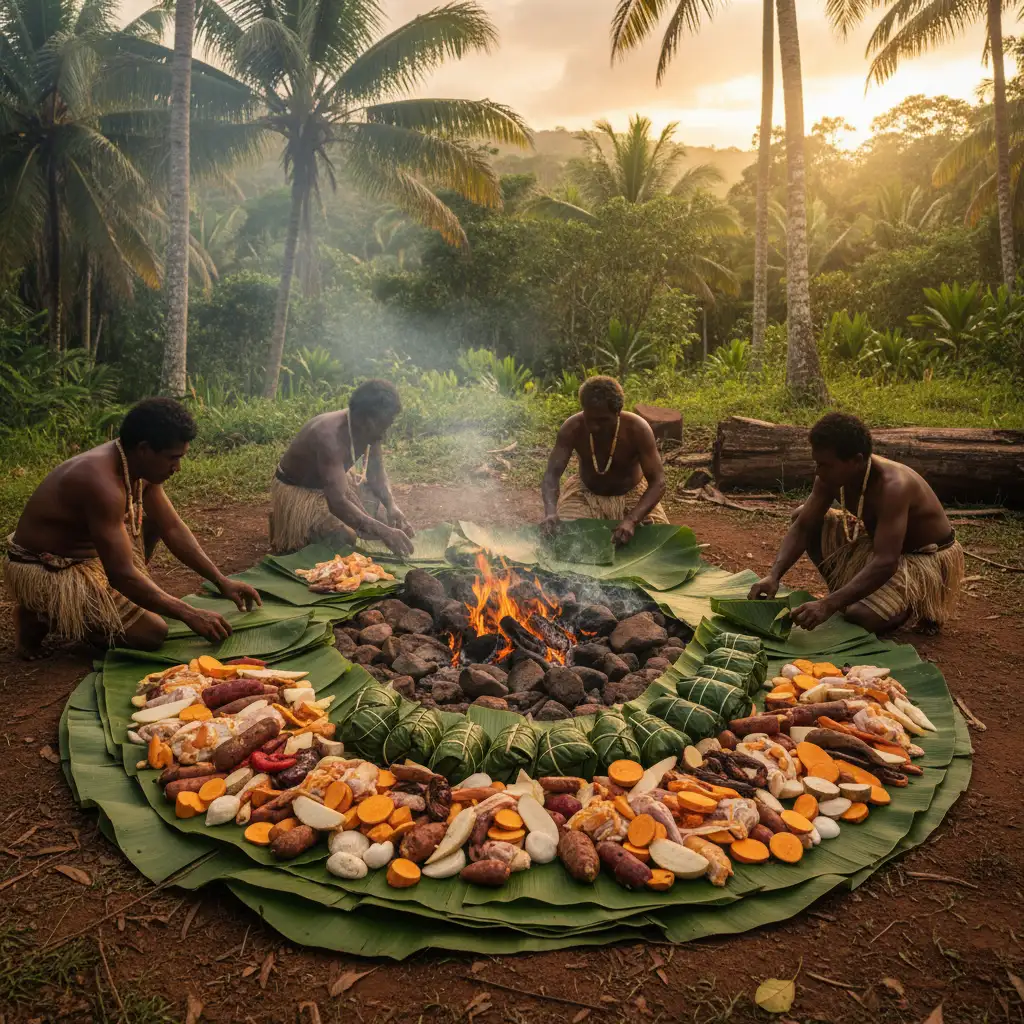
Contrastingly, the most iconic dish of New Caledonia culture is the Bougna. This traditional Kanak feast is a masterclass in slow cooking. It typically consists of root vegetables like taro, yam, and sweet potato, combined with chicken, fish, or lobster, all drenched in fresh coconut milk. The ingredients are wrapped in banana leaves and buried in an earth oven (similar to a Māori Hāngī) with hot stones to steam for several hours. The result is a smoky, tender, and incredibly flavorful meal that represents the heart of Melanesian hospitality.
Fusion Flavors and Local Seafood
Modern chefs in Nouméa are increasingly blending these two worlds. It is common to find dishes like “Carpaccio of New Caledonian Blue Prawns” or “Venison with a Hibiscus Reduction.” The local Blue Prawn is world-renowned for its sweet flavor and is a must-try for any seafood lover. This fusion extends to the beverage scene as well, where local beers and tropical fruit juices are served alongside prestigious French vintages.
What defines the art and history of New Caledonia?
The history of New Caledonia is a complex narrative of migration, colonization, and cultural resilience. This history is meticulously preserved and celebrated through the islands’ museums and art galleries. To understand New Caledonia culture today, one must look back at the various waves of people who have called these islands home, including the Kanaks, the French, and the descendants of indentured laborers from Southeast Asia and the Pacific.
The Jean-Marie Tjibaou Cultural Centre is the crown jewel of the island’s cultural landscape. Designed by the renowned architect Renzo Piano, the center is a modern architectural marvel that pays homage to traditional Kanak design. It serves as a museum, library, and performance space dedicated to the promotion of Kanak culture. The soaring wooden structures, inspired by the Grand Case, are designed to “sing” as the wind passes through them, symbolizing the living nature of indigenous traditions.
The Colonial Legacy and Maritime History
In Nouméa, the Musée de la Nouvelle-Calédonie offers a deep dive into the broader Melanesian world, featuring artifacts from across the Pacific. Meanwhile, the Maritime History Museum chronicles the voyages of explorers like Captain James Cook (who named the island after Scotland) and the later arrival of French settlers. The colonial architecture found in the “Faubourg Blanchot” district provides a glimpse into the 19th-century life of European settlers, with beautifully restored wooden villas and lush gardens.

What should New Zealand travelers know about cultural etiquette?
Traveling from New Zealand to New Caledonia is a short journey, but the cultural shift is significant. Respecting local norms is key to a rewarding experience. Because the culture is a blend of French formality and Kanak tradition, visitors should be mindful of both European and Melanesian etiquette.
In Nouméa and other urban areas, a simple “Bonjour” (Good day) or “Bonsoir” (Good evening) is expected when entering a shop, restaurant, or even getting into a taxi. It is considered polite to acknowledge the person before jumping into a transaction. In the tribes, the rules of “La Coutume” apply. If you are visiting a remote village or a tribal area, always ask for the chief or a local guide to facilitate your introduction. This ensures you are welcomed and that you are not inadvertently trespassing on sacred ground.
Environmental Stewardship
Both the Kanak and the French residents share a deep respect for the environment, particularly the lagoon, which is a UNESCO World Heritage site. When snorkeling or diving, avoid touching the coral or disturbing the marine life. Sustainable tourism is a growing focus in New Caledonia, and visitors are encouraged to support local artisans and eco-friendly operators who prioritize the preservation of the island’s unique biodiversity.
By embracing both the French “joie de vivre” and the Kanak “spirit of the land,” New Zealand travelers can experience a depth of culture that is truly unique in the South Pacific. Whether you are dining in a Michelin-standard restaurant or sharing a Bougna with a local tribe, the fusion of New Caledonia culture offers an unforgettable journey into the heart of the Pacific.