
Snorkeling New Caledonia offers an unrivaled immersion into the world’s largest enclosed lagoon, a UNESCO World Heritage site. Visitors can explore vibrant coral gardens at Duck Island, swim alongside green sea turtles at Amedee Lighthouse, and experience the crystal-clear waters of Jinek Bay’s natural aquarium, all located just a short flight from New Zealand.
For travelers seeking an underwater paradise that combines French sophistication with Melanesian warmth, New Caledonia represents the pinnacle of South Pacific snorkeling. The archipelago is not merely a holiday destination; it is a global sanctuary for marine biodiversity. With a barrier reef second only to Australia’s in length, the lagoon surrounding the main island of Grande Terre creates a protected, calm environment ideal for snorkelers of all skill levels.
The Majesty of the UNESCO World Heritage Lagoon
In 2008, the lagoons of New Caledonia were inscribed as a UNESCO World Heritage site, a testament to their exceptional natural beauty and biological diversity. This is not just a snorkeling trip; it is an exploration of one of the planet’s most vital marine ecosystems.

Why is this Lagoon Unique?
The New Caledonian lagoon covers a staggering 24,000 square kilometers. It encompasses a diversity of coral reefs that is virtually unmatched globally. Unlike other reef systems that may be suffering from severe bleaching, many of New Caledonia’s reefs remain pristine due to strict conservation efforts and the sheer vastness of the area. The lagoon features a double barrier reef—a rare geological formation—which provides multiple layers of protection against ocean swells, resulting in water clarity that often exceeds 30 meters.
For the snorkeler, this means distinct zones to explore: the fringing reefs near the shore, the intermediate patch reefs within the lagoon, and the outer barrier reefs where the ocean floor drops into the abyss. Each zone hosts a unique community of marine life, from microscopic plankton to massive pelagic species.
Snorkeling Hotspots: Duck Island and Amedee
When staying in Nouméa, you do not need to travel far to experience world-class snorkeling. Two of the most accessible and rewarding locations are Île aux Canards (Duck Island) and the Amedee Lighthouse Reserve.
What to Expect at Duck Island (Île aux Canards)?
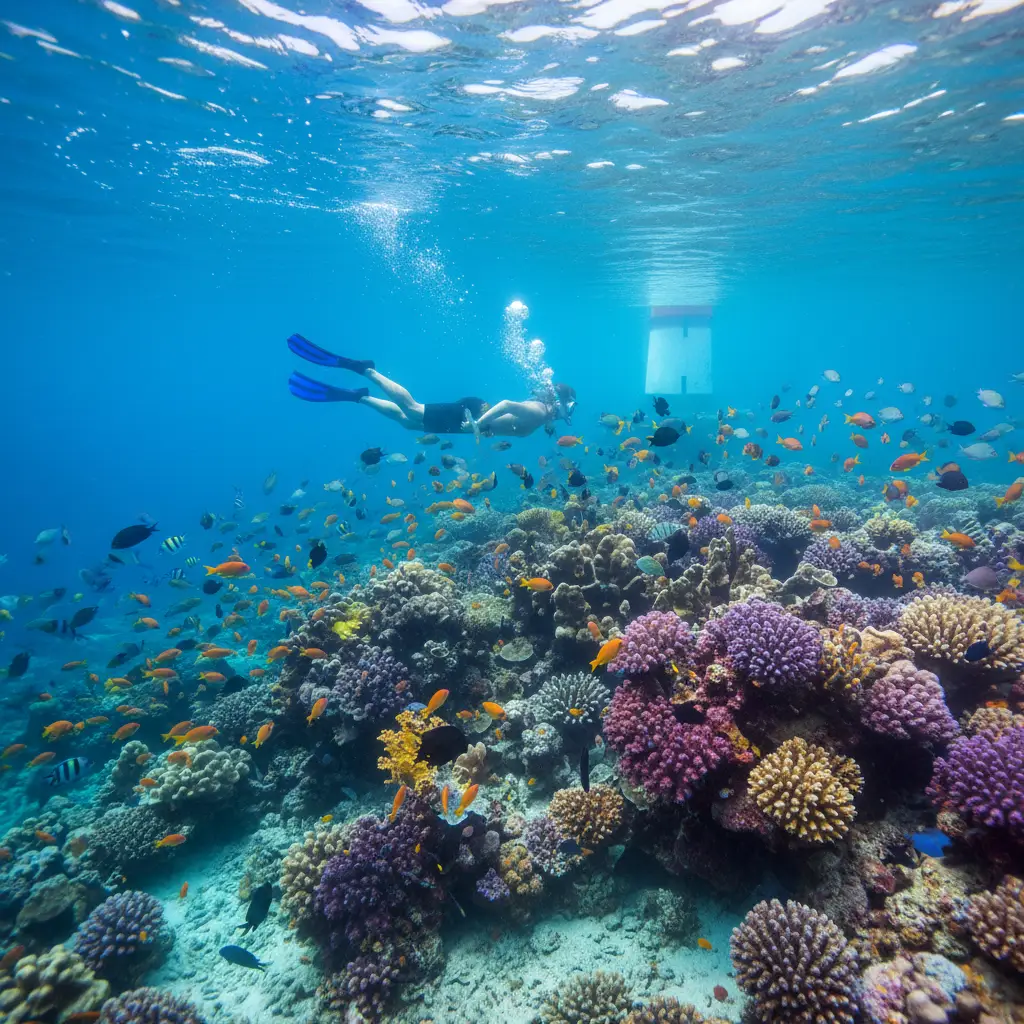
Located just a five-minute water taxi ride from Anse Vata Beach in Nouméa, Duck Island is the perfect introduction to snorkeling New Caledonia. The islet is surrounded by a protected marine reserve that features a marked underwater snorkeling path.
This underwater trail is educational and accessible. Buoys mark specific points of interest where snorkelers can read underwater information boards explaining the coral and fish species in front of them. The water here is shallow and calm, making it ideal for families and beginners. You can expect to see butterflyfish, parrotfish, and intricate branching corals just meters from the white sand beach.
The Amedee Lighthouse Marine Reserve
For a more immersive day trip, the Amedee Island lies about 24 kilometers off the coast of Nouméa. This tiny sandy cay, dominated by the historic metallic lighthouse, is a protected marine reserve where fishing is strictly prohibited. The result is an abundance of marine life that is unafraid of humans.
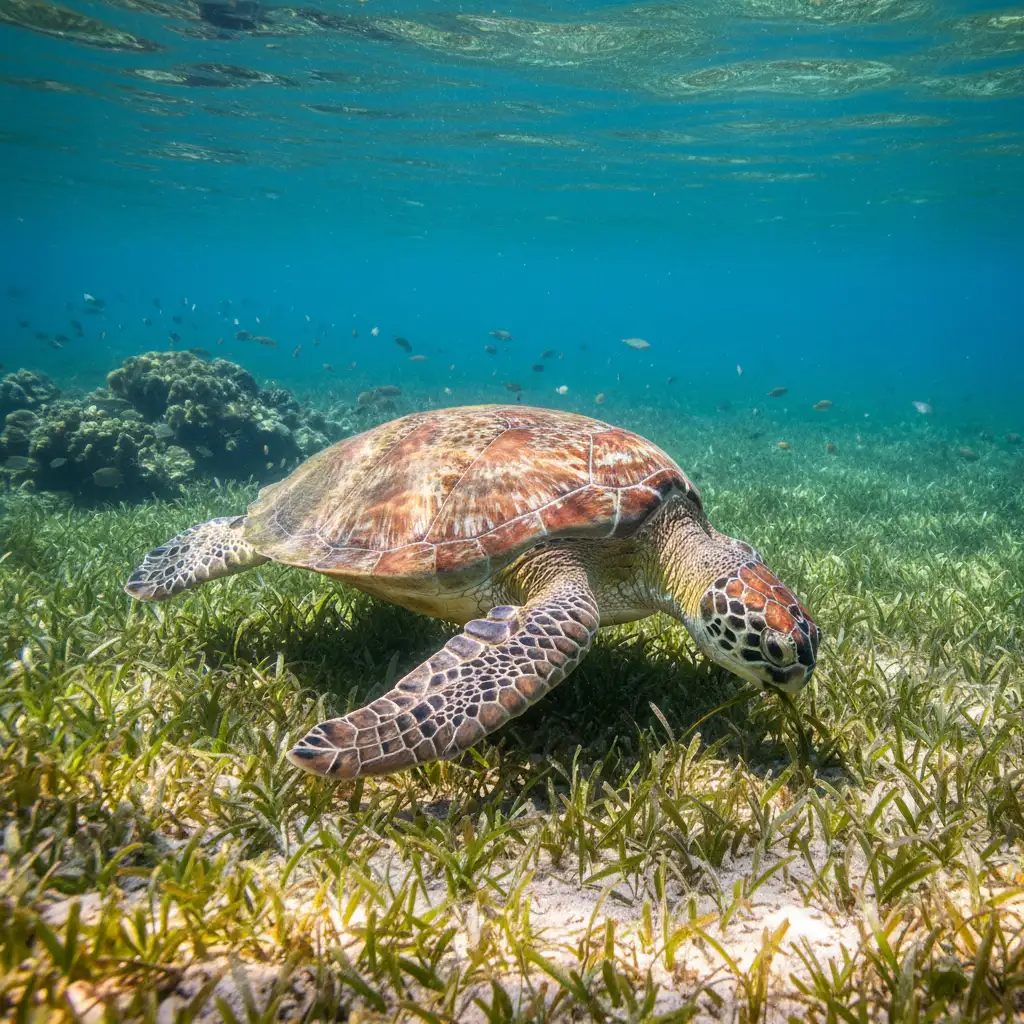
Snorkeling at Amedee is famous for one specific resident: the Green Sea Turtle. The seagrass beds surrounding the island attract these gentle giants in large numbers. It is not uncommon to spot 10 to 15 turtles in a single snorkeling session. The water around the jetty is teeming with schools of striped surgeonfish and giant trevally. Because it is further from the mainland, the visibility at Amedee is often spectacular, creating a ‘swimming in an aquarium’ effect that photographers adore.
The Natural Aquarium of Jinek Bay (Lifou)
While the main island offers incredible experiences, the Loyalty Islands present a different level of pristine beauty. Specifically, Jinek Bay on the island of Lifou is widely regarded as one of the best snorkeling spots in the South Pacific.
Exploring the Coral Gardens of Jinek
Jinek Bay is often referred to as a “natural aquarium,” and the moniker is well-deserved. The bay is naturally sheltered, creating a pool-like environment with virtually no current. The coral density here is astounding. You will find massive Porites coral heads (bommies) that are centuries old, adorned with colorful Christmas tree worms and surrounded by clouds of anthias.

To protect this fragile ecosystem, access to Jinek Bay is regulated. Visitors often need to purchase a pass (usually around 1500 XPF), and the number of swimmers allowed at one time is capped. Access is via a wooden staircase that drops you directly into deep water, preventing damage to the shallow corals. This site is a must-visit for anyone traveling to Lifou, whether by cruise ship or inter-island flight.
Marine Life to Spot: Turtles, Dugongs, and More
The biodiversity of the New Caledonian lagoon is the primary draw for eco-tourists. The archipelago is home to more than 9,300 marine species. Understanding what you might see enhances the snorkeling experience significantly.
Sea Turtles
As mentioned, the Green Sea Turtle (Chelonia mydas) is the most commonly sighted species, particularly around seagrass beds. However, the Loggerhead Turtle (Caretta caretta) also frequents the outer reefs. These animals are protected by law in New Caledonia; touching or harassing them is strictly forbidden. The best way to interact is to float motionlessly on the surface and watch them graze or surface for air.
The Elusive Dugong
New Caledonia is home to the third-largest population of dugongs in the world. These shy marine mammals, often related to the myth of the mermaid, graze on the seagrass meadows within the lagoon. While they are more difficult to spot than turtles due to their elusive nature, sightings are possible, particularly in the quieter bays along the west coast of Grande Terre. Spotting a dugong is a rare privilege and a highlight of any naturalist’s career.
Reef Sharks and Rays
It is common to encounter White-tip and Black-tip reef sharks while snorkeling new caledonia. These sharks are generally timid and pose little threat to humans. They are indicators of a healthy reef ecosystem. You may also encounter Manta Rays, particularly near the passes where the lagoon meets the open ocean, and the majestic Spotted Eagle Ray cruising the shallows.
Best Time for Snorkeling in New Caledonia
While New Caledonia is a year-round destination, seasonal variations affect water temperature and visibility, which are critical factors for snorkelers.
The Cool vs. Warm Season
Mid-May to September (Cool Season): The air is cooler (20°C – 23°C), and the water temperature drops to around 21°C or 22°C. While this might require a wetsuit (3mm or 5mm), the trade-off is often superior visibility and less rainfall. Humpback whales also migrate through the lagoon during this time.
October to April (Warm Season): This is the peak time for water activities. Water temperatures rise to a comfortable 26°C – 29°C, allowing for extended snorkeling sessions in just swimwear or a rash guard. February and March are the warmest months but also bring a higher risk of tropical cyclones. For the perfect balance of warm water and stable weather, October through December is widely considered the optimal window.
Travel Guide: From New Zealand to the Reef
For Kiwis, New Caledonia is the closest tropical neighbor, yet it remains an exotic escape that feels worlds away. The convenience of travel makes it an attractive alternative to longer-haul destinations like Hawaii or Southeast Asia.
Flight Connections
Aircalin and Air New Zealand operate direct flights from Auckland to Nouméa (La Tontouta International Airport). The flight time is approximately 2 hours and 50 minutes. This short duration means you can leave Auckland in the morning and be snorkeling at Duck Island by the afternoon.
Essential Logistics for Kiwis
- Currency: New Caledonia uses the Pacific Franc (XPF). While credit cards are widely accepted in Nouméa, cash is essential for visiting tribal areas or smaller islands like Lifou or Isle of Pines.
- Language: French is the official language. While English is spoken in major hotels and tourist hubs, learning a few basic phrases like “Bonjour” (Hello) and “Merci” (Thank you) goes a long way in showing respect to the locals.
- Gear: While rental gear is available at major spots like Duck Island, bringing your own mask and snorkel is recommended for hygiene and fit. If you plan to visit remote beaches on the East Coast or Loyalty Islands, having your own reef shoes is also advisable to protect against sharp coral and stonefish.
People Also Ask
Is snorkeling in New Caledonia safe?
Yes, snorkeling in New Caledonia is generally very safe. The lagoon protects swimmers from large ocean swells, creating calm conditions. However, visitors should always be aware of currents, avoid touching coral or marine life (some species like stonefish are venomous), and wear reef-safe sunscreen. Always snorkel with a buddy.
Do I need a wetsuit to snorkel in New Caledonia?
It depends on the season. From October to April, the water is warm (25-29°C) and swimwear is usually sufficient. During the cooler months (May to September), water temperatures drop to 21-23°C, so a shorty wetsuit or a 3mm full suit is recommended for comfort, especially during longer sessions.
Can you see turtles in Noumea?
Yes, turtles are frequently sighted near Nouméa. The best place to see them is the Amedee Lighthouse Marine Reserve, which has a dense population of Green Sea Turtles. They are also occasionally spotted at Duck Island and along the bays of Nouméa.
What is the best island for snorkeling in New Caledonia?
Lifou is often cited as the best for snorkeling due to Jinek Bay. However, the Isle of Pines (Île des Pins) is famous for the “Piscine Naturelle” (Natural Pool), and the main island’s Poé Beach offers a unique snorkeling trail. Each island offers a distinct experience.
Are there sharks in the New Caledonia lagoon?
Yes, the lagoon is a healthy ecosystem home to various shark species, primarily Reef Sharks (Black-tip and White-tip). These are generally not aggressive toward humans. Attacks are extremely rare, especially in designated snorkeling zones. Standard safety precautions should always be followed.
How much does it cost to go to Duck Island?
A return water taxi ticket to Duck Island (Île aux Canards) from Anse Vata typically costs between 1,200 and 1,500 XPF (approx. 16-20 NZD). You can spend the whole day there, and there is a restaurant and sun lounger rental available on the island.