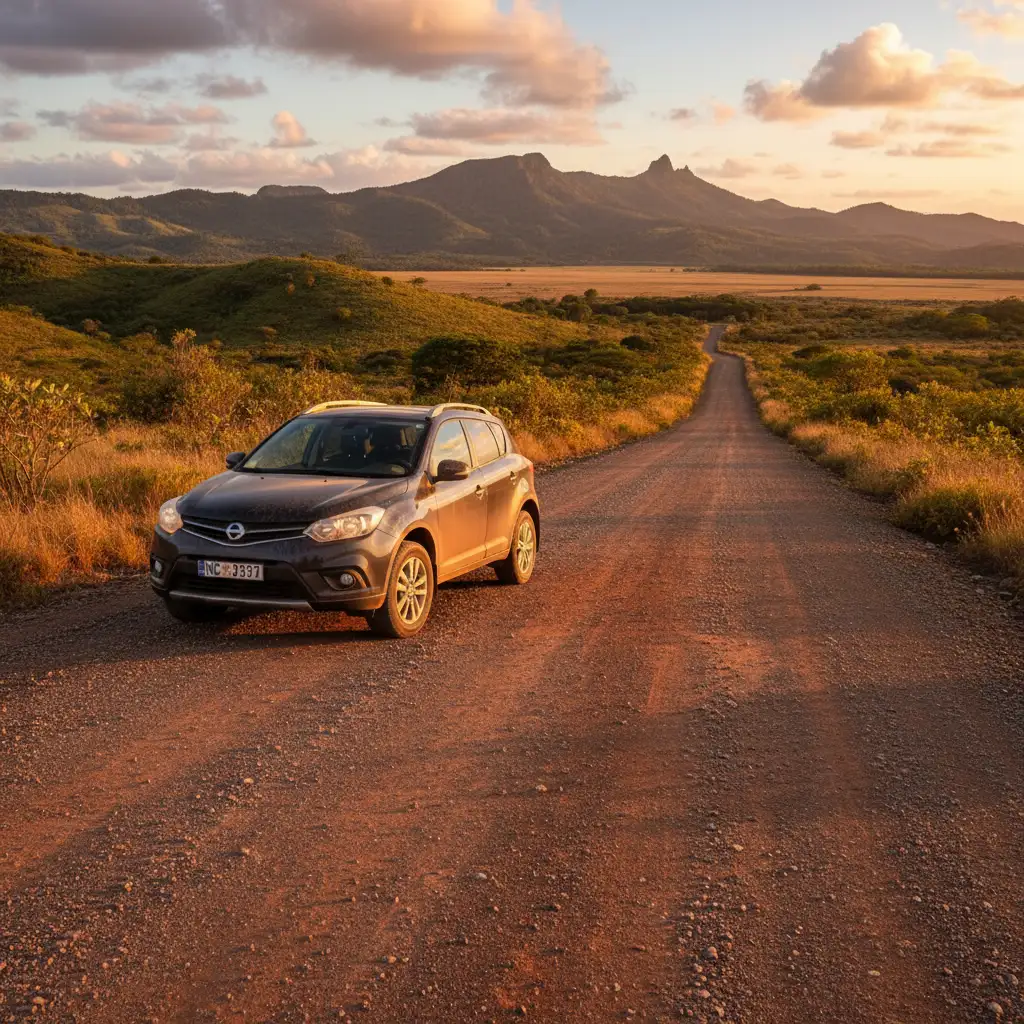
Driving from Noumea to Hienghene is a journey of approximately 380 kilometers that typically takes between 5 to 6 hours without extended stops. The primary route involves taking the RT1 north along the West Coast to Koné, then crossing the central mountain range via the scenic Koné-Tiwaka Road (RPN2) to reach the lush East Coast.
Introduction: The Great Cross-Country Road Trip
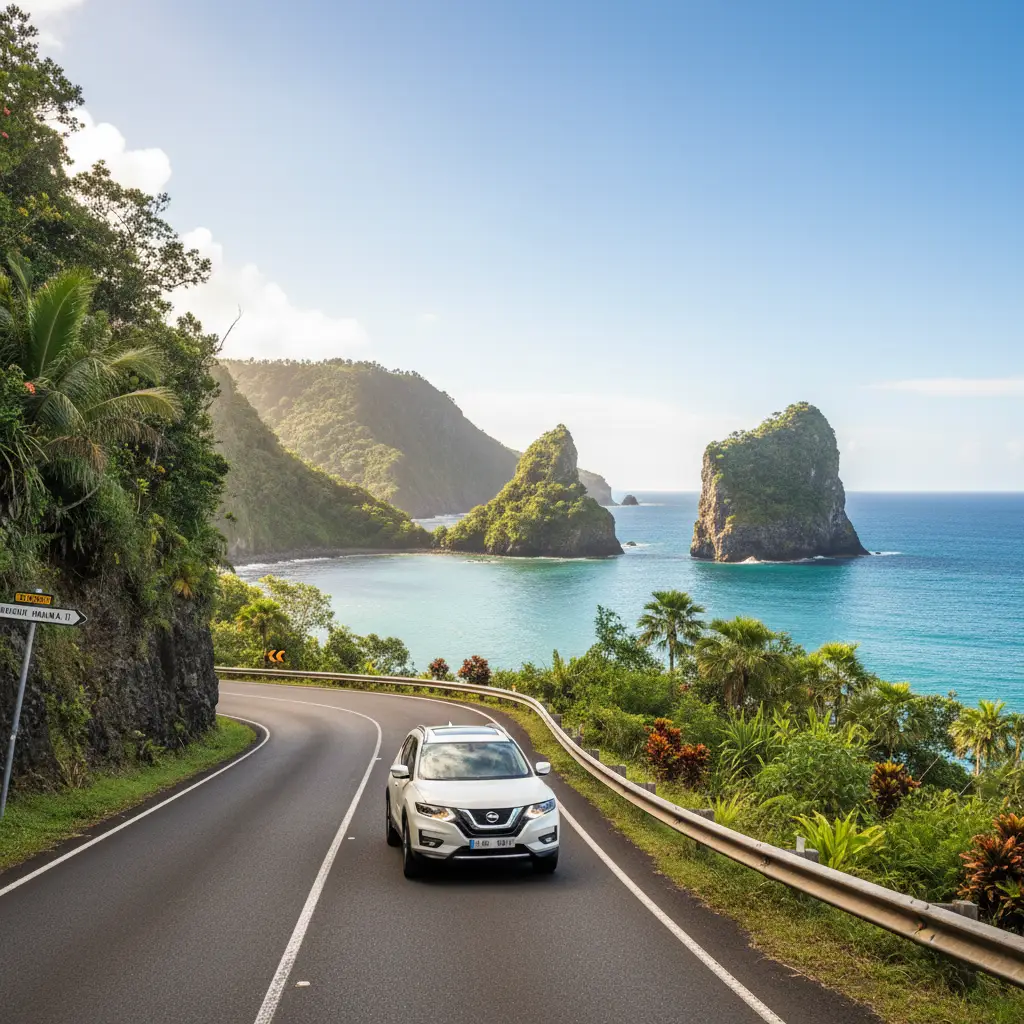
For New Zealand travelers accustomed to the scenic diversity of Aotearoa, the drive from Noumea to Hienghene offers a parallel but distinctly tropical experience. This journey is not merely a transfer from point A to point B; it is a comprehensive tour through the geological and cultural heart of New Caledonia (Grand Terre). You will transition from the dry, savannah-like plains of the West Coast—reminiscent of the Otago grandeur—to the dense, humid rainforests and dramatic limestone karsts of the East Coast.
Understanding the logistics of driving from Noumea to Hienghene is critical for a safe and enjoyable trip. While the infrastructure in New Caledonia is generally excellent compared to other Pacific Island nations, the remote nature of the North Province requires careful planning regarding fuel, timing, and route selection. This guide provides an authoritative breakdown of the journey, ensuring you reach the majestic limestone cliffs of Hienghene safely.
Route Overview: The Koné-Tiwaka Connector
When planning your itinerary for driving from Noumea to Hienghene, there is one route that stands out for its reliability, safety, and scenic value: the Koné-Tiwaka Road. While maps may show alternative passes across the central chain (La Chaîne Centrale), such as the road through Houailou, the Koné-Tiwaka (RPN2) is the modern standard for cross-country travel.
The journey begins on the RT1, the main arterial highway leaving Noumea. This section hugs the West Coast, characterized by rolling hills, niaouli trees, and cattle stations that might remind Kiwi travelers of Northland or the Waikato, albeit with a red-earth twist. You will follow the RT1 for approximately 270 kilometers until you reach the town of Koné, the capital of the North Province.
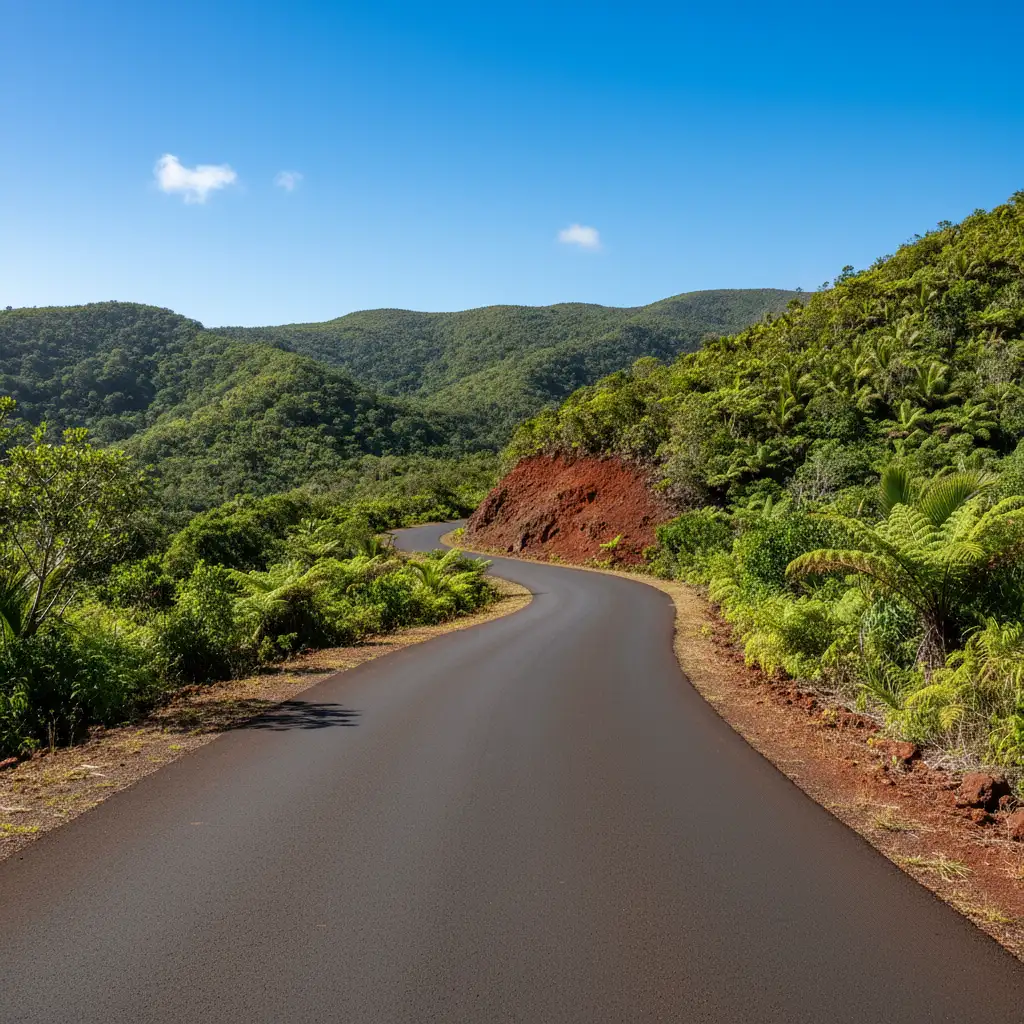
At Koné, the journey changes character dramatically. You will turn onto the RPN2, known as the Koné-Tiwaka road. Completed in the early 2000s, this is an engineering marvel that smooths out the rugged terrain of the central mountains. It serves as the gateway to the East Coast, dropping you out near Poindimié/Touho, where you turn north to drive the final leg along the coast to Hienghene.
Driving Times and Road Conditions
Time management is essential when driving in New Caledonia. Unlike New Zealand, where twilight lingers, the tropical sun sets quickly, and driving the winding East Coast roads in the dark is not recommended for first-time visitors due to lack of street lighting and stray livestock.
Segment 1: Noumea to Bourail
Time: 2 Hours
Condition: Excellent. The road is wide, sealed, and features passing lanes. Traffic can be heavy leaving Noumea, but it thins out past Tontouta International Airport. The speed limit is generally 110 km/h, reducing to 50 km/h through villages.
Segment 2: Bourail to Koné
Time: 1 Hour 15 Minutes
Condition: Good. The road remains sealed and relatively straight, cutting through the dry scrublands. Be vigilant for cattle grazing near the roadside, a common hazard in this agricultural belt.
Segment 3: Koné to Tiwaka (The Crossing)
Time: 1 Hour
Condition: Excellent but technical. This road climbs into the rainforest. It is fully sealed and wide enough for two vehicles comfortably, but it is winding. Drivers should engage low gear on descents to save brakes. The scenery here is spectacular, with waterfalls and river valleys visible from the road.
Segment 4: Tiwaka to Hienghene
Time: 1 Hour 15 Minutes
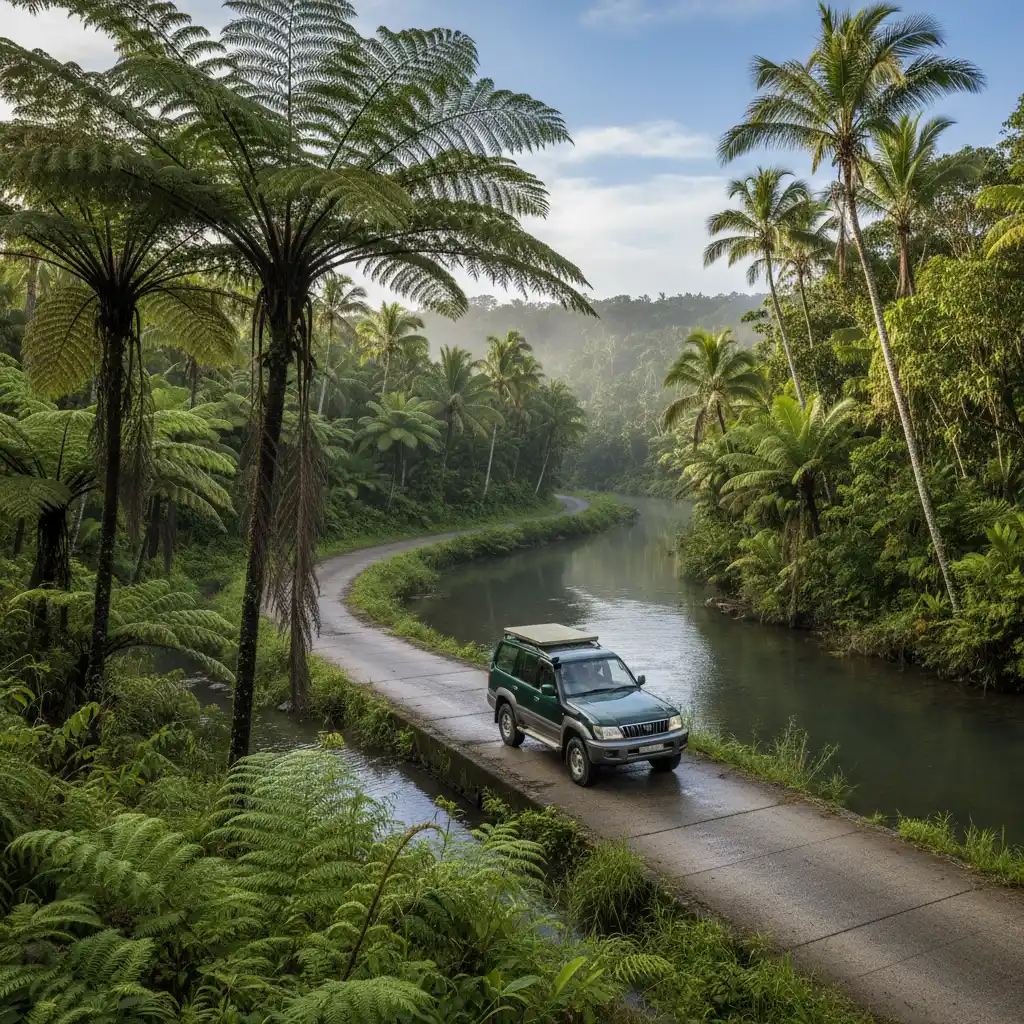
Condition: Variable. Once you hit the East Coast road (RNP3) heading north, the road narrows. While still sealed, you will encounter “radiers” (concrete causeways that flood during heavy rain) and tighter corners. The vegetation becomes dense, often forming a canopy over the road.
Essential Scenic Stops Along the Way
To make the most of driving from Noumea to Hienghene, break up the journey. This transforms a long commute into a sightseeing adventure. Here are the must-visit locations that offer a reprieve from the wheel.
1. La Foa (1.5 Hours from Noumea)
La Foa is a charming historic settlement known for its colonial architecture and the Passerelle Marguerite, a bridge designed by a disciple of Gustave Eiffel. It is an ideal spot for a coffee break and a pastry. The town square often hosts local markets on weekends.
2. Roche Percée, Bourail (2 Hours from Noumea)
Just before you continue north, take a short detour to the coast at Bourail to see La Roche Percée (The Pierced Rock) and the Bonhomme de Bourail. This rock formation stands guard over a surf beach that looks strikingly similar to New Zealand’s West Coast beaches, complete with rough surf and pine trees.
3. The Viewpoint of Koné-Tiwaka
Approximately halfway across the Koné-Tiwaka road, there are designated pull-off areas. These offer panoramic views of the central mountain chain. It is the perfect place to stretch your legs and photograph the transition from the red earth of the west to the deep greens of the east.
4. The Lindéralique Rocks
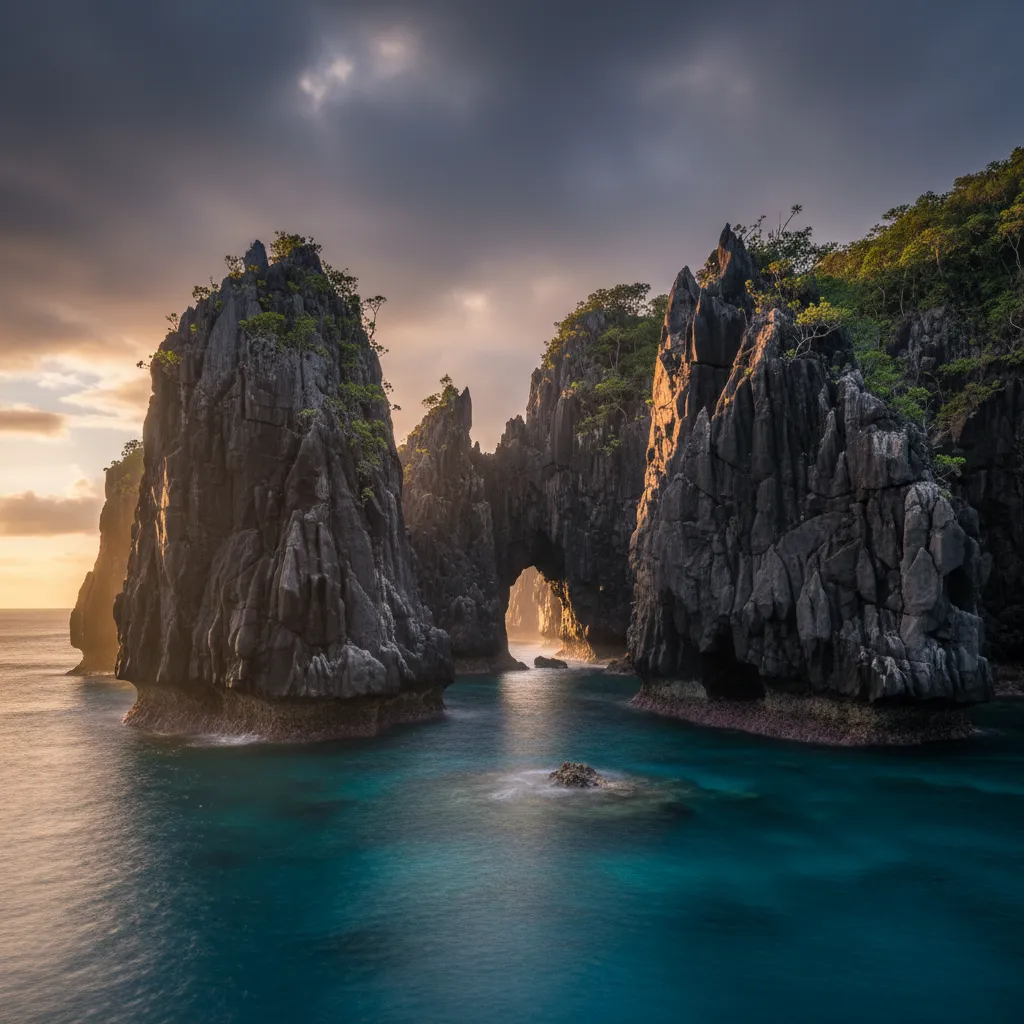
As you approach Hienghene, you will drive past the Lindéralique Rocks. These massive black limestone cliffs rise vertically from the lagoon, creating a dramatic, gothic landscape. It is one of the most photographed sites in the Pacific.
Fuel Availability and Vehicle Advice
For New Zealand travelers, the concept of rural isolation is familiar, but the fuel logistics in the North Province require specific attention. Running out of fuel on the Koné-Tiwaka road is a situation you must avoid, as mobile reception can be patchy.
Where to Fuel Up
- Noumea to Bourail: Fuel is readily available. Major stations (Mobil, Shell, Total) are frequent.
- Koné: This is your critical refueling point. Before turning inland onto the Koné-Tiwaka road, fill your tank to the top. Koné has large service stations with cafe facilities.
- The East Coast: Once you cross to the East Coast, fuel stations become smaller and have irregular hours. While there is fuel in Hienghene, stations may close for lunch (12:00 PM – 2:00 PM) and close early in the evening (often by 6:00 PM). Sunday availability can be non-existent in smaller villages.
Choosing the Right Vehicle
Do you need a 4WD? For the main route driving from Noumea to Hienghene, a standard sedan or hatchback is sufficient as the entire route is sealed. However, if you plan to explore side roads, access remote waterfalls, or drive up to the Belvedere lookout in Hienghene, a compact SUV or 4WD is highly recommended. The extra ground clearance is valuable for navigating the concrete causeways (radiers) after rain.
Safety and Local Driving Etiquette
Driving in New Caledonia is on the right-hand side of the road, the opposite of New Zealand. This requires constant mental adjustment, particularly at roundabouts and when pulling out of intersections.
Speed Limits and Policing
Speed limits are strictly enforced with mobile radar cameras. The general open road limit is 110 km/h, dropping to 70 km/h or 50 km/h in built-up areas. On the East Coast, ignore the speed limit signs if the conditions suggest slower travel is safer; the winding nature of the coastal roads often makes 80 km/h impossible.
The “Coutume” and Tribal Lands
The road to Hienghene passes through many Kanak tribal areas. It is respectful to drive slowly through villages. If you stop to take photos of people or specific huts, always ask for permission. While the main road is public, side roads may lead to private tribal land.
Animals on the Road
The biggest hazard when driving from Noumea to Hienghene is livestock. There are no fences in many parts of the East Coast. Horses, cattle, and dogs frequently wander onto the warm tarmac, especially at dusk. Avoid night driving whenever possible.
People Also Ask (PAA)
Is the road from Noumea to Hienghene sealed?
Yes, the entire main route via RT1 and the Koné-Tiwaka road (RPN2) is fully sealed (tarmac). You do not need to drive on gravel unless you take side detours or visit specific tribal sites off the main highway.
Do I need a 4×4 to drive to Hienghene?
No, a 4×4 is not strictly necessary for the main drive. A standard 2WD car can easily handle the sealed roads. However, a high-clearance vehicle or SUV is more comfortable for the concrete river crossings and allows access to rougher scenic lookouts.
Can I drive from Noumea to Hienghene in one day?
Yes, it is possible. The drive takes 5 to 6 hours. However, to enjoy the scenery and drive safely without fatigue, it is recommended to start early in the morning (around 8:00 AM) to arrive by mid-afternoon.
Is it safe to drive in New Caledonia at night?
It is generally advised to avoid driving at night in rural areas (outside Noumea). The roads lack street lighting, and the risk of hitting wandering horses, cattle, or deer is significantly higher after dark.
How many tolls are on the road to Hienghene?
There is one toll booth on the RT1 leaving Noumea (Peage de Tina). As of 2024, the cost is minimal (approx. 150-200 XPF). The rest of the journey to Hienghene is toll-free.
What is the best time of year to drive to Hienghene?
The dry season (May to October) is the best time for driving. During the wet season (January to March), heavy rains can cause the “radiers” (causeways) on the East Coast to flood, potentially blocking the road to Hienghene temporarily.