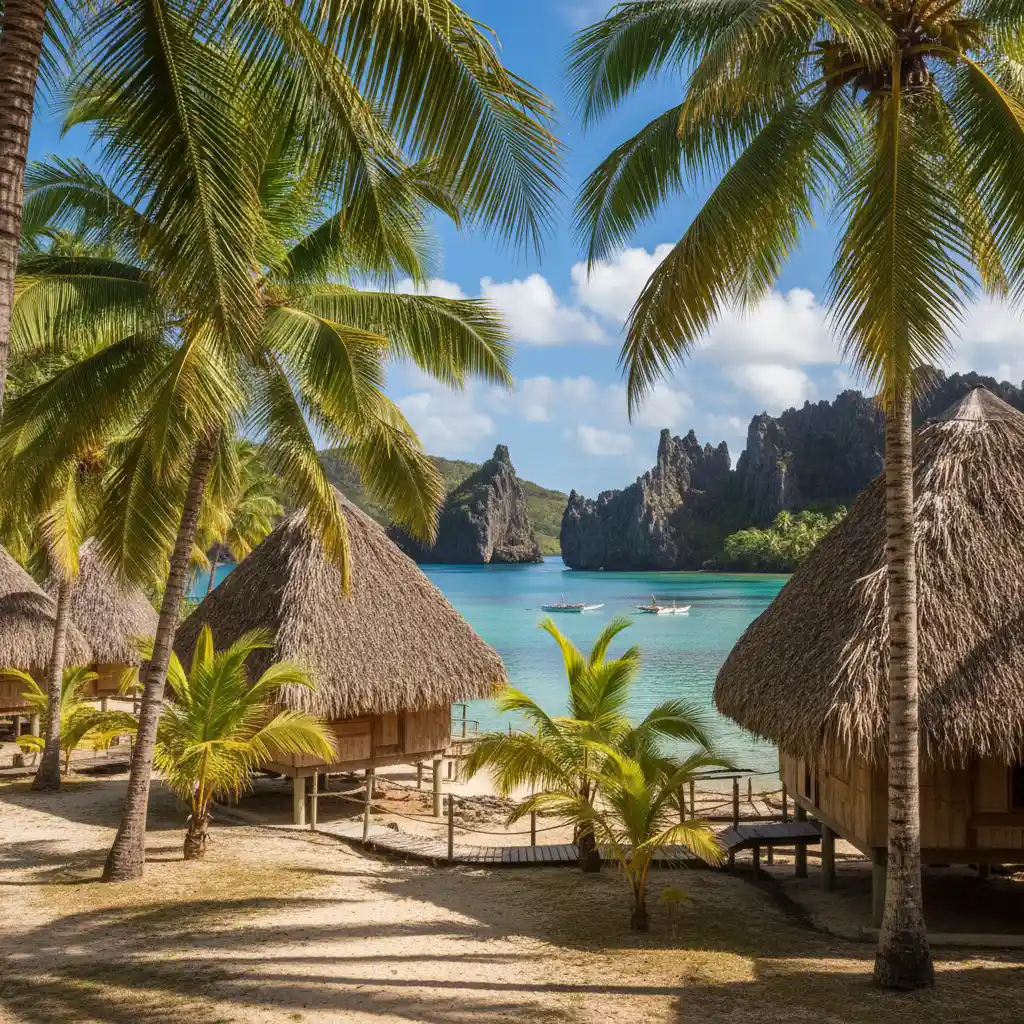
Koumac is a vital township in New Caledonia’s Northern Province, serving as the essential gateway to the Grand North. The top things to see include the spectacular limestone Koumac Caves, the historic Tiebaghi mining village, and the panoramic views from the Roches de Notre-Dame. It offers travelers a unique blend of geological wonders, industrial heritage, and authentic Caledonian bush culture.
Introduction: The Heart of the North
For New Zealand travelers seeking an adventure beyond the beaches of Nouméa and the Isle of Pines, the Northern Province of New Caledonia offers a rugged, authentic experience that feels surprisingly familiar yet distinctly exotic. Koumac, located approximately 360 kilometers northwest of Nouméa, is the administrative and economic hub of this region. It is a town where the red earth meets the lagoon, and where the spirit of the “Broussard” (bushman) is alive and well.
When planning what to see in Koumac, it is important to understand that this is not a resort town; it is a frontier town. It serves as the perfect base camp for exploring the wild “Grand North.” The landscape shifts dramatically here, transitioning from the dry, savannah-like plains of the west coast into the mountainous, mineral-rich terrain that defines the northern tip of Grande Terre. Whether you are a geology enthusiast, a history buff interested in the nickel and chrome boom, or a road-tripper looking for the road less traveled, Koumac delivers a profound sense of place.

What are the Koumac Caves?
Undoubtedly the crown jewel of tourism in the area, the Koumac Caves (Les Grottes de Koumac) are a must-visit destination. Located just a few kilometers from the town center, this extensive limestone karst system is embedded in the forest, offering a cool respite from the tropical heat and a fascinating journey into the geological past of the island.
Exploring the Cave System
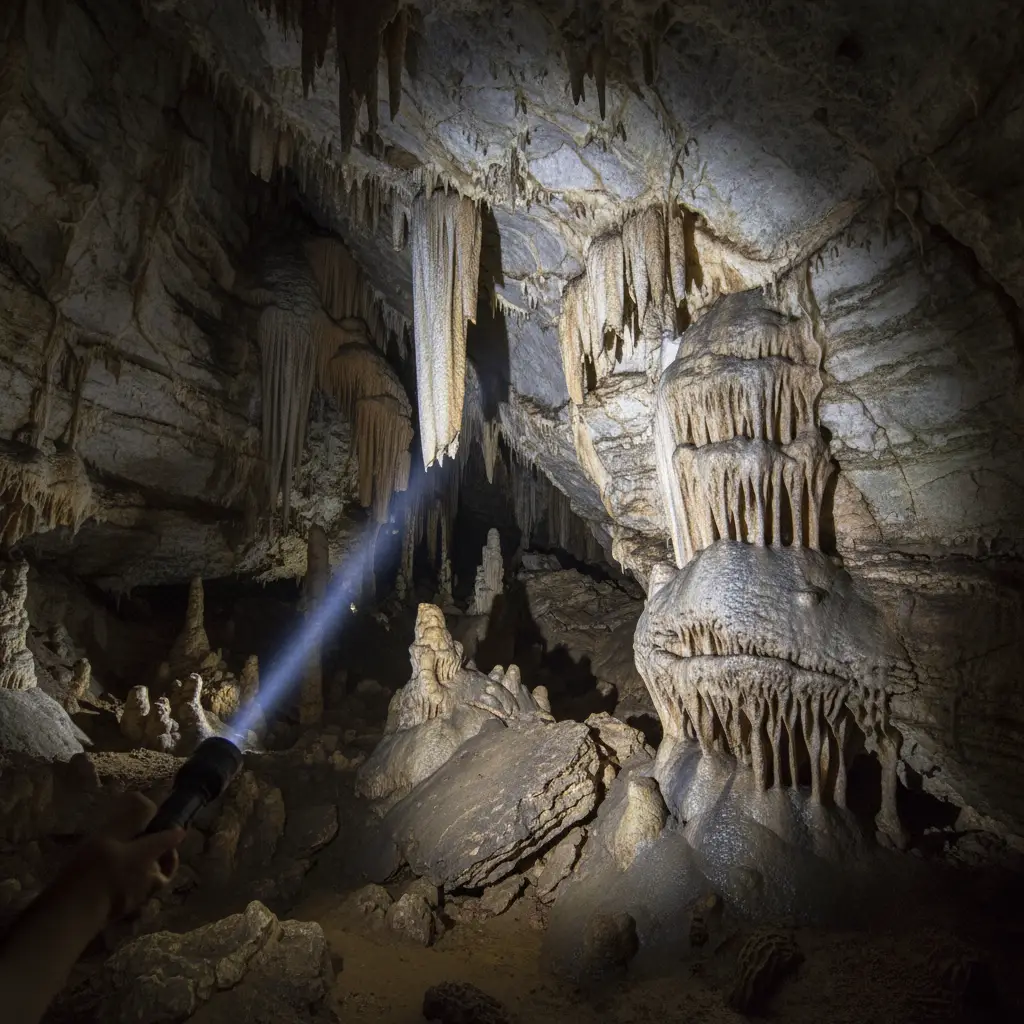
The cave system is carved into Eocene limestone and stretches for nearly 4 kilometers, though only a portion is accessible to the general public without specialized spelunking gear. The accessible areas are divided into two main sections: the “Small Cave” (Petite Grotte) and the “Big Cave” (Grande Grotte).
The Petite Grotte is easily accessible and known for its “Vierge” (Virgin) stalagmite formation. However, the Grande Grotte is where the true adventure lies. A marked path leads visitors about 350 to 400 meters into the cavern. As you descend, the natural light fades, replaced by the beams of your torch (which is essential gear). The interior features impressive galleries adorned with stalactites, stalagmites, and draperies formed over millions of years by mineral-rich water dripping through the limestone.
The Bats of Koumac
One of the most defining features of the Koumac Caves is its resident population of bats. The caves are home to several species, including the Bent-winged Bat (Miniopterus). If you remain quiet, you can hear the rustle of thousands of wings on the ceiling high above. It is crucial for visitors to respect these creatures; flash photography and loud noises should be avoided to prevent disturbing the colony. The presence of these bats adds a layer of biological significance to the geological wonder.
Access to the caves is generally free, and there is a camping area nearby (Camping des Grottes) which provides basic amenities, making it a popular spot for campervans touring the North.
How did Mining Shape Koumac?
To understand Koumac, one must understand the soil it sits upon. New Caledonia holds a significant percentage of the world’s nickel reserves, but in this region, chrome was also king. The history of the town is inextricably linked to the extraction of these minerals, specifically at the nearby Tiebaghi Mine.
The Legend of Tiebaghi
The Tiebaghi massif was once the largest chrome mine in the world. From the early 1900s through to the 1960s (and later for nickel), this mine was an industrial powerhouse that drew workers from Vietnam, Japan, Indonesia, and Europe, creating the multicultural melting pot that characterizes New Caledonia today. Although the original village is largely abandoned, the remnants of this era are powerful attractions.
Visiting the Old Mining Village
While access to the active mining areas is restricted, guided tours are often available to the old Tiebaghi village (check with the local tourism office, as access can fluctuate). Seeing the rusted machinery, the old conveyor belts, and the dilapidated colonial-era housing provides a hauntingly beautiful glimpse into the harsh lives of the early miners. In Koumac town itself, the architecture often reflects this colonial industrial past, with buildings designed to withstand cyclones and the tropical climate.
The Church of Koumac is another landmark worth noting. Built in the mid-20th century, its architecture is unique, featuring stones from the region and a design that speaks to the resilience of the community. It stands as a testament to the faith of the diverse population that settled in this remote corner of the Pacific.

Why is Koumac the Gateway to the Grand North?
Koumac is the last major town with full services (supermarkets, fuel, medical services) before you reach the absolute northern tip of Grande Terre. For travelers engaging in a self-drive itinerary—a popular choice for Kiwis accustomed to road trips—Koumac is the strategic pivot point.
The Road to Poum and Boat Pass
From Koumac, the road continues north toward Poum. This drive is spectacular. The vegetation becomes sparser, the red soil more vibrant, and the lagoon creates a striking contrast with its turquoise waters. The destination is Boat Pass, the northernmost point of the main island. Standing here, looking out across the water towards the Belep Islands, gives one a feeling of being at the “end of the world.”
The drive from Koumac to Poum takes about an hour, making it an easy day trip. Along the way, you will pass wild horses, isolated beaches, and small tribal villages. This is the “Grand North” experience: silence, space, and untouched beauty.
Hiking and Natural Landscapes
Beyond the caves and mines, Koumac offers excellent opportunities for hiking. The topography is dominated by the limestone massifs that rise abruptly from the plains.
Les Roches de Notre-Dame
The Roches de Notre-Dame is a massive limestone formation that dominates the landscape near the caves. It is a popular spot for rock climbing and hiking. The trail offers panoramic views over the Koumac valley and out to the lagoon. The flora here is distinct, with dry forest species that have adapted to the limestone substrate (calcium-rich soil).
Tangadiou Beach
While the East Coast is known for lush greenery and waterfalls, the West Coast and North are known for their mangroves and sheltered bays. Tangadiou Beach, located a short drive from the town center, is a quiet spot perfect for a picnic. It isn’t a white-sand resort beach; rather, it is a wild, natural coastline where you can watch fishermen and enjoy the sunset over the lagoon.

Accommodation Options in Koumac
As a transit hub, Koumac offers reliable accommodation, though options are limited compared to Nouméa. Booking in advance is highly recommended, especially during local school holidays.
- Hotel Kelnara: Located in the heart of the village, this is a comfortable option offering air-conditioned rooms, Wi-Fi, and a restaurant. It is convenient for those who want to be close to shops and amenities.
- Monitel: Situated slightly outside the center, Monitel offers bungalow-style accommodation and hotel rooms. It features a swimming pool, which is a welcome relief after a day of hiking the caves. Their restaurant is well-regarded for serving local venison and seafood.
- Camping des Grottes: For the adventurous Kiwi traveler with a tent or campervan, the campsite near the caves offers a budget-friendly and immersive nature experience. Facilities are basic (cold showers, BBQ areas), but the location is unbeatable.
Logistics for New Zealand Travelers
Traveling to Koumac requires some planning. Here are the essentials for visitors from New Zealand:
- Getting There: Koumac is roughly a 4 to 4.5-hour drive from La Tontouta International Airport. The road (RT1) is sealed and generally in good condition, though it can be winding. Domestic flights are also available from Nouméa-Magenta airport to Koumac airport, taking approximately 40 minutes.
- Driving: New Caledonia drives on the right-hand side of the road. An International Driving Permit is recommended, though a valid NZ license is usually accepted for short stays. Watch out for cattle and horses on the road, especially at night.
- Language: French is the official language. While staff in major hotels may speak some English, it is less common in the “Brousse” (bush). Learning a few basic phrases or having a translation app is very helpful.
- Currency: The currency is the Pacific Franc (XPF). While credit cards are accepted at hotels and supermarkets in Koumac, it is wise to carry cash for small roadside stalls or tribal visits.
People Also Ask
How long is the drive from Noumea to Koumac?
The drive from Nouméa to Koumac takes approximately 4 to 4.5 hours via the RT1 west coast road. The distance is about 365 kilometers. It is a scenic drive, but it is recommended to take breaks at towns like Bourail or Koné along the way.
Do I need a guide for the Koumac Caves?
No, you do not need a guide for the accessible parts of the Koumac Caves. The main galleries are open to the public. However, you absolutely need a strong torch (flashlight) and sturdy shoes, as the ground can be slippery and the caves are completely dark inside.
What is the best time of year to visit Koumac?
The best time to visit is during the cooler, drier months from May to October. This avoids the peak heat and humidity of the tropical summer and reduces the risk of cyclones. The temperatures during this period are pleasant for hiking and exploring.
Is Koumac safe for tourists?
Yes, Koumac is generally safe for tourists. It is a working town with a friendly community. As with any travel, standard precautions regarding valuables should be taken. When visiting tribal areas, it is respectful to follow local customs (La Coutume).
Are there restaurants in Koumac?
Yes, there are several dining options. Most hotels (like Monitel and Kelnara) have their own restaurants serving French and local cuisine. There are also a few snacks and pizzerias in the town center, as well as a marina restaurant.
Can I swim in Koumac?
Yes, you can swim at nearby beaches like Tangadiou or Pandop. However, always be aware of local conditions. For snorkeling, boat trips to the outer reef or nearby islets are recommended for the best visibility and marine life.