The Parc des Grandes Fougères, or Giant Fern Park, is a protected 4,535-hectare rainforest reserve located in the South Province of New Caledonia near Farino. Renowned for its abundance of prehistoric tree ferns and high density of the endemic, flightless Cagou bird, the park offers a network of well-maintained hiking and mountain biking trails suitable for nature enthusiasts of all abilities.
For New Zealand travelers seeking a prehistoric wilderness experience just a short flight from Auckland. Whether you have chosen the winner of the Premium Economy Battle: Aircalin Hibiscus vs Air NZ or a standard seat, the Giant Fern Park represents the pinnacle of New Caledonia’s biodiversity. Nestled in the heart of the central mountain chain, this park is not merely a walking track; it is a journey back in time to the Gondwanaland era. Whether you are an avid tramper looking to conquer steep ridges or a family wanting a peaceful picnic amongst ancient flora, this guide covers everything you need to know about visiting this ecological jewel.
Where is the Giant Fern Park Located?
The Parc des Grandes Fougères is situated approximately 110 kilometers north of Nouméa, the capital city. The drive typically takes about 1 hour and 30 minutes via the RT1, the main arterial road that runs up the west coast of the main island, Grande Terre. This accessibility makes it an ideal day trip or an overnight excursion for Kiwi travelers basing themselves in Nouméa. Once you have sorted your Arrival Logistics: Tontouta Airport to Noumea, the drive to the rural hubs is straightforward.
To reach the park, you will drive through the township of La Foa before turning inland towards Farino. Farino is notable for being the highest commune in New Caledonia and the only one without a coastline. As you ascend into the hills, the vegetation changes dramatically from dry savannah to lush, dense rainforest. The road is sealed and well-signposted, winding through picturesque valleys that are reminiscent of the Waitakere Ranges, yet distinctly tropical.
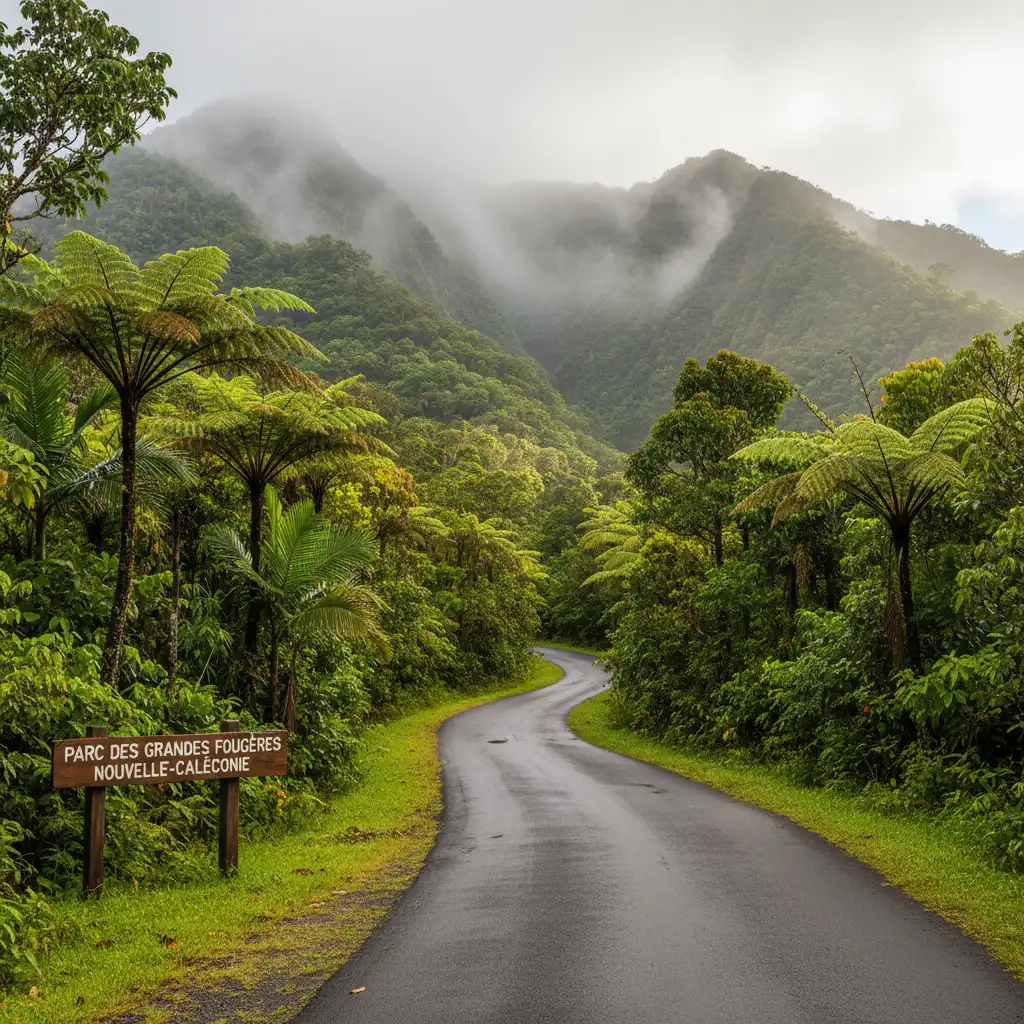
The park entrance is located at the intersection of the Farino, Moindou, and Sarraméa municipal boundaries. There is ample parking available at the reception area, which serves as the trailhead for all major routes.
What Makes the Flora So Unique?
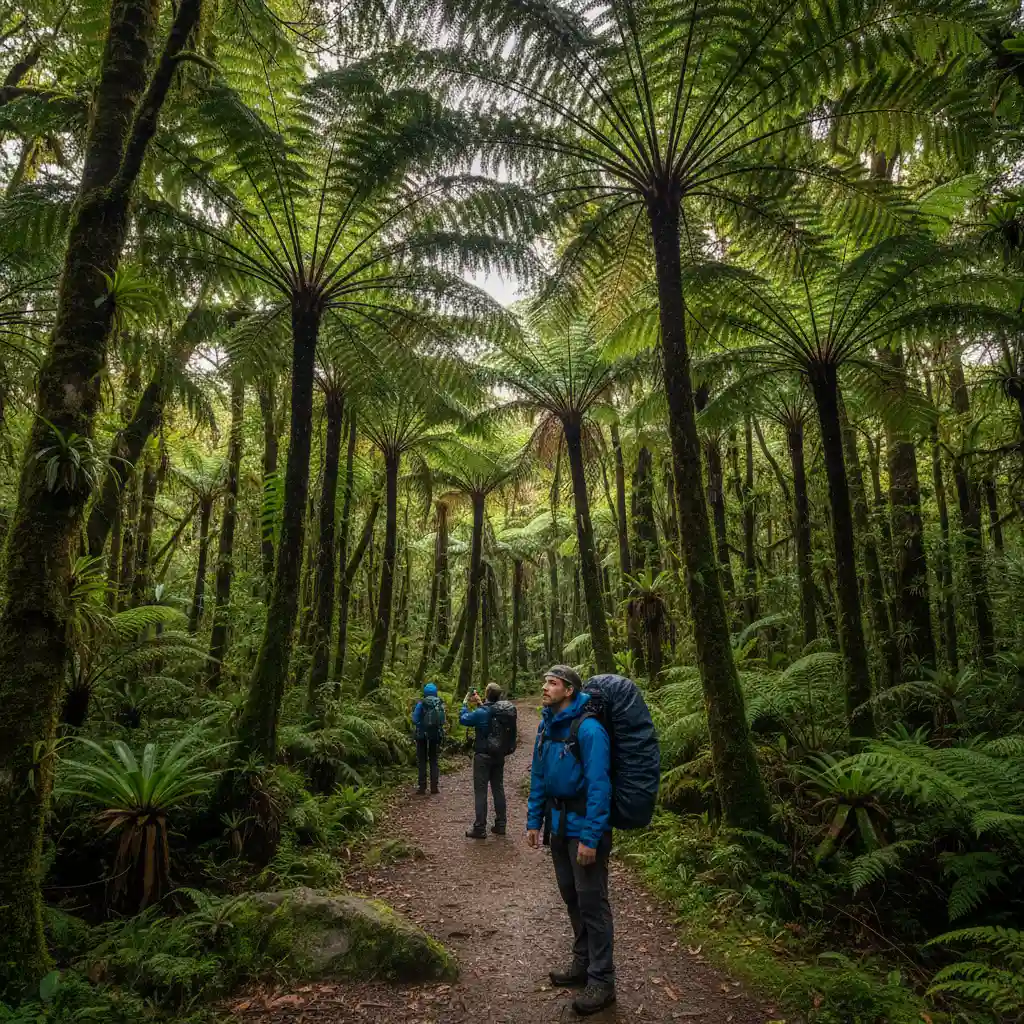
As the name suggests, the park is dominated by arborescent ferns, primarily of the Cyathea genus. These are not your standard garden ferns; many reach heights of over 20 meters, creating a towering canopy that filters the sunlight and maintains a humid, cool microclimate on the forest floor. For botany enthusiasts, the park is a living laboratory.
New Caledonia separated from the supercontinent Gondwana around 80 million years ago, allowing its flora to evolve in isolation. Consequently, the biodiversity here is staggering. The Giant Fern Park protects a specific ecosystem known as dense humid forest on schistose soil. Alongside the giant ferns, you will find majestic Kaori trees, palms endemic to the island, and a rich understory of mosses and lichens.
The visual impact of walking beneath these prehistoric giants is profound. The atmosphere is quiet and ancient, often shrouded in a light mist that rolls off the central mountain chain. It is a stark contrast to the dry sclerophyll forests found on the coast, offering a refreshing, cool environment that is perfect for physical activity.
How to Spot the Cagou Bird?
One of the primary reasons visitors flock to the Giant Fern Park is for the opportunity to see the Cagou (or Kagu) in the wild. The Cagou is the emblem of New Caledonia—a grey, crested, flightless bird that is the only member of its taxonomic family, the Rhynochetidae. It is endangered and fiercely protected.

The park is home to one of the healthiest populations of Cagous on the island, thanks to intensive predator control programs aimed at eliminating rats, feral cats, and pigs. Unlike the Kiwi bird in New Zealand, which is nocturnal and notoriously difficult to spot, the Cagou is diurnal (active during the day). They are relatively unafraid of humans and can often be seen foraging for worms and insects right on the hiking tracks.
Tips for Cagou Spotting
- Listen carefully: The Cagou has a distinctive call that sounds somewhat like a barking dog. If you hear this in the distance, stop and scan the undergrowth.
- Go early: Bird activity is generally higher in the cooler morning hours between 7:30 AM and 10:00 AM.
- Stay quiet: While they are not overly skittish, loud noises will drive them into the deeper bush. Walk softly and keep conversation to a whisper.
- Look for movement: Their grey plumage provides excellent camouflage against the forest floor, but their quick, jerky movements often give them away.
Which Hiking Trail is Right for You?
The park features approximately 30 kilometers of marked trails, catering to everyone from casual walkers to endurance athletes. The tracks are well-maintained, clearly marked with color-coded signage, and generally safe. However, like any bush walk, appropriate footwear and water are essential.
The Small Loop (Sentier de la Petite Boucle)
Distance: 3.5 km | Time: 1 – 1.5 hours | Difficulty: Easy
This is the most popular track for families and those with limited time. It offers a condensed experience of the park’s highlights, winding through dense stands of tree ferns and crossing small creeks. The terrain is relatively flat with gentle undulations, making it accessible for children.
The Great Loop (Sentier de la Grande Boucle)
Distance: 7.5 km | Time: 2.5 – 3.5 hours | Difficulty: Moderate
For a more immersive experience, the Great Loop takes you deeper into the primary forest. This track involves more elevation gain and loss, providing viewpoints over the surrounding valleys. You are more likely to encounter solitary Cagous on this less-trafficked route. It passes by the majestic “Grand Kaori,” a massive tree that is centuries old.
The Pic Vincent Track
Distance: 11 km (return) | Time: 4 – 5 hours | Difficulty: Hard
This trail is designed for fit trampers. It leads to the summit of Pic Vincent, offering panoramic views of the lagoon on the west coast and the mountain ranges to the east. The ascent is steep in sections and can be slippery after rain. The reward is a breathtaking perspective of the island’s geography that few tourists get to see.
Can You Mountain Bike in the Park?
Yes, the Parc des Grandes Fougères is a premier destination for mountain biking (VTT). The trails are shared use, but the width of the main tracks accommodates both cyclists and walkers comfortably. The terrain offers a mix of technical single-track and wider fire roads.
There are specific circuits designated for cyclists ranging from 10km to 20km loops. The “La Foa” and “Farino” loops offer thrilling descents and challenging climbs. It is important to note that bike rentals are not available directly inside the park, so you must bring your own bike or rent one from a provider in Nouméa or La Foa before arriving.
Practical Information for Visitors
Planning is key to enjoying your visit to the Giant Fern Park. Unlike some NZ parks, there are opening hours and entry fees to consider.
Opening Hours
The park is open every day except Tuesdays.
Hours: 7:30 AM to 5:30 PM (Last entry usually at 3:30 PM).
It is highly recommended to arrive early to beat the midday heat, although the forest canopy does provide significant shade.
Entry Fees
There is a modest entry fee which goes towards the conservation efforts and maintenance of the tracks. As of the last update, prices are approximately:
Adults: 400 – 600 CFP (approx. $6 – $9 NZD)
Children: Reduced rates available.
Payment can usually be made by cash or local card, but carrying cash is always safer in rural areas.
Picnic Facilities
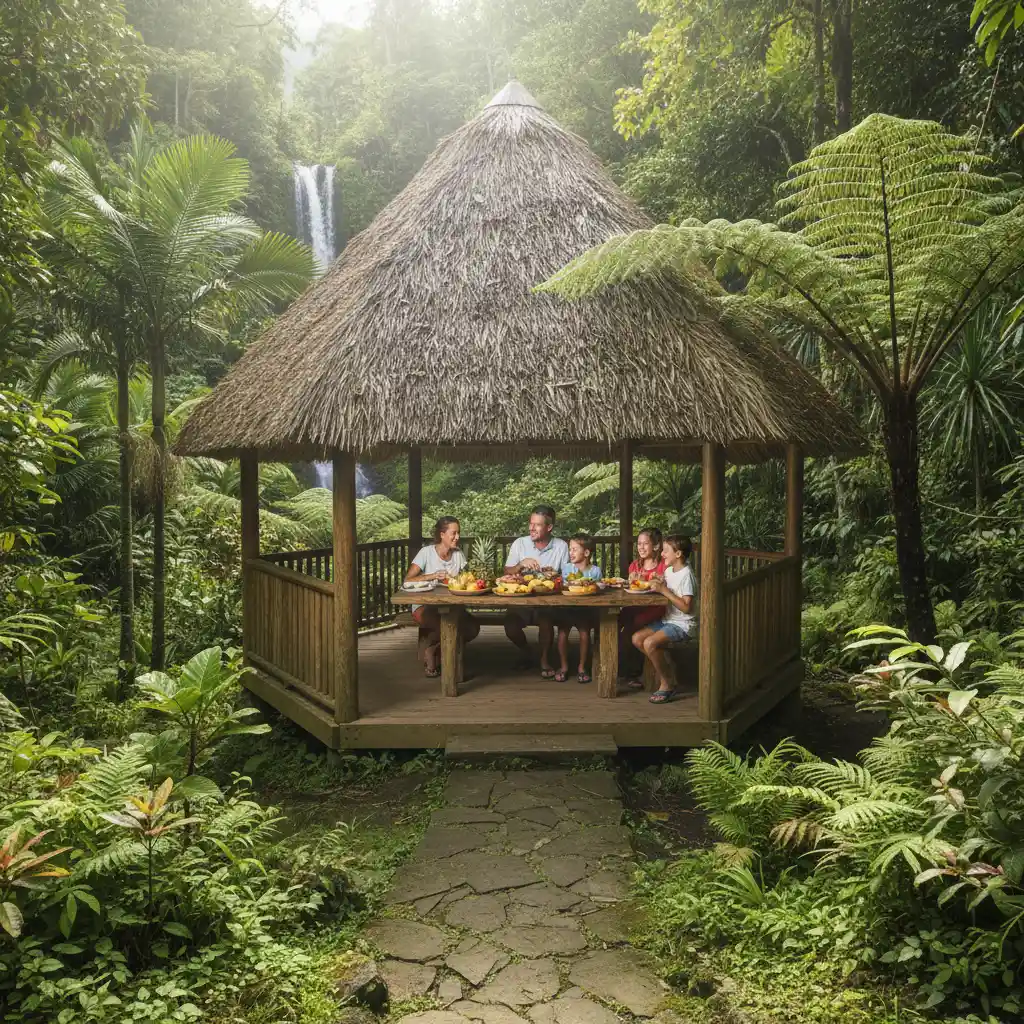
One of the park’s best features is its designated picnic area located near the entrance and at the “Cœur de Farino” intersection. These areas are equipped with sheltered tables (farés) and BBQ facilities. However, these are wood-fired BBQs, and use may be restricted during dry periods due to fire risk. There are no shops inside the park, so you must bring all food and plenty of water with you.
Exploring Farino and Sarraméa
After your hike, take some time to explore the surrounding area. Farino is famous for its monthly market (Marché de Farino), usually held on the second Sunday of the month. It is a fantastic place to buy local jams, coffee, and crafts. The region is also known for coffee production; keep an eye out for local plantations offering tastings.
Nearby Sarraméa offers the “Trou Feuillet,” a deep waterhole perfect for a cooling swim, though access can sometimes be restricted depending on local conditions. The proximity of these villages makes the Giant Fern Park an anchor for a broader exploration of the “Brousse” (the New Caledonian bush).
Why This Park Appeals to the NZ Market
For Kiwis, the Parc des Grandes Fougères feels familiarly wild yet exotically different. The infrastructure—signage, track quality, and safety—meets the high standards New Zealanders are used to with DOC tracks. Yet, the species are distinct. The lack of snakes and dangerous predators makes it a safe environment for families, mirroring the safety of the NZ bush.
Furthermore, the flight connectivity between Auckland and Nouméa means you can be walking amongst these giant ferns in the morning after a late-night flight arrival where you’ve enjoyed In-Flight Dining: French Cuisine vs Kiwi Classics. It serves as the perfect antidote to the resort-heavy tourism of the coast, offering a genuine connection with the land and its ancient history.
Frequently Asked Questions
Do I need a guide to hike in the Giant Fern Park?
No, a guide is not required. The trails are very well marked with color-coded signs and maps are available at the reception. However, guided tours can be arranged if you wish to learn more about the botanical history and birdlife from a local expert.
Is the park suitable for young children?
Yes, the park is very family-friendly. The Small Loop (3.5km) is achievable for children capable of walking for an hour. The paths near the entrance are wide and relatively flat, and the picnic areas provide a great base for families.
What should I wear for a hike in the park?
Wear breathable, moisture-wicking clothing suitable for tropical humidity. Sturdy walking shoes or hiking boots are recommended as the red clay soil can be slippery when wet. A hat and insect repellent are also essential items.
Are dogs allowed in Parc des Grandes Fougères?
No, dogs and other domestic pets are strictly prohibited. This is to protect the ground-dwelling Cagou birds and other endemic wildlife from potential predation or disease.
Is there cell phone reception in the park?
Reception can be patchy. You will likely have signal near the reception area and at higher elevations like Pic Vincent, but do not rely on it deep in the valleys. It is advisable to download offline maps or carry a physical map provided at the entrance.
Can I camp overnight in the park?
Generally, camping is not permitted within the reserve to protect the ecosystem. However, there are accommodation options nearby in Farino and Sarraméa, ranging from guesthouses to campsites.