
The history of New Caledonia spans over 3,000 years, beginning with the Lapita people, followed by Captain Cook’s arrival in 1774. It evolved through a harsh French penal colony era and served as a vital Allied base during WWII, resulting in a unique blend of indigenous Kanak culture and French sophistication.
What are the origins of New Caledonia’s Indigenous People?
Long before European frigates charted the waters of the South Pacific, the archipelago now known as New Caledonia was home to a sophisticated seafaring civilization. The history of New Caledonia begins roughly 3,000 years ago with the arrival of the Lapita people.
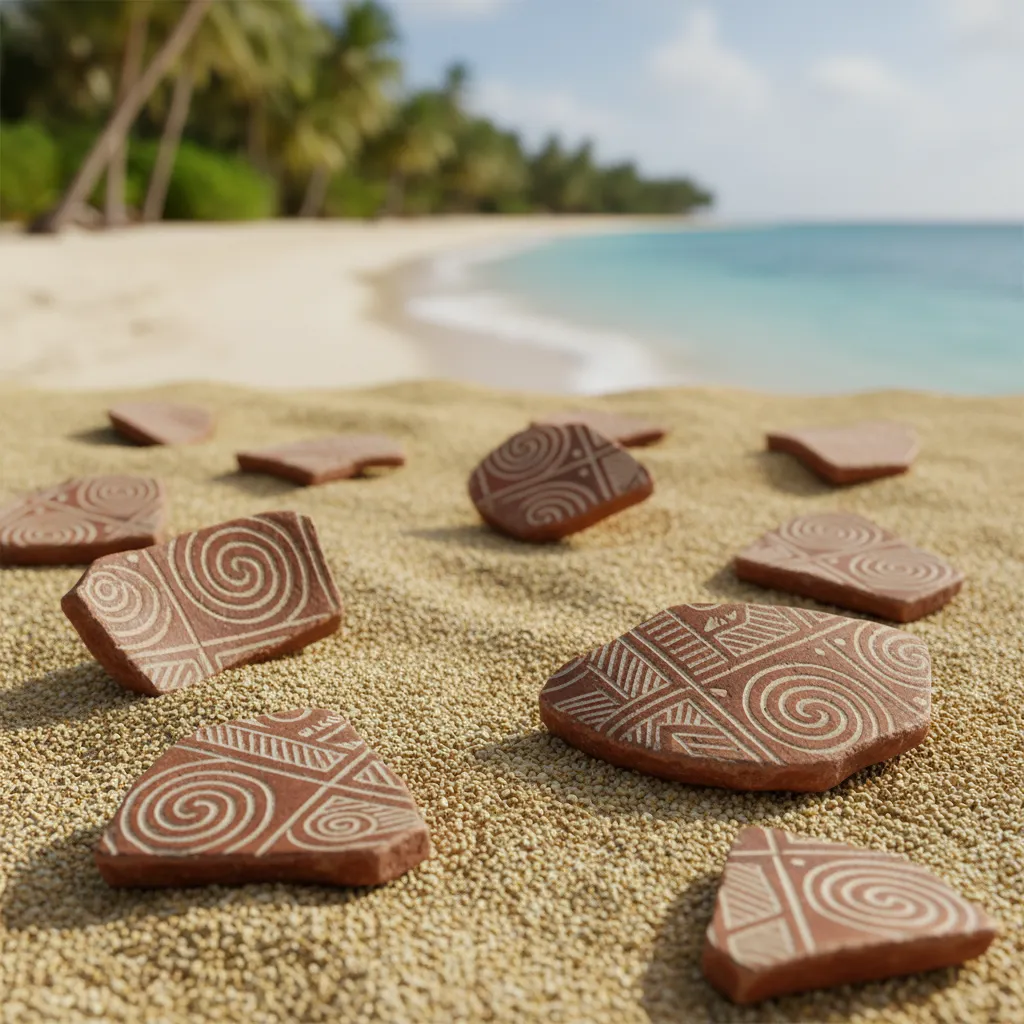
Navigating out of Southeast Asia on outrigger canoes, the Lapita were master navigators who settled across the Pacific, from Papua New Guinea to Tonga and Samoa. In New Caledonia, specifically at the Koné site on the west coast of the main island (Grande Terre), archaeologists discovered the distinctive pottery that gave this culture its name. These pottery shards, characterized by intricate geometric patterns stamped into the clay, provide the earliest evidence of human settlement in the region, dating back to around 1500 BC to 1000 BC.
The descendants of these early Lapita settlers are the Kanak people, the indigenous inhabitants of New Caledonia. Over millennia, they developed a complex tribal society deeply rooted in the land. Their culture was defined by clan structures, customary laws, and a profound spiritual connection to nature. The Kanak society was agrarian, mastering the cultivation of yams and taro in terraced fields that can still be seen today, particularly in the central mountain ranges. Understanding this ancient lineage is crucial for any traveler visiting from New Zealand, as the Kanak custom (Coutume) remains a vibrant and essential part of daily life in the islands.
When did Captain Cook discover New Caledonia?
For the Western world, the history of New Caledonia began on September 4, 1774. It was during his second voyage of discovery aboard the HMS Resolution that the renowned British explorer Captain James Cook sighted the rugged, pine-covered ridges of Grande Terre.
Cook was struck by the landscape’s resemblance to the Scottish Highlands—specifically the rugged terrain of Scotland, which the Romans called Caledonia. Consequently, he named the islands “New Caledonia.” This naming convention mirrors other discoveries in the region, such as New Hebrides (now Vanuatu) and New South Wales.
Although Cook did not claim the islands for the British Empire, his detailed mapping and interactions with the Kanak people opened the door for future European interest. He noted the “friendly and honest” nature of the indigenous population and the abundance of massive Araucaria pines (now known as Cook Pines), which were highly valued for ship masts. Following Cook, French explorer Jean-François de Galaup, comte de Lapérouse, was ordered to investigate the islands in 1788, but his ships vanished in the Solomon Islands, leaving the next major European contact to traders, whalers, and sandalwood merchants in the early 19th century.
How did New Caledonia become French?
The transition from a trading stopover to a French territory was driven by imperial rivalry and religion. In the mid-19th century, the Pacific was a chessboard for British and French influence. Protestant missionaries from the London Missionary Society and Catholic Marist missionaries from France were both vying for spiritual conversion of the Kanak population.
To secure a strategic naval base in the South Pacific and to protect Catholic missionaries, Emperor Napoleon III ordered the annexation of the archipelago. On September 24, 1853, Admiral Febvrier Despointes formally raised the French flag at Balade, claiming New Caledonia for France. This act fundamentally altered the trajectory of the island’s history, shifting it from a loose collection of tribal chiefdoms to a structured colony of the French Empire. The capital, originally Port-de-France (later renamed Nouméa), was founded shortly after in 1854 on a deep-water harbor protected by islands, making it an ideal maritime hub.
Was New Caledonia a Penal Colony?
Yes, similar to the history of Australia, a significant chapter in the history of New Caledonia involves its time as a penal colony. Between 1864 and 1897, France transported approximately 22,000 prisoners to “Le Caillou” (The Pebble).
The prisoners, known as Bagnards, were divided into three distinct categories:
- Criminals: Common thieves, murderers, and felons who were sentenced to hard labor.
- Political Prisoners (Communards): Following the failed Paris Commune uprising of 1871, thousands of political dissidents were exiled to New Caledonia. Unlike common criminals, many were intellectuals, writers, and artists who contributed significantly to the cultural development of the colony.
- Relégués: Repeat offenders who were exiled for life, not necessarily for severe crimes but for habitual recidivism.
The conditions were brutal. Convicts were forced to build the infrastructure of the colony, including the roads, the port of Nouméa, and the St. Joseph’s Cathedral. The remnants of this era are hauntingly beautiful tourist sites today. The ruins of the prison at Île des Pins (Isle of Pines) and the prison buildings in Nouville (Nouméa) stand as silent witnesses to this dark era.
Once their sentences were served, many convicts were forced to stay in New Caledonia as “liberated” settlers to populate the colony, a system known as doublage. This created a distinct class of settlers (Caldoches) who, along with free settlers, formed the backbone of the European population.

The Nickel Boom: Le Caillou’s Wealth
While the penal colony provided the labor, it was geology that provided the economy. In 1864, engineer Jules Garnier discovered a green ore on the banks of a river: nickel. It was quickly realized that New Caledonia possessed some of the world’s largest deposits of nickel.
The “Nickel Boom” transformed the island. It drove the need for more labor, leading to waves of immigration from Asia (Vietnam, Indonesia, and Japan) and other Pacific islands to work in the mines. This immigration created the multicultural melting pot that defines modern New Caledonia. Today, the massive SLN (Société Le Nickel) factory in Nouméa is a testament to this enduring industry, and nickel remains the primary economic driver of the territory.
What was the American impact during WWII?
For many New Zealanders, the connection to New Caledonia is strongest through the shared history of World War II. Following the fall of France to Nazi Germany in 1940, New Caledonia’s local government rallied to Free France under General de Gaulle, defying the Vichy regime. This decision was pivotal.
After the attack on Pearl Harbor, the South Pacific became a critical theater of war. In March 1942, the United States military arrived in New Caledonia, turning the island into the primary Allied headquarters in the South Pacific (South Pacific Area – SOPAC). Under Admiral William “Bull” Halsey, Nouméa became a bustling American city virtually overnight.
The Era of “Little America”
At the peak of the war, over 50,000 American troops were stationed in New Caledonia—outnumbering the local population. The impact was profound and immediate. The Americans brought with them modern machinery, bulldozers, jeeps, and a level of logistical power the locals had never seen.
Culturally, the “American presence” revolutionized the island. The rigid colonial hierarchy was shaken as American soldiers treated Kanaks and indentured laborers with a level of familiarity and equality that shocked the French settlers. The locals were introduced to Coca-Cola, jazz music, chewing gum, and Hollywood movies. The US military built modern roads, hospitals, and airfields (including the current international airport at Tontouta).
The headquarters of the South Pacific Commission in Nouméa, known as “The Pentagon,” was originally the US military command center. For a brief, intense period, New Caledonia was “Little America,” and the fondness for this era remains strong among the older generation of Caledonians.

The Road to Modernity and Political Status
The post-war era brought a push for autonomy and recognition of Kanak identity. The 1980s were a turbulent time, known euphemistically as Les Événements (The Events), characterized by civil unrest and conflict between loyalists (who wanted to remain French) and independentists (who sought a sovereign Kanaky).
Peace was restored through landmark agreements: the Matignon Accords (1988) and the Nouméa Accord (1998). These agreements established a unique path for decolonization, creating a shared citizenship and transferring powers from France to the local government. They also recognized the Kanak identity and established customary senate bodies.
Today, New Caledonia holds a sui generis (unique) status within the French Republic. It is not a standard overseas territory but has a high degree of autonomy. Recent referendums on independence have resulted in “No” votes, maintaining the French connection, though the political dialogue continues. For the visitor, this results in a stable, sophisticated destination that blends French infrastructure and legal standards with Pacific warmth.
Experiencing History: A Guide for NZ Travelers
For New Zealanders looking to explore the history of New Caledonia, the past is accessible and well-preserved. The flight from Auckland to Nouméa is less than three hours, yet it transports you into a deeply layered historical landscape.
To truly understand the narrative from convicts to modern day, consider visiting these key sites:
- The Maritime Museum of New Caledonia (Nouméa): Excellent exhibits on La Pérouse and the American presence during WWII.
- Site Historique de l’Île Nou (Nouville): Take a guided tour of the old convict buildings, including the bakery and the chapel.
- Tjibaou Cultural Centre: Designed by Renzo Piano, this architectural masterpiece honors Kanak culture and history. It is essential for understanding the indigenous perspective.
- Museum of New Caledonia (Musée de la Nouvelle-Calédonie): Currently undergoing renovation, this museum holds the world’s finest collection of Kanak art and artifacts.

New Caledonia offers a history that is distinct from the British colonial experience of New Zealand, yet shares the common threads of Pacific navigation and WWII heritage. It is a destination where you can walk through the ruins of a 19th-century prison in the morning and enjoy a French pastry in a modern, cosmopolitan city by the afternoon.
People Also Ask
Who discovered New Caledonia?
While the Lapita people settled the islands around 1500 BC, the first European to discover and chart New Caledonia was Captain James Cook on September 4, 1774, during his second voyage to the Pacific.
Was New Caledonia a convict colony?
Yes, New Caledonia served as a French penal colony from 1864 to 1897. Approximately 22,000 prisoners, including common criminals and political exiles from the Paris Commune, were transported there.
Why is New Caledonia French?
New Caledonia became French after Emperor Napoleon III ordered its annexation to secure a naval base and protect Catholic missionaries. Admiral Febvrier Despointes formally raised the French flag on September 24, 1853.
What is the indigenous population of New Caledonia called?
The indigenous people of New Caledonia are called the Kanak. They make up the largest ethnic group in the territory and have inhabited the islands for over 3,000 years.
What role did New Caledonia play in WWII?
New Caledonia was a critical Allied stronghold in the South Pacific. It served as the headquarters for the US military (SOPAC) under Admiral Halsey, hosting over 50,000 troops and serving as a logistical hub for battles in the Solomons and Coral Sea.
Is New Caledonia independent?
No, New Caledonia is currently a special collectivity of France. While it has significant autonomy under the Nouméa Accord, recent referendums have resulted in the territory voting to remain part of France.