
The Tjibaou Cultural Centre architecture is a masterpiece of high-tech eco-design by Renzo Piano, located in Nouméa, New Caledonia. It features ten curved structures resembling traditional Kanak huts, constructed from Iroko wood and steel. These “cases” utilize passive ventilation systems, symbolizing the harmonious blend of indigenous culture and modern engineering.
For travelers venturing from New Zealand to the Pacific neighbors of New Caledonia, the Jean-Marie Tjibaou Cultural Centre represents more than just a tourist attraction; it is a profound architectural statement of identity, reconciliation, and memory. Located on the Tina Peninsula just outside of Nouméa, this site is widely regarded as one of the most significant architectural achievements in the Southern Hemisphere. It stands as a testament to the Kanak people, the indigenous inhabitants of New Caledonia, and honors the legacy of their leader, Jean-Marie Tjibaou.
The centre is not merely a museum but a living organism that breathes with the trade winds. Designed by Italian architect Renzo Piano, known for the Centre Pompidou in Paris and The Shard in London, the Tjibaou Cultural Centre architecture seamlessly marries ancient Kanak building traditions with cutting-edge modern technology. For architecture enthusiasts and cultural travelers alike, understanding the structural and symbolic nuances of this site enriches the experience of visiting this unique archipelago.
What is Renzo Piano’s Architectural Vision for the Centre?
In 1991, an international competition was launched to design a cultural centre that would honor Jean-Marie Tjibaou, who was assassinated in 1989. Renzo Piano won the competition not by proposing a static monument, but by suggesting a structure that would evolve and integrate with the natural environment. His vision was to create a symbol of Kanak culture that avoided the trap of kitsch mimicry. He famously stated that he wanted to create a building that was “as ancient as the Kanak memory and as modern as the 21st century.”
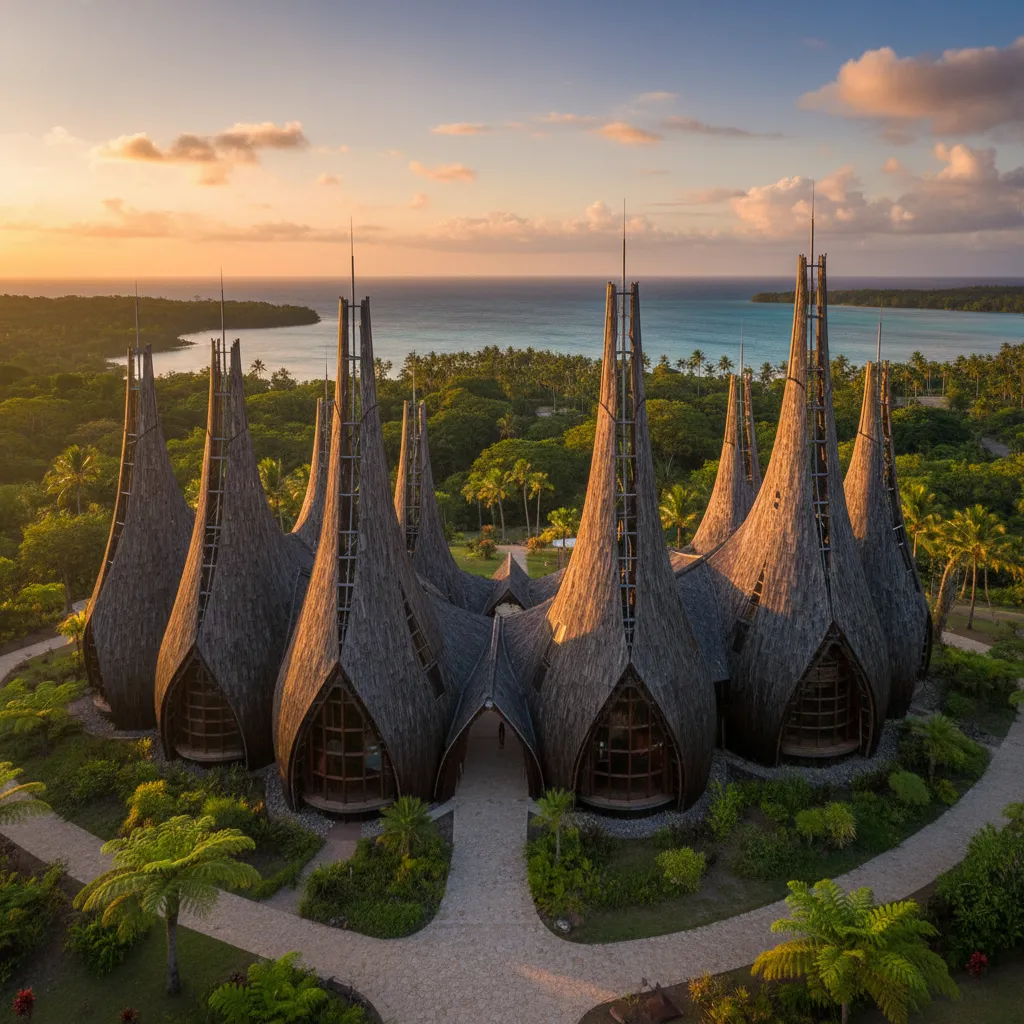
The design concept revolves around the “Case” (pronounced ‘caz’), the traditional Kanak hut. However, rather than simply replicating the straw and wood huts found in tribal villages, Piano deconstructed the form. He focused on the verticality and the circular gathering spaces inherent in Kanak life. The result is a cluster of ten “Great Cases” of varying heights (from 20 to 28 meters) arranged in three villages along a long, covered corridor. This layout mimics the traditional “allée” (ceremonial path) found in Kanak settlements.
The architecture is intentionally unfinished in appearance. Piano described it as a construction in the process of becoming, reflecting the dynamic and evolving nature of Kanak culture itself. The structures open up to the sky and the lagoon, rejecting the concept of a closed fortress in favor of a porous relationship with the elements. This openness is crucial to the building’s function, both culturally and climatically.
How Does the Sustainable Engineering Work?
The **Tjibaou Cultural Centre architecture** is a pioneering example of green building and passive design, long before these terms became industry buzzwords. The defining feature of the centre is its sophisticated natural ventilation system, which was developed through extensive wind tunnel testing. The structures are designed to “sing” with the wind, utilizing the prevailing trade winds from the ocean to cool the interior spaces without the need for energy-intensive air conditioning.
The Double-Skin Façade
Each of the ten cases features a double-skin façade. The outer layer consists of curved ribs made from laminated Iroko wood—a timber chosen for its durability, resistance to rot, and ability to weather into a silver-grey hue that mimics the trunks of the surrounding coconut palms. These wooden ribs are spaced to filter sunlight and wind. Behind this wooden screen lies a second layer of adjustable glass louvers and an inner wall.

The system works dynamically. When the trade winds blow, the pressure difference drives air through the louvers. The orientation of the cases is specific; the curved, high side faces the prevailing winds, acting as a wind scoop. Sensors monitor wind speed and direction, automatically opening or closing the louvers to maintain a constant, comfortable airflow. This produces a distinct sound—a low hum—that gives the building an auditory presence, reinforcing the Kanak belief that the wind carries the spirits of the ancestors.
Materials and Durability
The choice of materials was a diplomatic and structural negotiation. While traditional Kanak huts use vegetative materials that require regular replacement (symbolizing the cycle of life), a public institution needed permanence. Steel and glass provide the structural integrity required for a monumental public building, while the Iroko wood provides the organic texture and connection to the earth. The steel joints are designed to be visible, celebrating the technology rather than hiding it, much like the lashings in a traditional hut are visible and decorative.
Exhibitions on Kanak Heritage
While the exterior is a triumph of architecture, the interior serves the vital purpose of preserving and projecting Kanak heritage. The centre is divided into three distinct “villages,” each serving a specific cultural function. The layout forces visitors to move through the space in a way that encourages contemplation and discovery.
Village 1: Kanak Identity (Kanéka)
The first cluster of cases focuses on the roots of Kanak identity. Here, visitors find exhibitions dedicated to the history of the archipelago, the impact of colonization, and the art of the Kanak people. It houses permanent collections of sculpture, weaving, and artifacts that demonstrate the continuity of tradition. The architecture here creates intimate, shadowed spaces that feel sacred, appropriate for viewing objects of spiritual significance.
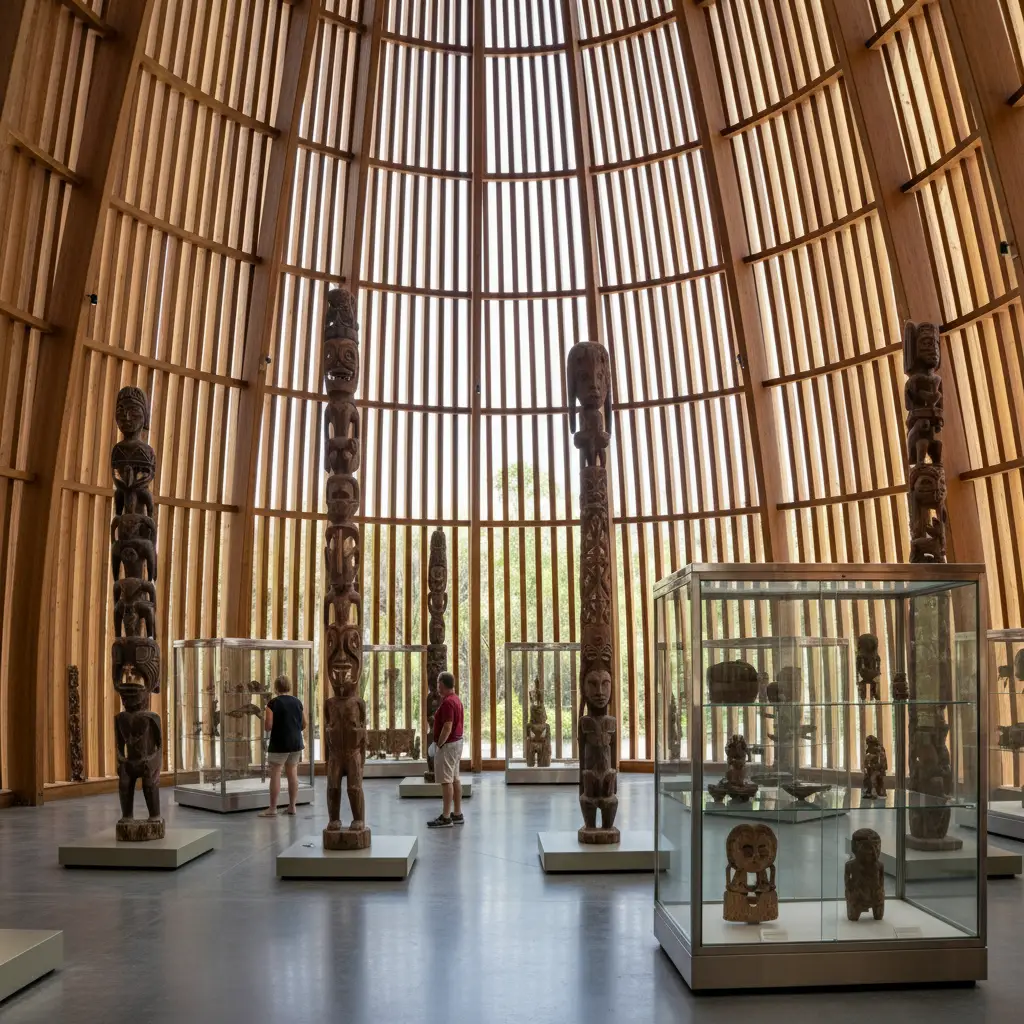
For New Zealand travelers familiar with Maori marae, the resonance is palpable. The reverence for ancestors and the connection to the land (Le Rocher) are themes that bridge the gap between the cultures of Aotearoa and New Caledonia. The exhibitions often feature contemporary Pacific art, highlighting that Kanak culture is not frozen in the past but is vibrant and political.
Village 2: The Spaces for Art
The second village houses the media library, conference rooms, and spaces for temporary exhibitions. This is the intellectual heart of the centre, where researchers and artists convene. The architecture here is more open, with wider spans to accommodate gatherings. It reflects the “Great House” of the chief, where decisions are made and stories are told.
Village 3: Focus on Creativity
The final cluster is dedicated to creative expression, including dance, music, and painting studios. It is located at the end of the path, closest to the sea, symbolizing the projection of culture outwards to the world. The acoustics in these cases are tuned for performance, demonstrating the versatility of Piano’s shell design.
The Kanak Path and Gardens
One cannot discuss the **Tjibaou Cultural Centre architecture** without addressing the landscape. In Kanak culture, there is no separation between the building and the land; they are one entity. Renzo Piano worked closely with ethnobotanists to ensure the surroundings were an integral part of the architectural narrative.
The Chemin Kanak (Kanak Path)
Surrounding the buildings is an interpretive landscape known as the Kanak Path. This winding trail creates a mythological journey through the vegetation. It is lined with plants that hold specific symbolic meanings in Kanak society. For example, the taro represents the man, while the yam represents the chief. The Araucaria pine, tall and straight, symbolizes the ancestors watching over the living.
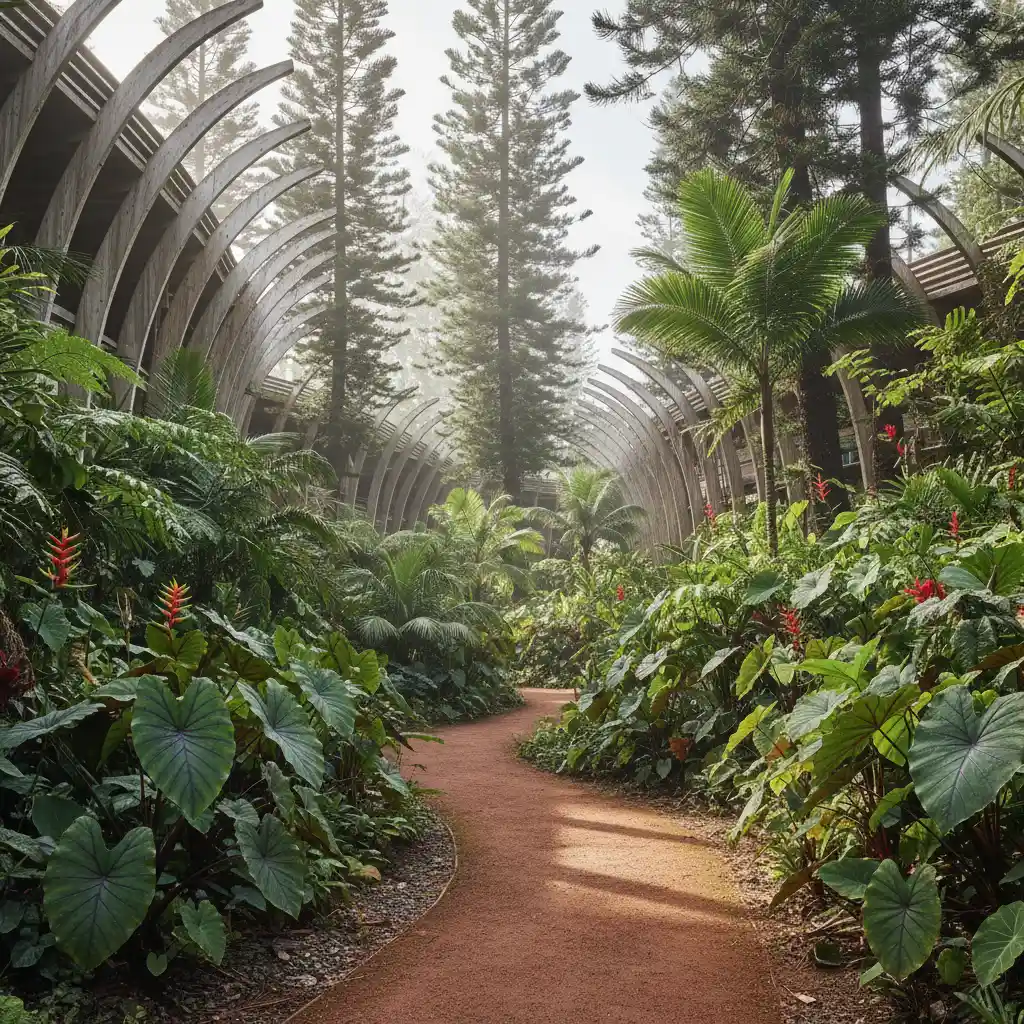
The path is designed to be walked before entering the buildings, preparing the visitor mentally and spiritually. It tells the story of the creation of the first man, Tein Kanak. As you walk the path, the architecture reveals itself slowly through the trees, never dominating the landscape but appearing to grow out of it. This “hide and reveal” technique is a common feature in Pacific landscape design, creating a sense of mystery and reverence.
The landscaping also serves a functional purpose. The density of the vegetation was calculated to modify the wind flow around the buildings, creating microclimates that enhance the passive ventilation system. The red soil of the path contrasts vividly with the green foliage and the weathering wood of the cases, creating a striking visual palette that photographers adore.
Visitor Information and Access for NZ Travelers
For New Zealanders planning a trip to New Caledonia, the Tjibaou Cultural Centre is a non-negotiable stop. It provides the essential context needed to understand the country beyond the beaches of Nouméa and the Isle of Pines.
Getting There
The centre is located on the Tina Peninsula, approximately 10 kilometers northeast of downtown Nouméa.
By Car: It is a 15-20 minute drive from the city center. Parking is ample and free.
By Bus: The Karuïa Bus network services the centre (Line 40). It is an affordable and reliable option for tourists.
By Taxi: Taxis are readily available from Nouméa, though it is advisable to arrange a pickup time for your return.
Best Time to Visit
To fully appreciate the **Tjibaou Cultural Centre architecture**, visit in the late afternoon. The changing light on the wooden ribs creates a dynamic visual transformation, turning the buildings from a matte grey to a warm, glowing gold as the sun sets. Tuesdays are often quieter, allowing for a more contemplative experience of the exhibitions and the Kanak Path.
Guided Tours
While you can wander the grounds independently, joining a guided tour is highly recommended. Guides provide deep insights into the symbolism of the architecture and the political history of Jean-Marie Tjibaou that simply cannot be gleaned from placards alone. Tours are available in English, usually at specific times, so checking the official schedule prior to arrival is essential for Kiwi tourists who may not be fluent in French.
People Also Ask
Why was the Tjibaou Cultural Centre built?
The centre was built to honor Jean-Marie Tjibaou, the assassinated leader of the Kanak independence movement. It serves as a symbol of recognition for Kanak culture by the French government and a place to preserve, develop, and share indigenous heritage with the world.
What materials were used to build the Tjibaou Cultural Centre?
The primary materials are Iroko wood (imported from Africa for its durability and resistance to termites), glass, steel, and aluminum. The combination allows for a structure that looks organic but possesses the strength of modern engineering.
How many “cases” are there in the cultural centre?
There are ten “cases” (huts) in total, organized into three distinct villages. They vary in size, with heights ranging from 20 to 28 meters, and are connected by a long, low corridor.
Who is the architect of the Tjibaou Cultural Centre?
The centre was designed by the world-renowned Italian architect Renzo Piano. He won the international design competition in 1991, and the building was completed and opened to the public in 1998.
Is the Tjibaou Cultural Centre sustainable?
Yes, it is a landmark of sustainable design. It utilizes passive ventilation systems that harness trade winds to cool the interior naturally, reducing the need for air conditioning. The design also integrates seamlessly with the local vegetation.
How long does it take to visit the Tjibaou Cultural Centre?
Visitors should allocate at least 2 to 3 hours to fully experience the site. This allows enough time to walk the Kanak Path, explore the exhibitions inside the cases, and appreciate the architecture from various angles.