
Blue River Provincial Park is a 22,000-acre protected reserve located in the Great South of New Caledonia, characterized by its distinctive red lateritic soil, the submerged Drowned Forest, and ancient biodiversity. It serves as the primary sanctuary for the endemic Cagou bird and offers extensive hiking, mountain biking, and kayaking opportunities just 45 minutes from Nouméa.
What Makes Blue River Provincial Park Unique?
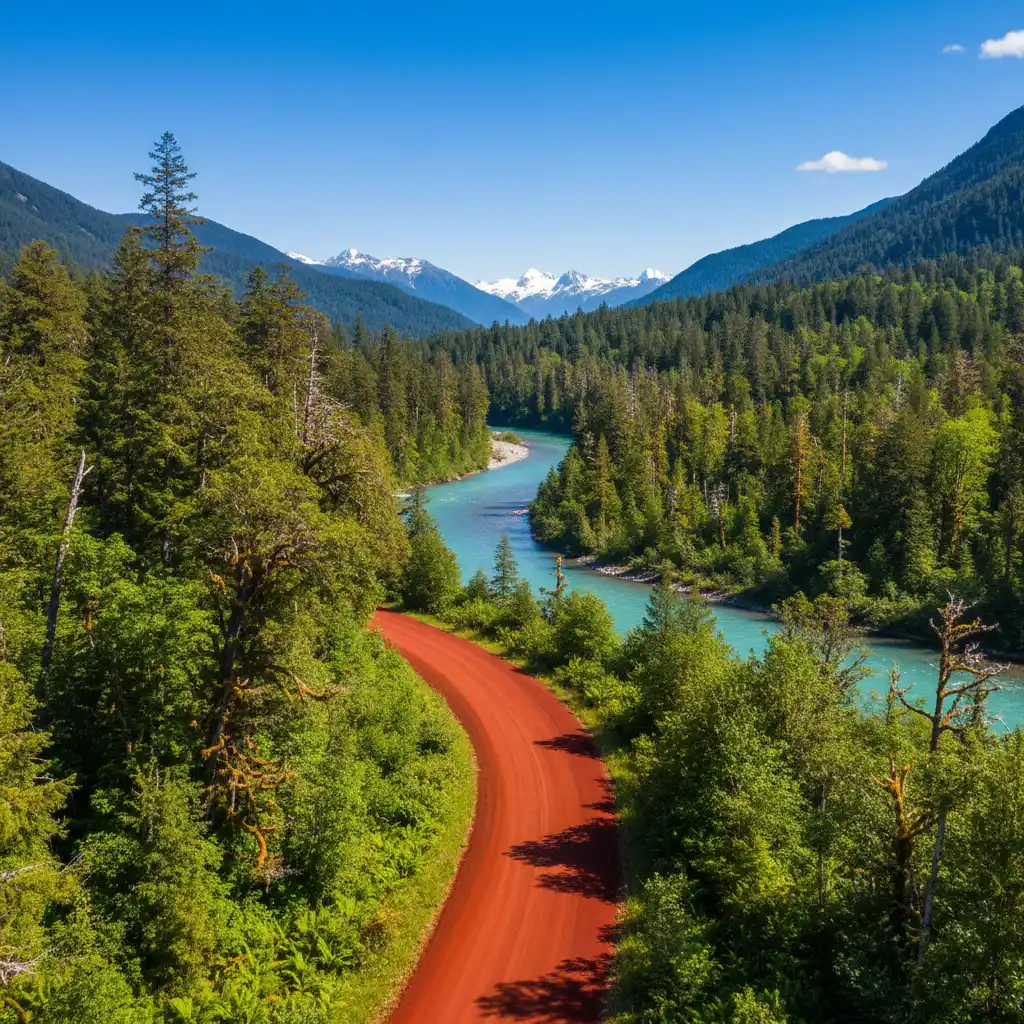
For travelers venturing from New Zealand or Australia to New Caledonia, the landscape shifts dramatically as you leave the capital city of Nouméa. The lush tropical greenery gives way to the “Grand Sud” (Great South), a region defined by its mineral-rich, iron-oxidized soil known as laterite. At the heart of this crimson landscape lies the Blue River Provincial Park (Parc de la Rivière Bleue), the largest and most significant terrestrial park in the Southern Province.
Established to protect the fragile ecosystem of the ultrabasic scrubland, the park is a geological and botanical wonder. Unlike the volcanic soil found in parts of New Zealand, the red earth here is derived from the weathering of ultramafic rocks, creating a substrate that is toxic to many common plants but a haven for ancient, endemic species. This unique geochemistry is responsible for the park’s vibrant contrast: the shocking red of the earth against the deep turquoise of the Blue River and the emerald green of the rainforest canopy.
The park is not merely a scenic destination; it is a critical conservation zone. It houses the largest remaining population of the Cagou, New Caledonia’s flightless national bird. For eco-tourists and nature enthusiasts, the park offers a rare glimpse into a prehistoric ecosystem that has evolved in isolation for millions of years. Whether you are exploring by mountain bike, kayak, or on foot, the sense of entering a “lost world” is palpable.
What is the Drowned Forest (La Forêt Noyée)?
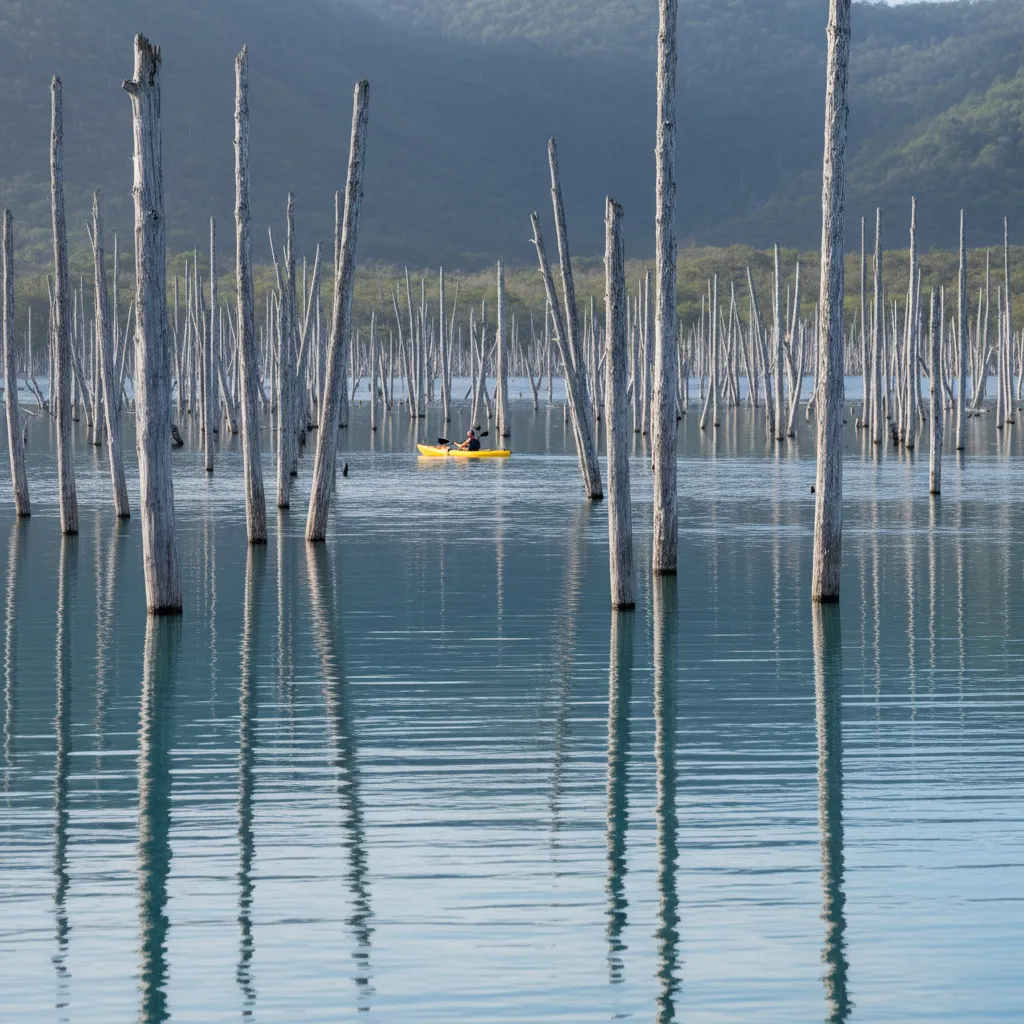
One of the most surreal and photographed locations within Blue River Provincial Park is the Drowned Forest (La Forêt Noyée). This hauntingly beautiful landscape was created artificially, yet nature has reclaimed it in a spectacular fashion. In 1958, the construction of the Yaté Dam caused the water levels to rise significantly, submerging a vast tract of the valley.
However, the trees that inhabited this valley—specifically the Chêne Gomme (Gum Oak)—did not rot away as one might expect. Due to the extreme hardness and density of their iron-rich wood, the trunks have remained standing for over six decades. Today, thousands of bleached white trunks rise eerily from the calm, glassy waters of Yaté Lake.
Kayaking the Ghostly Waters
The best way to experience the Drowned Forest is by kayak. Paddling through this silence is an ethereal experience. The water is often crystal clear, allowing you to see the submerged roots and the aquatic life that has adapted to this new environment. Under the moonlight (during special full moon tours offered by the park), the white trunks glow against the dark water, creating a mystical atmosphere that feels worlds away from the bustling beaches of Anse Vata.
For photographers, the Drowned Forest offers exceptional opportunities, particularly at sunrise or sunset when the light softens, casting long shadows and reflecting the skeletal trees on the mirror-like surface of the lake. It stands as a poignant reminder of the intersection between human industrial development and the resilience of nature.
The Giant Kaori and Endemic Wildlife
Deep within the humid rainforest section of the park stands the Grand Kaori (Agathis lanceolata), a living monument to the island’s botanical history. This specific tree is estimated to be over 1,000 years old. Standing at approximately 40 meters tall with a trunk diameter of nearly 3 meters, it is a survivor of centuries of cyclones and climate shifts.
For visitors from New Zealand, the connection is immediate; the Kaori is a close relative of the Kauri (Agathis australis). Seeing this ancient giant connects the Gondwanaland heritage shared by New Caledonia and New Zealand. A dedicated boardwalk protects the shallow root system of the tree, allowing visitors to approach the massive trunk without causing damage.
How to Spot the Cagou Bird
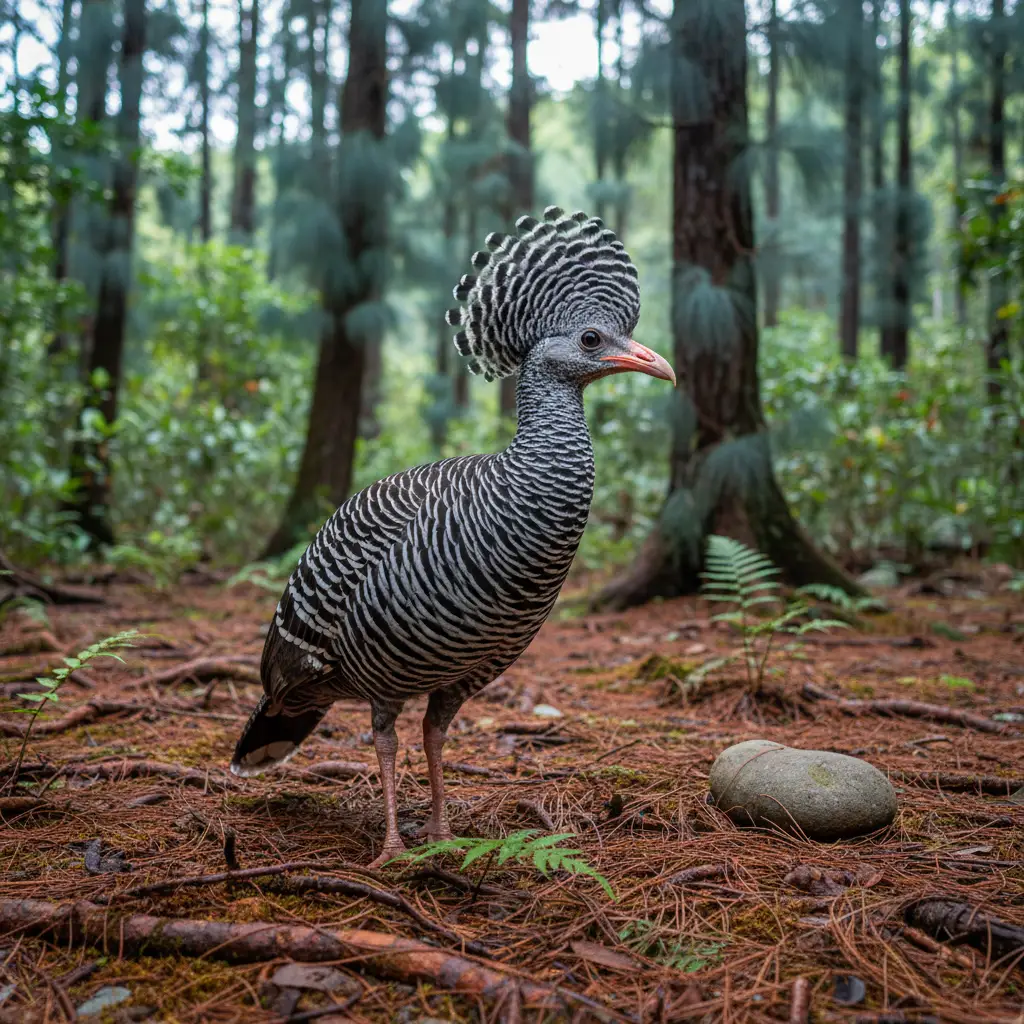
Blue River Provincial Park is the premier location in the world to see the Cagou (Rhynochetos jubatus) in the wild. This ash-grey, flightless bird is the emblem of New Caledonia. It is unique not only for its inability to fly but for its “barking” call and its singular taxonomic status—it is the only species in its entire family.
Thanks to intensive predator control programs within the park (targeting rats and feral cats), the Cagou population here is thriving. They are relatively unafraid of humans and can often be seen foraging in the leaf litter near the picnic areas at Pont Pérignon. When threatened or displaying, they fan out their crests, a spectacular sight for any birdwatcher.
Yate Lake and the Madeleine Falls
While Blue River Provincial Park is the main attraction, the surrounding Great South region offers complementary sites that are essential to the itinerary. The park borders Yaté Lake, a massive artificial reservoir powering the island’s hydroelectricity. The drive around the lake reveals the sheer scale of the wilderness here.
Nearby, the Madeleine Falls (Chutes de la Madeleine) offers a different botanical experience. Located in the Plaine des Lacs, this reserve features a waterfall that, while not incredibly high, is set within a stunning natural amphitheater of red rocks and rare conifers. The botanical path here is world-renowned among botanists. It contains 168 species of plants, 95% of which are endemic to New Caledonia. This includes the primitive Netfums, a plant genus that provides a link to the flora of the dinosaur era.
The contrast of the roaring water against the silent, scrubby red plains creates a landscape that feels almost Martian. It is an accessible site with well-maintained paths, making it perfect for families or those who prefer a lighter walk compared to the deep bush hiking of the main park.
Hiking the GR1 NC through the Grand Sud
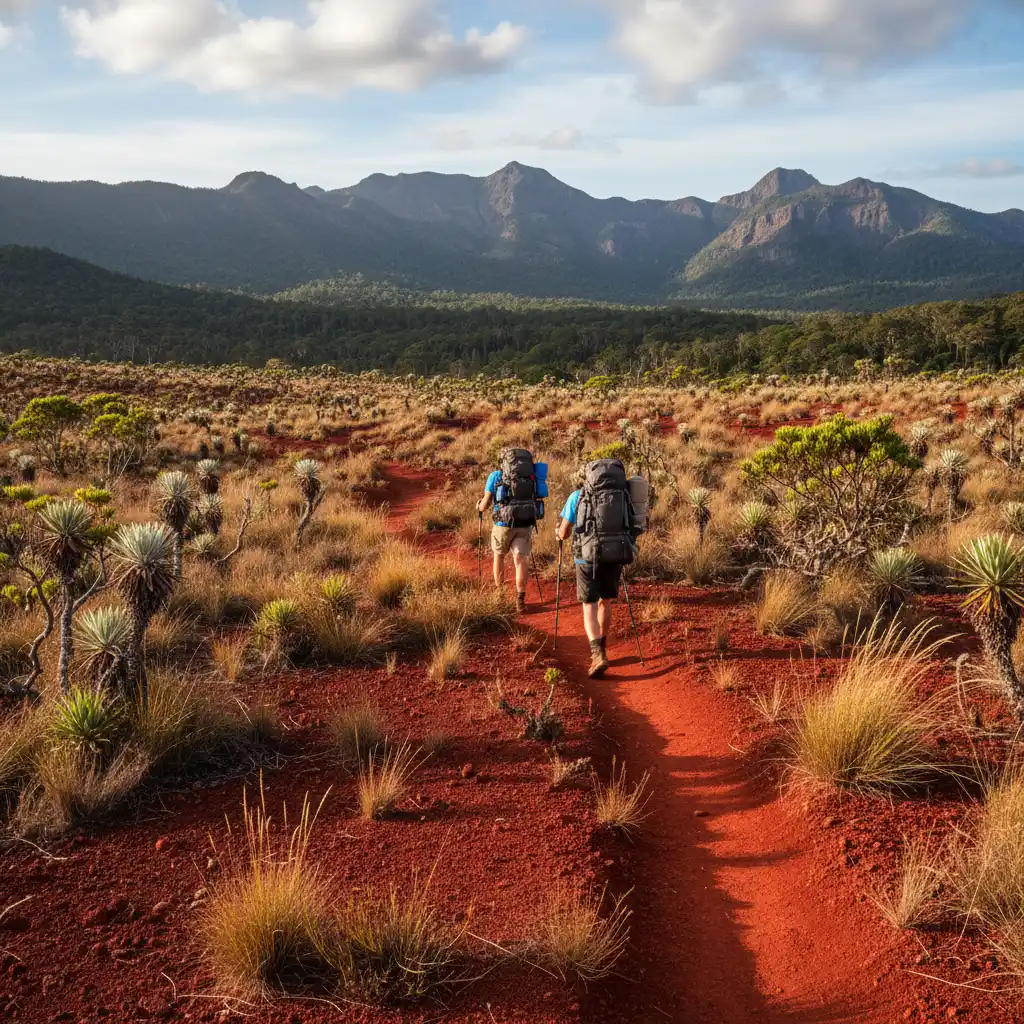
For the serious trekker, the Great South serves as the starting point (or terminus) of the GR1 NC, a long-distance hiking trail that traverses the southern province. The segments passing through Blue River Provincial Park are among the most spectacular.
The trail winds through the changing vegetation, from the mining scrubland (maquis minier) to the dense humid rainforest. Hiking this terrain requires preparation; the red soil can absorb heat, making midday treks challenging. However, the rewards are panoramic views over the winding Blue River and the distant peaks of the Central Mountain Chain.
The park offers a shuttle service (navette) that can drop hikers at various trailheads, allowing for flexible day hikes without the need to commit to multi-day camping. Popular routes include the path to the Upper Blue River and the loops around the Giant Kaori. The trails are well-marked, but carrying sufficient water is mandatory, as the streams in the mining areas may contain heavy metals, though the Blue River itself is pristine in the upper reaches.
Practical Information for Travelers
Visiting Blue River Provincial Park requires some logistical planning, especially for international visitors renting cars from Nouméa.
How to Get There
The park is located in the commune of Yaté. From Nouméa, take the RP1 road towards Mont-Dore, then follow the signs for Yaté/Parc de la Rivière Bleue. The drive takes approximately 45 minutes to 1 hour. The final stretch of road leading to the park entrance is unsealed but generally accessible by standard 2WD vehicles, though a high-clearance vehicle or SUV is recommended for comfort.
The Internal Shuttle
To protect the environment, private vehicles are not allowed deep into the park past the Pont Pérignon. Visitors must park their cars and utilize the park’s internal shuttle service, rent mountain bikes, or walk. The shuttle runs regularly and stops at major points of interest, including the Drowned Forest launch point and the Giant Kaori trail.
Opening Hours and Fees
The park is generally closed on Mondays. It opens early, usually around 7:00 AM, and the last entry is often in the early afternoon. There is a nominal entry fee (approx. 600 CFP), and shuttle services may cost extra. It is highly advisable to check the official Province Sud website for the most current schedule before driving out.
Best Time to Visit
The cooler months from June to September are ideal for hiking, as the heat is less intense. However, the park is accessible year-round. If you plan to kayak, checking the wind forecast is wise, as the open water of the Drowned Forest can get choppy.
People Also Ask
How far is Blue River Park from Noumea?
Blue River Provincial Park is approximately 60 kilometers from Nouméa. The drive typically takes between 45 minutes to 1 hour, passing through Mont-Dore and the Col de Mouirange.
Can you swim in the Blue River Park?
Yes, swimming is renowned in the park. The river offers several designated swimming holes with crystal clear, refreshing water, perfect for cooling off after a hike.
Do I need a 4WD to go to Blue River Park?
A 4WD is not strictly necessary to reach the main entrance and car park (Pont Pérignon) in dry weather, but an SUV or vehicle with higher clearance is recommended due to the gravel roads leading up to the gate.
Are there crocodiles in Blue River Provincial Park?
No, there are no crocodiles in New Caledonia. The rivers and lakes are safe from dangerous aquatic predators, making swimming and kayaking very safe activities.
Is there camping in Blue River Provincial Park?
Yes, the park offers designated camping areas equipped with basic facilities like shelters and BBQ pits. Camping permits must be booked in advance through the provincial booking system.
What should I wear to Blue River Provincial Park?
Wear breathable hiking clothes and sturdy shoes. The red soil stains easily, so avoid white clothing. A hat, sunglasses, and high-SPF sunscreen are essential due to the lack of shade in the scrubland areas.