
Bourail, the capital of New Caledonia’s West Coast, offers a diverse array of activities blending marine adventure with rural heritage. The top things to do include exploring the UNESCO World Heritage lagoon at Poe Beach via glass-bottom boat, hiking the biodiversity-rich Domain of Deva, witnessing the geological wonder of La Roche Percée, and experiencing the region’s authentic “Broussard” cowboy culture.
Located approximately two and a half hours north of Nouméa, Bourail serves as the gateway to the untamed West Coast. While many travelers flock to the Loyalty Islands or the Isle of Pines, the region of Bourail provides a distinctively different experience. Here, the red earth of the bush meets the turquoise waters of the world’s largest lagoon. For travelers visiting from New Zealand and Australia, Bourail represents an accessible, high-contrast destination where you can hike arid hills in the morning and swim with sea turtles in the afternoon.
What makes La Roche Percée and Turtle Bay unique?
La Roche Percée (The Pierced Rock) is one of the most iconic geological sites in New Caledonia and a mandatory stop when exploring Bourail. Unlike the white sand beaches typical of the islands, this stretch of coastline features glistening grey quartz sand, framed by dramatic cliff faces and Araucaria pines. This area is not just a scenic viewpoint; it is a geological testament to the island’s volcanic past and erosion processes.
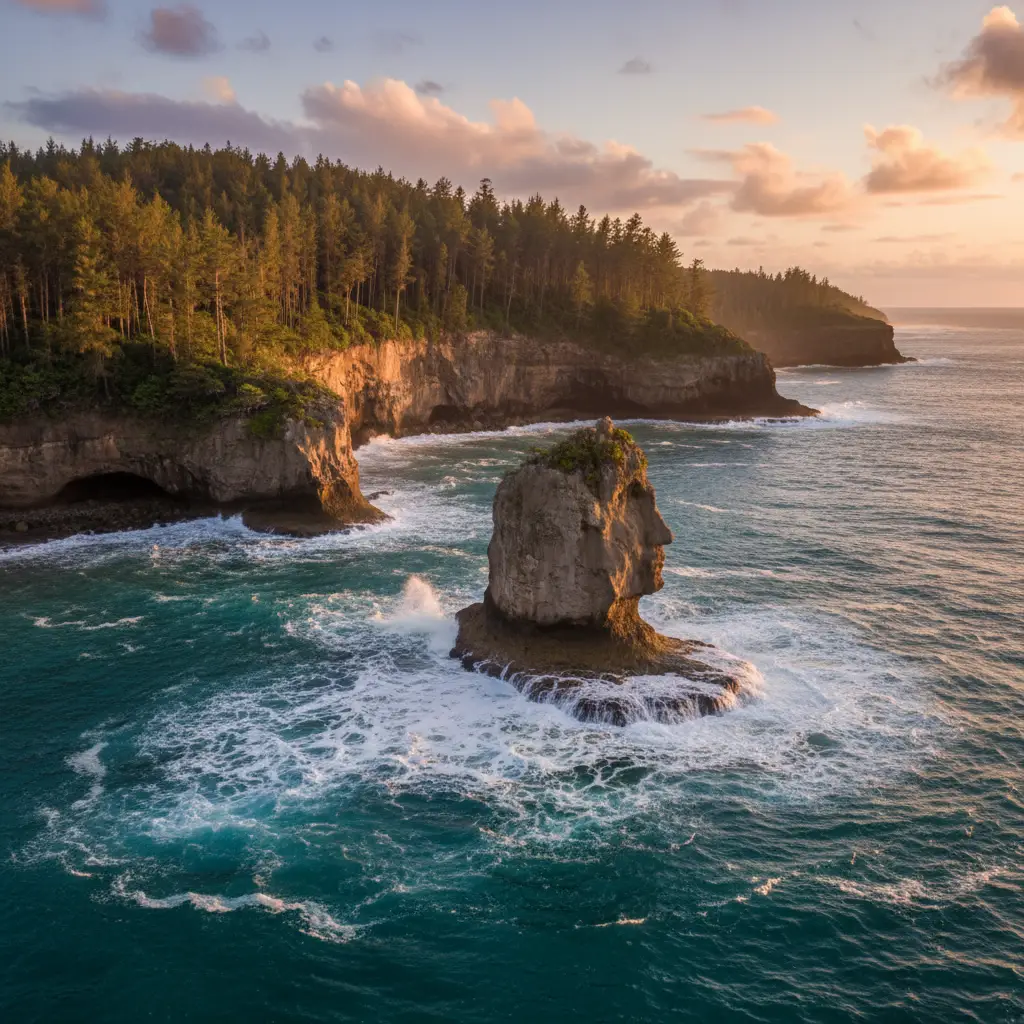
The Bonhomme of Bourail
The centerpiece of this area is the “Bonhomme de Bourail” (The Old Man of Bourail). This massive monolith, shaped by wind and waves over millennia, stands guard at the entrance to the Gouaro Bay. According to local Kanak legend, the rock represents the guardian of the pass to the afterlife. While the natural arch that once connected it to the mainland collapsed years ago, the solitary stack remains a powerful symbol of the region. Visitors can admire the Bonhomme from the beach or take the coastal walking track that leads up the cliffside for a panoramic view of the pass.
Turtle Bay (Baie des Tortues)
Adjacent to La Roche Percée lies the aptly named Turtle Bay. This secluded cove is a critical nesting ground for Loggerhead turtles (Grosse Tête). During the nesting season, which typically runs from November to March, these majestic creatures come ashore to lay their eggs. The local environmental associations are very active here, protecting the nests and organizing educational releases of hatchlings. Even outside of nesting season, the bay is a serene location for a picnic, sheltered from the prevailing trade winds by the surrounding cliffs. However, swimmers should be cautious of strong currents in this specific area; often, it is better suited for wading and photography than deep ocean swimming.
How to explore Poe Beach and the Glass Bottom Boats?
Poe Beach (Plage de Poé) is the tourism hub of the Bourail district and arguably the most popular beach on the main island (Grande Terre). Stretching for nearly 17 kilometers, this white sand beach faces a shallow, crystal-clear lagoon that is part of the UNESCO World Heritage site listing. The water here is exceptionally calm and shallow, making it safe for families and ideal for a variety of water sports.
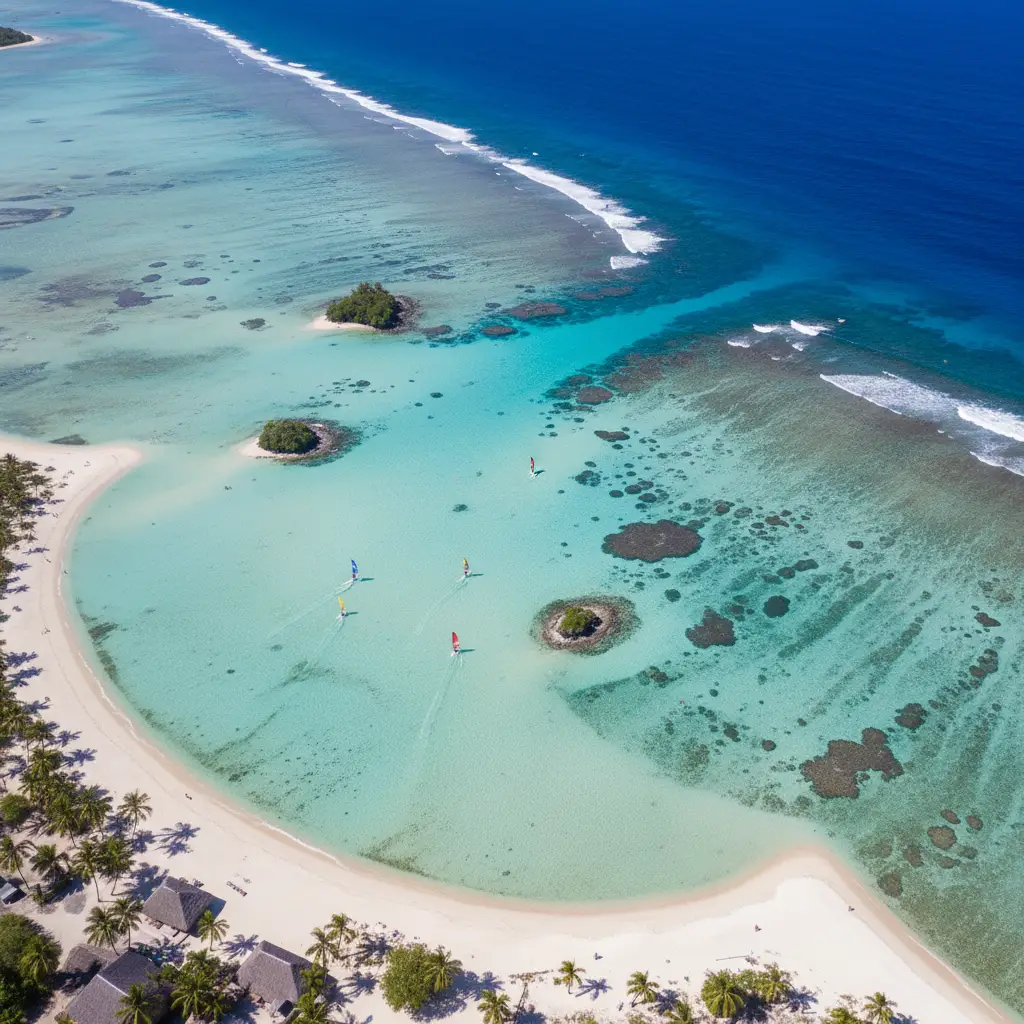
Snorkeling the Reef via Glass Bottom Boat
The coral reef at Poe is located roughly 2 kilometers offshore, which is too far for most to swim comfortably. The best way to experience the underwater biodiversity is to book a trip on a glass-bottom boat. These flat-bottomed vessels are designed to navigate the shallow lagoon waters without damaging the coral ecosystems.
The boat tours typically transport visitors out to the “faille” (the drop-off) or specific coral gardens near the Lentilla Pass. Once the boat anchors, passengers can jump in for a snorkeling session. The underwater visibility is often spectacular, exceeding 20 meters. You can expect to see vibrant soft and hard corals, giant clams, clownfish, parrotfish, and frequently, Green Sea Turtles and rays gliding through the seagrass beds. For those who prefer to stay dry, the glass panels offer a clear window into this aquatic world, making it an inclusive activity for all ages.
Kayaking and Windsurfing
Because the lagoon is protected from the open ocean swell by the barrier reef, the water conditions at Poe are flat, yet the area often receives consistent trade winds. This combination makes Poe Beach a world-class destination for windsurfing and kitesurfing. Beginners can learn in the waist-deep water without fear of being swept out to sea or battered by waves. For a more relaxed pace, renting a kayak or stand-up paddleboard (SUP) allows you to explore the coastline silently. Paddling over the seagrass beds often reveals stingrays and turtles resting in the shallows.
What does the Domain of Deva offer outdoor enthusiasts?
The Domain of Deva (Domaine de Deva) is a massive protected natural area covering approximately 8,000 hectares. It represents the largest dry forest ecosystem remaining in New Caledonia, a habitat that is globally threatened. For eco-tourists and outdoor adventurers, Deva is the crown jewel of the West Coast.

Hiking and Mountain Biking Trails
The Domain features an extensive network of well-marked trails catering to all fitness levels. The trails wind through niaouli (paperbark) savannas, dense dry forests, and climb up to ridges offering panoramic views of the lagoon and the shark-fin-shaped hills.
- The Oua Koué Trail: A popular choice for hikers, offering a moderate climb to a summit that provides a 360-degree view of the reef and the mountains.
- The Giants’ Path (Sentier des Géants): This trail takes you through the rainforest where you can see massive banyan trees and ancient cycads, giving the area a prehistoric feel.
- Mountain Biking: Deva creates a paradise for cyclists with dedicated single-track routes. The terrain varies from flat, sandy tracks near the coast to technical rocky descents in the hills.
Birdwatching and Wildlife
As a protected reserve, Deva is teeming with birdlife. It is one of the best places to spot the New Caledonian Crow, known for its tool-using intelligence, as well as the Notou (giant pigeon) and the Kagu (though Kagus are rarer here than in the Blue River Park). The preservation of the dry forest is crucial for these species, and the domain serves as an open-air classroom for understanding the island’s unique endemism.
How to experience the West Coast Cowboy Culture?
Bourail is often referred to as the “Far West” of the Pacific. The landscape of rolling hills and dry plains is ideally suited for cattle ranching, giving rise to a distinct subculture known as the “Broussards” (bushmen). This is not a tourist gimmick; it is a living history dating back to the colonization era when settlers established large stations for livestock.
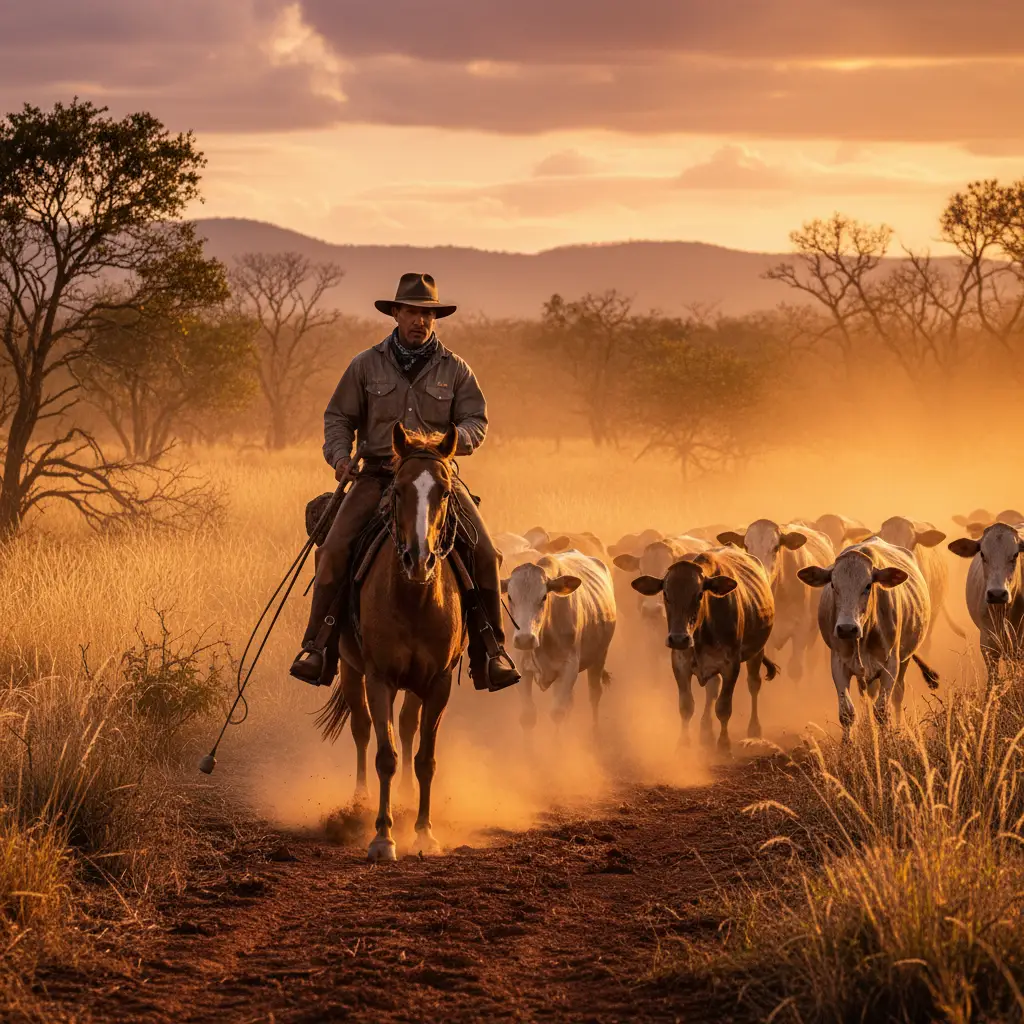
The Foire de Bourail (Bourail Fair)
If your travel dates are flexible, aim to visit in mid-August during the Foire de Bourail. This is the largest agricultural and cultural event in New Caledonia. It is a three-day festival featuring rodeos, barrel racing, livestock judging, and woodchopping competitions. It provides a fascinating insight into the fusion of French rural traditions and Pacific island life. You will see stockmen in Akubra hats riding horses alongside stalls selling local venison sausages and French pastries.
Farm Stays and Horse Riding
To truly immerse yourself in this culture, consider booking a stay at a local guest farm (station). Many local families open their doors to tourists, offering a chance to participate in daily farm life or enjoy a traditional meal of venison or local beef. Horseback riding is also a quintessential Bourail activity. Several operators run guided treks that take you from the grassy hills down onto the beach, allowing you to gallop along the shoreline at sunset—a bucket-list experience for many equestrians.
Practical Information for Travelers
Planning a trip to Bourail requires some logistical preparation to ensure a smooth experience, especially for those arriving from New Zealand or further afield.
Getting There and Around
Most international flights arrive at La Tontouta International Airport, located roughly 45 minutes north of Nouméa. Bourail is a further 1 hour and 45 minutes drive north from the airport (approx. 2.5 hours total from Nouméa city). Renting a car is highly recommended, if not essential. Public transport exists (the Raï bus network) but is infrequent and will not allow you to access the scattered attractions like Deva or the various beaches easily. Note that traffic drives on the right-hand side of the road in New Caledonia, which is a change for visitors from New Zealand and Australia.
Accommodation Options
Bourail offers a spectrum of accommodation to suit different budgets:
- Luxury: The Sheraton New Caledonia Deva Spa & Golf Resort is located within the Domain of Deva. It offers 5-star bungalows, a world-class golf course, and direct beach access.
- Mid-Range: There are several hotels and motels near Poe Beach offering comfortable, air-conditioned bungalows and self-catering options.
- Camping: For the adventurous, the campsite at Poe Beach is extremely popular. It is well-equipped with amenities, but it is advisable to book in advance during school holidays and weekends as it is a favorite spot for locals.
Dining in Bourail
The culinary scene in Bourail is a mix of French sophistication and island freshness. Do not miss the chance to try local specialties. Venison (cerf) is a staple of the West Coast diet, often served as a civet (stew), sausage, or carpaccio. Seafood is also abundant, with blue prawns (crevettes bleues) being a local delicacy. Most dining options are concentrated around Poe Beach or in the Bourail town center.
How far is Bourail from Nouméa?
Bourail is approximately 160 kilometers northwest of Nouméa. By car, the drive typically takes about 2 hours and 30 minutes via the RT1 highway, which is a sealed and well-maintained road offering scenic views of the mountains and coast.
What is the best time of year to visit Bourail?
The best time to visit is during the cooler, drier months from May to October. September and October are particularly pleasant with lower humidity. If you want to see the Bourail Fair, visit in mid-August. Turtle nesting season is from November to March.
Do I need a 4WD to visit Bourail?
Generally, no. The main roads to Bourail, Poe Beach, and the Sheraton Deva are sealed and accessible by standard 2WD vehicles. However, if you plan to explore remote farm tracks or specific off-road trails in the mountains, a 4WD would be beneficial.
Is it safe to swim at Poe Beach?
Yes, Poe Beach is considered very safe for swimming. The water is shallow and protected by the reef, meaning there are no large waves or strong rips near the shore. However, always exercise caution regarding currents near the channel passes and wear reef shoes to protect against coral or stonefish.
Can I see turtles in Bourail without a boat?
Yes, it is possible. Turtles are frequently seen surfacing near the seagrass beds at Poe Beach, which are accessible by swimming or kayaking from the shore. However, a glass-bottom boat tour significantly increases your chances of a clear sighting.
What currency is used in Bourail?
New Caledonia uses the Pacific Franc (XPF or CFP). While major hotels and some tour operators accept credit cards, it is advisable to carry cash for small shops, markets, and snacks, especially in rural areas like Bourail.