To get from the Noumea cruise terminal to the city center, passengers docking at the industrial container wharf must first take a mandatory free shuttle to the main terminal building. From there, the city center (Place des Cocotiers) is a flat, 15-minute walk (1.2 km). Alternatively, travelers can utilize the ‘Petit Train’ tourist shuttle, the convenient Hop-on Hop-off bus service, or local taxis available at the terminal exit.
For New Zealand travelers arriving in New Caledonia, navigating the logistics of the Noumea port is the first step to a successful shore excursion. Whether you are arriving on P&O, Carnival, or Royal Caribbean, understanding the layout of the port and the transit options available is crucial for maximizing your limited time on the island. This guide details every transport method available to bridge the gap between your ship and the vibrant French atmosphere of downtown Noumea.
Understanding Your Arrival: The Container Terminal vs. City Terminal
Before planning your route to the city center, it is vital to understand exactly where your ship docks. Noumea has recently reorganized its cruise infrastructure, which can be confusing for first-time visitors.
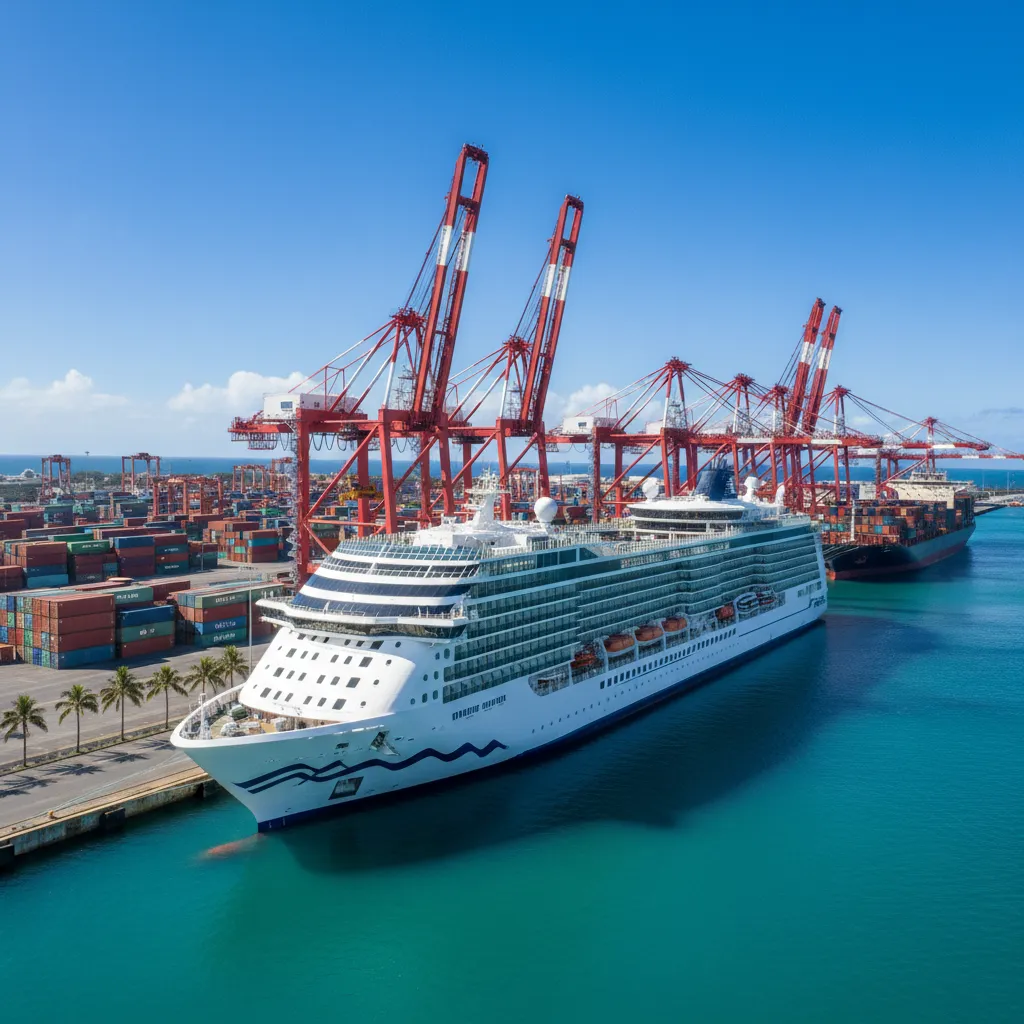
Most large cruise liners departing from New Zealand do not dock directly at the passenger terminal in the city heart. Instead, they dock at the commercial container terminal located across the harbor. Due to health and safety regulations within this active industrial zone, passengers are prohibited from walking around the ship.
Upon disembarkation, you will board a mandatory, complimentary shuttle bus provided by the port authority. This shuttle takes approximately 5 to 10 minutes to transport you from the ship’s gangway to the Gare Maritime (Cruise Terminal Building). This building is the true starting point for all independent travel into the city. It houses a tourism information desk, a handicraft market, and currency exchange facilities.
Walking from the Cruise Terminal to City Center
For budget-conscious travelers and those who enjoy stretching their legs after days at sea, walking is a viable and popular option. The route from the Gare Maritime to the city center is safe, flat, and straightforward.
Is it safe to walk from the Noumea cruise terminal to the city?
Yes, the walk is generally very safe during daylight hours. The route follows the waterfront and main roads which are well-trafficked. However, pedestrians should remain aware of their surroundings, keep valuables secure, and be mindful of the tropical heat, which can be deceptive.
The Walking Route
Once you exit the Cruise Terminal Building, you will see the Casino Johnston supermarket directly across the street. This is a common landmark for crew members buying supplies.
- Exit the Terminal: Turn left upon leaving the terminal building.
- Follow the Waterfront: Walk along Rue Jules Ferry. You will pass the ferry terminal for boats heading to Île des Pins and the Loyalty Islands.
- Turn Right: At the intersection with Rue du Général Mangin or Rue Anatole France, turn right to head inland toward the city square.
- Arrival: Continue straight for two to three blocks until you reach Place des Cocotiers.
Time Estimate: 15 to 20 minutes at a leisurely pace.
Difficulty: Low (Flat terrain).
Cost: Free.
The ‘Petit Train’ vs. Public Bus Services
Many New Zealanders are familiar with the “Tchou Tchou Train” concepts found in other Pacific ports. Noumea offers a similar service, but it is important to distinguish this from standard public transport.
What is the Noumea Petit Train?
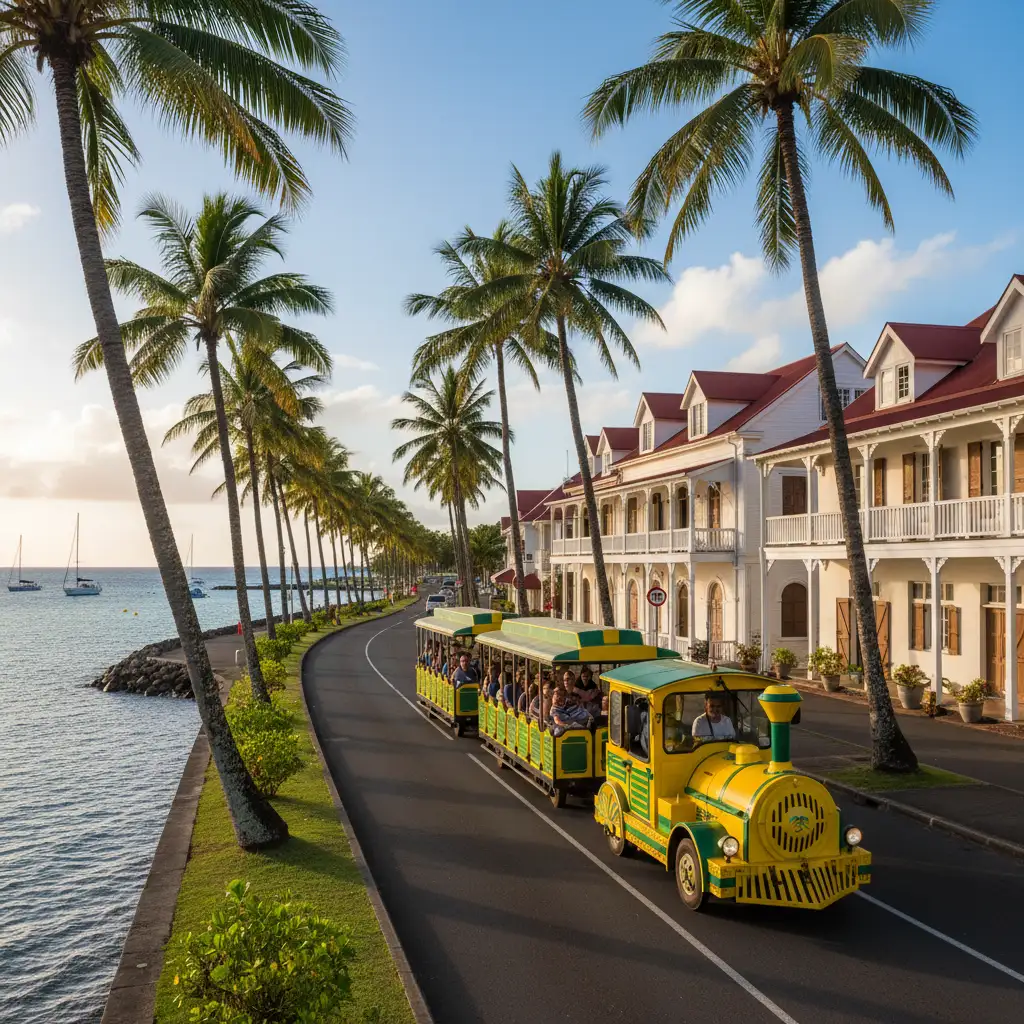
The “Petit Train” is a tourist-oriented road train that offers a guided loop of the city’s main attractions. It is not designed as a direct shuttle for point-to-point transport but rather as a sightseeing experience.
The Route: The train typically departs from the cruise terminal, loops through the city center, climbs up to the Ouen Toro lookout for panoramic views, and travels along the bays (Anse Vata and Baie des Citrons) before returning to the ship.
Pros:
- Audio commentary (often in English) provides historical context.
- No physical exertion required.
- Great for families with young children.
Cons:
- Can be crowded with long queues immediately after the ship docks.
- More expensive than public buses.
- Fixed schedule means less flexibility.
Using the Public Bus (Tanéo)
For a more authentic and cost-effective experience, the local bus network, known as Tanéo, is excellent. To get from the city center to the beaches (which is where most tourists want to go after seeing the square), you can catch the bus from the hub near Place des Cocotiers.
Key Route: Line L3 connects the city center to the popular beaches of Baie des Citrons and Anse Vata.
Cost: Approximately 300 XPF (around $4.50 NZD) for a pass, or slightly more if buying single tickets on board (cash only, small change required).
Hop-on Hop-off Bus Routes and Prices
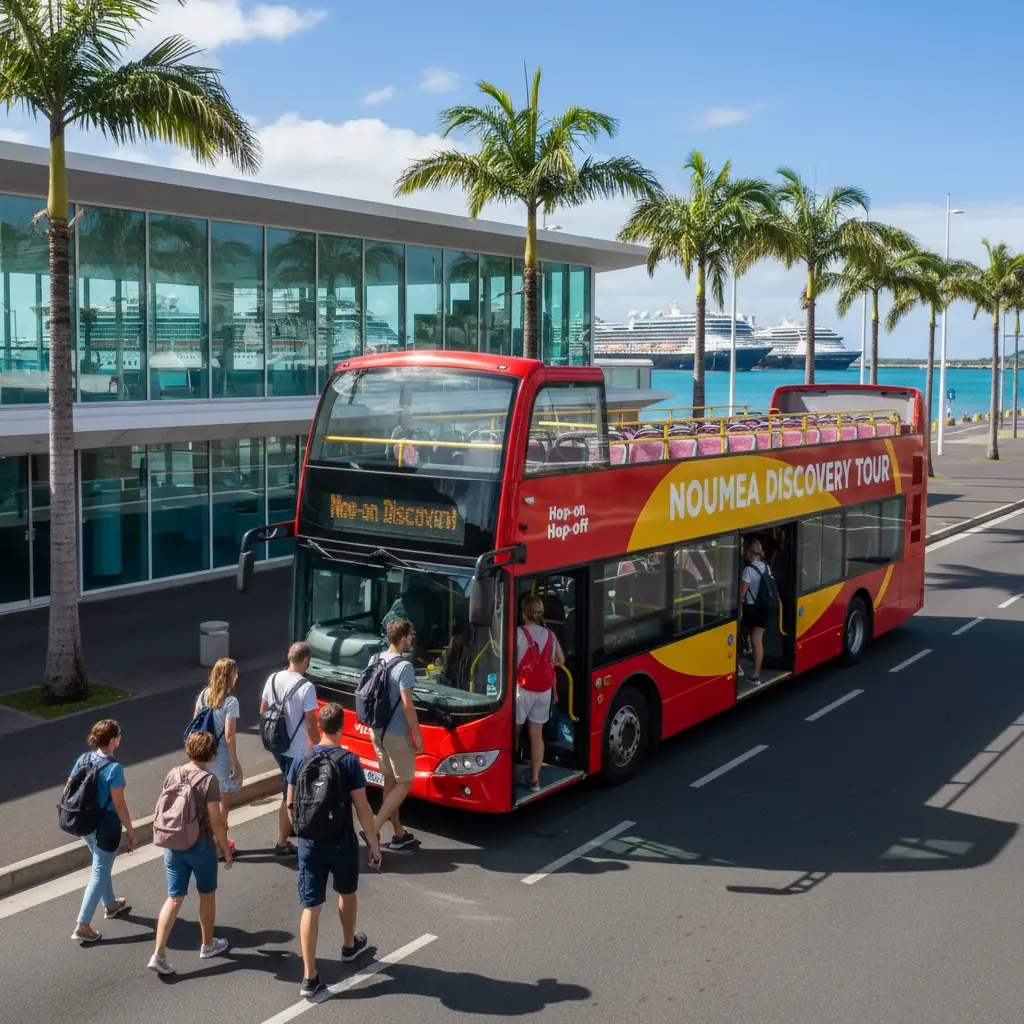
A middle ground between the public bus and a guided tour is the Hop-on Hop-off bus service. These buses are specifically tailored to cruise ship passengers and operate only on days when ships are in port.
How much is the Hop-on Hop-off bus in Noumea?
Prices fluctuate slightly by season, but expect to pay approximately $20 – $25 NZD (1,500 – 2,000 XPF) for an all-day pass. Tickets are usually sold at the tourism desk inside the Cruise Terminal Building or directly at the bus stop just outside.
The Route:
These buses run a continuous loop stopping at key locations:
1. Cruise Terminal
2. City Center (Place des Cocotiers)
3. Municipal Market (Port Moselle)
4. Baie des Citrons (Lemon Bay – swimming beach)
5. Anse Vata (Shopping and Aquarium)
6. Ouen Toro Lookout
Frequency: Buses typically run every 20 to 30 minutes. This is an excellent option if you want to spend the morning shopping in the city center and the afternoon swimming at Lemon Bay without worrying about taxi availability.
Taxi Availability and Private Transfers
Taxis are available in Noumea, but they can be scarce when a large ship (4,000+ passengers) is in port. The taxi rank is located immediately outside the Gare Maritime.
Are taxis expensive in Noumea?
Compared to New Zealand standards, taxis in New Caledonia can be pricey. All taxis are metered. A ride from the cruise terminal to the city center is short (5 minutes) and should cost around 1,000 XPF ($15 NZD). A ride to the beaches (Anse Vata) will cost significantly more, likely between 2,000 and 3,000 XPF ($30 – $45 NZD).
Important Taxi Tips:
- Currency: Most drivers only accept Pacific Francs (XPF) in cash. Do not assume they will accept NZD or credit cards.
- Language: Many drivers speak limited English. It is helpful to have your destination written down or displayed on your phone map.
- Surcharges: Be aware that surcharges apply on Sundays and public holidays.
Walking Map to Place des Cocotiers
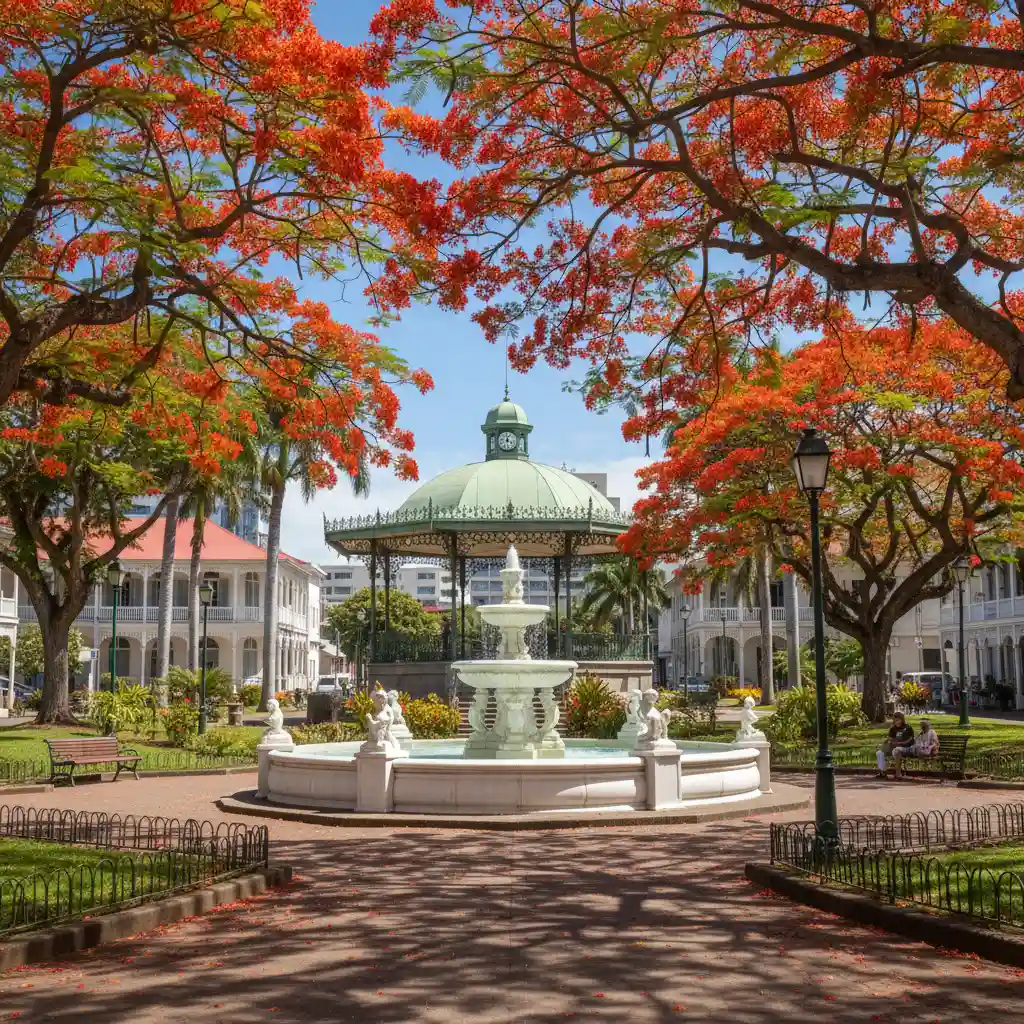
If you choose to walk, your destination is Place des Cocotiers (Coconut Square). This is the heart of Noumea, featuring a band rotunda, botanical gardens, and the famous Fontaine Céleste.
From this central square, you have access to:
- The City Museum (Musée de la Ville): Located in a colonial building on the square.
- Shopping: Boutiques selling French fashion and perfumes line the streets parallel to the square (Rue de l’Alma).
- Cafés: Numerous spots to grab a croissant and coffee.
While a digital map is useful, the layout is a simple grid. Keep the ocean to your back (after leaving the terminal) and head slightly right; you cannot miss the large, green park space that defines the city center.
Essential Tips for Kiwi Travelers
New Caledonia offers a slice of France in the Pacific, which means some cultural norms differ from New Zealand. Here is how to prepare for your day ashore.
Currency and Payments
The currency is the Pacific Franc (XPF). While some tourist stalls at the terminal may accept NZD or AUD (usually at a poor exchange rate), local shops, buses, and cafes in the city center generally require XPF. There are ATMs at the cruise terminal and in the city center. Credit cards (Visa/Mastercard) are widely accepted in shops but less so for small transport fees.
The “Siesta” Hours
Unlike New Zealand, many shops in Noumea close for a lunch break, typically between 11:30 AM and 1:30 PM. However, on cruise ship days, many tourist-centric businesses may remain open. Plan your shopping for the morning and your beach time or lunch for the middle of the day.
Language Barrier
French is the official language. While tourism workers speak English, a simple “Bonjour” (Hello) and “Merci” (Thank you) go a long way in establishing good rapport with locals.
Connectivity
New Zealand mobile plans will incur roaming charges. Free Wi-Fi is often advertised at Place des Cocotiers, but it can be unreliable. The Cruise Terminal usually offers paid Wi-Fi options or local SIM cards, which are often cheaper than NZ roaming packs for data.
Frequently Asked Questions
How far is the walk from Noumea cruise terminal to the city?
The walk is approximately 1.2 kilometers (0.75 miles) and takes about 15 to 20 minutes. It is a flat, paved route along the waterfront and city streets.
Can I use New Zealand dollars in Noumea?
While some market vendors inside the cruise terminal might accept NZD, it is not legal tender in the city. You should withdraw Pacific Francs (XPF) from an ATM or exchange money for shops, taxis, and cafes.
Is there Uber in Noumea?
No, Uber does not currently operate in New Caledonia. You must rely on registered taxis, private transfer shuttles, or the public bus system.
Does the free shuttle go to the city center?
No. The free port shuttle only transports passengers from the ship (container wharf) to the Cruise Terminal Building (Gare Maritime). Transport from the building to the city center must be arranged independently.
Are shops open on Sundays in Noumea?
Most shops in the city center are closed on Sundays and Monday mornings. However, the market at Port Moselle is open early Sunday morning, and tourist shops at the terminal usually open when a ship is in port.
What is the best way to get to Anse Vata beach from the terminal?
The most efficient way is the Hop-on Hop-off bus or a taxi. Walking to Anse Vata takes over an hour and is not recommended in the heat. The public bus (Line L3) is the cheapest option but requires walking to the city hub first.