
New Caledonia cruise excursions DIY refers to the strategic practice of independently booking local transport, tours, and activities at ports like Noumea, Lifou, and Isle of Pines instead of purchasing official cruise line packages. This approach allows travelers to reduce costs by up to 50%, access uncrowded locations, and directly support the local Kanak economy while managing their own return-to-ship logistics.
For New Zealanders cruising the Pacific, the allure of New Caledonia is undeniable. The turquoise waters, the French-Melanesian fusion, and the proximity to Auckland make it a staple itinerary. However, seasoned cruisers know that the “shore excursion desk” is often a source of inflated prices and herded-cattle experiences. This guide provides the tactical knowledge required to navigate Noumea, Lifou, and the Isle of Pines on your own terms.
Why Avoid Ship-Booked Shore Excursions?
The primary motivation for choosing New Caledonia cruise excursions DIY style is value and autonomy. Cruise lines operate businesses designed to maximize onboard revenue, and shore excursions are a significant profit center. When you book a “City Highlights” tour through the ship, a substantial percentage of your fee goes to the cruise line, not the local operator.
Beyond the cost, there is the issue of crowd control. Ship excursions often move in convoys of 40-seater buses. This means you move at the pace of the slowest person in the group, often resulting in limited time at actual attractions and excessive time waiting for headcounts. By going independent, you can beat the buses to the best snorkeling spots, eat at authentic local restaurants rather than tourist buffets, and adjust your schedule on the fly.
The Critical Error: Managing Ship Time vs. Local Time
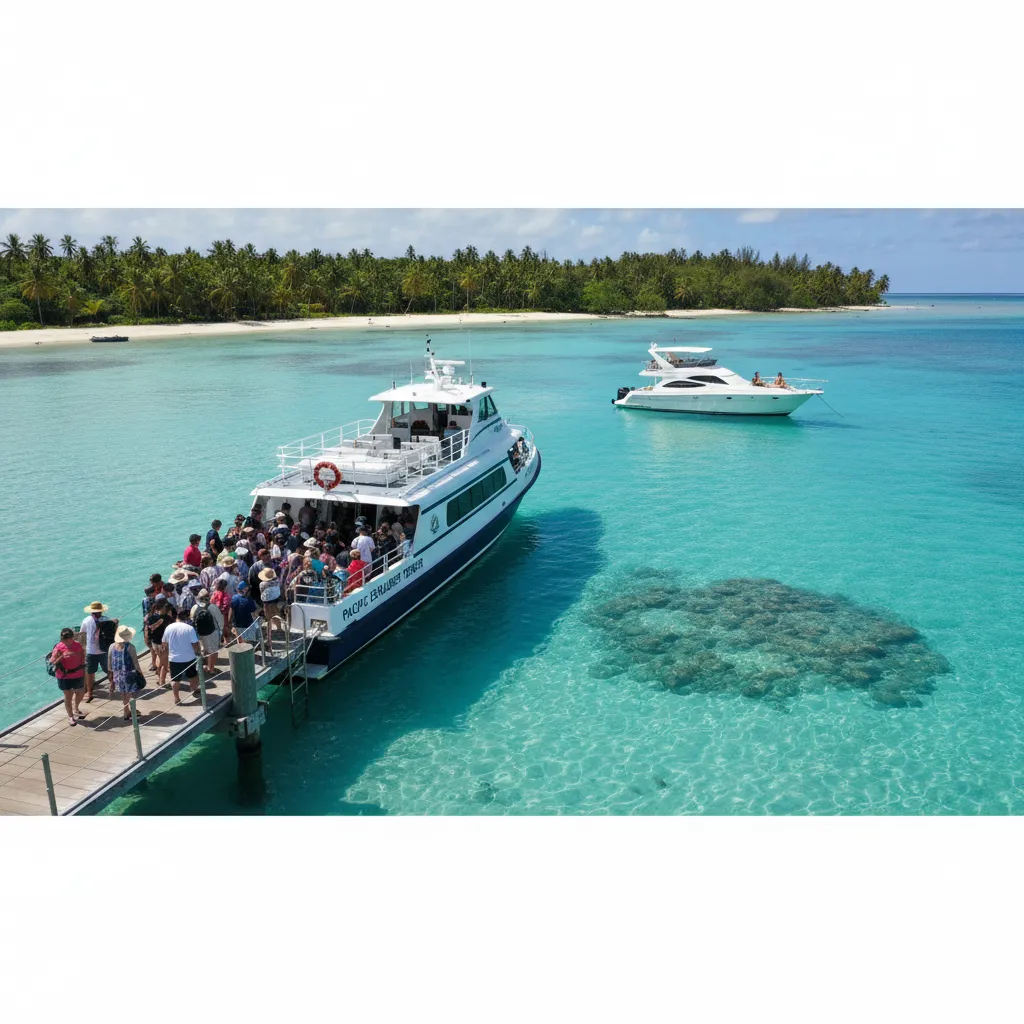
The most common fear preventing cruisers from going DIY is the risk of missing the ship. This fear is rooted in the confusion between “Ship Time” and “Local Time.”
Does the ship change clocks to New Caledonia time?
It depends on the Captain and the Cruise Line. Generally, ships departing from New Zealand (Auckland) or Australia (Sydney/Brisbane) may change their onboard clocks to match New Caledonia time (GMT+11), but this is not guaranteed. New Caledonia does not observe Daylight Saving Time, whereas New Zealand and parts of Australia do.
The Tactical Rule: Always keep your wristwatch on “Ship Time.” Your phone may automatically update to local network time as soon as it connects to a tower in Noumea. If the ship stays on NZ time, but your phone switches to Noumea time, you risk returning an hour late (or early). Verify the “All Aboard” time posted at the gangway before you leave the vessel and cross-reference it with a manual watch.
Currency for Cruisers: AUD, NZD, or XPF?
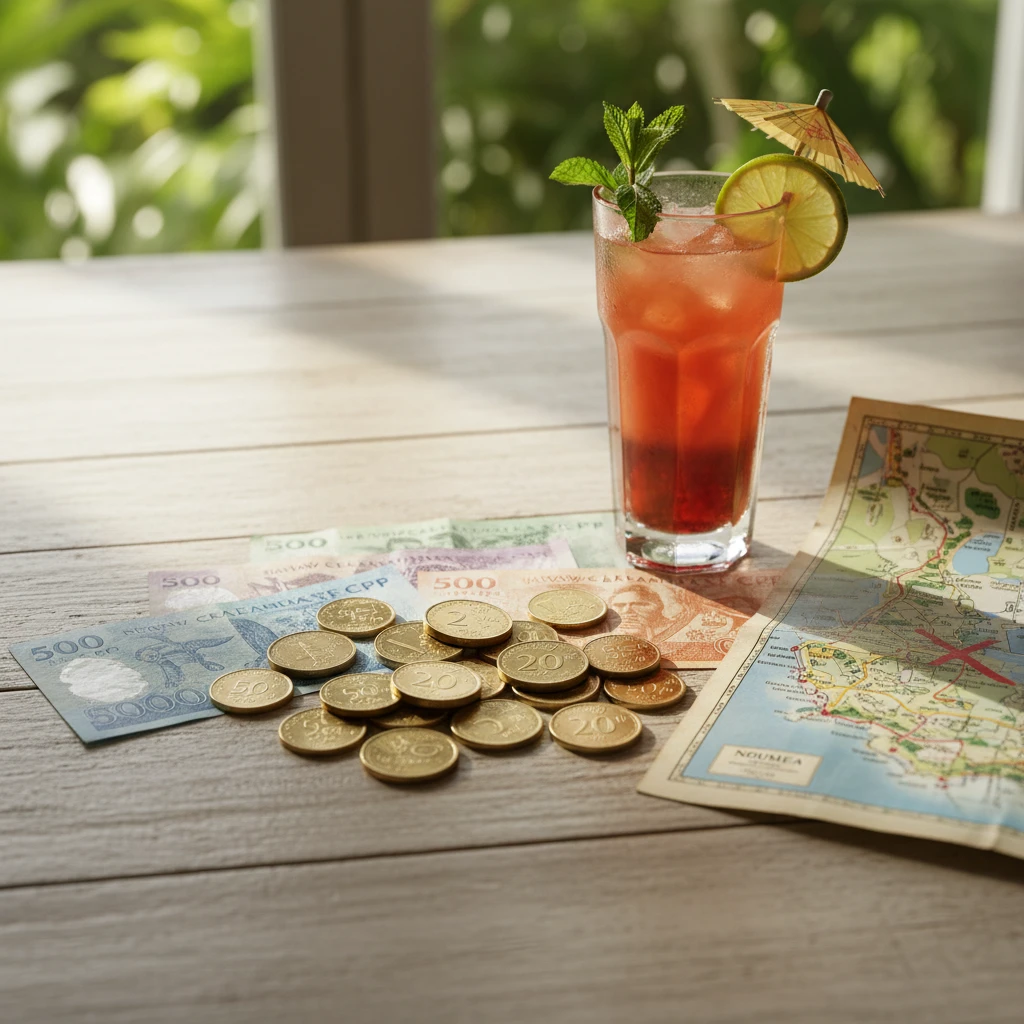
One of the most frequent questions from Kiwi travelers is regarding currency. The official currency of New Caledonia is the Pacific Franc (XPF or CFP). While the economy relies heavily on tourism, assuming everyone accepts NZD is a strategic error.
Will locals accept NZD or AUD?
In Noumea, larger tourist operators and some shops may accept Australian Dollars (AUD), but rarely New Zealand Dollars (NZD). Even when AUD is accepted, the exchange rate offered by vendors will be poor—often 20% worse than the bank rate. NZD is generally not accepted outside of the immediate cruise terminal market stalls.
How to get the best exchange rate?
For a seamless DIY experience, withdraw XPF from an ATM in Noumea using a travel card (like Wise or Revolut) to avoid transaction fees. Alternatively, exchange NZD for XPF in New Zealand before departure. Having local currency is essential for paying for local buses (Karuïa Bus), taxi boats to Duck Island, and small snacks in Lifou or Isle of Pines where credit card terminals may be down.
Noumea: The Urban DIY Guide
Noumea is the capital and the most complex port to navigate. It is an industrial port, and depending on where your ship docks, your DIY strategy must change.
Where does the ship dock in Noumea?
Ships usually dock at the Industrial Container Terminal. From here, you cannot walk out of the port due to safety regulations. The port authority provides a free shuttle bus that takes you from the ship to the Cruise Terminal building (Gare Maritime) in downtown Noumea. This is your starting point.
DIY Option 1: The Tchou Tchou Train
The “Tchou Tchou Train” (yellow and green road train) is a popular ship excursion, but you can book it independently at the terminal building for a lower price, or find local operators running similar tours right outside the terminal. These tours typically cover the Ouen Toro lookout, Palm Beach, and the colonial houses.
DIY Option 2: Duck Island (Île aux Canards)
Instead of paying $100+ for a beach break, do this:
- Take the free shuttle to the Cruise Terminal.
- Walk to the “Moselle” bus stop (approx. 300m).
- Catch the local Karuïa Bus (Line 10 or 11) heading towards Anse Vata. The ticket costs roughly 190 XPF (approx. $3 NZD) if bought at a kiosk, or slightly more on board.
- Get off at Anse Vata Beach.
- Look for the yellow water taxi stands on the beach. A return ticket to Duck Island is roughly 1500 XPF per person.
- Rent a lounger and snorkel gear on the island or bring your own.
DIY Option 3: Baie des Citrons
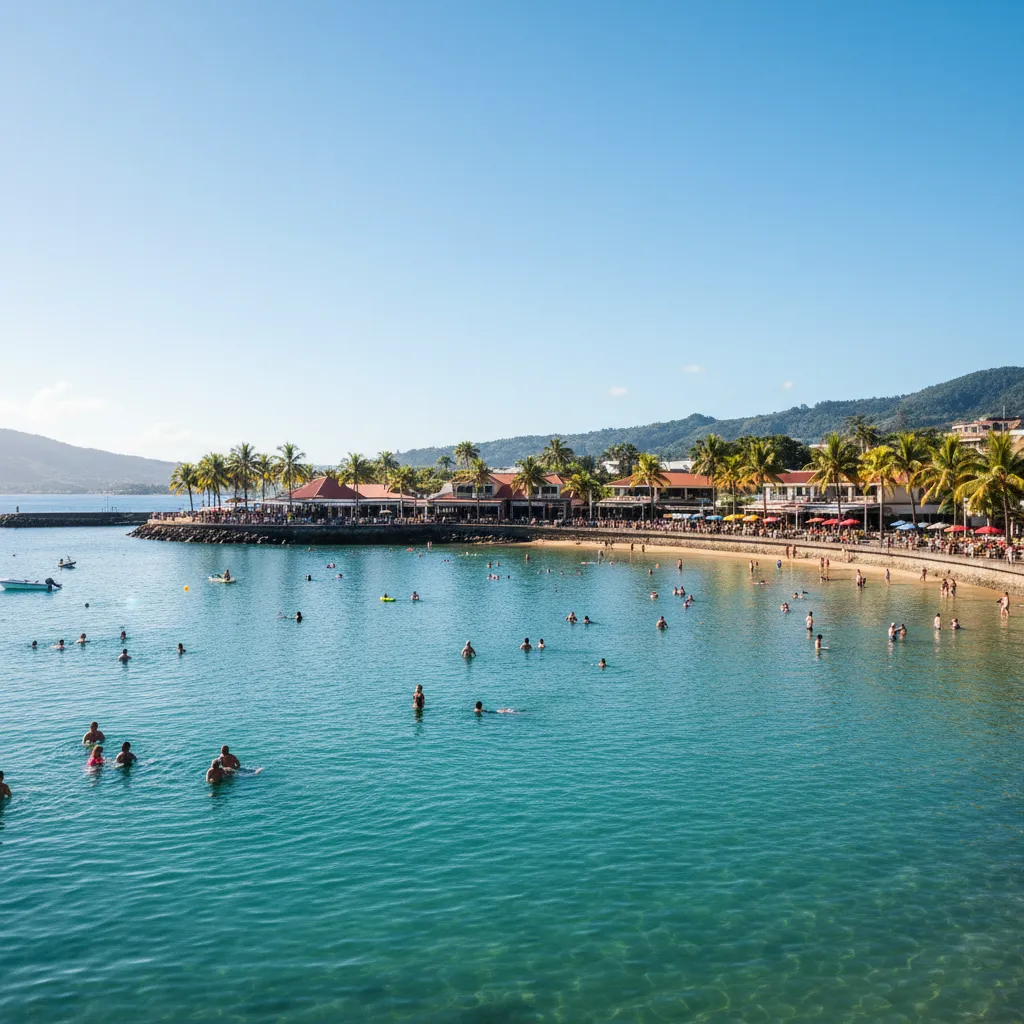
If you want a free beach day, take the same bus (Line 10 or 11) and get off at Baie des Citrons (Lemon Bay). It is a sheltered bay perfect for swimming, lined with bars and restaurants that are significantly cheaper than ship prices. It is also walkable from Anse Vata.
Lifou: Snorkeling and Cliffs Without the Crowd
Lifou is a tender port, meaning the ship anchors offshore and uses lifeboats to ferry you to the jetty at Easo. The area is small, walkable, and perfect for DIY exploration.
How to snorkel Jinek Bay independently?
Jinek Bay is one of the world’s premier snorkeling spots, known as the “Aquarium.” To protect the coral, the local tribe limits the number of daily visitors. Cruise lines sell “Jinek Bay Passes” at a premium.
The Hack: Get on one of the first tenders ashore. Walk straight past the market stalls and head up the road to the left towards Jinek Bay (approx. 10-15 minute walk). You can often purchase a pass directly at the entrance for roughly $15-$20 AUD/NZD (cash is king here), provided they haven’t reached capacity. If you miss out on a pass, the snorkeling directly off the jetty at Easo is surprisingly good and completely free.
Notre Dame de Lourdes
For a panoramic view, walk up the hill to the small church, Notre Dame de Lourdes. It is a steep but short hike (approx. 20 minutes) offering iconic views of the bay and your cruise ship. No guide is needed—just follow the path.
Isle of Pines: Paradise on a Budget
Often called the “Jewel of the Pacific,” Isle of Pines is also a tender port. You will land at Kuto Bay.
Kuto Bay and Kanumera Bay
The moment you step off the tender, you are at Kuto Bay, which features incredibly fine white sand. This beach is free. A short 5-minute walk across the narrow isthmus takes you to Kanumera Bay. Kanumera is better for snorkeling, specifically around the sacred rock (Rocher de Kaa Nuë). Note: Do not climb the rock; it is taboo (sacred) to the locals.
The Natural Pool (Piscine Naturelle)
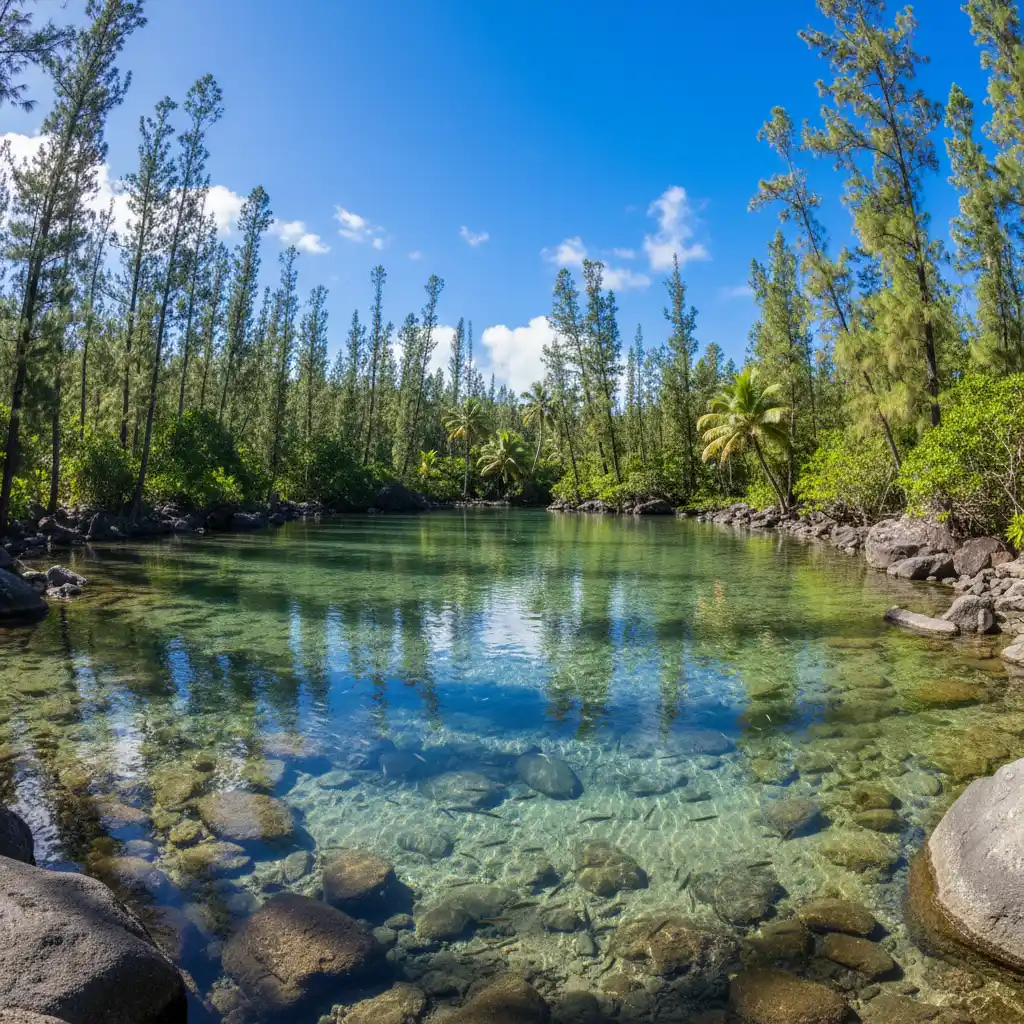
This is the famous natural aquarium. Ship tours charge a fortune for this. To do it yourself:
- Disembark early.
- Negotiate with local minibus drivers waiting at the parking lot near the jetty. They offer return transfers to the start of the river walk for the Natural Pool.
- The cost is usually around 2000-3000 XPF return.
- You will be dropped at a river entrance and must walk/wade through a shallow stream for 20 minutes to reach the pool.
- Entrance fee to the pool is usually 200 XPF (cash only).
Ensure you agree on a strict pick-up time with your driver to get back to the tenders safely.
Walking Distances and Logistics Summary
Understanding the physical layout is key to planning your New Caledonia cruise excursions DIY.
- Noumea (Container Terminal): 0km walkable. Must take shuttle (10 mins) to City Terminal.
- Noumea (City Terminal to Moselle Market): 300m / 5 mins flat walk.
- Noumea (City Terminal to Anse Vata): 5km. Not walkable. Take Bus #10/#11 or Taxi.
- Lifou (Jetty to Jinek Bay): 800m / 10-15 mins slight hill.
- Lifou (Jetty to Church): 600m / 20 mins steep uphill.
- Isle of Pines (Jetty to Kanumera Bay): 400m / 5 mins flat walk.
- Isle of Pines (Jetty to Natural Pool): Too far to walk. Requires 20 min drive + 20 min river walk.
Frequently Asked Questions
Is it safe to walk around Noumea alone?
Generally, yes. Noumea is a modern French city. However, like any urban center, petty theft can occur. Stick to the main tourist areas (Baie des Citrons, Anse Vata, Place des Cocotiers) and avoid walking alone at night in unlit areas. During cruise days, the police presence is usually higher.
Can I use my credit card in New Caledonia?
In Noumea, yes. Most restaurants, supermarkets, and attractions accept Visa and Mastercard. In Lifou and Isle of Pines, infrastructure is limited. While some larger stalls may have EFTPOS, the connection is unreliable. Always carry XPF cash for the islands.
Do I need to speak French to get around?
French is the official language. While tourism workers speak English, bus drivers and some market vendors may not. Learning basic phrases like “Bonjour” (Hello) and “Combien?” (How much?) goes a long way. Downloading an offline Google Translate pack is highly recommended.
What happens if I get injured on a DIY excursion?
If you are not on a ship-sponsored tour, the ship is not liable for your medical care ashore. You must have comprehensive travel insurance that covers activities like snorkeling. Noumea has a high-standard hospital, but medical evacuation from the outer islands can be costly.
Are there taxis at the Noumea cruise terminal?
Yes, there is usually a taxi rank at the Gare Maritime (where the shuttle drops you). Taxis are metered. A trip to Anse Vata costs approximately 1500-2000 XPF depending on traffic. This can be cost-effective for a group of 4 compared to the bus.
Can I rent a car in Noumea?
Yes, rental agencies like Avis and Europcar have offices near the cruise terminal area. However, driving in Noumea can be traffic-heavy, and parking at beaches is scarce on weekends. For a single day, taxis or buses are usually less stressful.