The prime New Caledonia surf season runs from May to September, coinciding with the Southern Hemisphere winter. During these months, consistent southwest groundswells generated by deep Antarctic lows bombard the barrier reef, paired with favorable offshore southeast trade winds. While surfing is possible year-round, this period offers the highest probability of world-class waves for intermediate to advanced surfers.
When is the best time to surf in New Caledonia?
For New Zealand surfers looking to escape the bitter cold of a mid-winter Piha or Dunedin session without sacrificing wave quality, New Caledonia offers a premier solution. The peak surf season is unequivocally May through September. This window aligns perfectly with the activity of the “Roaring Forties” and “Furious Fifties”—the band of strong westerly winds in the Southern Ocean.
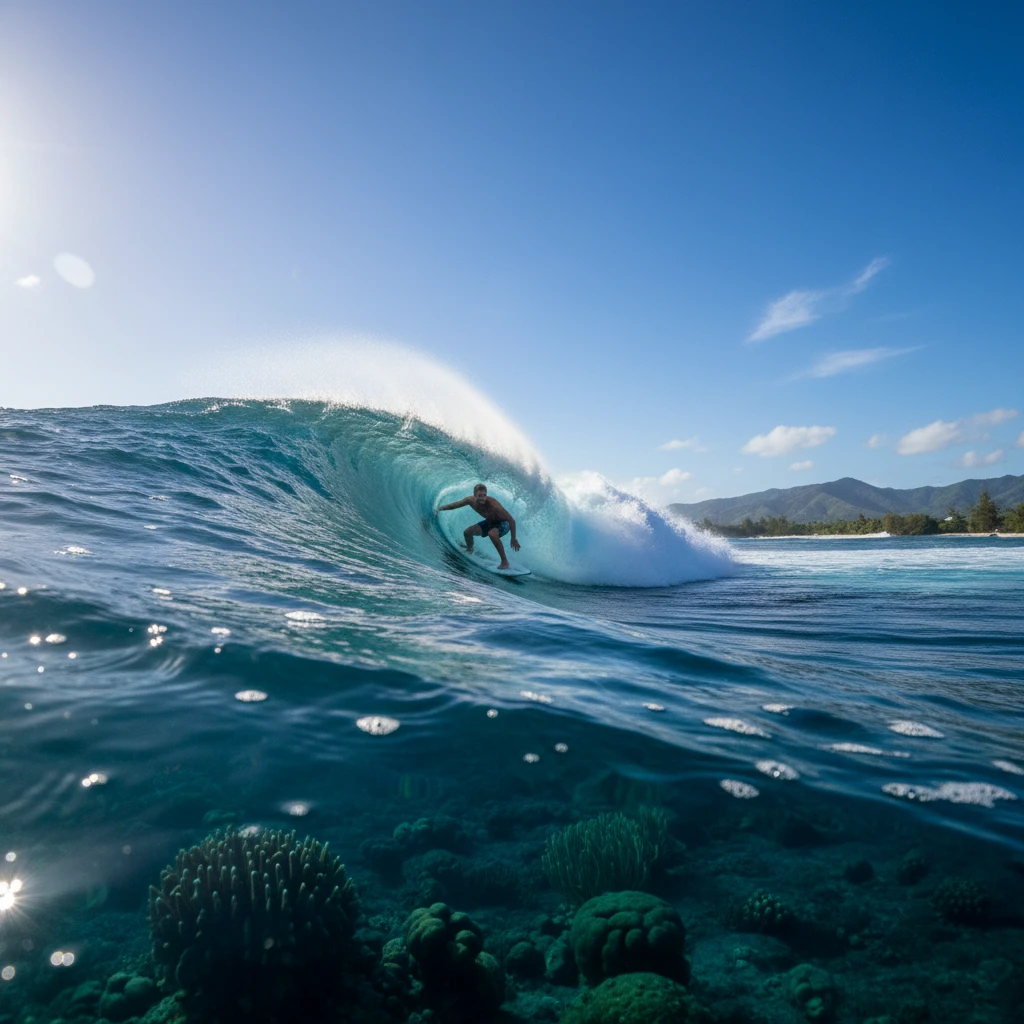
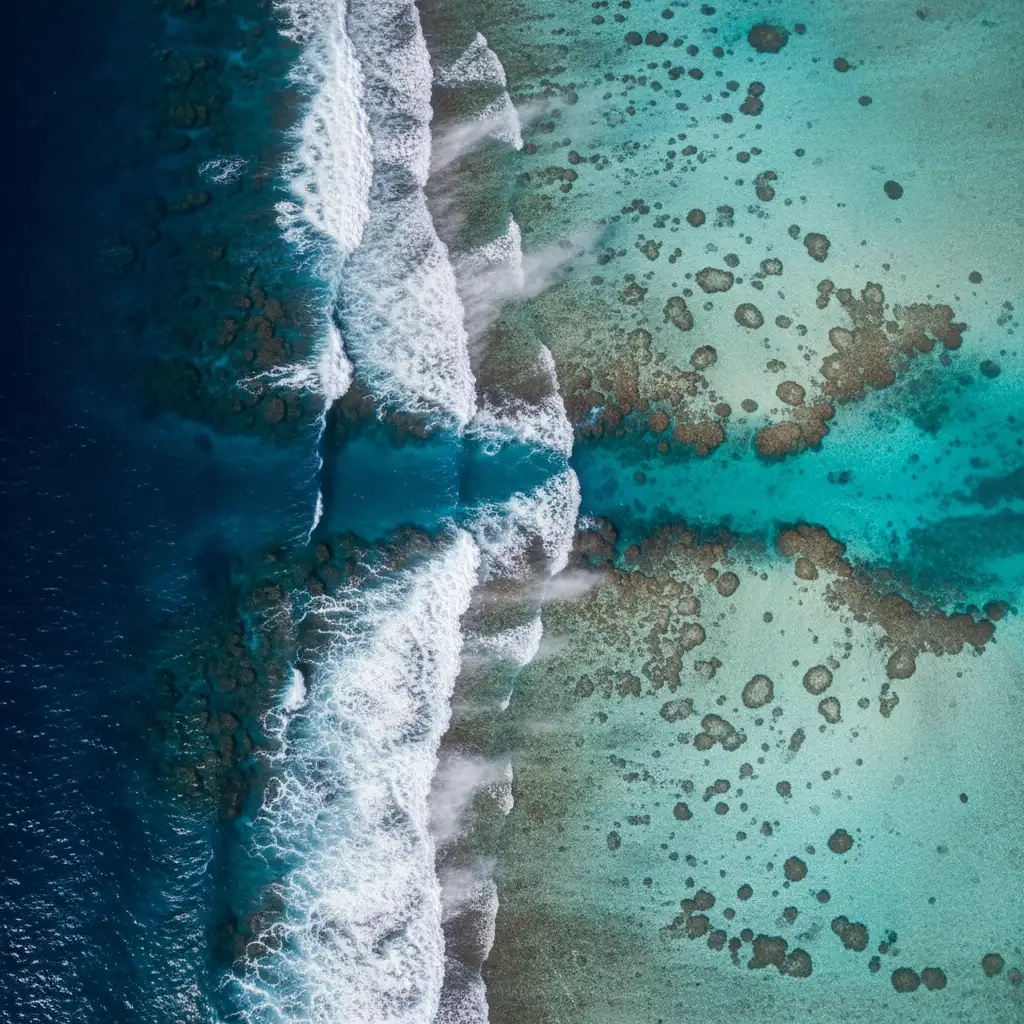
During these winter months, deep low-pressure systems track underneath Australia and New Zealand, sending long-period southwest groundswells marching up the Tasman Sea and into the Coral Sea. Unlike the beach breaks of New Zealand’s east coast which can be fickle, New Caledonia’s setup relies on the world’s second-longest double barrier reef to groom these swells into perfection.
Why Winter Works Best
The magic of the New Caledonia surf season lies in the convergence of two meteorological factors: swell source and wind direction. While the Southern Ocean churns out the energy, the local high-pressure systems settle in, creating a stable atmosphere. This stability is crucial. In summer, the weather can be more volatile with tropical depressions, but winter brings a predictability that allows for planned surf trips.
For Kiwis, this is the ultimate strike mission. A flight from Auckland to Noumea takes less than three hours—shorter than driving from Auckland to Taranaki in traffic—placing you in a zone where overhead barrels are the norm, not the exception.
How do trade winds affect New Caledonia surfing?
Understanding the wind is just as critical as understanding the swell. In New Caledonia, the prevailing winds are the Southeast Trade Winds (Alizés). These winds blow consistently throughout the year, but their interaction with the surf breaks is what defines the quality of your session.
Most of the premier surf breaks in New Caledonia, particularly those accessible from Noumea (like Ouano, Dumbea, and Tenia), are located on the southwest or west-facing sections of the barrier reef. Because the trade winds blow from the Southeast, they act as perfect offshore winds for these passes.
The Diurnal Wind Pattern
Even in the peak season, wind management is key. The typical daily pattern follows a diurnal cycle:
- Early Morning (6:00 AM – 10:00 AM): Winds are usually light and variable or light offshore. This is the “golden window” for glassy conditions and the best time to book your taxi boat.
- Mid-Day to Afternoon (11:00 AM – 4:00 PM): The trade winds intensify. While they remain offshore (holding the wave face up), they can become quite strong (20+ knots). This makes for harder paddling and potential blindness from spray on the take-off, though it turns the region into a world-class kitesurfing destination.
- Late Evening: Winds occasionally drop, offering a sunset glass-off, though boat transfers back to the mainland can be tricky in low light.
What is the swell consistency like?
Consistency is the primary reason New Zealanders choose New Caledonia over other Pacific islands that might rely on more fickle north swells. The swell window is wide open to the Tasman and Coral Seas. Here is a breakdown of what to expect regarding wave height and consistency throughout the year.
Quarterly Swell Breakdown
- Q1 (Jan – Mar): The Off-Season. Swells are less frequent and smaller (2-4ft). This is the cyclone season, so while average days are small, a nearby system can produce massive, unruly waves. High humidity and variable winds make this less desirable for pure surf trips.
- Q2 (Apr – Jun): The Ramp Up. This is the shoulder season leading into peak. April can be hit-or-miss, but by May, the consistency jumps to over 60% of days seeing surfable waves over 4ft.
- Q3 (Jul – Sep): The Prime Time. This is the statistical peak. Consistency hits 70-80%. Average wave heights range from 4ft to 8ft+. Long-period swells (14-18 seconds) are common, causing the reef passes to light up with power comparable to Cloudbreak or Teahupo’o, albeit often more user-friendly at the right spots.
- Q4 (Oct – Dec): The Wind Season. Swell production slows down as the Southern Ocean calms. The trade winds are often at their strongest during these months, making surfing difficult even if there is swell.
Do I need a wetsuit in New Caledonia?
For a Kiwi surfer, New Caledonia water temperatures are a luxury, but don’t be fooled into thinking it is bathwater year-round. It is a sub-tropical climate, not equatorial.
Seasonal Temperature Guide
Winter (Peak Surf Season): Water temperatures drop to between 22°C and 24°C (71°F – 75°F).
Comparison: This is significantly warmer than a NZ winter (13-15°C) but cooler than Fiji or Bali.
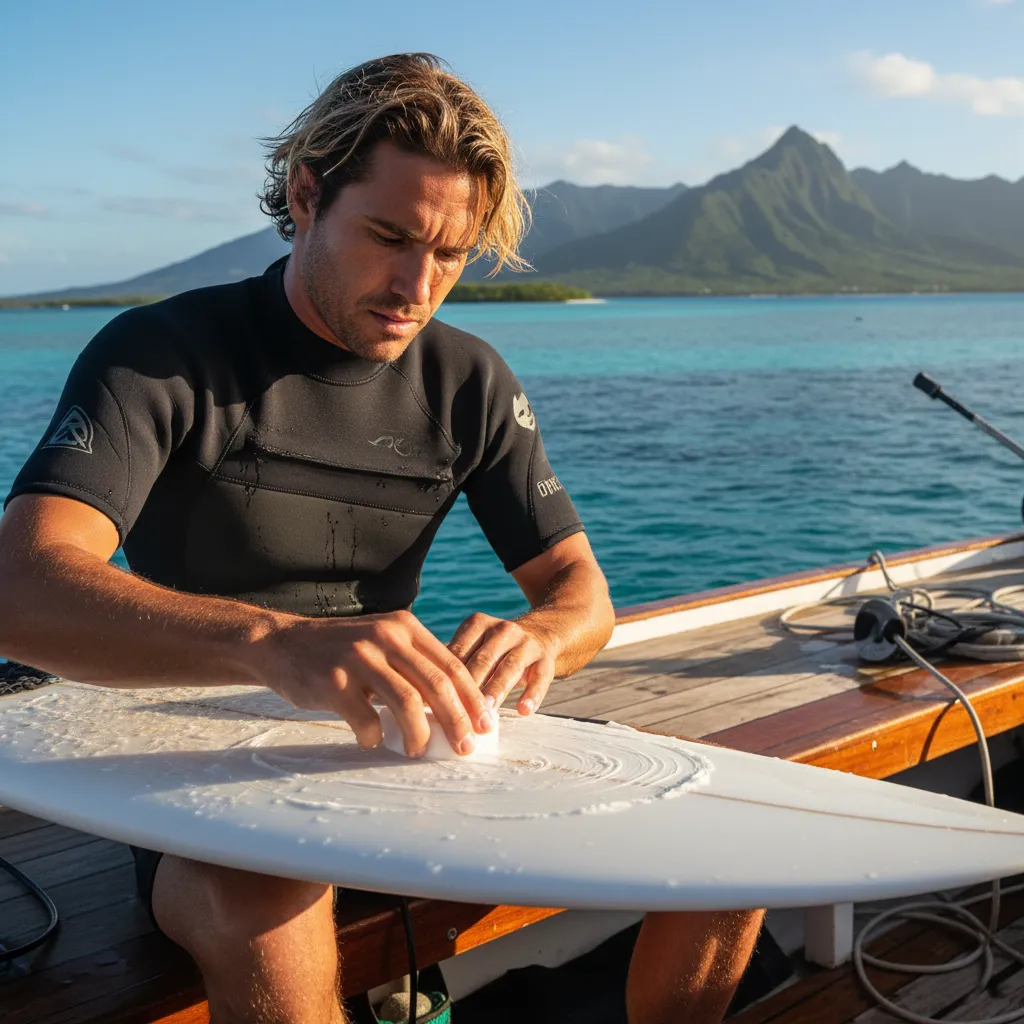
Gear Recommendation: A 2mm spring suit or a 1.5mm neoprene top with boardshorts is the standard attire. On windy mornings, that wind chill factor can be high while waiting for sets, so a short-arm steamer isn’t out of the question for those who feel the cold.
Summer: Water temperatures rise to 26°C – 28°C.
Gear Recommendation: Boardshorts or bikini only. However, a rash guard is highly recommended for sun protection and to prevent rash from the saltier water.
Reef Protection
Regardless of the season, reef booties are essential. The waves break over live coral, and the passes can be shallow, especially at low tide. Sea urchins are also common in the lagoon. A cut foot in the tropics can easily become infected (coral dust), ruining your trip. Pack a lightweight pair of reef booties.
Is surfing possible during cyclone season?
The cyclone season runs from November to April. For the risk-averse traveler, this is a time to avoid. However, for the big-wave charger or the flexible traveler, this period holds the “wildcard” potential.
When a tropical cyclone forms in the Coral Sea or to the north near Vanuatu, it can send massive, raw energy toward New Caledonia. If the cyclone is positioned correctly (far enough away to not bring destructive winds, but close enough to send swell), you can score 10ft+ waves with light winds.
Warning: This is unpredictable. You cannot book a trip months in advance for this. It requires monitoring synoptic charts and being ready to fly on 48 hours’ notice. Furthermore, many taxi boat operators may cease operations if maritime weather warnings are in effect.
Logistics: Getting to the Breaks
One of the unique aspects of the New Caledonia surf season is the logistics of accessing the waves. Unlike surfing the Taranaki Highway where you drive and check, surfing here is a nautical adventure.
The Barrier Reef Factor
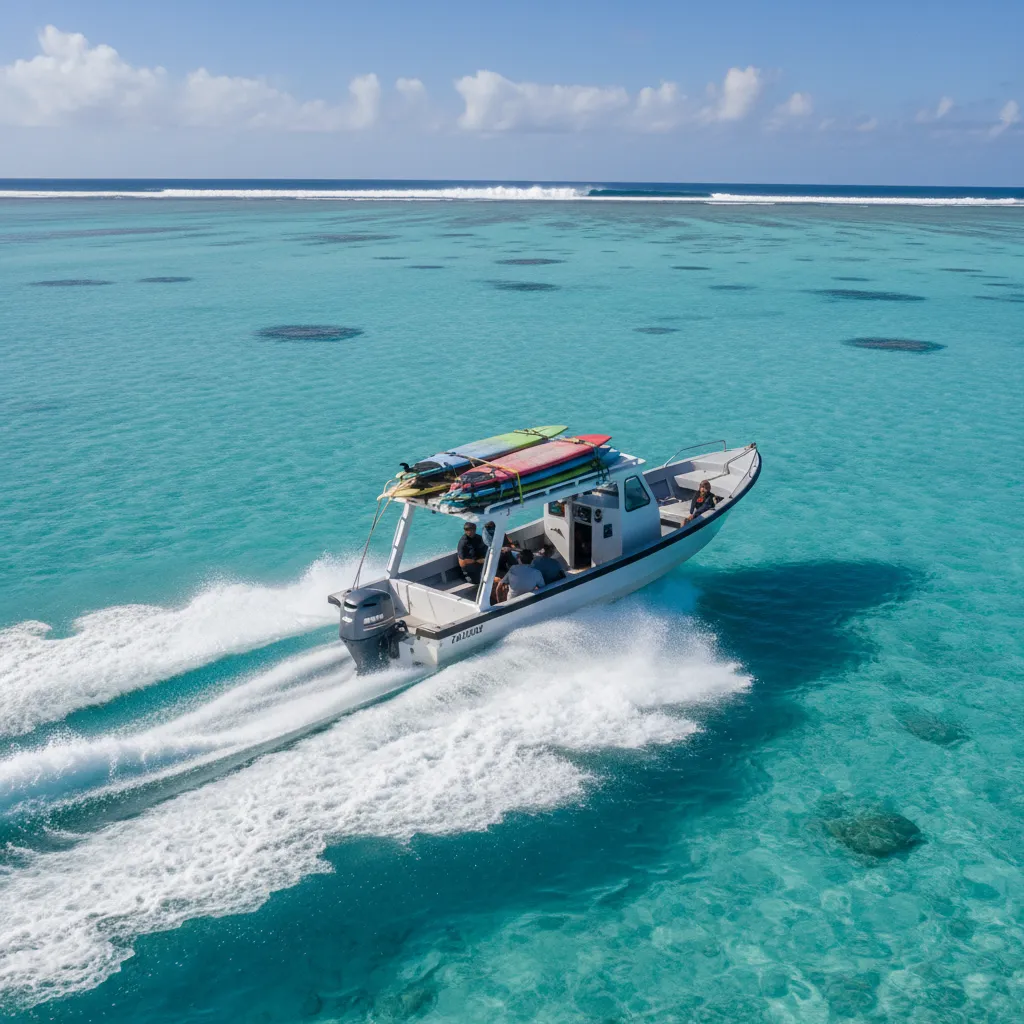
The surf breaks are located on the barrier reef, which is situated 15 to 25 minutes by boat from the mainland (Noumea). You cannot paddle out from the beach.
- Taxi Boats: This is the standard mode of transport. Operators run from the marinas in Noumea (Port Moselle). You generally need to book these in advance or be part of a surf camp.
- Cost: Expect to pay between 3,000 to 5,000 XPF (approx. $45-$75 NZD) for a return trip. It is more expensive than a beach break, but the crowd factor is significantly lower.
- The “Passes”: The most famous spots are Passe de Dumbea (a heavy right and a workable left) and Passe de Boulari. Because these are passes in the reef, currents can be strong. Always respect the ocean and listen to your boat captain regarding tides.
Summary
For New Zealanders, the New Caledonia surf season represents the perfect winter escape. By targeting the months of May to September, you maximize your chances of scoring consistent, long-period southwest swell groomed by offshore trades. While it requires a bit more budget and planning than a domestic road trip due to the boat transfers, the reward is uncrowded, crystal-clear tropical barrels just a short flight from Auckland.
When is the best time to surf in New Caledonia?
The best time to surf is during the peak season from May to September. This period offers the most consistent swell and favorable offshore trade winds.
Do I need a wetsuit in New Caledonia?
In the winter (May-Sept), a 1.5mm top or 2mm spring suit is recommended as water temps drop to 22-24°C. In summer, boardshorts are sufficient.
Is New Caledonia good for beginner surfers?
Generally, no. Most waves break over sharp coral reefs far from shore and require boat access. It is better suited for intermediate to advanced surfers.
How do I get to the surf breaks in Noumea?
You must take a taxi boat from Noumea. The breaks are located on the barrier reef, approximately 20 minutes offshore.
Are there sharks in New Caledonia surf spots?
Yes, sharks are present in the lagoon and reef passes. It is advisable to surf with others, avoid dawn/dusk, and respect local warnings.
What is the flight time from Auckland to New Caledonia?
The flight time is approximately 2 hours and 50 minutes, making it a very accessible destination for New Zealand travelers.