New Caledonia’s premier kitesurfing spots are concentrated around its UNESCO World Heritage lagoons, with Poé Beach in Bourail offering expansive flat water and Anse Vata in Noumea providing accessible urban riding. Powered by consistent Alizé trade winds from September to March, these locations offer world-class conditions for freeride and freestyle, distinct from the reef-break surf zones found at La Roche Percée.
For New Zealanders seeking a tropical escape without the long-haul flight, New Caledonia represents the ultimate water sports playground. Just a short flight from Auckland, this French Pacific territory boasts the world’s largest enclosed lagoon, offering a diversity of spots that rival any global destination. While the archipelago is famous for its turquoise waters, understanding the distinct separation between kitesurfing lagoons and dedicated surf breaks is crucial for planning a successful trip. This guide explores the very best kitesurfing New Caledonia spots, compares them to the region’s surf zones, and provides the logistical details Kiwis need for an unforgettable adventure.
Why is Poé Beach considered the kitesurfing capital of New Caledonia?
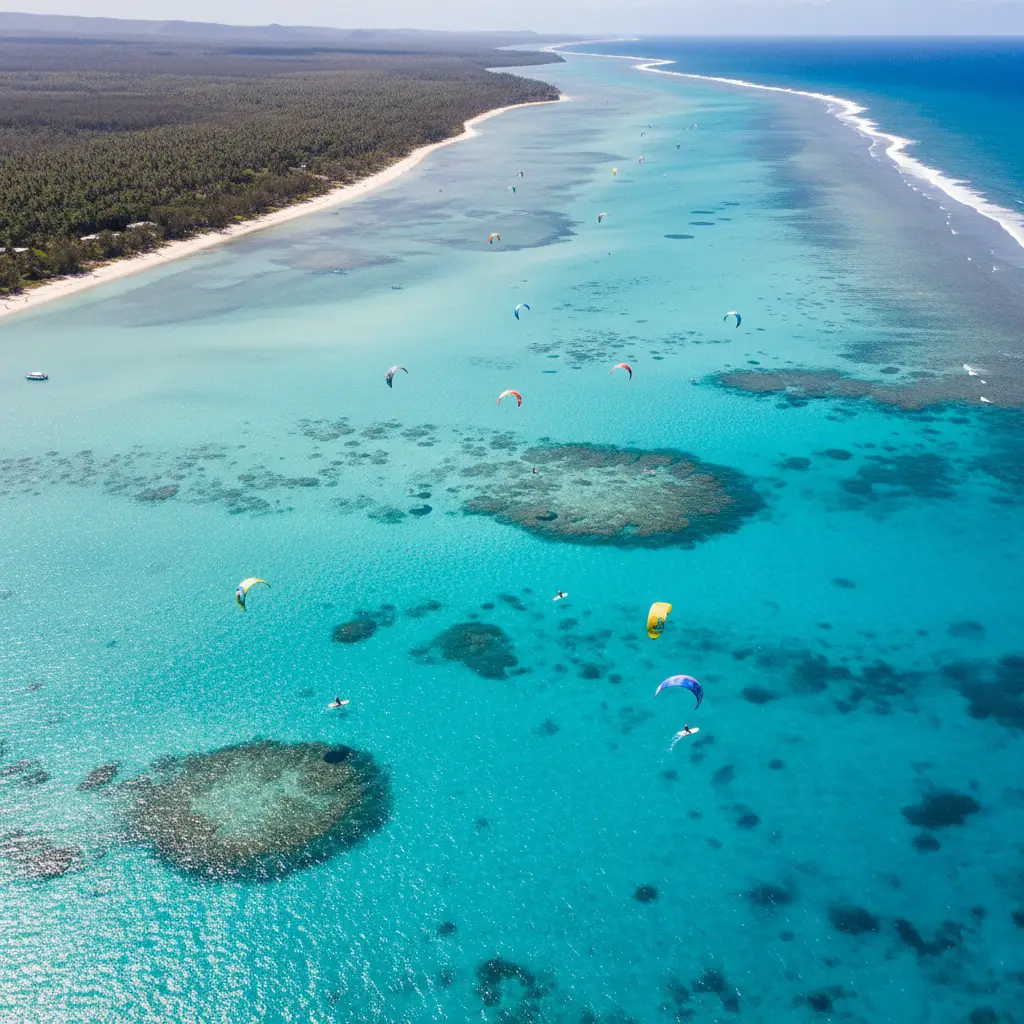
Located approximately two hours north of Noumea near the town of Bourail, Poé Beach is widely regarded as the crown jewel of New Caledonia kitesurfing. Unlike the choppy open ocean, Poé features a massive, shallow lagoon protected by a coral reef located roughly 2 to 3 kilometers offshore. This unique geography creates a vast expanse of flat, crystal-clear turquoise water that is safe for beginners yet exhilarating for speed freaks and freestyle experts.
The wind trajectory at Poé is exceptionally favorable. The trade winds, known locally as the Alizés, typically blow side-onshore here. This ensures that if a kiter encounters equipment failure or fatigue, they will drift back toward the white sandy beach rather than out to sea. The lagoon is wide enough that it never feels crowded, even during peak season. For New Zealanders accustomed to the colder, punchier conditions of local beaches, the warmth and flatness of Poé offer a luxurious riding experience.
Accommodation options in this area range from the upscale Sheraton New Caledonia Deva Spa & Golf Resort to comfortable bungalows and campsites directly on the beach. This accessibility means you can rig up your gear steps from your bed. The vibe at Poé is distinctly laid-back compared to the capital, making it the preferred destination for purists who want to spend all day on the water.
What makes Noumea’s Meridien and Anse Vata spots unique?
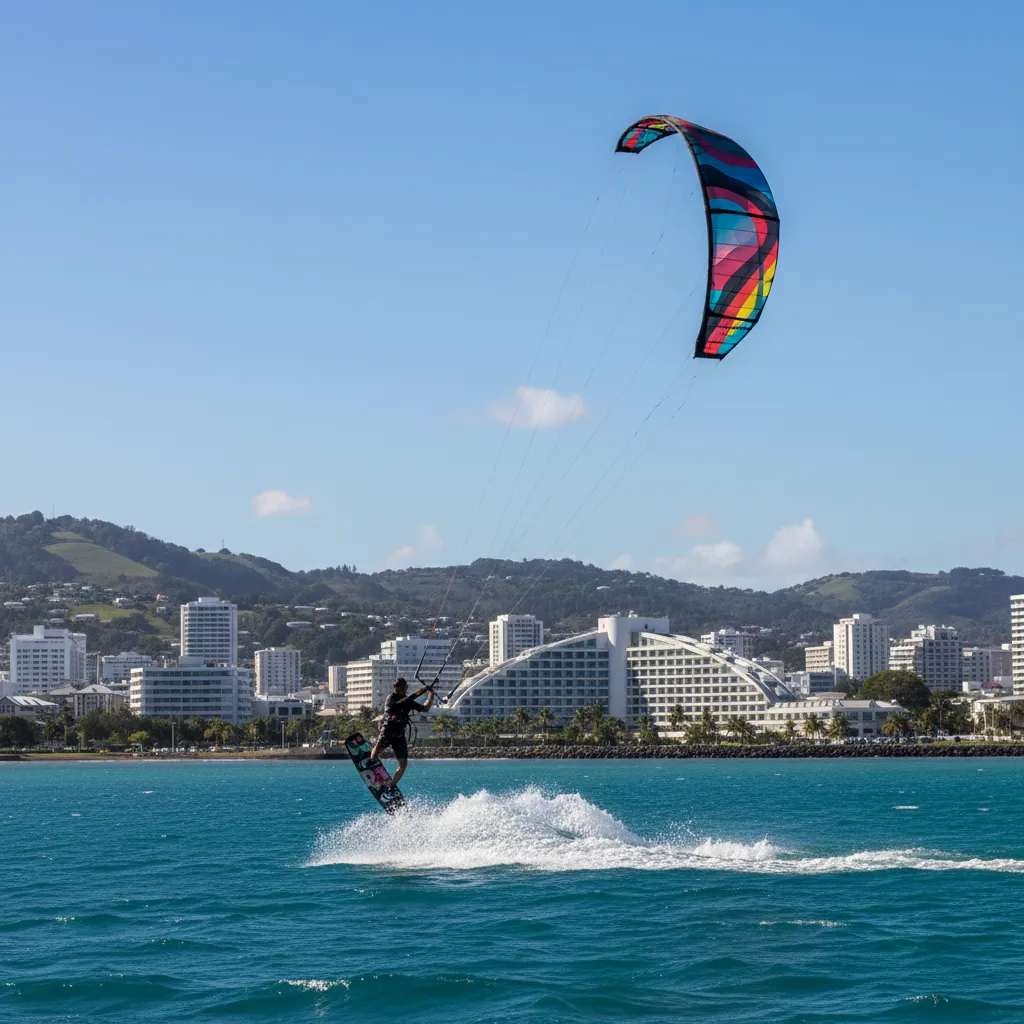
For travelers who prefer the amenities of a city combined with world-class watersports, Noumea offers exceptional urban kitesurfing. The two primary spots are Anse Vata and the coastline adjacent to Le Méridien Noumea Resort & Spa. These locations are incredibly convenient, allowing visitors to enjoy French cuisine, shopping, and nightlife immediately after a session.
Anse Vata Bay
Anse Vata is the bustling heart of Noumea’s waterfront. It is famous for its wind reliability, funneling the trade winds effectively. While the water here can be choppier than at Poé due to boat traffic and open exposure, it is the launchpad for trips to nearby islets. Many kiters launch from here to ride upwind or take a taxi boat to Îlot Maître.
Îlot Maître
Located just a short boat ride from Anse Vata, Îlot Maître is a marine reserve that offers conditions similar to Poé but on a smaller scale. The island is surrounded by a shallow sandy bottom, making it a paradise for learning and practicing new tricks. The DoubleTree by Hilton resort is located here, featuring overwater bungalows. Kiting around these bungalows offers a surreal experience often compared to the Maldives or Tahiti.
Le Méridien Launch
The beach near Le Méridien is another popular launch point, particularly for windsurfers and kitesurfers looking to access the deeper channels. It requires slightly more technical skill due to the presence of swimmers and beachgoers, but it remains a staple for the local riding community. The “Côte Blanche” is another nearby spot in Noumea, known for its flat water at low tide and popularity among local freestyle enthusiasts.
Are there wild kitesurfing spots off the beaten track?
Beyond the established hubs of Poé and Noumea, New Caledonia hides secret spots for the adventurous traveler. These locations require 4WD vehicles or boat access and offer complete solitude.
Ouano: Situated between La Foa and Bourail, Ouano features a surf camp vibe with a massive lagoon. It is famous for its “surf taxi” boat trips out to the reef passes where experienced kiters can ride waves. The flat water inside the lagoon is pristine, and the spot is significantly quieter than Poé.
Koné and the North: As you travel further north, the infrastructure thins out, but the wind remains. Spots near Koné offer wild riding conditions, though self-sufficiency is key here. There are no kite schools in these remote areas, so they are strictly for intermediate to advanced riders with their own gear.
How to distinguish kite zones from surf zones in New Caledonia?
A common misconception among travelers is that good surf spots and good kite spots are synonymous. In New Caledonia, they are often geographically distinct due to the barrier reef structure.
The Surf Zones: Reef Breaks
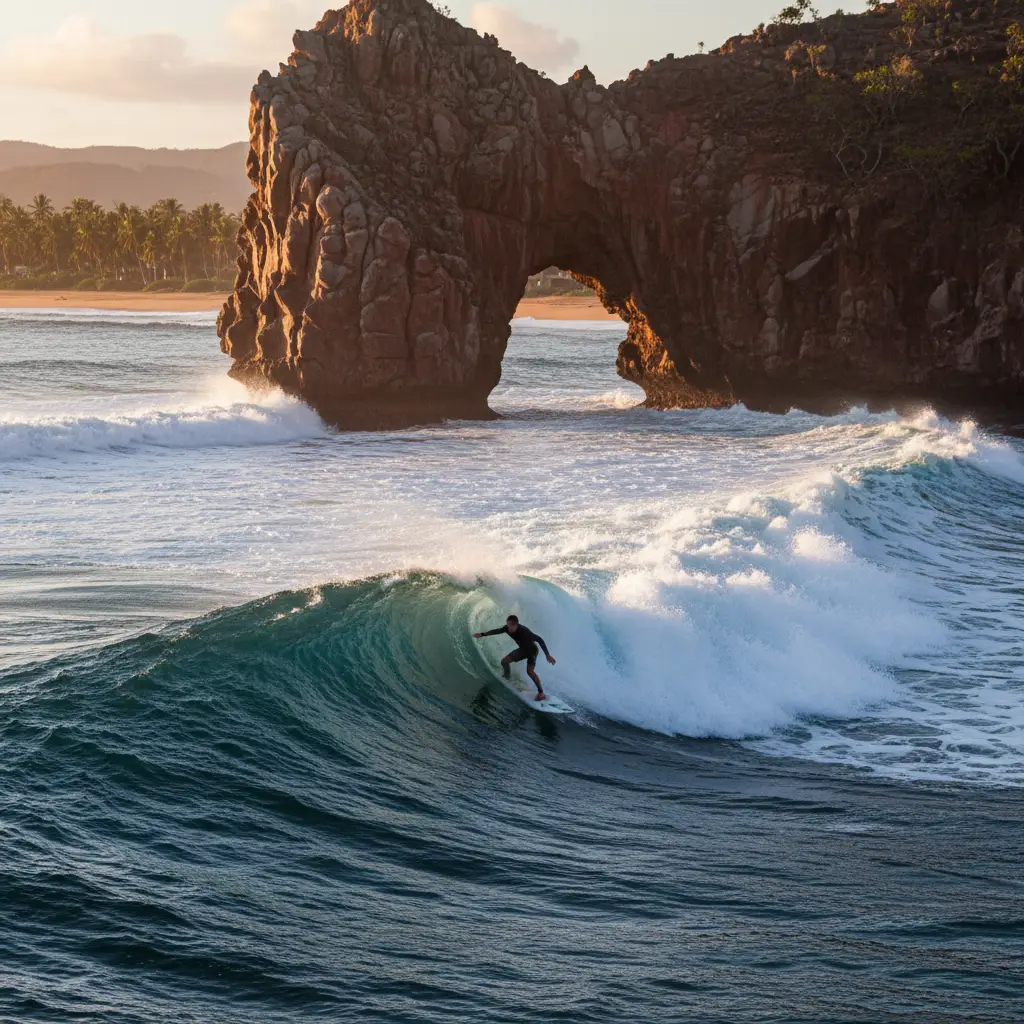
Surfing in New Caledonia is predominantly a reef-break affair. The waves break miles offshore at the passes in the barrier reef. To surf here, you generally need a boat. The exception is La Roche Percée in Bourail (near Poé), which is the only beach break on the main island. This is where the surf community congregates. It is not a kite spot; the wind is often blocked or gusty due to the cliffs, and the wave mechanics are better suited for paddling.
The Kite Zones: The Lagoons
Kitesurfing happens inside the lagoon (flat water) or at the reef passes when the wind is right (wave kiting). However, the primary “zones” marketed to tourists are the flat-water lagoons like Poé and Îlot Maître. Kiting at a dedicated surf spot like the Secret Spot or Gouaro Pass requires respect for the surfers and expert knowledge of the reef to avoid getting washed onto sharp coral.
Key Takeaway for Kiwis: If you want to surf, head to La Roche Percée or book a boat charter to the passes. If you want to kite, stick to Poé, Ouano, and the Noumea lagoons. Do not expect to launch a kite easily at the main surf beach of La Roche Percée.
What is the trade wind reliability by month?
New Caledonia enjoys a subtropical climate heavily influenced by the Alizés (trade winds). Understanding the wind calendar is essential for booking your trip from New Zealand to ensure maximum time on the water.
- September to November (Peak Season): This is the “windy season.” The Alizés are most reliable, blowing 15 to 25 knots almost daily. This is the best time for hardcore kiters to visit. The air is warm, but the water can still be slightly crisp, so a shorty wetsuit or 3/2mm is recommended.
- December to March (Summer Season): The wind remains consistent but can be interspersed with tropical depressions or cyclones. It is hotter and more humid. When the wind blows, it is warm and steady. This is a great time for those who want to combine kiting with general beach holidays.
- April to August (Off-Peak): The wind becomes lighter and less predictable. While you can still score great sessions, it is not guaranteed. This is the surfing season, as winter swells hit the reef passes.
For a standard 7-day trip, visiting in October or November gives you the highest probability of riding 6 or 7 days.
What are the kite schools and rental prices?
New Caledonia has a highly developed infrastructure for kitesurfing instruction, adhering to strict French safety standards. Instructors are state-certified, ensuring a high quality of teaching.
Kite Schools
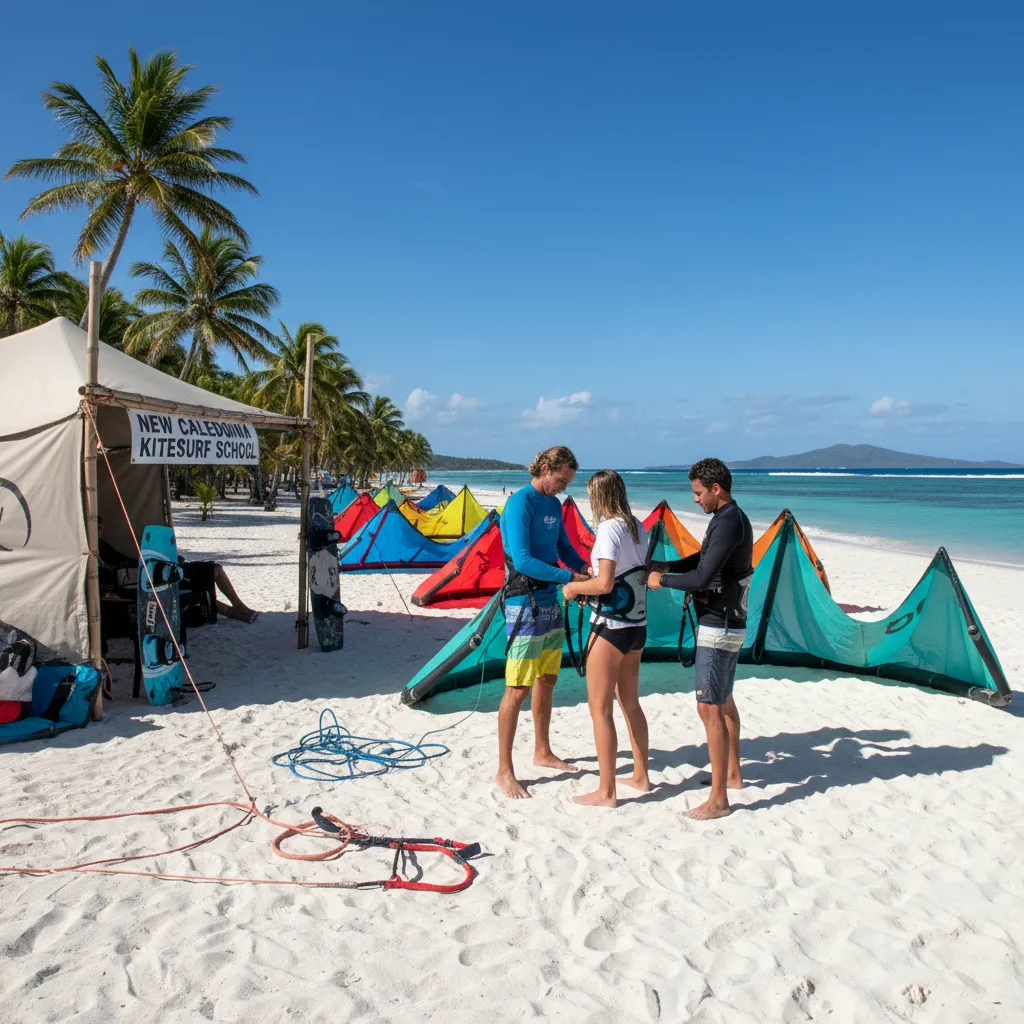
In Poé, schools like Kitesurf Attitude and Là-bas offer lessons ranging from beginner discovery courses to advanced foil coaching. In Noumea, schools operate out of Anse Vata and Îlot Maître. Lessons are typically conducted using radio helmets, and beginners are often taken by boat to sandbars away from the main beach to ensure safety and plenty of space.
Rental Prices
Renting gear is a viable option for Kiwis who want to travel light, though bringing your own equipment is cheaper for longer stays. Prices are generally quoted in XPF (Pacific Francs).
- Full Gear Rental (Kite, Board, Harness): Approximately 8,000 to 12,000 XPF (approx. $120 – $180 NZD) for a half-day.
- Private Lesson (2 hours): Approximately 16,000 to 20,000 XPF (approx. $240 – $300 NZD).
- Storage/Locker usage: Many schools offer gear storage for a weekly fee, allowing you to leave your heavy bags at the beach.
It is worth noting that gear shops in Noumea are well-stocked with major brands like Duotone, North, and F-One, so if you break a part, replacements are readily available. However, prices for purchasing gear can be higher than in New Zealand due to import taxes.
Conclusion
For New Zealanders, New Caledonia offers a premier kitesurfing experience that combines the reliability of trade winds with the luxury of French Pacific culture. Whether you choose the endless flat waters of Poé Beach or the convenient urban kiting of Noumea, the archipelago caters to every style of rider. By distinguishing between the reef-break surf zones and the lagoon kite zones, and timing your trip during the peak Alizé season, you guarantee a world-class water sports holiday just a short flight from home.
What is the best month for kitesurfing in New Caledonia?
The best months for kitesurfing in New Caledonia are from September to November. During this period, the Alizé trade winds are at their most consistent, blowing 15-25 knots almost daily, providing optimal conditions for all riding levels.
Do I need a wetsuit for kitesurfing in New Caledonia?
Yes, a wetsuit is recommended, especially during the peak wind season (September-November) when the water can be slightly cool despite the warm air. A shorty or a 2mm/3mm summer wetsuit is usually sufficient for comfort during long sessions.
Is Poé Beach suitable for beginner kitesurfers?
Absolutely. Poé Beach is arguably the best spot for beginners in New Caledonia. The lagoon is vast, shallow, and protected by a reef, resulting in flat water. The side-onshore wind direction also ensures riders drift back to the beach safely.
Can I surf and kitesurf at the same beach in New Caledonia?
Generally, no. The best surf spot is La Roche Percée (a beach break), while the best kite spots are the lagoons like Poé and Anse Vata. However, expert riders can take boats to reef passes where it is possible to kitesurf waves, but these are distinct zones.
How do I get from Noumea to Poé Beach?
Poé Beach is located in Bourail, about a 2 to 2.5-hour drive north of Noumea. The best way to get there is by renting a car from La Tontouta International Airport or Noumea city, as public transport options are limited for travelers carrying gear.
Are there sharks in New Caledonia’s kitesurfing spots?
New Caledonia has a healthy marine ecosystem, including sharks. While attacks are rare, authorities occasionally close beaches in Noumea if sightings occur. Poé Beach is generally considered safer due to the shallow lagoon environment, but it is always important to obey local signage and warnings.