
Surfing in New Caledonia offers uncrowded, world-class reef breaks primarily accessible by boat along the world’s largest lagoon. While La Roche Percée provides the sole beach break, experienced surfers flock to passes like Ouano and Dumbéa for hollow lefts and rights. This guide covers logistics, safety, and the unique taxi-boat culture essential for navigating these tropical waves.
For New Zealand surfers accustomed to the rugged west coast beach breaks of Piha or the point breaks of Raglan, New Caledonia presents a stark, tropical contrast. Located just a three-hour flight from Auckland, this French territory is home to the world’s largest lagoon, offering a surfing experience that is as challenging as it is visually stunning. Unlike the accessible shorelines of Aotearoa, surfing here is a logistical adventure requiring planning, boat charters, and a healthy respect for the open ocean environment.
Reef Breaks vs. Beach Breaks: Understanding the Terrain
The primary distinction between surfing in New Caledonia and New Zealand lies in the geography of the waves. In New Zealand, the majority of surfing takes place on beach breaks or rocky point breaks accessible directly from the shore. In New Caledonia, the scenario is fundamentally different due to the barrier reef that surrounds the main island, Grande Terre.
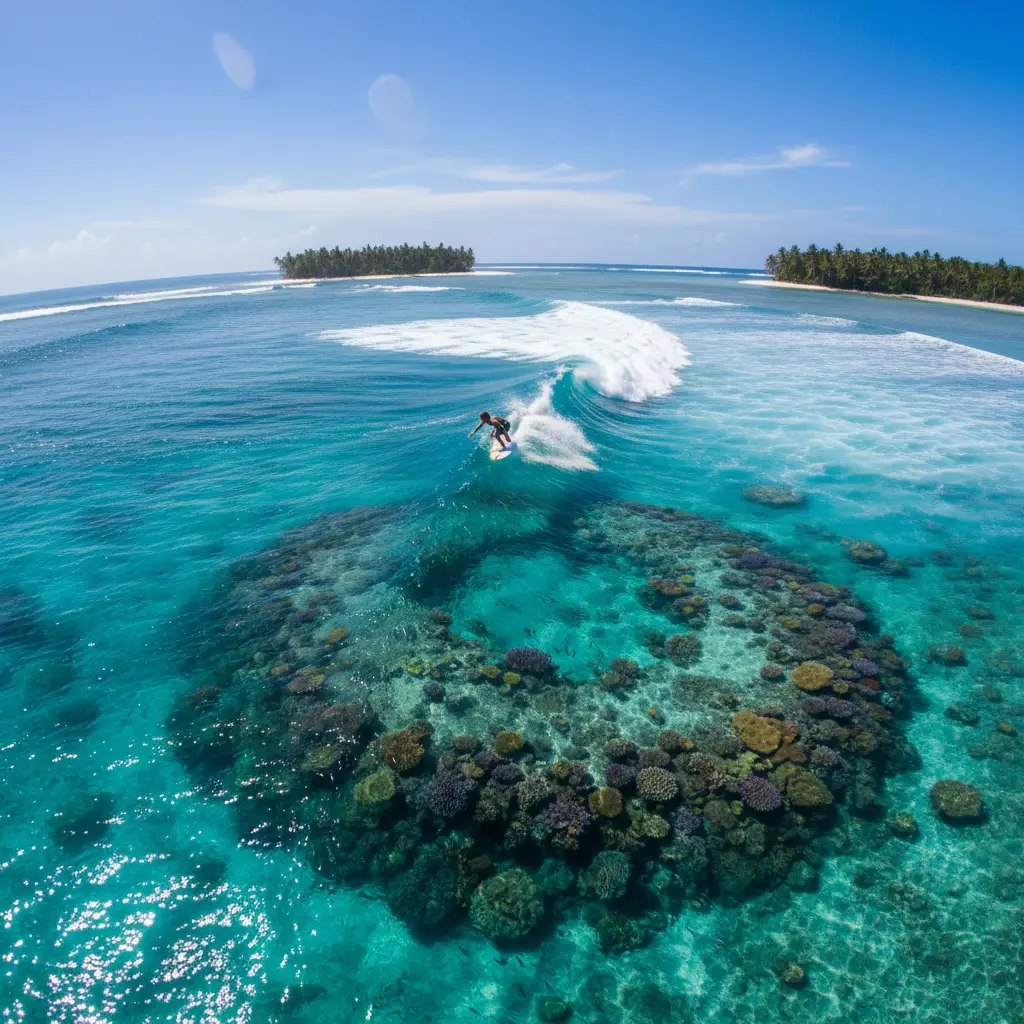
The Barrier Reef Dominance: Almost all high-quality waves in New Caledonia are located on the barrier reef, which sits anywhere from 5 to 25 kilometers offshore. These are powerful, hollow waves that break over sharp living coral. They are incredibly sensitive to wind and tide, often requiring high tide to ensure enough clearance over the reef to prevent injury and board damage.
The Exception: La Roche Percée: There is only one accessible beach break in the entire territory: La Roche Percée in Bourail. Located about two hours north of Noumea, this spot offers a more familiar setup for Kiwi surfers, with sand-bottom peaks. However, because it is the only spot accessible by car, it can get crowded with locals, beginners, and surf schools. While fun, it does not represent the world-class potential found at the outer reef passes.
The Necessity of Boat Access: The Taxi Boat Culture
If you are chasing the legendary waves of the South Pacific, you cannot simply strap your board to a roof rack and drive to the beach. In Noumea and the surrounding areas, surfing is inextricably linked to boating.
How do Taxi Boats work?
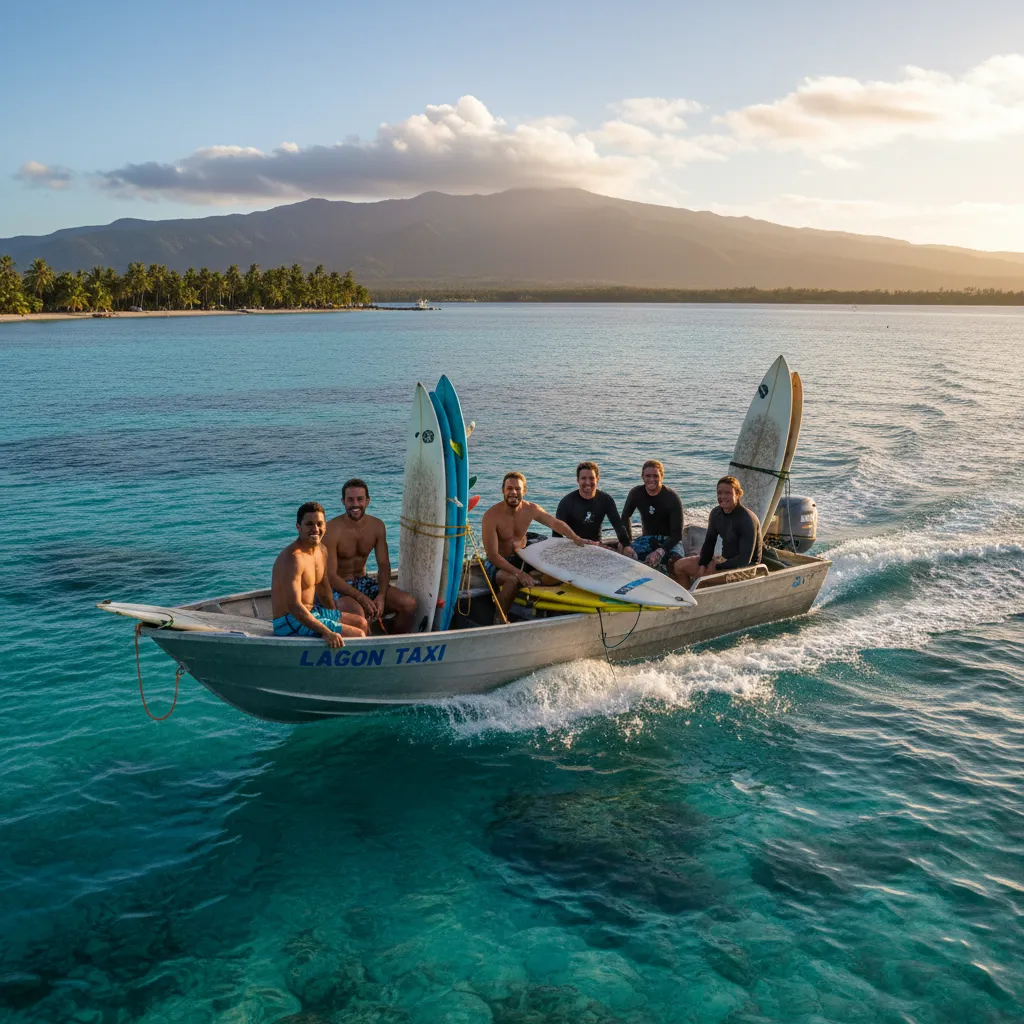
To reach the reef passes, surfers must utilize “taxi boats.” These are dedicated shuttle services that operate from marinas in Noumea (such as Port Moselle). The journey to the reef usually takes between 20 to 45 minutes, depending on the specific pass and sea conditions. This adds a layer of cost and logistics that doesn’t exist for most NZ surf trips.
Booking and Costs: It is rarely a turn-up-and-go situation. You typically need to book your spot on a boat in advance. Costs can range from 3,000 to 5,000 XPF (approx. $45-$75 NZD) per person for a round trip. The boat captain will drop you off in the channel near the break and agree on a pickup time. It is vital to adhere to this schedule; being stranded on the reef as the sun sets is dangerous.
Top Surf Spots in New Caledonia
Understanding where to go is crucial for maximizing your trip. The breaks are generally powerful and not suitable for beginners.
1. Dumbéa Pass
Located directly in front of Noumea, Dumbéa is one of the most consistent and popular spots. It offers a powerful left-hander and a right-hander. The left is generally longer and more performance-oriented, while the right can be shorter and more intense. Because of its proximity to the capital, it is the most frequented spot by taxi boats.
2. Ouano
Situated further north, near La Foa, Ouano is a world-class setup that often hosts competitions. It features a long, walling left-hander that can hold significant size. There are also right-handers available. Ouano is more remote than Dumbéa, often requiring a longer boat trip or a stay at the nearby surf camp to access efficiently.
3. Tenia
Tenia offers a pristine, often uncrowded experience. It is a beautiful left-hander located off the coast of Bourail. It requires a specific boat transfer from the Bourail area. The wave is known for its perfect shape and crystal-clear water, often compared to high-quality breaks in Indonesia or Fiji.
Safety: Sharks, Coral, and Currents
While the imagery of New Caledonia is idyllic, the ocean environment commands respect. Safety is a paramount concern for any traveling surfer.
Are sharks a concern in New Caledonia?
Yes, shark presence is a significant reality in New Caledonia. The territory has experienced shark incidents, leading to intermittent bans on swimming and nautical activities in specific zones, particularly around Noumea. Bull sharks and Tiger sharks are present in the lagoon.
Risk Mitigation:
- Avoid murky water: Do not surf after heavy rains when river mouths flush into the lagoon.
- Surf in groups: Never surf the outer reefs alone.
- Stay informed: Check local regulations immediately upon arrival. Some beaches or zones may have temporary closures enforced by the authorities.
- Avoid dawn and dusk: These are active feeding times for marine predators.
Reef and Current Dangers
The coral at the passes is sharp and unforgiving. At low tide, the reef can become exposed or extremely shallow (