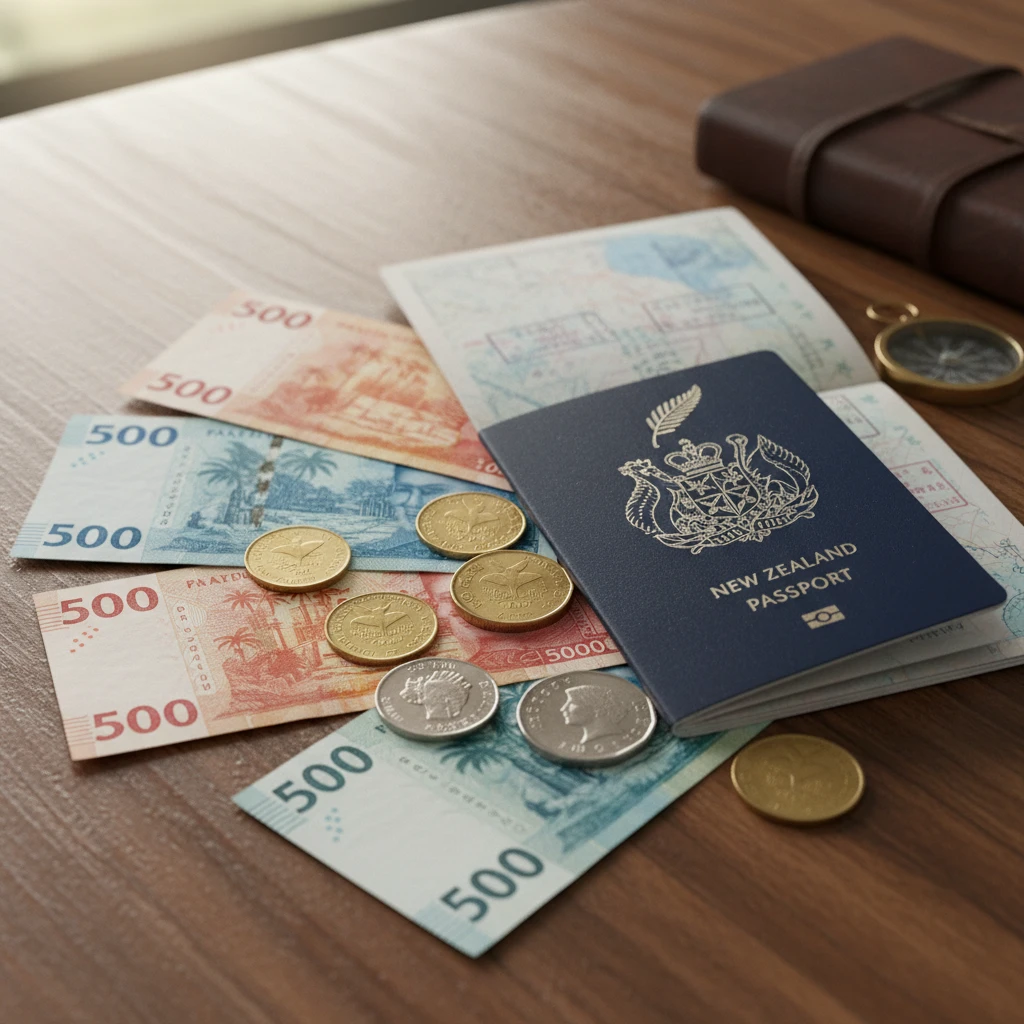
The most effective NZD to XPF exchange rate tip is to utilize a multi-currency travel card, such as Wise or Revolut, to withdraw cash from ATMs in Noumea upon arrival. Avoid exchanging currency at Auckland or Tontouta airports due to high commission spreads. Since the Pacific Franc (XPF) is pegged to the Euro, monitoring the NZD/EUR rate will help you time your currency conversion for maximum value.
Traveling to New Caledonia offers New Zealanders a taste of France in the Pacific, but navigating the currency exchange from New Zealand Dollars (NZD) to Pacific Francs (XPF) can be tricky. Without a solid strategy, hidden bank fees and poor exchange rates can eat into your holiday budget significantly. Whether you are planning a relaxing stay in Noumea or an adventure to the Isle of Pines, understanding the financial logistics is crucial.
What is the XPF and How Does the Exchange Rate Work?
The currency used in New Caledonia is the CFP Franc (Change Franc Pacifique), denoted by the ISO code XPF. It is also the currency of French Polynesia (Tahiti) and Wallis and Futuna. For New Zealand travelers, the most critical piece of information regarding the XPF is its relationship with the Euro.
The Fixed Peg: Unlike the NZD, which floats freely, the XPF has a fixed exchange rate with the Euro. The rate is set at 1,000 XPF = 8.38 Euros (approximate). This means the XPF does not fluctuate independently; it moves in exact lockstep with the Euro.
Therefore, when you are looking for the best time to buy XPF, you should actually be watching the NZD to Euro (EUR) exchange rate. If the New Zealand Dollar is performing well against the Euro, you will get a favorable rate against the Pacific Franc. This stability eliminates some volatility but ties your buying power to the European economic climate.
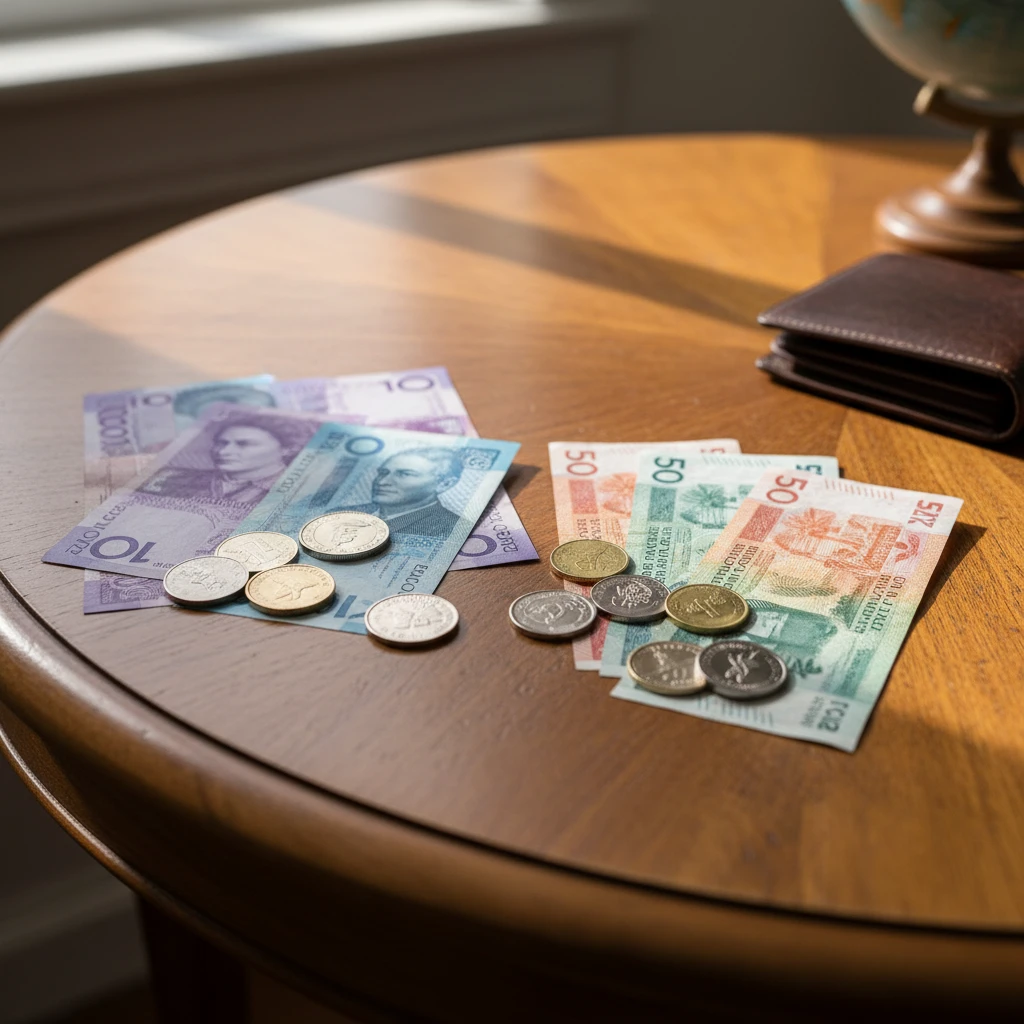
Cash vs. Card: What is the Best Payment Method in New Caledonia?
While New Caledonia is a modern territory with excellent infrastructure, the “Cash is King” rule still applies in many scenarios, particularly outside the capital city of Noumea. Understanding the balance between carrying cash and relying on cards is essential for a smooth trip.
Where can you use cards?
In Noumea, credit and debit cards (Visa and Mastercard) are widely accepted at hotels, larger restaurants, supermarkets (like Casino and Carrefour), and boutiques. Contactless payment is becoming more common, though not as ubiquitous as in New Zealand.
Where must you use cash?
You will strictly need XPF cash for:
- Local Markets: The Port Moselle Market requires cash for fresh produce and fish.
- Public Transport: Buses (Carsud and Karuïa) generally require cash or tickets bought with cash.
- Small Islands: On the Isle of Pines or the Loyalty Islands (Lifou, Maré, Ouvéa), card machines are frequently offline due to connectivity issues, and small “snacks” (roadside eateries) often do not have EFTPOS terminals.
- Tribal Stays: If you are staying in a traditional “Gîte” or tribal accommodation, cash is often the only accepted payment method.
Where Should You Exchange NZD for XPF?
Choosing where to exchange your money can save you up to 10% on your total travel budget. Here is a comparison of the most common options available to Kiwi travelers.
Should I exchange money at Auckland Airport?
Verdict: No. Airport exchange kiosks (such as Travelex at Auckland International) typically offer the worst exchange rates and charge high commission fees. You are paying for the convenience of last-minute exchanging. If you must have cash before you land, order it online from your bank or a currency provider for pickup, which usually secures a slightly better rate than the walk-up board rate.
Should I exchange at La Tontouta International Airport?
Verdict: Only for small amounts. Upon arrival in New Caledonia, you will find exchange bureaus (BCI) at the airport. While convenient for getting taxi fare, the rates are generally less favorable than in the city. It is recommended to withdraw a small amount from the airport ATM rather than using the currency exchange counter if possible.
Are City Banks in Noumea a good option?
Verdict: Yes, but watch the hours. Banks in downtown Noumea, such as BCI (Banque Calédonienne d’Investissement), BNC (Banque de Nouvelle-Calédonie), and Société Générale, offer fair rates. However, they have restricted opening hours (often closing for a long lunch break from 11:30 AM to 1:30 PM and closing early in the afternoon). You will need your passport to exchange cash over the counter.
Using Wise, Revolut, and NZ Bank Cards
The fintech revolution has made traveling with money significantly cheaper. Using a dedicated travel card is currently the most cost-effective way to spend in New Caledonia.
How to use Wise (formerly TransferWise) for XPF
Wise is a favorite among Kiwi travelers. However, it is important to note that Wise does not currently allow you to hold an XPF balance in your multi-currency account. This does not mean you cannot use the card.
The Strategy: Load your Wise card with NZD. When you spend in New Caledonia or withdraw from an ATM, Wise will auto-convert your NZD to XPF at the mid-market rate (the real exchange rate) plus a tiny conversion fee (usually under 1%). This is significantly cheaper than the 2-3% foreign transaction fee charged by traditional NZ banks.
Using NZ Bank Cards (ANZ, BNZ, ASB, Westpac)
If you prefer using your standard bank card, be aware of the costs. Most New Zealand banks charge:
- Foreign Currency Conversion Fee: Typically 1.8% to 2.5% of the transaction value.
- Overseas ATM Fee: A flat fee of $5 to $8 NZD per withdrawal.
While convenient, using your everyday card for every coffee or small purchase will accumulate fees quickly. If you use a standard bank card, limit your usage to large, infrequent ATM withdrawals to minimize the flat fees.
Navigating ATM Fees and Bank Charges
Even if you have a fee-free card like Wise, the local ATM operator in New Caledonia may charge their own access fee. This is known as the “surcharge.”
Which ATMs are best for tourists?
In New Caledonia, the main banking networks are BCI, BNC, OPT (Post Office), and Société Générale.
- OPT (Office des Postes et Télécommunications): OPT ATMs are often the most reliable in remote areas and islands. They generally accept Visa and Mastercard.
- BCI: Widely available in Noumea and larger towns.
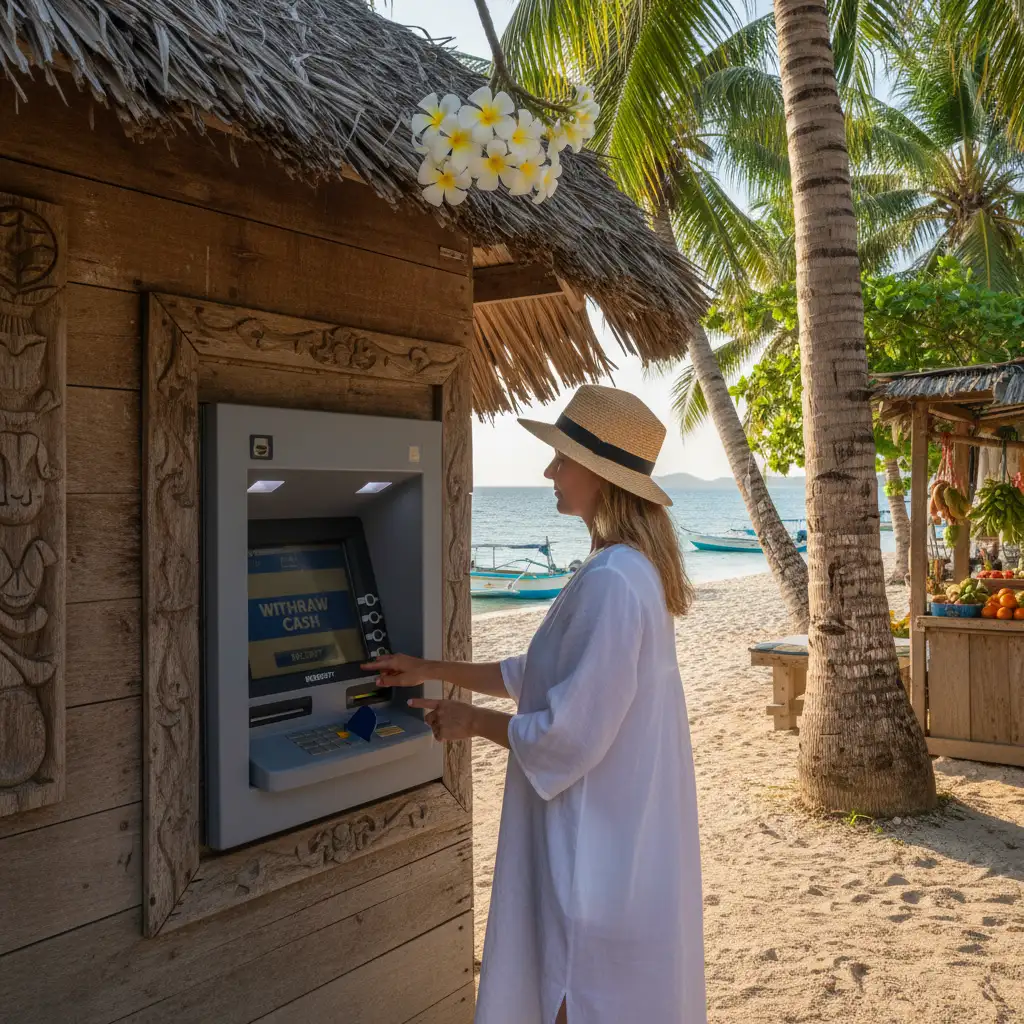
Pro Tip: When an ATM asks if you want to be charged in NZD or XPF, ALWAYS choose XPF. If you choose NZD, the ATM machine performs the currency conversion at a terrible rate (Dynamic Currency Conversion), often costing you an extra 5-7%. Let your own bank or card provider handle the conversion by selecting the local currency.
Tipping and Spending Culture in New Caledonia
One of the most common questions for Kiwis visiting the Pacific is regarding gratuities. New Caledonia follows French customs mixed with Pacific hospitality.
Is tipping mandatory in New Caledonia?
No, tipping is not mandatory. Unlike in the United States, service charges are included in the price of your meal or service. In local Melanesian culture, hospitality is a duty and honor, and tipping was traditionally not practiced because it implies a transactional relationship that contradicts the spirit of sharing.
When is tipping appropriate?
While not expected, tipping is becoming more common in tourist-heavy areas of Noumea. If you receive exceptional service at a high-end French restaurant, leaving small change or rounding up the bill is appreciated but never demanded. It is generally not customary to tip taxi drivers or hotel staff, though a smile and a polite “Merci” are essential.
Budgeting Tips for Kiwi Travelers
New Caledonia is known as one of the more expensive Pacific destinations due to its high standard of living and reliance on imported goods (often from France).
Daily Spend Estimates (in NZD)
- Budget Traveler: $150 – $200 NZD per day (Camping/Hostels, supermarket meals, bus transport).
- Mid-Range: $250 – $400 NZD per day (3-star hotel, mix of cafes and self-catering, rental car).
- Luxury: $500+ NZD per day (Overwater bungalows, fine dining, private transfers).
How to save money on food
To stretch your XPF further, adopt the local “French” style of eating. Buy fresh baguettes, cheeses, and charcuterie from a supermarket (Casino, Johnston, or Super U) for lunch. This is significantly cheaper than eating at restaurants for every meal and often just as delicious. Additionally, look for “Plats du Jour” (Dish of the Day) specials at restaurants, which offer great value for a fixed price.
Final Checklist for NZD to XPF Exchange
To summarize your currency strategy for New Caledonia:
- Before you leave: Apply for a Wise or Revolut card and load it with NZD.
- Upon arrival: Withdraw roughly 20,000 – 30,000 XPF ($300-$400 NZD) from an ATM at Tontouta Airport or Noumea for immediate expenses.
- During the trip: Use your card for hotels and supermarkets. Use cash for markets, buses, and outer islands.
- Always: Choose to pay in XPF (Local Currency) on card machines to avoid dynamic currency conversion fees.
Can I use New Zealand Dollars in New Caledonia?
Generally, no. While some tourist-centric market stalls might accept NZD in an emergency, the exchange rate offered will be very poor. You should always pay in Pacific Francs (XPF) or use a credit card. Major hotels may exchange NZD for you, but again, the rates will not be favorable compared to a bank or ATM.
How much cash should I carry in New Caledonia?
It is advisable to carry at least 10,000 to 15,000 XPF (approx. $150-$200 NZD) in cash at all times, especially if you are leaving Noumea. If you are visiting the Loyalty Islands or Isle of Pines, increase this amount as ATMs can be scarce or out of order, and many small operators do not accept cards.
Do New Caledonia ATMs accept NZ EFTPOS cards?
Standard NZ EFTPOS cards (those without a Visa or Mastercard chip) will NOT work in New Caledonia ATMs or payment terminals. You must use a Debit Visa, Debit Mastercard, or a standard credit card. Ensure your card has a 4-digit PIN, as 6-digit PINs are sometimes rejected by older machines.
Is New Caledonia expensive for New Zealanders?
Yes, New Caledonia is generally more expensive than New Zealand and other Pacific Islands like Fiji or Rarotonga. Prices for food and accommodation are comparable to major European cities. However, wine and French goods can be reasonably priced in supermarkets. Budgeting accordingly is essential.
What is the best currency to take to New Caledonia?
The best currency to take is the local currency, XPF. However, you do not need to bring it from New Zealand. The best strategy is to bring your NZ bank card or travel money card and withdraw XPF from ATMs upon arrival. If you want to bring emergency cash to exchange, Euros are easier to exchange than NZD, but NZD is still widely accepted at banks.
Can I use my Wise card in New Caledonia?
Yes, Wise cards work perfectly in New Caledonia anywhere Visa/Mastercard is accepted. Since Wise does not hold XPF wallets, ensure you have a balance in NZD. The card will automatically convert your NZD to XPF at the time of purchase using the mid-market rate, which is usually the cheapest way to spend money there.