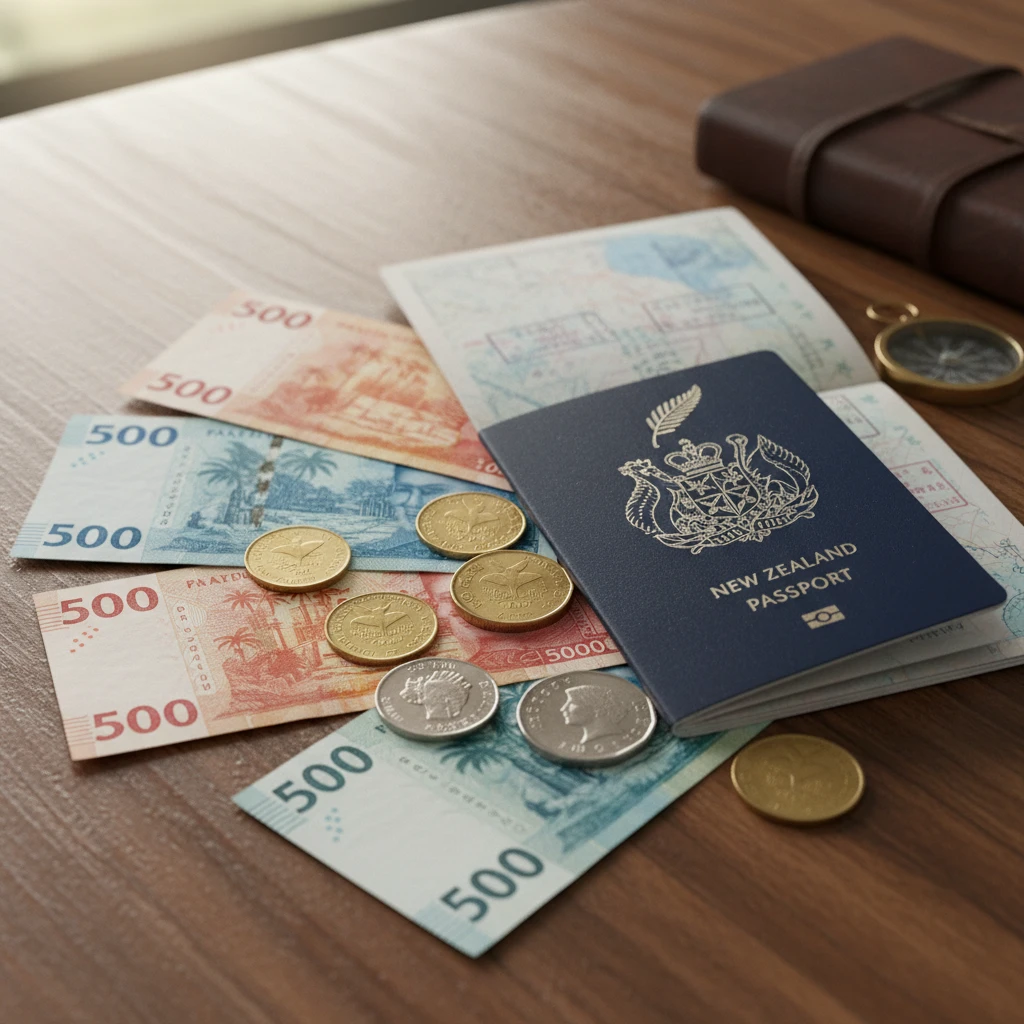
Driving in New Caledonia rules dictate that vehicles must travel on the right-hand side of the road, giving priority to traffic entering from the right unless signaled otherwise. Speed limits are strictly enforced, generally set at 50 km/h in urban areas and up to 110 km/h on main highways. While New Zealand driver’s licenses are valid, carrying an International Driving Permit is highly recommended for insurance validation and police interactions.
The Critical Shift: Driving on the Right
For Kiwi travellers accustomed to the left-hand traffic of New Zealand, the most significant adjustment when navigating New Caledonia is driving on the right-hand side of the road. This is a non-negotiable aspect of French traffic law and requires constant mental vigilance, particularly during the first 24 hours of your trip.
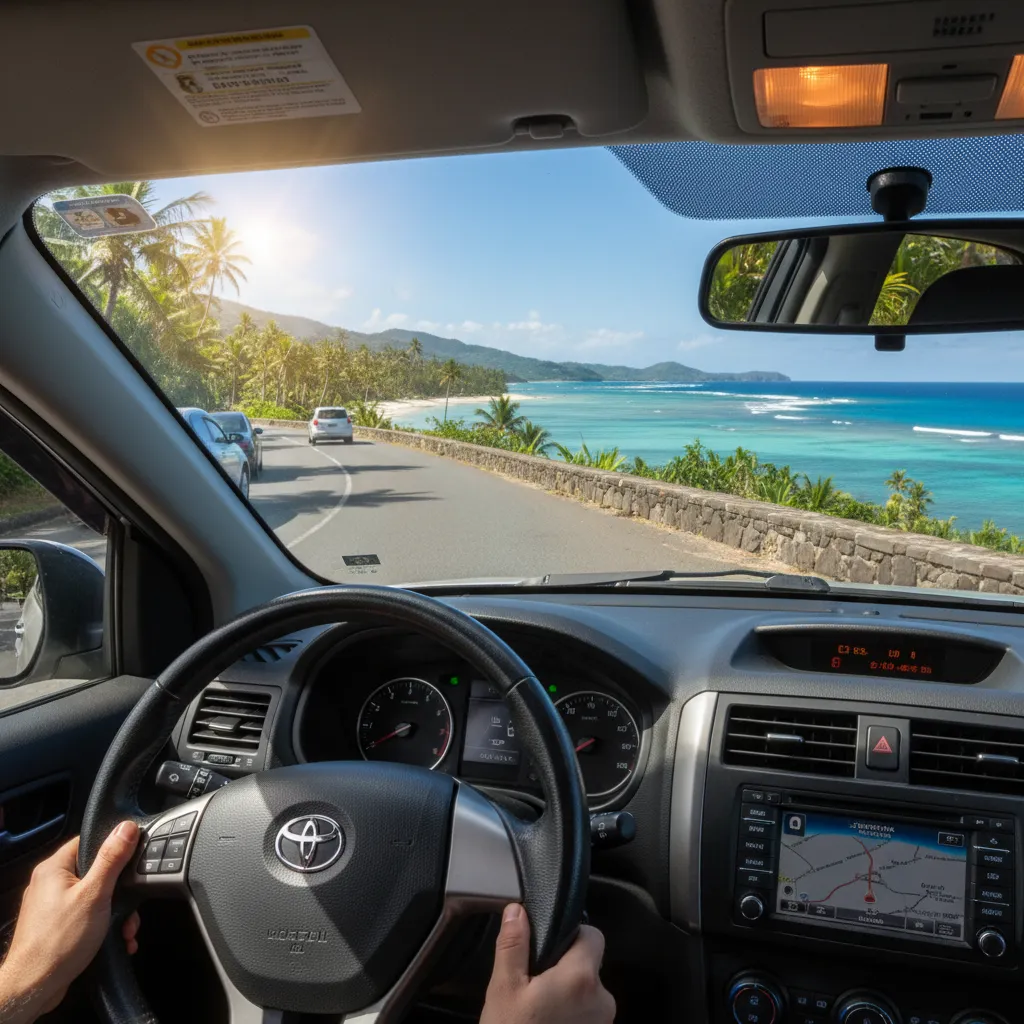
The transition affects more than just lane position. The driver’s seat in rental vehicles will be on the left side of the car. This alters your spatial awareness, particularly when judging the distance to the curb or the center line. For many New Zealanders, the most common muscle-memory error is reaching for the gear stick with the left hand, only to hit the door panel. In manual vehicles, you must shift gears with your right hand.
Key adjustments for Kiwis include:
- Intersection checks: You must look left, then right, then left again—the opposite of the NZ instinct.
- Lane discipline: The “slow lane” is the right lane. The left lane is strictly for passing. Undertaking (passing on the right) is illegal and dangerous.
- Roundabout entry: You enter roundabouts counter-clockwise, looking to your left for oncoming traffic.
Do New Zealanders Need an International Driving Permit?
One of the most common queries regarding driving in New Caledonia rules concerns licensing. Legally, a valid New Zealand driver’s license is accepted in New Caledonia for short-term tourist stays (typically up to three months or one year depending on specific visa conditions), provided the license is current and clearly legible.
However, relying solely on your NZ plastic card is not advisable. While rental agencies in Noumea will readily hand over keys upon seeing a New Zealand license, the legal landscape changes if you are involved in an accident or stopped by the Gendarmerie (French police).
The Insurance Factor
Many travel insurance policies have fine print requiring you to hold a license that is either in the local language or accompanied by an International Driving Permit (IDP). If you are involved in a collision, an insurer may use the lack of an IDP as grounds to deny a claim. Furthermore, if you encounter a police officer in a rural area (La Brousse) who does not speak English, an IDP—which translates your credentials into French—can de-escalate the situation significantly.
Recommendation: Spend the small fee to obtain an IDP from the AA in New Zealand before you depart. It serves as a crucial backup document.
Speed Limits and Police Enforcement
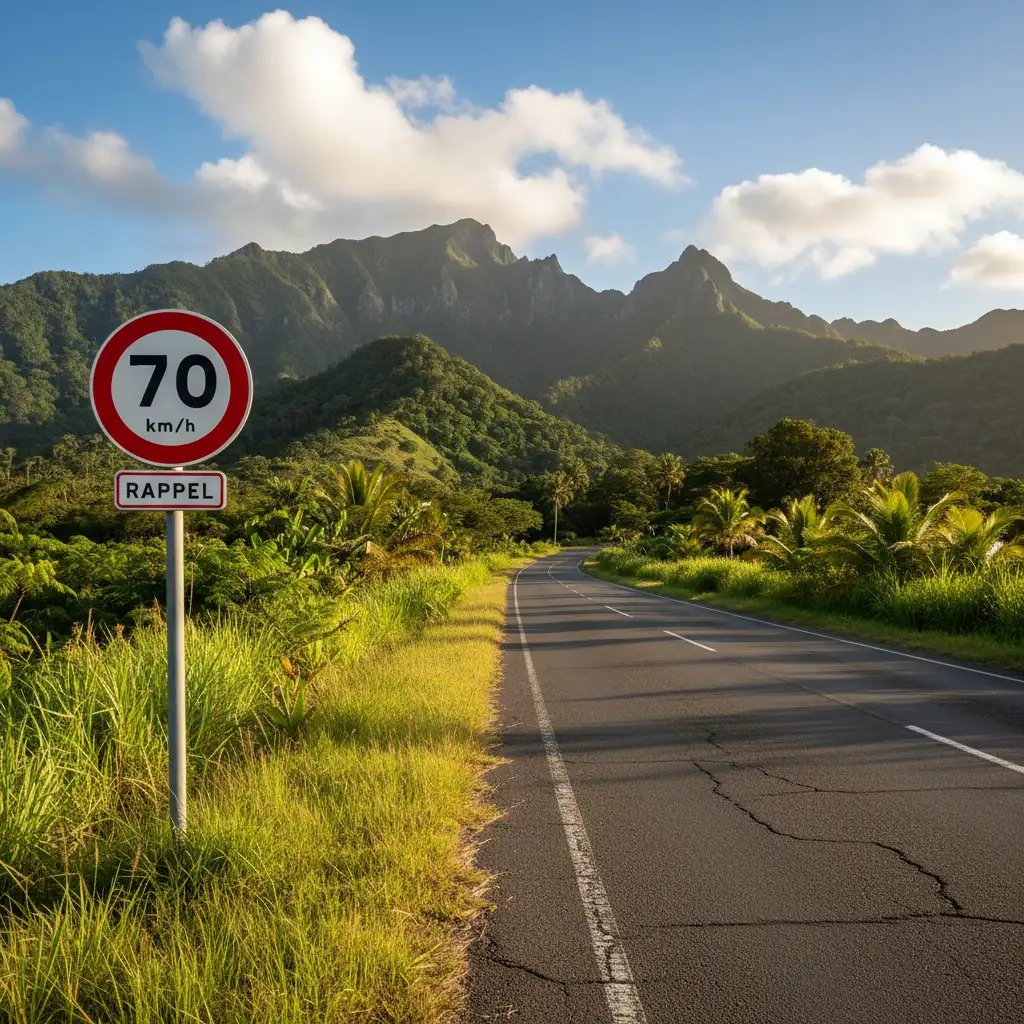
New Caledonia uses the metric system, so speed limits and distances are measured in kilometres, just like in New Zealand. However, the enforcement style and signage differ.
Standard Speed Limits:
- Urban Areas (Agglomerations): 50 km/h (sometimes reduced to 30 km/h in school zones or city centres).
- Rural Roads: 80 km/h (reduced from 90 km/h in recent years to improve safety).
- Expressways/Highways: 110 km/h (specifically on the distinct sections of the RT1 leaving Noumea).
- Wet Weather: Speed limits generally drop by 10-20 km/h during rain.
Police Presence and Radar
The roads are patrolled by the Gendarmerie Nationale. They are easily identifiable by their blue uniforms and blue vehicles. Police enforcement is strict regarding speed and seatbelts. Fixed speed cameras are present, particularly around Noumea and on the RT1, but mobile radar units are frequently deployed in the bush.
On-the-spot fines are common for traffic violations. If you are stopped for speeding, remain polite. Aggression or arguing is not tolerated. Unlike in New Zealand where you might receive a ticket in the mail, foreign drivers may be asked to pay fines immediately.
Understanding Priority to the Right
Perhaps the most confusing rule for New Zealanders is Priorité à droite (Priority to the Right). This is a fundamental tenet of the French Highway Code which applies in New Caledonia.
What is Priority to the Right?
At an intersection where there are no traffic lights, stop signs, or “give way” signs (known as Cédez le passage), the vehicle coming from the road to your right has the right of way. This applies even if you are on a seemingly main road and they are emerging from a smaller side street.
While major roads (like the RT1) usually have priority indicated by a yellow diamond sign, in residential areas of Noumea and smaller towns, the priority to the right rule is the default. If you see a car approaching an intersection from your right and they do not have a line across their road or a sign, you must yield.
Pro Tip: If you see an “X” sign in a red triangle, this specifically warns that priority to the right is in effect at the upcoming intersection.
Navigating Roundabouts in Noumea
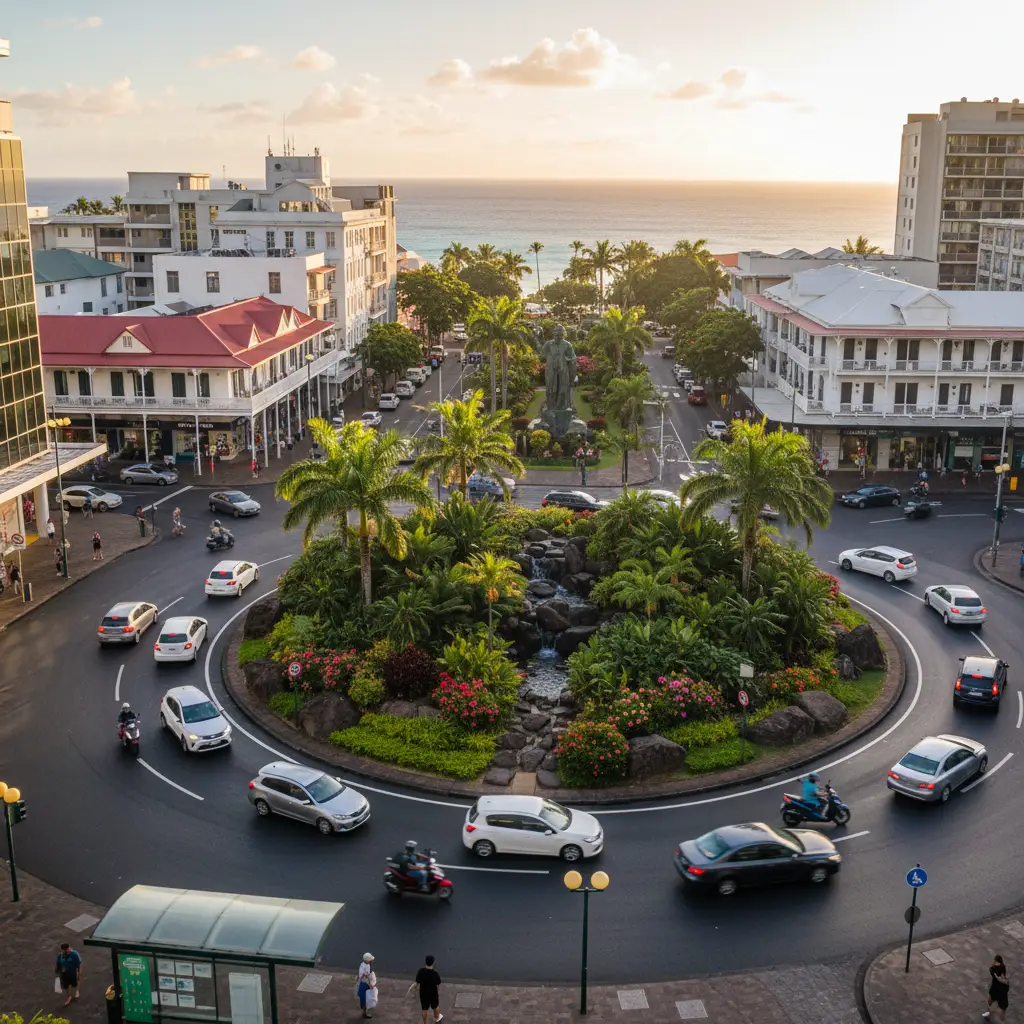
Noumea is famous (or infamous) for its numerous roundabouts. For a Kiwi, the mechanics are reversed. You must enter the roundabout driving to the right (counter-clockwise) and give way to traffic already on the roundabout coming from your left.
Lane Usage in Roundabouts:
- Turning Right or Going Straight: Stay in the outer lane.
- Turning Left or U-Turn: Use the inner lane.
Indicators are essential. Signal right if you are exiting immediately. Signal left if you are continuing around the roundabout, and switch to your right indicator just before your exit. Be hyper-aware of local drivers who may cut across lanes to exit; defensive driving is your best strategy here.
Road Conditions: Potholes, Night Driving, and Wildlife
The quality of roads in New Caledonia varies drastically between the developed areas of the South Province and the more remote North and East.
The State of the RT1 and Secondary Roads
The RT1 (Route Territoriale 1) is the main artery running up the west coast. It is generally sealed and in good condition. However, once you venture off the main highway or travel into the northern regions, road maintenance becomes inconsistent. Potholes can be deep and frequent. Sudden patches of gravel or road subsidence are common after heavy tropical rains.
The Dangers of Night Driving
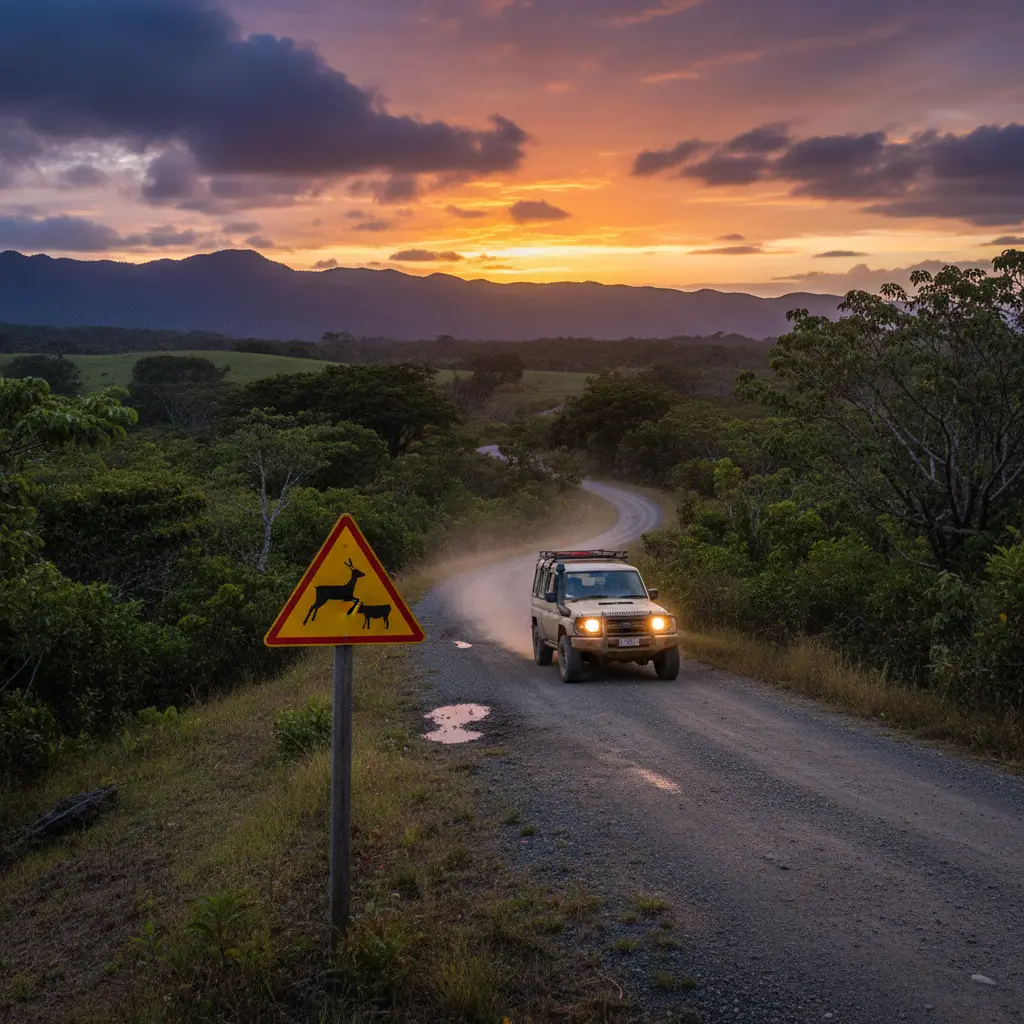
It is widely advised that tourists avoid driving at night outside of Noumea. Street lighting is non-existent on rural roads (La Brousse). The darkness is absolute, making it difficult to see hazards.
Wildlife Hazards: Wild deer and cattle are a significant plague in New Caledonia. They frequently wander onto roads at dusk and dawn. Hitting a deer at 80 km/h can total a rental car and cause severe injury. Furthermore, locals often walk along road shoulders at night without reflective gear. For your safety and theirs, plan your travel to arrive at your destination before sunset.
Fuel Stations and Parking Etiquette
Petrol Stations: Fuel is generally more expensive than in New Zealand. Stations are plentiful in the south but can be 100km apart in the north. Always fill up when you reach half a tank in rural areas. Most stations are full-service (an attendant pumps the gas for you), though self-service is becoming more common in Noumea. Tipping the attendant is not mandatory but small change is appreciated.
Parking: In downtown Noumea, parking is often paid (metered). Look for blue zones (“Zone Bleue”) which require a parking disc or payment ticket. Yellow curb lines indicate no parking. Towing is active in the city centre.
Alcohol Limits and Safety Equipment
New Caledonia takes road safety seriously, and regulations are strictly enforced to combat the road toll.
Blood Alcohol Concentration (BAC)
The legal blood alcohol limit is 0.5 grams per litre of blood. This is the same as New Zealand’s limit for drivers aged 20 and over. However, for probationary drivers (those who have held a license for less than three years), the limit is effectively zero (0.2g/L). Given the unfamiliar driving conditions, the safest policy for Kiwi tourists is zero alcohol when driving.
Seatbelts and Child Seats
Seatbelts are mandatory for all passengers, front and rear. Children under 10 years old are not permitted to sit in the front seat unless the vehicle has no rear seats or the rear seats are fully occupied by other children. Appropriate child restraints/booster seats are required by law for younger children, so ensure you book these with your rental car agency in advance.
Mobile Phones
Using a hand-held mobile phone while driving is illegal and carries a heavy fine. Hands-free sets are permitted, but distractions should be minimized given the need to concentrate on right-hand traffic rules.
People Also Ask
Can I drive in New Caledonia with a NZ license?
Yes, you can drive in New Caledonia with a valid New Zealand driver’s license for the duration of a standard tourist stay. However, carrying an International Driving Permit (IDP) is highly recommended for insurance purposes and to assist in interactions with police who may not speak English.
Is it difficult to drive in New Caledonia?
Driving in New Caledonia is generally moderate in difficulty. The main challenge for New Zealanders is adapting to driving on the right side of the road. Traffic in Noumea can be heavy during rush hour, but rural roads are quieter. Drivers must be vigilant regarding potholes and wildlife in rural areas.
What side of the road do they drive on in New Caledonia?
In New Caledonia, vehicles drive on the right-hand side of the road. This is the opposite of New Zealand. The driver sits on the left side of the vehicle, and the gear stick is operated with the right hand.
Are there toll roads in New Caledonia?
Yes, there is a toll road in New Caledonia. The main toll booth is located on the RT1 express road leaving Noumea towards the airport (La Tontouta). Ensure you have some local currency (CFP Francs) or a credit card handy when driving this route.
What is the speed limit in New Caledonia?
Speed limits are typically 50 km/h in urban areas, 80 km/h on rural roads (reduced from 90 km/h), and 110 km/h on expressways. Always watch for signs, as limits can change frequently, especially near schools or construction zones.
Is it safe to drive at night in New Caledonia?
Driving at night in rural New Caledonia is generally discouraged for tourists. There is very little street lighting, and the risk of hitting wandering livestock (cattle and deer) or pedestrians walking on the road shoulder is significantly higher than during the day.