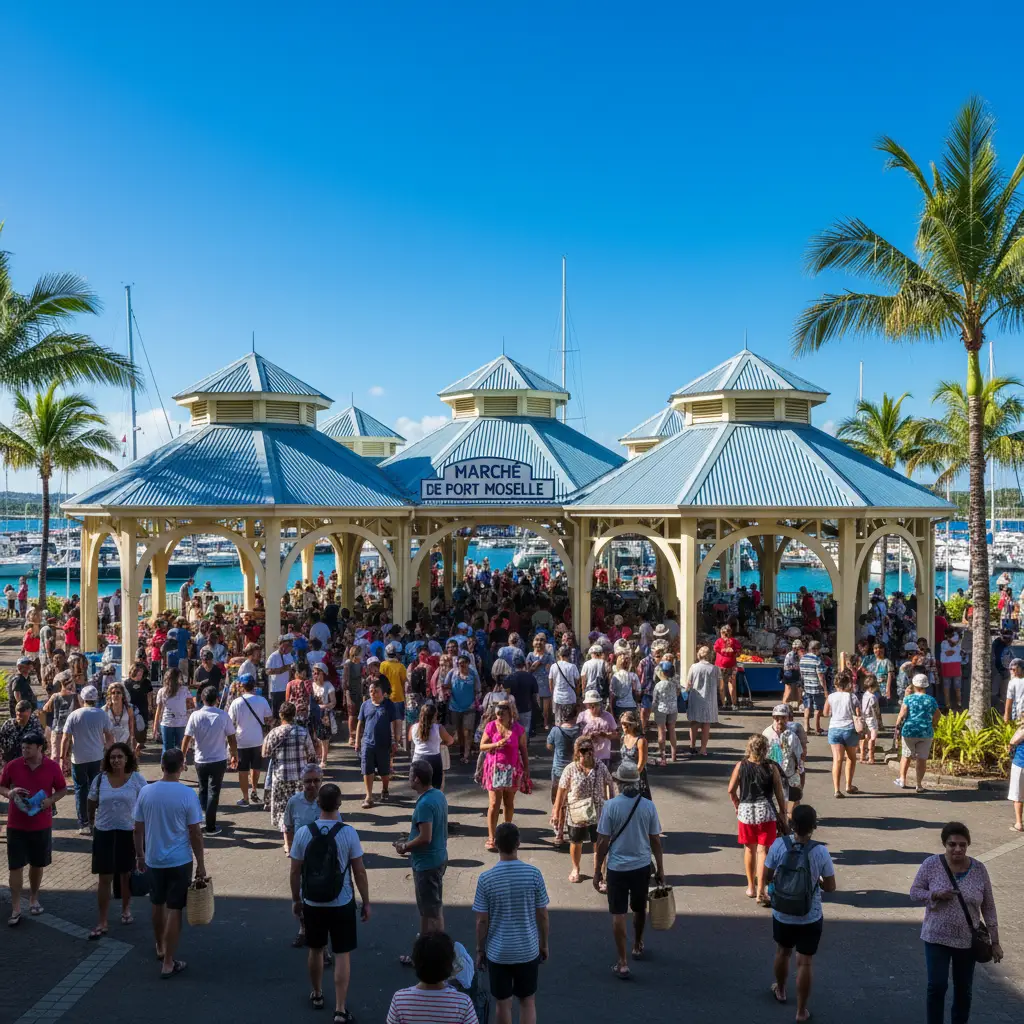
The Port Moselle Market in Noumea is New Caledonia’s premier daily market, comprised of distinctive hexagonal pavilions offering fresh tropical produce, locally caught seafood, and artisan handicrafts. Located beside the marina, it serves as the cultural and culinary heart of the city, open daily from early morning until midday, providing an authentic French-Pacific experience.
For New Zealand travellers, New Caledonia represents the closest proximity to France without the long-haul flight to Europe. Just a short journey from Auckland, Noumea offers a unique blend of Melanesian tradition and French sophistication. At the center of this cultural convergence lies the Port Moselle Market Noumea. It is not merely a place to purchase groceries; it is a sensory immersion into the daily life of the capital, where the aroma of freshly baked baguettes mingles with the briny scent of the Pacific Ocean.
When is the Best Time to Visit Port Moselle Market?
To experience the Port Moselle Market at its vibrant peak, timing is everything. While the market is technically open daily from 5:00 AM to 11:30 AM, the atmosphere shifts significantly throughout the morning and across the week.
Early Mornings for Freshness
For the absolute best selection, particularly regarding seafood and limited local produce, arriving between 6:00 AM and 7:30 AM is recommended. This is when the fishing boats have offloaded their catch, and the stalls are fully stocked. By 10:00 AM, many of the premium seafood items—such as the famous blue prawns—may be sold out. The early morning air is also cooler, making browsing the open-air pavilions more comfortable before the tropical heat sets in.
Weekend vs. Weekday Dynamics
Weekends, specifically Saturday and Sunday mornings, are the busiest and most energetic times. Local families visit to do their weekly shopping, and live music often plays near the café section, creating a festive atmosphere. If you prefer a quieter experience where you can engage more deeply with stallholders without the crowds, a Tuesday or Wednesday morning visit is advisable. Note that Mondays can sometimes be quieter as some fishermen and farmers take a break after the weekend rush.
The Seafood Pavilion: A Buyer’s Guide
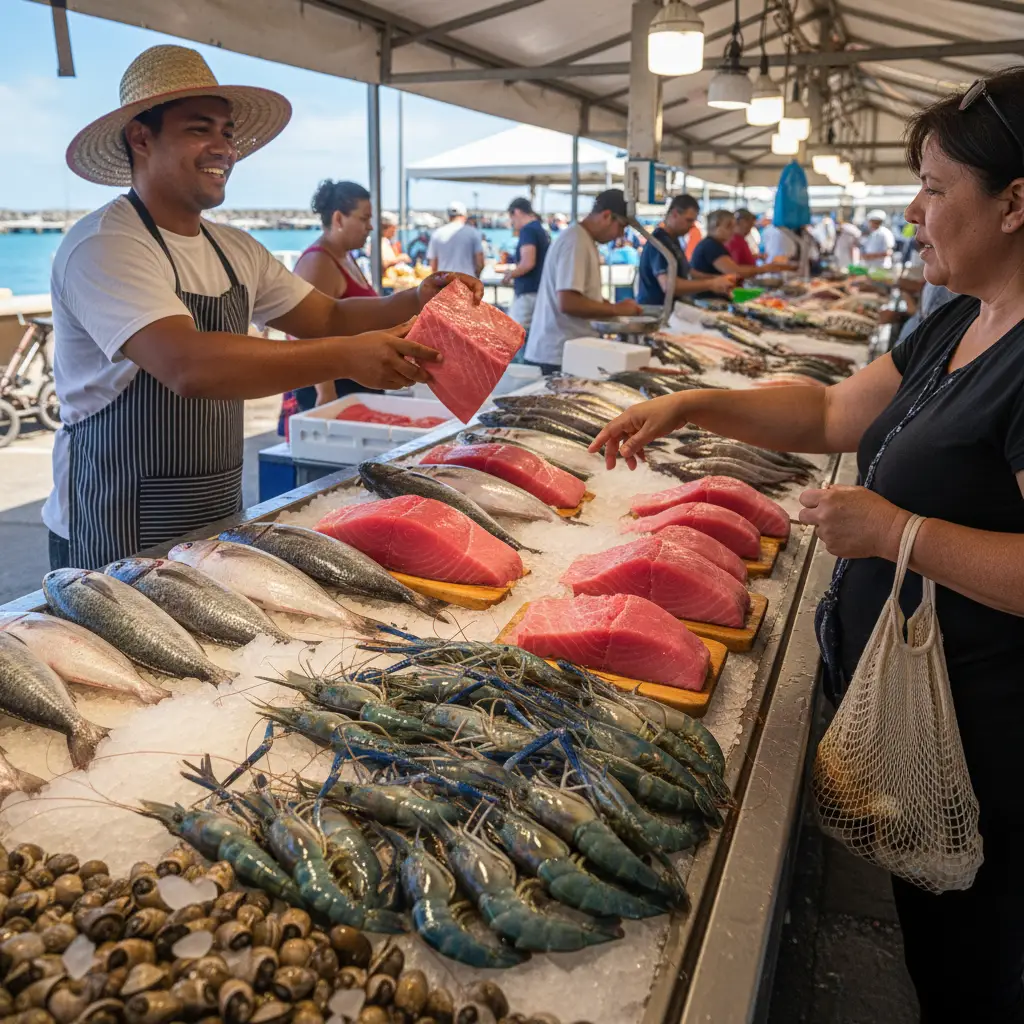
For many Kiwi travellers accustomed to high-quality ocean produce, the seafood section (La Halle aux Poissons) at Port Moselle Market is a revelation. The lagoon surrounding New Caledonia is a UNESCO World Heritage site, and the bounty it provides is displayed here on ice every morning.
What to Look For
The variety of fish available is staggering, but there are specific local specialties you should prioritize:
- Obsiblue Prawns: These iconic blue prawns are a New Caledonian delicacy. They are sweet, tender, and often eaten raw as sashimi or lightly grilled. They are distinct from the standard tiger prawns found elsewhere in the Pacific.
- Mahi-Mahi (Dolphinfish): Known locally as mahi-mahi, this is a staple. It is sold as whole fish or thick, clean fillets perfect for pan-searing in your holiday apartment.
- Yellowfin Tuna: Often sold as sashimi-grade blocks. The freshness is unparalleled, often caught the night before.
- Mangrove Crabs: Huge, mud crabs that are a local favorite for curries.
Preparation Tips for Tourists
If you are staying in accommodation with kitchen facilities, buying fish here is significantly cheaper than dining out. Most fishmongers will clean and fillet whole fish for you upon request—simply ask to have it “vidé” (gutted) and “filet” (filleted). If you do not have cooking facilities, look for the stalls selling salade tahitienne, a marinated raw fish salad with coconut milk, lime, and vegetables, ready to eat immediately.
Local Fruits and Vegetables Explained
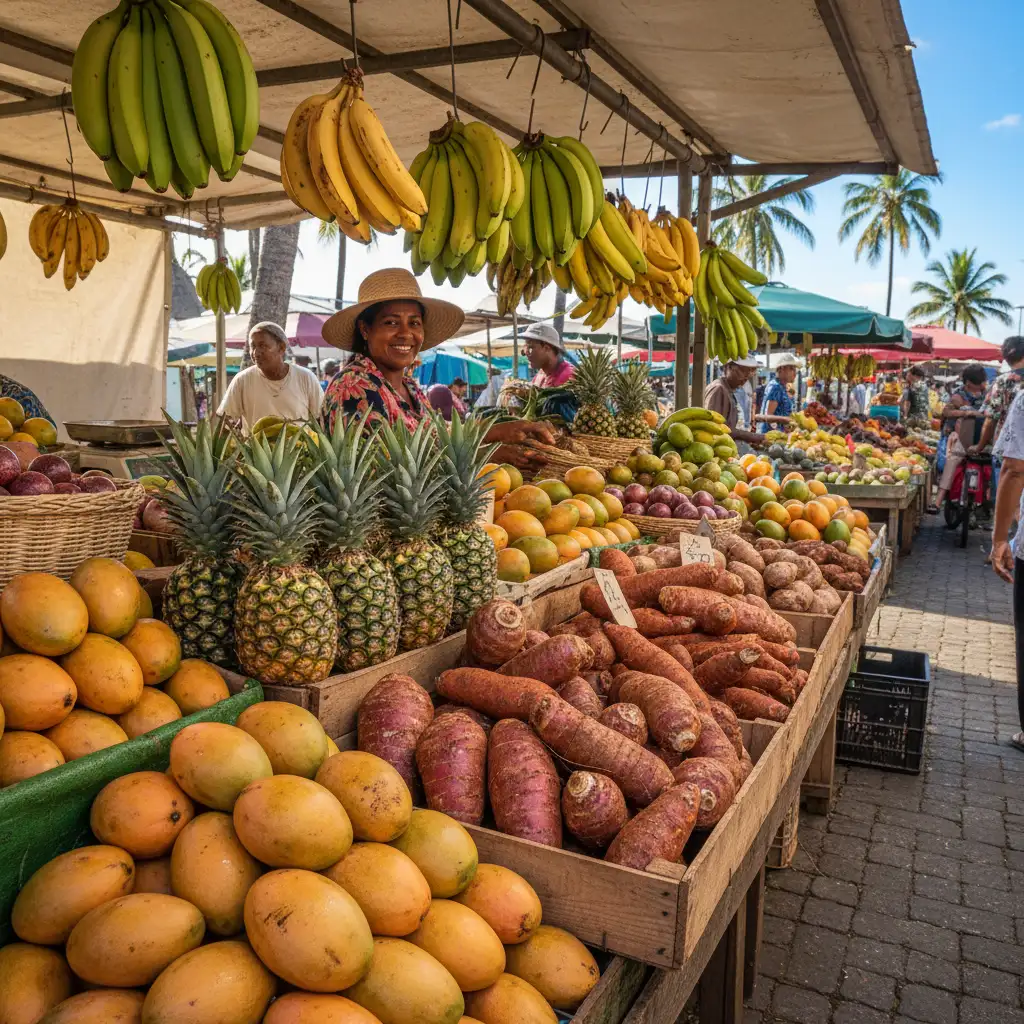
The fruit and vegetable pavilions offer a colorful collision of Melanesian staples and French market garden produce. Because New Caledonia enjoys a tropical climate with cooler highlands, the variety is impressive.
Tropical Fruits
Seasonality dictates availability. In the summer months (December to February), the market is flooded with lychees, mangoes, and pineapples. The lychees from Houaïlou are particularly famous for their small seeds and intense sweetness. Throughout the year, you will find papaya (pawpaw), bananas (including the cooking variety, plantains), and passionfruit. Don’t miss the pomme liane (passion fruit relative) or the custard apples (corossol).
Root Vegetables and Tubers
Central to Kanak cuisine are the tubers. You will see piles of yam (igname), taro, and manioc (cassava). These are excellent alternatives to potatoes if you are cooking a stew. The yams, in particular, hold significant cultural value in Kanak society and are often presented during customary ceremonies.
The French Influence on Greens
Alongside the tropical tubers, you will find high-quality temperate vegetables grown in the cooler regions of La Foa and Bourail. Crisp lettuces, radishes, fresh herbs (parsley, coriander, dill), and tomatoes are readily available, allowing you to construct a classic French salad to accompany your seafood.
French Bakery and Charcuterie Highlights
No guide to the Port Moselle Market Noumea would be complete without acknowledging the French gastronomy that permeates the stalls. This is where the “Paris of the Pacific” moniker truly comes to life.
Artisan Breads and Pastries
Several bakers set up stalls selling fresh baguettes, pain au levain (sourdough), and an array of viennoiseries. A fresh pain au chocolat or croissant aux amandes is the standard breakfast for locals visiting the market. The quality rivals what you might find in a provincial French town.
Charcuterie and Cheese
While strict biosecurity rules prevent New Zealanders from taking these items home, you absolutely must try them while in Noumea. Stalls offer terrines (pâté), rillettes, and cured sausages (saucisson sec). While much cheese is imported from France, there are local producers making excellent soft cheeses. A popular market ritual is to buy a baguette, some cheese, and a slice of terrine to take on a day trip to Amedee Island or the Duck Island (Île aux Canards).
Artisan Handicrafts and Souvenirs
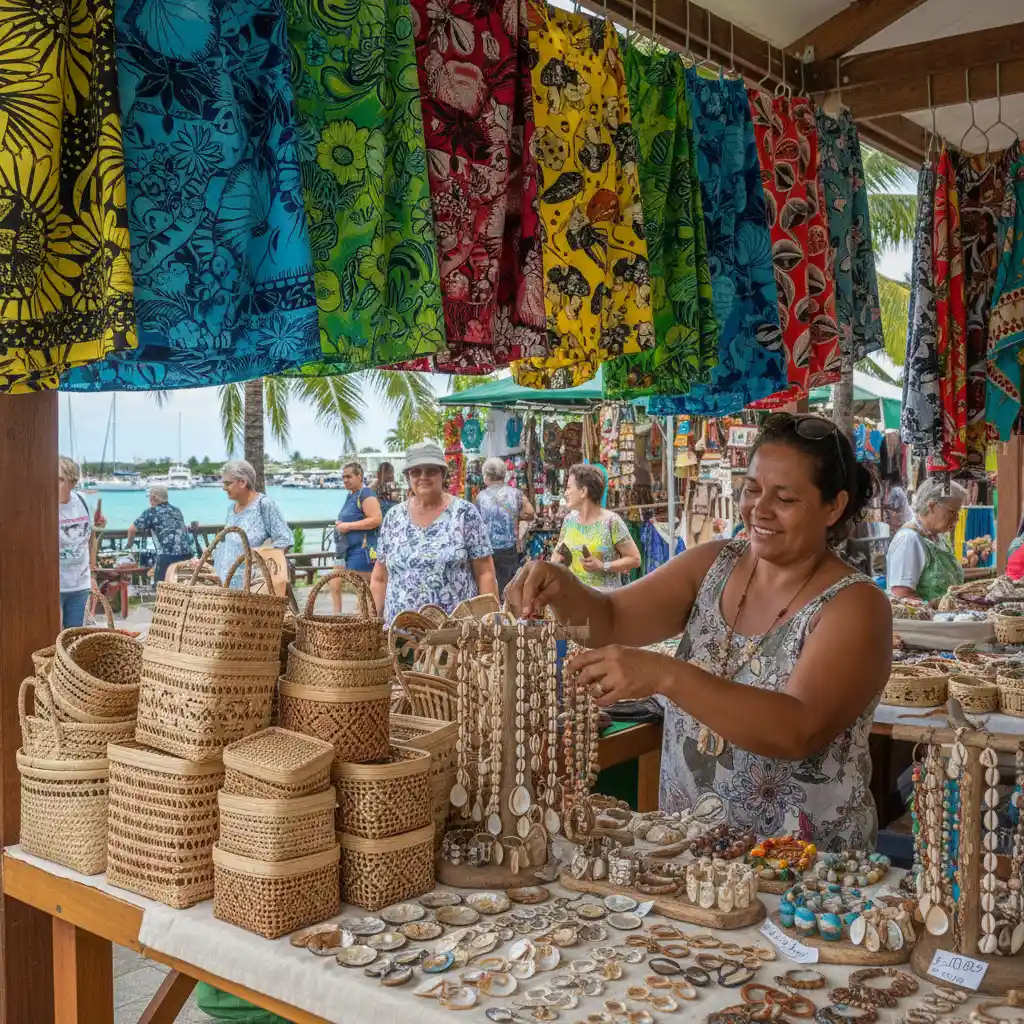
The outer ring of the market is generally dedicated to non-food items. This is the best place in Noumea to find authentic souvenirs that support local artisans rather than buying mass-produced items from a gift shop.
What to Buy
- Pareos (Sarongs): Brightly colored fabrics featuring hibiscus prints or tribal designs. They are essential for beach days and make lightweight gifts.
- Vannerie (Weaving): Intricate baskets, hats, and mats woven from pandanus leaves. These are traditional Kanak crafts and showcase immense skill.
- Jewelry: Look for items made from polished shells, seeds, and pearls. However, be cautious with coral products; ensure they are ethically sourced and check NZ customs regulations regarding coral imports before purchasing.
- Niaouli Oil: Extracted from the paperbark tree native to New Caledonia, this essential oil is used locally for everything from clearing sinuses to treating skin infections. It is a distinctively New Caledonian scent.
Essential Tips for New Zealand Travellers
Visiting a market in a Francophone country can be intimidating if you don’t speak the language. Here are practical tips to navigate Port Moselle like a local.
Currency and Payment
The currency is the Pacific Franc (XPF). While some larger stalls might accept credit cards, cash is king at the market. There are ATMs located near the market entrance, but it is wise to withdraw cash beforehand to avoid queues. The exchange rate fluctuates, but a rough mental math trick for Kiwis is that 1000 XPF is approximately $14-$15 NZD (always check current rates).
Language Etiquette
A little French goes a long way. Always greet the stallholder with a polite “Bonjour” (Good morning) before browsing or asking a price. When leaving, say “Merci, au revoir” (Thank you, goodbye). Even if your French is limited to these words, the effort is appreciated and often results in better service. Many vendors speak some English, especially given the frequency of cruise ships and NZ tourists.
Handling Produce
Unlike in New Zealand supermarkets where you select your own apples, market etiquette in French culture can vary. In some stalls, it is preferred that you do not squeeze the fruit. Watch what the locals do; if in doubt, point to what you want and let the vendor select the best ones for you. This is particularly true for delicate items like tomatoes or soft fruits.
People Also Ask
What days is the Noumea market open?
The Port Moselle Market is open every day of the week, Monday through Sunday. However, the most vibrant days with the most vendors are generally Friday, Saturday, and Sunday. Operating hours are typically from 5:00 AM to 11:30 AM.
Is the Noumea market cash only?
While some established vendors and the café may accept credit cards, the majority of fruit, vegetable, and handicraft stalls operate on a cash-only basis. It is highly recommended to carry Pacific Francs (XPF) in small denominations.
Can you buy cooked food at Port Moselle Market?
Yes, there is a central café area (buvette) where you can buy coffee, pastries, and cooked breakfasts like croque-monsieurs. Additionally, some stalls sell takeaway items like Vietnamese spring rolls (nems) and Tahitian fish salad.
How far is the market from the cruise ship terminal?
Port Moselle Market is very accessible for cruise passengers. It is approximately a 10 to 15-minute walk from the main cruise ship terminal in downtown Noumea, making it an easy morning excursion.
What is the famous blue prawn in New Caledonia?
The famous blue prawn is known as the “Obsiblue.” It is a rare species of prawn farmed in the pristine lagoons of New Caledonia. They are prized by chefs worldwide for their sweet, melting texture and unique blue coloration before cooking.
Are prices at Noumea markets fixed or negotiable?
For food items (produce, seafood, bakery), prices are fixed and displayed per kilogram or per item; bargaining is not practiced. For handicrafts and souvenirs, prices are generally fixed, but a small amount of polite negotiation might be acceptable if purchasing multiple items, though it is not as aggressive as in Asian markets.