NZ MPI rules for French cheese imports require all dairy products to be commercially manufactured, packaged, and clearly labeled. While most hard cheeses are permitted, soft cheeses must be pasteurized. Crucially, all cheese must be declared on the New Zealand Passenger Arrival Card to undergo biosecurity inspection upon arrival from New Caledonia.
What are the NZ MPI rules for French cheese imports regarding hard vs soft varieties?
When navigating the NZ MPI rules for French cheese imports, the distinction between hard and soft cheese is the most critical factor for travelers returning from New Caledonia. The Ministry for Primary Industries (MPI) maintains strict biosecurity protocols to protect New Zealand’s massive dairy industry from foreign pests and diseases, particularly Foot and Mouth Disease (FMD).
Hard Cheeses: The Safest Bet
Hard cheeses such as Comté, Beaufort, and Mimolette are generally viewed as low-risk by MPI officers. Because these cheeses undergo long aging processes and have low moisture content, they are less likely to harbor pathogens. Most hard cheeses from France or New Caledonia are permitted into New Zealand, provided they are commercially produced and for personal consumption. Even if the cheese is made from raw milk (unpasteurized), many extra-hard varieties are still allowed because the acidification and maturation process naturally eliminates most bacteria of concern.

Soft and Semi-Soft Cheeses: Pasteurization is Key
Soft cheeses like Brie, Camembert, and Reblochon are higher risk due to their high moisture content. Under NZ MPI rules for French cheese, soft cheeses must be pasteurized. Pasteurization involves heating the milk to kill harmful microbes. If you are purchasing soft cheese in a Nouméa supermarket to bring back to Auckland, you must check the label for the word ‘pasteurisé’.
The Raw Milk (Au Lait Cru) Exception
New Zealand has very specific rules regarding raw milk cheese. While France is famous for ‘fromage au lait cru’, many of these are prohibited for import by individual travelers unless they meet specific Import Health Standards (IHS). Generally, if a soft cheese is raw milk based and not shelf-stable, it will likely be confiscated and destroyed by MPI. The exception often applies to Roquefort, which has a specific agreement, but it must still be commercially packaged and declared.
What are the packaging requirements for importing French cheese?
The physical state of your cheese is just as important as the type of cheese itself. MPI officers at Auckland Airport need to be able to verify exactly what the product is and where it came from. This is why packaging is a non-negotiable part of the NZ MPI rules for French cheese imports.
First and foremost, the cheese must be in its original, unopened commercial packaging. This means you cannot bring back a wedge of cheese wrapped in wax paper from a local artisanal deli if it lacks a commercial label. The label should ideally be in English or French and must include the manufacturer’s name, the country of origin (France or New Caledonia), and an ingredients list. If the cheese is a soft variety, the label must clearly indicate that the milk has been pasteurized.
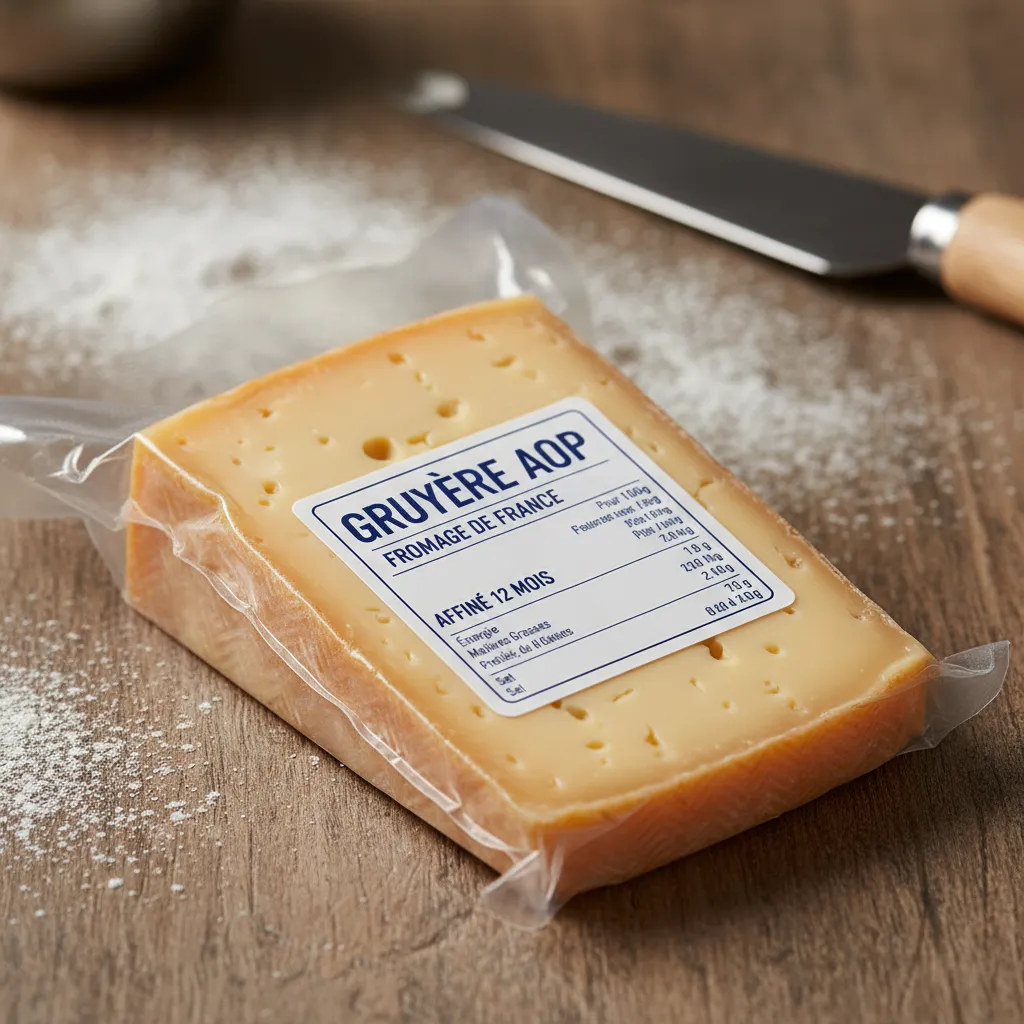
Vacuum sealing is highly recommended for travelers. While not a strict legal requirement for all hard cheeses, vacuum-sealed packaging prevents odors from leaking into your luggage and demonstrates to MPI officers that the product hasn’t been tampered with. Furthermore, it helps maintain the quality of the cheese during the flight from Nouméa to Auckland. If you buy cheese at La Quichenotte or other specialty shops in New Caledonia, ask if they can vacuum-pack your selections for travel.
Are there quantity limits for French cheese imports?
A common question for travelers is how much cheese they can actually bring back. The NZ MPI rules for French cheese imports fall under the ‘personal use’ category. This means there isn’t a hard-and-fast kilogram limit like there is for tobacco or alcohol, but the amount must be ‘reasonable’ for personal consumption or as a gift.
Typically, MPI considers up to 2kg to 5kg of cheese to be a reasonable personal amount. If you arrive with a suitcase entirely filled with 20kg of Brie, the biosecurity officer will likely suspect commercial intent. Commercial imports require a completely different set of permits, health certificates, and customs broker involvement. For the average traveler returning from a holiday in New Caledonia, sticking to 2-3 high-quality wheels or wedges is the safest approach to avoid secondary questioning.
It is also worth noting that the value of the cheese contributes to your duty-free allowance. If the total value of all your overseas purchases (including cheese, wine, and souvenirs) exceeds NZD $700, you may be required to pay GST and customs duties on the excess. Keep your receipts from the Nouméa supermarkets or boutiques to prove the value of your items.
How does the declaration process work at Auckland Airport?
The most important rule of New Zealand biosecurity is: **Declare or Discard**. The declaration process is the final hurdle in bringing your French cheese home safely. This process begins before you even land, while you are still on the aircraft from New Caledonia.
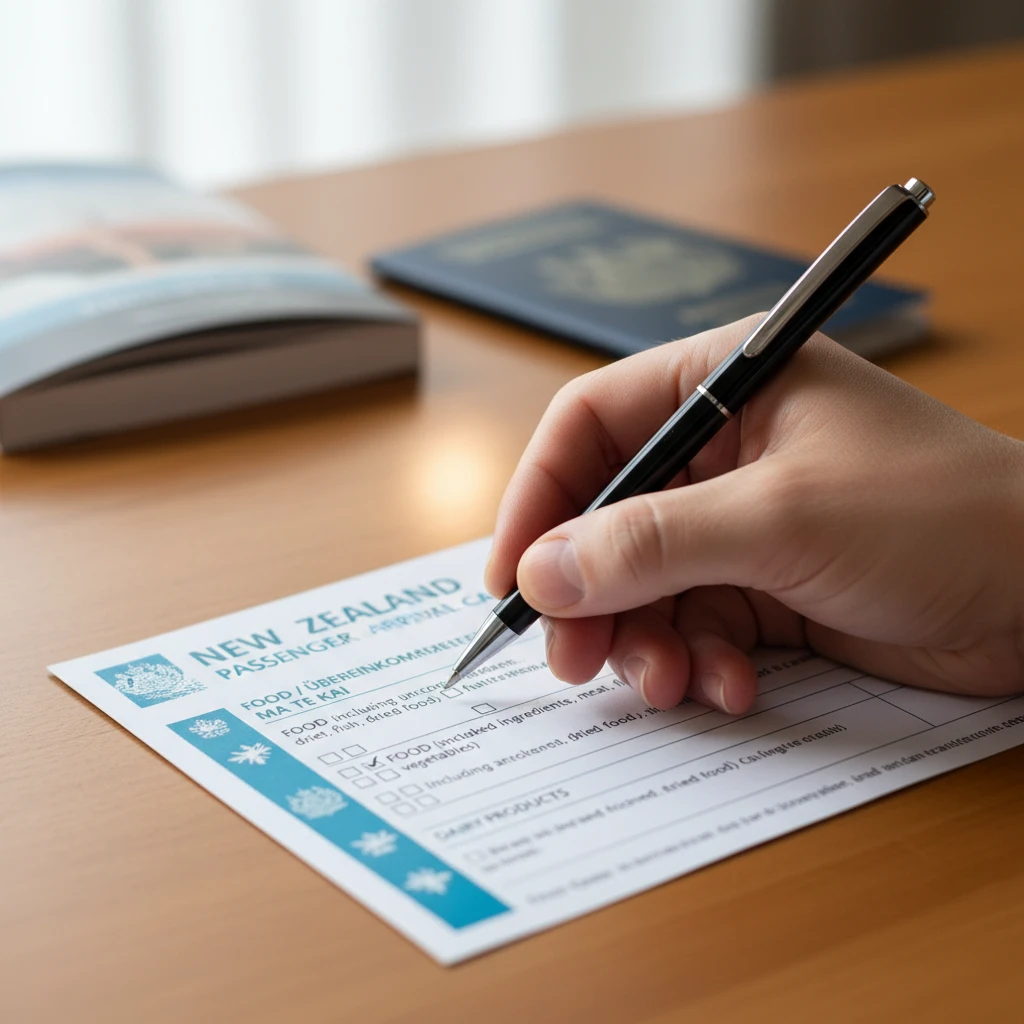
Step 1: The Passenger Arrival Card
You will be handed a New Zealand Passenger Arrival Card. Section 4 asks if you are bringing any food into the country, specifically mentioning ‘dairy products’. You must tick **YES**. Ticking ‘No’ when you have cheese in your bag is a legal offense, even if the cheese itself is permitted.
Step 2: The Biosecurity Screening
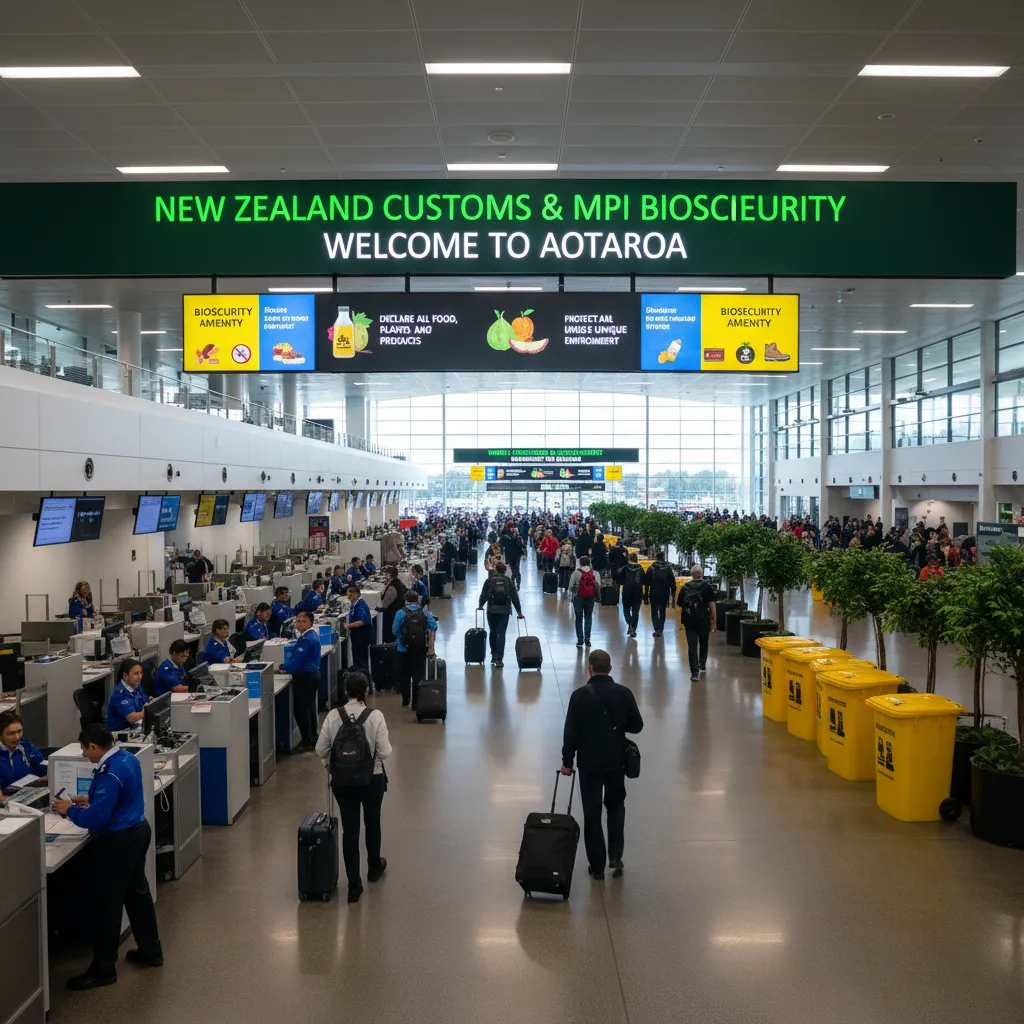
After collecting your luggage at Auckland Airport, you will head toward the biosecurity lanes. An MPI officer will review your card. They will ask you what kind of food you have. Be specific: “I have commercially packaged, pasteurized French cheese from New Caledonia.”
Step 3: Inspection
You will be directed to an inspection point. The officer will likely want to see the cheese. They will check the labels for pasteurization marks and ensure the packaging is intact. If the cheese meets all NZ MPI rules for French cheese imports, the officer will hand it back to you, and you are free to go. If the cheese is prohibited (e.g., a raw milk soft cheese), they will give you the option to have it destroyed or, in some cases, sent back at your expense.
Why New Caledonia is a unique source for French cheese
New Caledonia, being a French overseas territory, offers a unique opportunity for New Zealanders to access authentic French dairy products without traveling to Europe. The supermarkets in Nouméa, such as Carrefour or Géant, stock an incredible array of cheeses flown in directly from France. This makes it a popular activity for Kiwis to ‘stock up’ at the end of their tropical holiday.
Because New Caledonia has a high standard of animal health and close regulatory ties with the European Union, MPI generally views products sourced there as having a similar risk profile to those from France. However, the rules remain the same: the cheese must be commercially produced. You cannot bring back ‘home-made’ cheese from a rural farm in the New Caledonian bush, as these lack the necessary quality controls and labeling required for biosecurity clearance.
What are the consequences of breaking NZ MPI rules?
New Zealand takes its biosecurity very seriously. Failure to follow the NZ MPI rules for French cheese imports can result in significant penalties. The most common issue is ‘failure to declare’.
If you have cheese in your bag and you tick ‘No’ on your arrival card, and that cheese is subsequently found by an X-ray machine or a detector dog, you will face an automatic **NZD $400 instant fine**. This fine applies even if the cheese would have been allowed into the country had you declared it. The fine is for the act of deception/omission, not the product itself.
For more serious breaches, such as attempting to smuggle large quantities of prohibited dairy products for sale, travelers can face prosecution, fines of up to $100,000, and even imprisonment. The simple message from MPI is: if you’re not sure, declare it. The officers are generally very helpful to those who are honest about what they are carrying.
Practical Tips for Bringing Cheese Home
To ensure your French cheese arrives in the best possible condition and passes MPI inspection smoothly, follow these tips:
- Keep Receipts: This proves where you bought the cheese and its commercial nature.
- Use a Cool Bag: The flight from Nouméa is short (about 3 hours), but a small insulated bag will keep soft cheeses at a stable temperature.
- Check for ‘Pasteurisé’: Before buying, look for this specific word on the label of any soft or semi-soft cheese.
- Ask the Experts: If shopping at a specialized fromagerie in Nouméa, tell them you are flying to New Zealand. They are often familiar with the export requirements and can help you choose ‘safe’ hard cheeses.
Can I bring Roquefort cheese into New Zealand?
Yes, Roquefort is generally allowed because it is a specific type of sheep’s milk cheese that meets New Zealand’s import standards, provided it is commercially packaged and declared.
Do I need to declare vacuum-packed cheese from New Caledonia?
Yes, absolutely. All food items, regardless of how they are packaged, must be declared on your Passenger Arrival Card.
What is the fine for not declaring cheese at NZ customs?
The instant fine for failing to declare a biosecurity risk item like cheese is NZD $400.
Is raw milk cheese allowed in NZ?
Only certain types of hard raw milk cheeses or those that meet specific maturation criteria are allowed. Most soft raw milk cheeses are prohibited for personal import.
How much cheese can I bring for personal use?
There is no strict limit, but 2-5kg is generally considered a reasonable personal amount. Larger quantities may be flagged as commercial.
Does the cheese need to be in its original packaging?
Yes, the NZ MPI rules for French cheese imports require the product to be in its original, unopened commercial packaging with clear labeling.