
French is the sole official language spoken in New Caledonia, serving as the medium for government, education, and commerce throughout the archipelago. However, the territory is linguistically rich, boasting 28 distinct indigenous Kanak languages. While English is understood in major Nouméa hotels, proficiency is limited in rural areas, making basic French skills essential for travelers.
For Kiwi travelers hopping across the Pacific, New Caledonia represents a fascinating linguistic paradox: it is geographically our neighbor, yet culturally and linguistically, it is a slice of the European continent. Unlike other Pacific destinations where English is the de facto lingua franca of tourism, New Caledonia remains proudly Francophone.
Understanding the language landscape is not just about ordering a croissant; it is about respect, safety, and unlocking the genuine warmth of the local population. Whether you are planning a 2025 getaway to the Isle of Pines or a business trip to Nouméa, this guide covers everything New Zealanders need to know about communication in the territory.
The Official Language: Standard French and Caldoche
In New Caledonia, French is not merely a second language; it is the mother tongue for many and the primary language of administration for all. Unlike other Pacific nations where indigenous languages may share official status, French holds the singular title of the official language here.

Metropolitan French vs. New Caledonian French
If you studied French in high school in New Zealand, you learned “Metropolitan French” (the standard French spoken in Paris). You will be relieved to know that this standard French is understood and spoken by everyone in New Caledonia. News broadcasts, official documents, and hotel staff all utilize standard grammar and vocabulary.
However, you will also encounter “Caldoche” French (often generally referred to as the local accent or dialect). Similar to how Australian or Kiwi English differs from British English, Caldoche French has its own rhythm, slang, and intonation. It is often spoken faster and may incorporate words from Kanak languages.
Common Local Slang to Recognize:
- “Tata”: Used universally for “Goodbye” or “See you later” (instead of Au revoir).
- “Fin valab”: Something that is very good or excellent.
- “Astiquer”: Literally to polish, but locally can mean to beat someone up or tease them heavily.
- “Pochon”: A plastic bag (you’ll need to know this at the supermarket).
The 28 Indigenous Kanak Languages
While French unifies the administration, the soul of the archipelago is voiced through its indigenous languages. There are 28 distinct Kanak languages spoken across the main island (Grande Terre) and the Loyalty Islands. These belong to the Austronesian language family, making them distant cousins to Te Reo Māori.
For a Kiwi, listening to Kanak languages might trigger a sense of familiarity. The vowel sounds are often pure and open, similar to Māori vowels. However, the grammar and vocabulary are distinct.
The Four Major Regional Languages
While you aren’t expected to learn these, recognizing them shows immense cultural respect, especially if visiting the Loyalty Islands:
- Drehu: Spoken on Lifou Island. It is the most widely spoken vernacular language.
- Nengone: Spoken on Maré Island.
- Paicî: Spoken in the Poindimié region (Grande Terre).
- Ajië: Spoken in the Houaïlou region (Grande Terre).
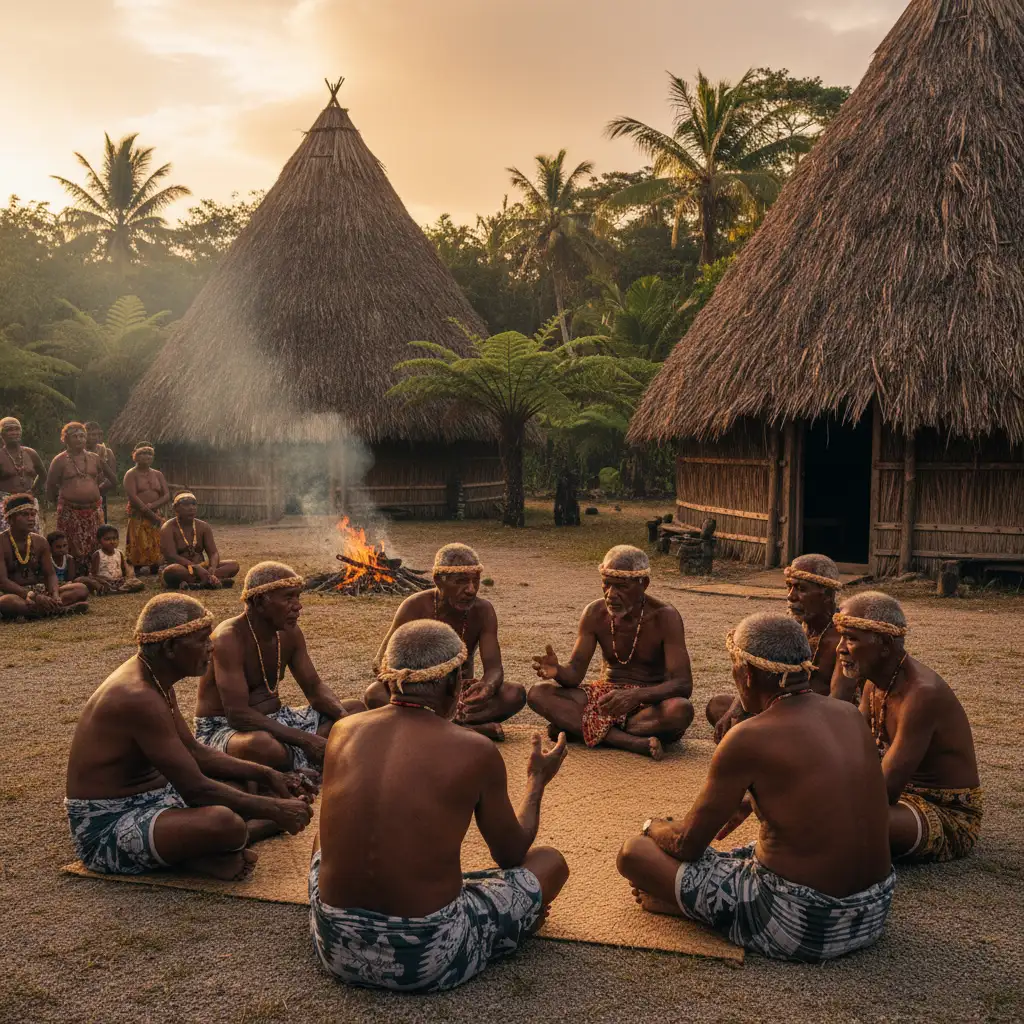
In 2025, efforts to teach these languages in schools are increasing, and you may see bilingual signage at cultural sites like the Jean-Marie Tjibaou Cultural Centre.
Do They Speak English? A Reality Check for Kiwis
This is the most critical section for New Zealand travelers. A common misconception is that because New Caledonia is a Pacific tourism hub, English will be spoken everywhere. This is false.
Unlike Fiji or Rarotonga, where English is ubiquitous, New Caledonia is French territory. The education system is French, television is French, and daily life is conducted in French.
Nouméa and Tourist Hubs
In the main tourist areas of Anse Vata and Baie des Citrons in Nouméa, most hotel receptionists, tour operators, and high-end restaurant staff will speak conversational to fluent English. You will have no trouble checking in or booking a glass-bottom boat tour.
The “Bush” and Loyalty Islands
Once you leave Nouméa to explore the “Brousse” (the Bush/rural areas) or fly to the Loyalty Islands (Lifou, Ouvéa, Maré), English proficiency drops sharply. In small guesthouses (gîtes), local markets, or roadside stalls, English may be non-existent.
The Kiwi Advantage: Interestingly, many locals prefer the Kiwi accent to the American or British one, finding us friendlier. If you struggle with French, apologize with a smile: “Désolé, je ne parle pas français” (Sorry, I don’t speak French). It goes a long way.
Essential French Phrases for Kiwi Travelers
You don’t need to be fluent, but you do need to try. Locals appreciate the effort immensely. Here is a curated list of phrases specifically for the typical Kiwi traveler’s needs (dining, directions, and politeness).

The “Magic Words” (Do not forget these)
- Bonjour (Bohn-joor): Hello / Good morning.
Rule: Say this to everyone. Shopkeepers, bus drivers, people in elevators. It is rude not to. - Bonsoir (Bohn-swahr): Good evening.
- Merci (Mair-see): Thank you.
- S’il vous plaît (Seel-voo-play): Please.
- Parlez-vous anglais ? (Par-lay voo ong-lay): Do you speak English?
Ordering Food & Drink
New Caledonia is a gastronomic destination. Don’t let the language barrier stop you from ordering the best bougna or seafood.
- Je voudrais… (Zhuh voo-dray): I would like…
- L’addition, s’il vous plaît. (La-dee-see-on, seel-voo-play): The bill, please.
- Une carafe d’eau (Oon kah-raf doh): A jug of tap water (free, unlike bottled water).
- Où sont les toilettes ? (Oo sohn lay twah-let): Where is the bathroom?
- C’est délicieux ! (Say day-lee-see-uh): It is delicious!
Numbers (For Prices)
While prices are usually displayed, understanding numbers helps at markets.
- Un/Une (1), Deux (2), Trois (3), Quatre (4), Cinq (5).
- Dix (10), Vingt (20), Cinquante (50), Cent (100).
- Mille (1000) – Note: The currency is Pacific Francs (XPF), so you will mostly deal in hundreds and thousands.
Cultural Etiquette: The Rules of Politeness
Language is more than vocabulary; it is behavior. In New Caledonia, the culture of politeness is rigorous. For Kiwis who are used to a casual “G’day” or a nod, the French formality can seem stiff, but it is simply a different code of respect.
The Importance of “Bonjour”
We cannot stress this enough: You must greet the person before you ask for anything. In New Zealand, you might walk up to a counter and ask, “Do you have any pies left?” In New Caledonia, this is considered aggressive. You must say, “Bonjour,” wait for them to reply “Bonjour,” and then ask your question.
La Coutume (Custom)
If you are visiting a Kanak tribe or staying in a tribal homestay, you may be introduced to “La Coutume.” This is a traditional gesture of exchange and respect. While this is often done with a small gift (a piece of fabric, a 500 XPF coin, or tobacco) given to the chief or host, the language used is humble and respectful. If you don’t speak the dialect, French is perfectly acceptable for this ceremony. The intent matters more than the syntax.

Translation Technology for 2025
If your high school French is rusty, technology is your safety net. However, connectivity can be spotty in the remote parts of Grande Terre.
Recommended Apps
- Google Translate (Offline Mode): Essential. Download the French language pack before you leave New Zealand. The camera feature (Google Lens) is a lifesaver for translating menus instantly.
- DeepL: Often provides more natural-sounding translations than Google, though it requires data.
- Offline Maps (Maps.me or Google Maps): While not strictly language, navigating French street names is easier when the GPS reads them out to you.
Data Connectivity
As of 2025, eSIMs are the most convenient way for Kiwis to get data in New Caledonia. Providers like Airalo or local carrier OPT offer tourist data packs. Having active data allows you to use voice translation in real-time conversations, bridging the gap between English and French effortlessly.
People Also Ask
Is English widely spoken in New Caledonia?
No, English is not widely spoken outside of major hotels and tourist attractions in Nouméa. In rural areas, supermarkets, and smaller islands, French is the primary mode of communication, and English proficiency is low.
Do I need to speak French to visit New Caledonia?
While you can survive without it in a resort bubble, learning basic French phrases is highly recommended for a smooth trip. It helps with ordering food, asking for directions, and showing respect to locals.
What is the greeting in New Caledonia?
The standard greeting is “Bonjour” (Good day) during the day and “Bonsoir” (Good evening) at night. In casual settings, you might hear “Tata” for goodbye. Handshakes are common, and friends may exchange kisses on the cheek (la bise).
Are there any New Caledonia dialects I should know?
Yes, there is a local French dialect often called “Caldoche.” It features unique slang and a distinct accent. Additionally, there are 28 Kanak languages, with Drehu being the most common indigenous language.
Can I use New Zealand Dollars in New Caledonia?
No, the currency is the Pacific Franc (XPF). You cannot use NZD or AUD directly in shops. You must exchange money or withdraw XPF from ATMs. However, major credit cards are widely accepted in Nouméa.
Is New Caledonia safe for tourists in 2025?
Following the unrest in mid-2024, stability has largely returned to tourist zones, but travelers should stay informed via the SafeTravel website. Learning French helps you stay aware of local news and instructions during your stay.