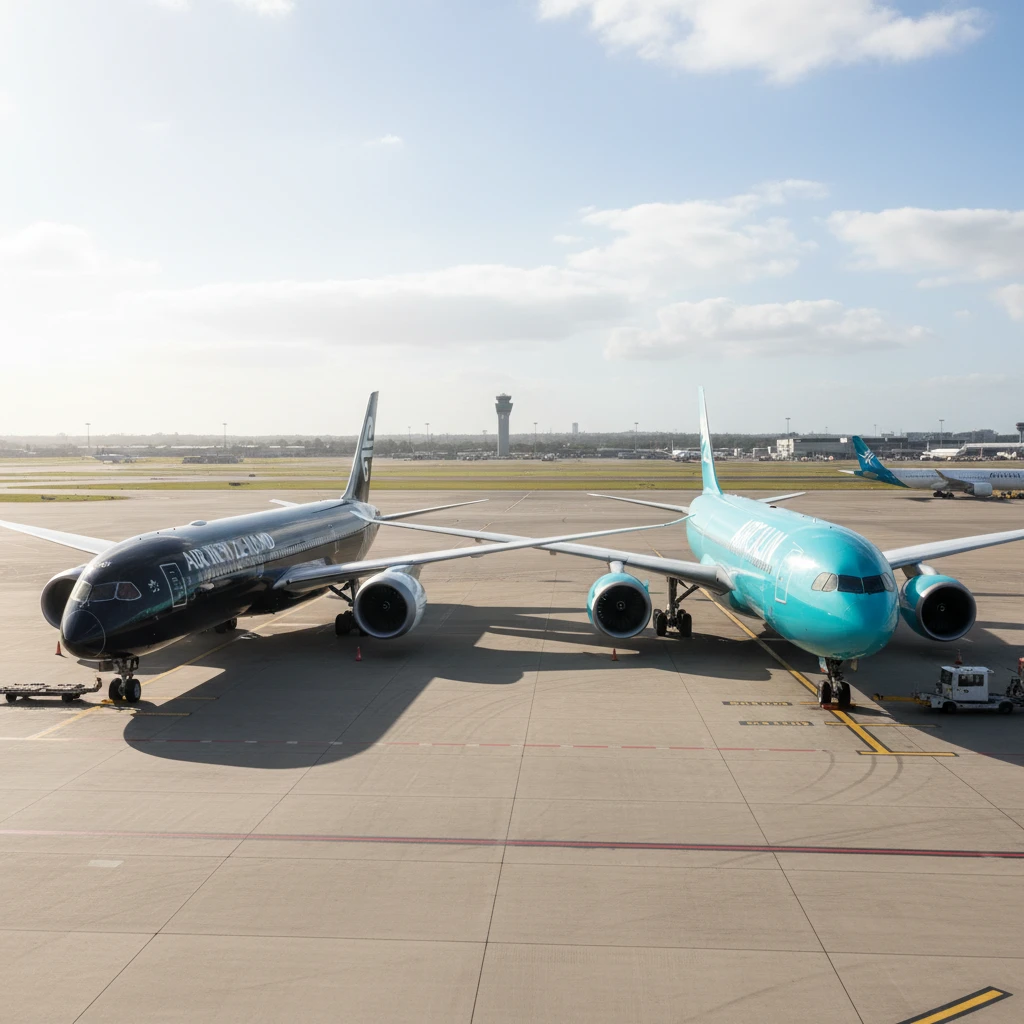
An Aircalin A330neo review reveals a state-of-the-art flying experience characterized by the quiet Airspace cabin, 1-2-1 lie-flat Business Class seating, and robust Wi-Fi connectivity. Primarily serving routes like Auckland and Tokyo from Noumea, the aircraft offers superior cabin pressure and humidity levels, ensuring passengers arrive refreshed and less fatigued than on older models.
Which aircraft are used on Aircalin’s Auckland routes?
Aircalin, the international airline of New Caledonia, has undergone a significant fleet modernization program, replacing its aging Airbus A330-200 and A320-200 aircraft with the latest generation “neo” (New Engine Option) variants. For travelers flying between Auckland (AKL) and Nouméa (NOU), the aircraft type can vary depending on the season, demand, and specific flight number. Typically, Aircalin utilizes both the Airbus A330-900neo and the Airbus A320neo on this key South Pacific corridor.
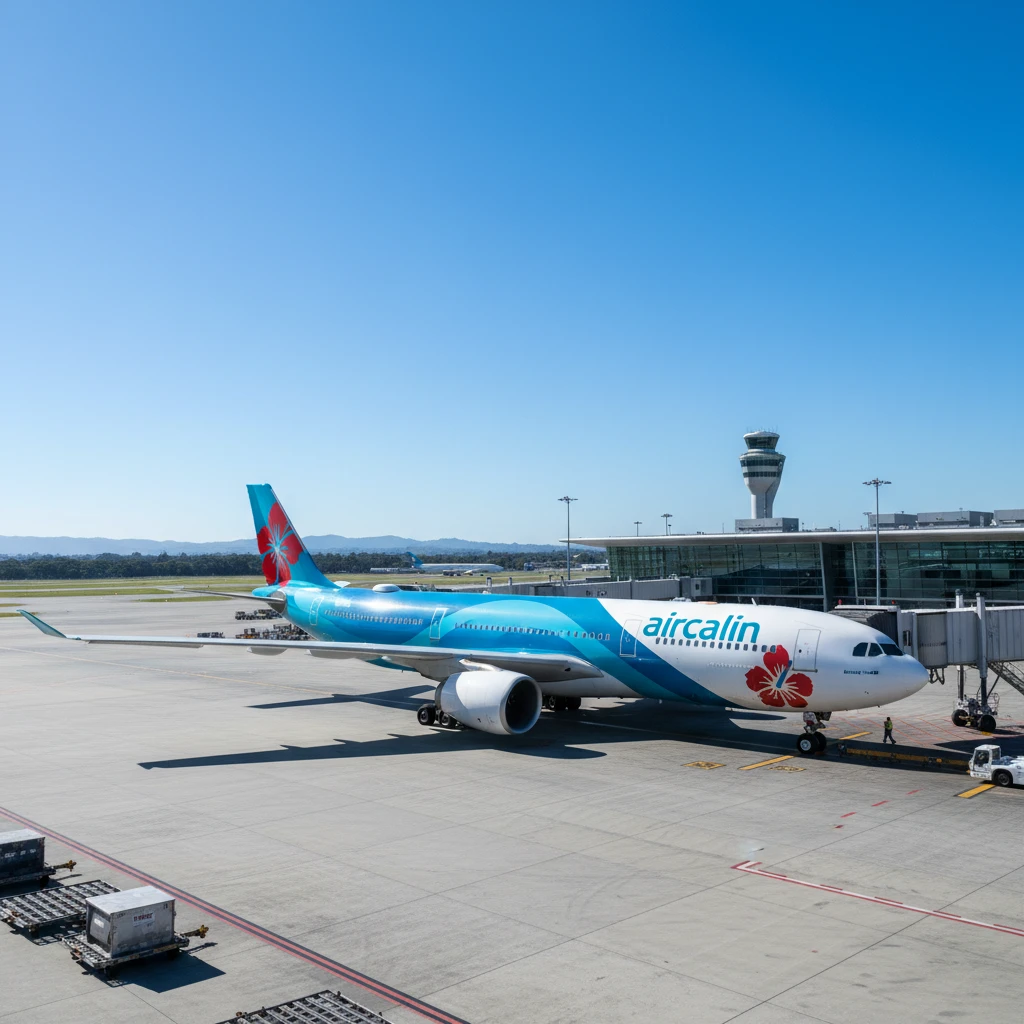
The A330-900neo is the flagship of the fleet, often deployed on the Auckland route during peak travel periods or to provide a seamless connection for passengers originating from Europe or Asia. This wide-body aircraft offers a three-class configuration: Business, Premium Economy, and Economy. Its presence on the short three-hour hop from Auckland is a significant upgrade for passengers, providing a long-haul level of comfort on a regional flight.
On the other hand, the A320neo is the workhorse for daily or high-frequency services. As a narrow-body aircraft, it is perfectly suited for the distance between New Zealand and New Caledonia. While smaller, Aircalin’s A320neo is far from a basic experience. It features the same modern “Airspace” cabin aesthetics as its larger sibling, ensuring a consistent brand experience across the fleet. Understanding which aircraft is scheduled for your flight is crucial, as the seating layouts and onboard amenities differ substantially between the wide-body and narrow-body options.
How do cabin noise and pressure affect passenger comfort?
One of the most significant advantages of the “neo” generation is the improvement in cabin environment. For many years, passengers associated flying with dry skin, fatigue, and a constant hum that made sleep difficult. The A330neo and A320neo address these issues through advanced engineering and the “Airspace” cabin concept. In an Aircalin A330neo review, the most frequently cited improvement is the reduction in ambient noise.
The Rolls-Royce Trent 7000 engines on the A330neo are not only more fuel-efficient but are also significantly quieter than the previous generation. Airbus claims the A330neo is one of the quietest cabins in its class, with noise levels reduced by several decibels. This makes a noticeable difference during the flight, allowing for easier conversation and a more restful environment for those trying to sleep. The A320neo, powered by Pratt & Whitney or CFM LEAP engines, similarly offers a quieter experience compared to the older A320ceos.
Beyond noise, cabin pressure and humidity play a vital role in how you feel upon arrival. Most older aircraft are pressurized to an altitude of 8,000 feet. The A330neo features a lower cabin altitude—closer to 6,000 feet—which means there is more oxygen in the air and the body doesn’t have to work as hard to maintain its physiological balance. Combined with improved HEPA filtration and higher humidity levels, the “Airspace” cabin helps prevent the “jet lag” feeling often caused by dehydration and thin air. For passengers on the Auckland route, this means arriving in Nouméa ready to hit the beach rather than needing a nap.
What Wi-Fi availability can you expect onboard Aircalin?
In the modern age of travel, staying connected is often a priority rather than a luxury. Aircalin has integrated the Panasonic eX3 inflight entertainment (IFE) and connectivity system across its neo fleet. This system provides high-speed satellite Wi-Fi, allowing passengers to browse the web, check emails, and even use social media while flying over the Pacific Ocean.
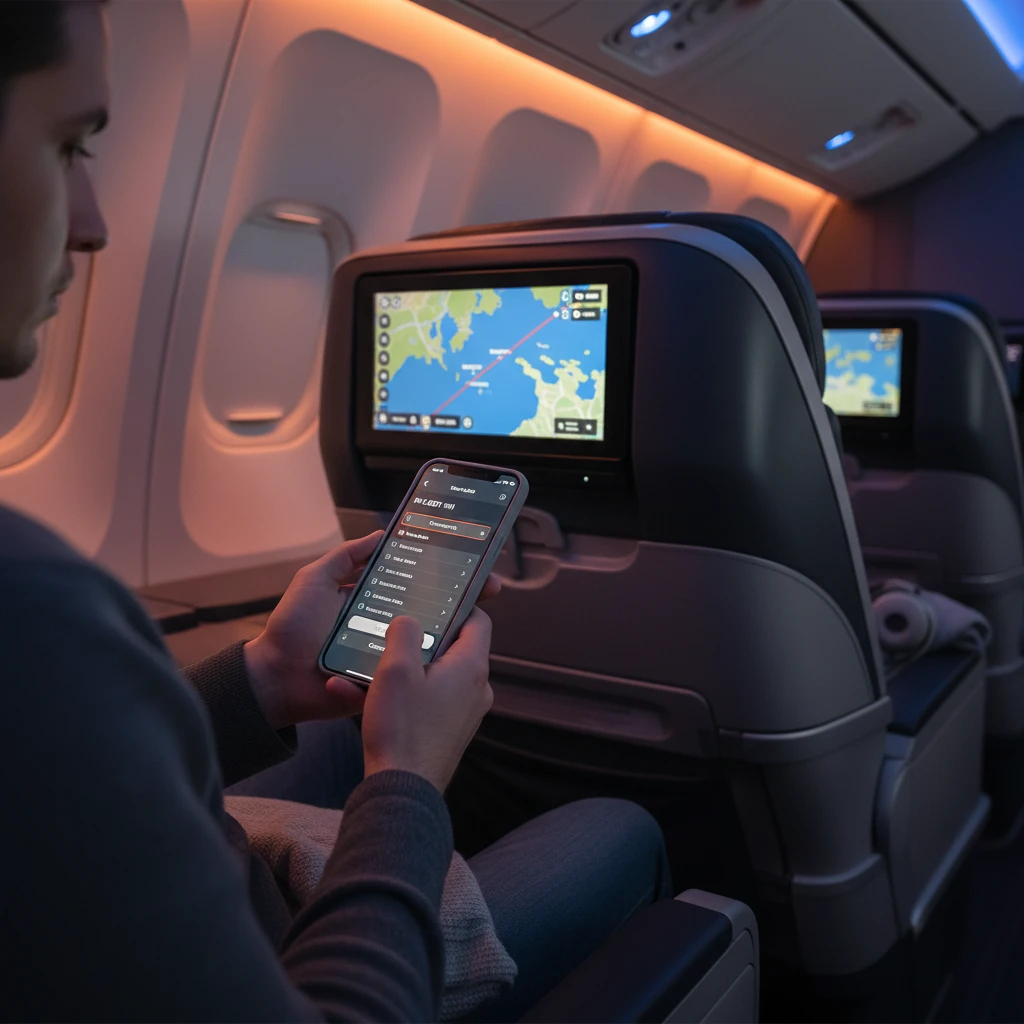
The Wi-Fi service on the A330neo is typically structured into different tiers. Passengers can often access a free messaging tier (perfect for WhatsApp or iMessage), while more data-intensive tasks require a paid pass. These passes are usually priced based on time or data volume (e.g., a 1-hour pass vs. a full-flight pass). It is worth noting that while the A330neo is fully equipped for connectivity, the A320neo fleet also offers Wi-Fi, though the speeds and availability can sometimes vary depending on the specific aircraft’s registration and the satellite coverage over the specific flight path.
For those who prefer to disconnect from the internet, the IFE system itself is a standout feature. The A330neo boasts large, high-definition touchscreens at every seat. The library includes a wide selection of recent Hollywood releases, French cinema, documentaries, and a dedicated section for New Caledonian culture. The system also includes a high-resolution 3D moving map, which is particularly impressive when flying over the reefs and lagoons of the South Pacific. USB charging ports and universal power outlets are available at every seat in Business and Premium Economy, and shared outlets are found in Economy, ensuring your personal devices remain charged.
What are the seat configuration differences between the A330neo and A320neo?
The choice between the A330neo and A320neo fundamentally changes the physical space you will occupy. The A330neo is a wide-body, twin-aisle aircraft, while the A320neo is a narrow-body, single-aisle aircraft. This leads to vastly different seating configurations, especially in the premium cabins.
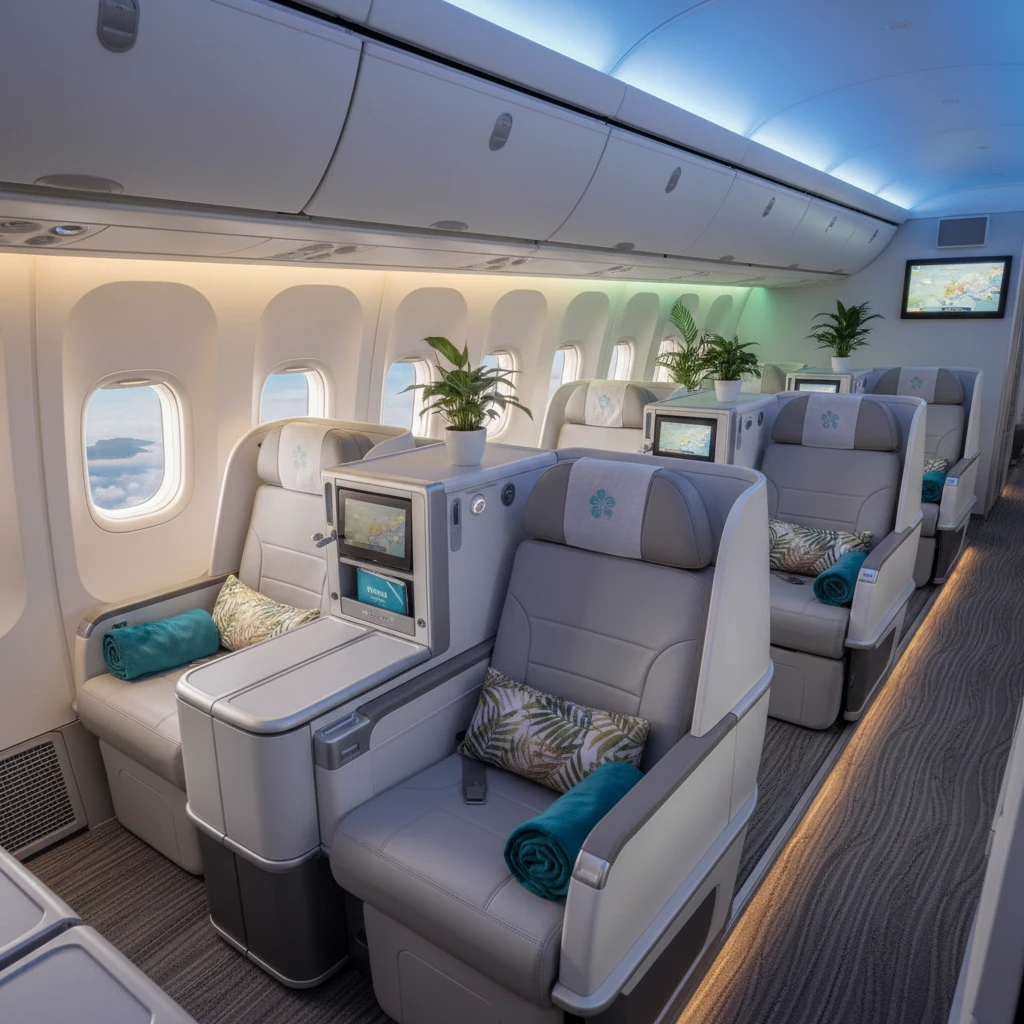
In the Aircalin A330neo, the Business Class cabin (Hibiscus Class) features a 1-2-1 layout. This is the gold standard for modern long-haul travel, as every passenger has direct aisle access. The seats are the Stelia Opal model, which transform into fully flat beds. This is a massive advantage for travelers who value privacy and the ability to sleep. In contrast, the A320neo Business Class usually follows a 2-2 configuration. While these seats are much wider and offer more recline than Economy, they are not lie-flat beds. They are more akin to a high-end domestic First Class seat found in the United States or a regional Business Class in Asia.
Economy Class also sees differences. The A330neo utilizes a 2-4-2 configuration. This is highly favored by couples, as the window pairs offer more privacy and fewer neighbors to climb over. The seats provide a generous pitch (legroom) and modern ergonomics. The A320neo uses a standard 3-3 configuration in Economy. While the seats themselves are modern Recaro models with decent padding and adjustable headrests, the middle seat is an unavoidable reality of the narrow-body design. For the Auckland to Nouméa route, the A330neo’s 2-4-2 layout is generally considered the more comfortable way to fly, even in the back of the plane.
What is the in-flight service and catering like?
Regardless of the aircraft type, Aircalin prides itself on its