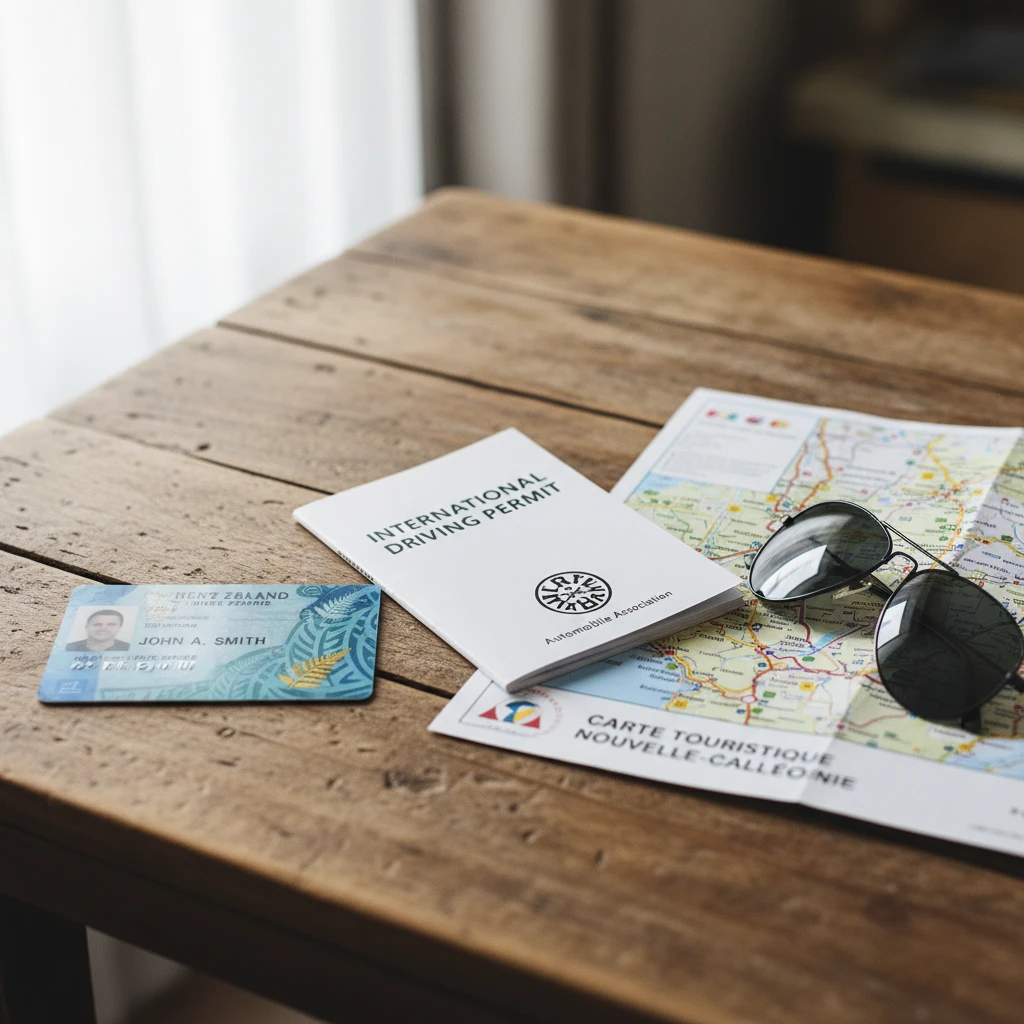
To drive in New Caledonia, New Zealand citizens can use their valid NZ driver’s license for short stays up to 90 days. While an International Driving Permit (IDP) is not strictly mandatory for English-language licenses, it is highly recommended to avoid translation issues with local authorities and to ensure full compliance with car rental insurance policies.
Do I need an International Driving Permit for New Caledonia?
For most New Zealanders planning a holiday in New Caledonia, the primary concern is the legality of their domestic license. Because New Caledonia is an overseas territory of France, it follows French administrative rules. Technically, a valid New Zealand license is accepted for tourists as long as it is in English. However, the official advice from both the New Zealand Ministry of Foreign Affairs and Trade (MFAT) and local French authorities is that an International Driving Permit (IDP) serves as a certified translation that can prevent significant headaches.
If you are stopped by the Gendarmerie or involved in a minor traffic incident, having an IDP alongside your New Zealand license ensures there is no ambiguity regarding your driving entitlements. Furthermore, many car rental agencies in Nouméa and at La Tontouta International Airport may request an IDP to satisfy their insurance provider’s fine print. It is a small investment—available through the AA in New Zealand—that provides peace of mind before you depart.
What is it like driving on the right-hand side?
The most immediate and significant change for Kiwi drivers in New Caledonia is the transition from driving on the left to driving on the right-hand side of the road. While this may seem daunting, the layout of New Caledonia’s main roads is intuitive, and most drivers adjust within the first hour of getting behind the wheel.
The driver’s seat in a New Caledonian rental car will be on the left side of the vehicle. This means your gear shifter will be on your right, and your indicators and wipers might be swapped compared to what you are used to in a Japanese-import NZ vehicle. A helpful tip for Kiwis is to remember the mantra: “The driver stays in the middle of the road.” If you are positioned toward the center line of the two-way road, you are likely in the correct lane. Be particularly mindful when exiting car parks or turning at intersections, as these are the moments when muscle memory is most likely to lead you into the wrong lane.
What is Priority to the Right (Priorité à Droite)?
One of the most unique and potentially confusing aspects of French driving law is the rule of “Priorité à Droite” or Priority to the Right. In New Caledonia, unless there is a sign indicating otherwise, traffic coming from a side road on your right has the right of way over you, even if you are on a seemingly “main” road.
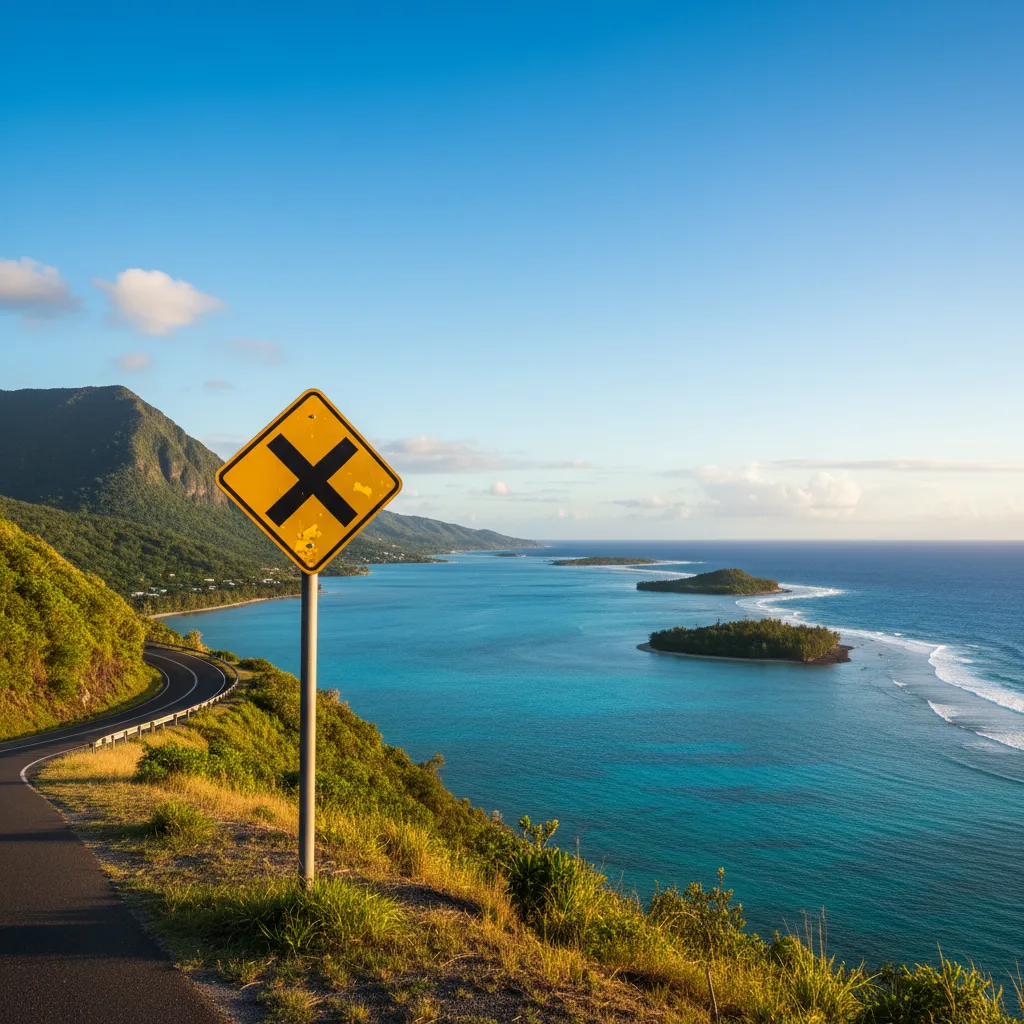
You will recognize priority roads by a yellow diamond sign. If you see this sign, you have the right of way. However, if the diamond has a black diagonal line through it, or if you see a red triangle with an “X” inside, the priority rule reverts to the right. In urban areas of Nouméa, this rule is frequently applied. Always look for the “Cédez le passage” (Give Way) or “Stop” signs on side streets; if they aren’t there, slow down and prepare to let vehicles from the right merge ahead of you. This is a significant departure from New Zealand’s give-way rules and requires constant vigilance.
What are the speed limits in New Caledonia?
Speed limits in New Caledonia are strictly enforced, often by mobile radar units and fixed cameras. The limits are measured in kilometers per hour (km/h), which will be familiar to Kiwis, but the specific thresholds differ from New Zealand’s standard 50/100 split.
- Urban Areas: Generally 30 km/h to 50 km/h. Nouméa’s city center and residential zones often have lower limits to protect pedestrians.
- Open Roads (Mainland): Usually 110 km/h on the main RT1 highway (the primary artery running north to south).
- Secondary Roads: Typically 70 km/h to 80 km/h depending on the terrain and curvature.
It is important to note that New Caledonia has a zero-tolerance approach to drink-driving, with lower legal blood-alcohol limits than in New Zealand. The legal limit is 0.5g/l for experienced drivers and 0.2g/l for learners or new drivers. Given the winding nature of the roads and the presence of livestock in rural areas, staying sober and within the speed limit is essential for safety.
Are road conditions in remote areas safe for tourists?
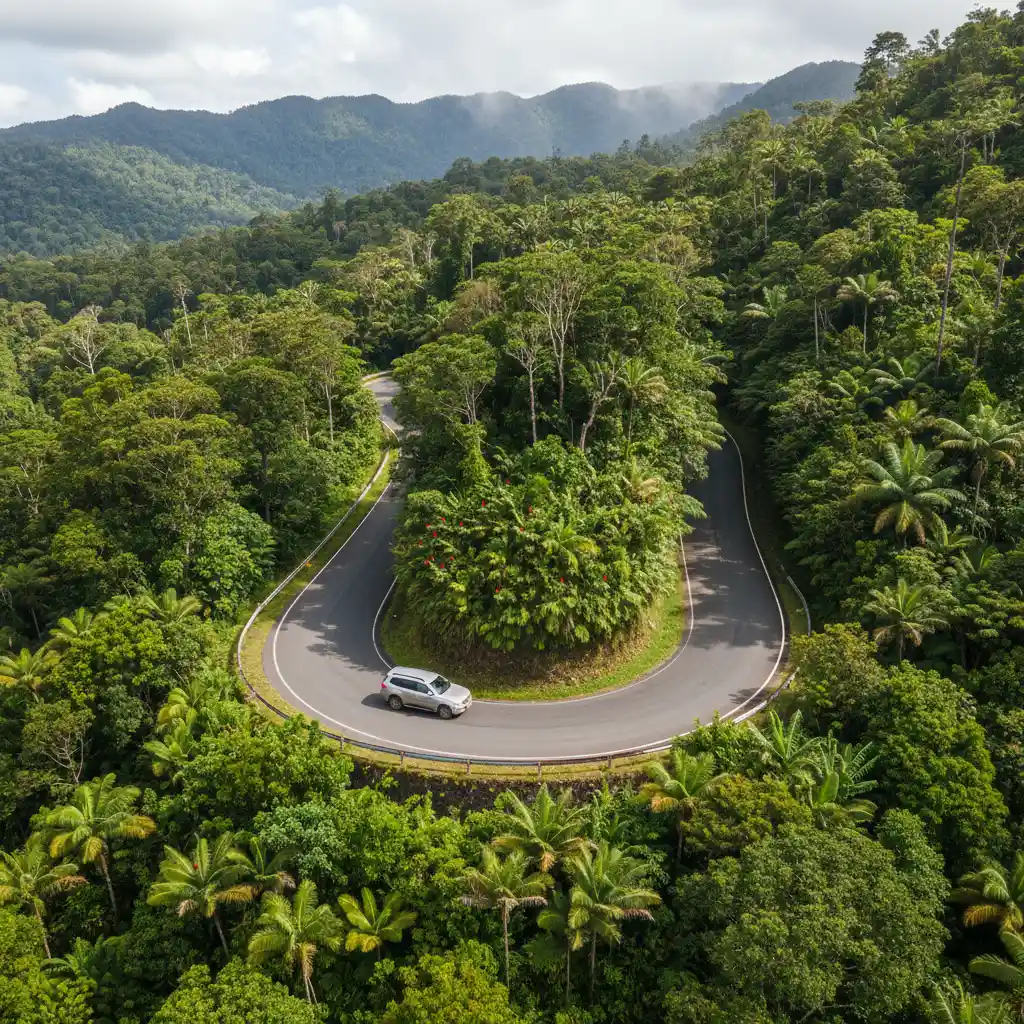
New Caledonia offers some of the most stunning driving scenery in the South Pacific, from the rugged mountains of the Chaîne Centrale to the coastal flats of the West Coast. The RT1 is generally in excellent condition, comparable to a New Zealand state highway. However, as you venture into the “Grand Sud” (Great South) or across the transverse roads to the East Coast, conditions can change rapidly.
Remote roads are often narrower, steeper, and more prone to washouts after heavy tropical rain. Potholes can be frequent in areas with heavy mining traffic. If you are planning to visit the Blue River Park or the Yaté region, a 4WD or a vehicle with high ground clearance is highly recommended. Furthermore, be aware of “radars” (speed bumps) which are often unmarked and very high in residential villages. Kiwis should also watch out for stray cattle, horses, and dogs, which are common on rural roads, particularly at dusk and dawn.
What should Kiwis know about renting a car?
Renting a car is the best way to see New Caledonia beyond the confines of Nouméa. Most major international brands like Hertz, Avis, and Europcar operate out of La Tontouta Airport and the city center (Anse Vata/Baie des Citrons). Here are a few tips specifically for New Zealanders:
- Transmission: Manual cars are the standard and are much cheaper to rent. If you require an automatic, you must book well in advance as the fleet is limited.
- Insurance: Check your credit card travel insurance or dedicated travel insurance policy. Many Kiwis find that “excess reduction” offered at the counter is expensive, but it provides the most comprehensive local coverage.
- Fuel: Petrol (Essence) and Diesel (Gazole) are widely available, but in remote areas, stations may be closed on Sundays or late at night. Most pumps are self-service but require a credit card with a microchip and PIN.
- Age Requirements: You generally need to be at least 21 years old to rent a car, and drivers under 25 may face a “young driver” surcharge.
Safety, Parking, and Driving Etiquette
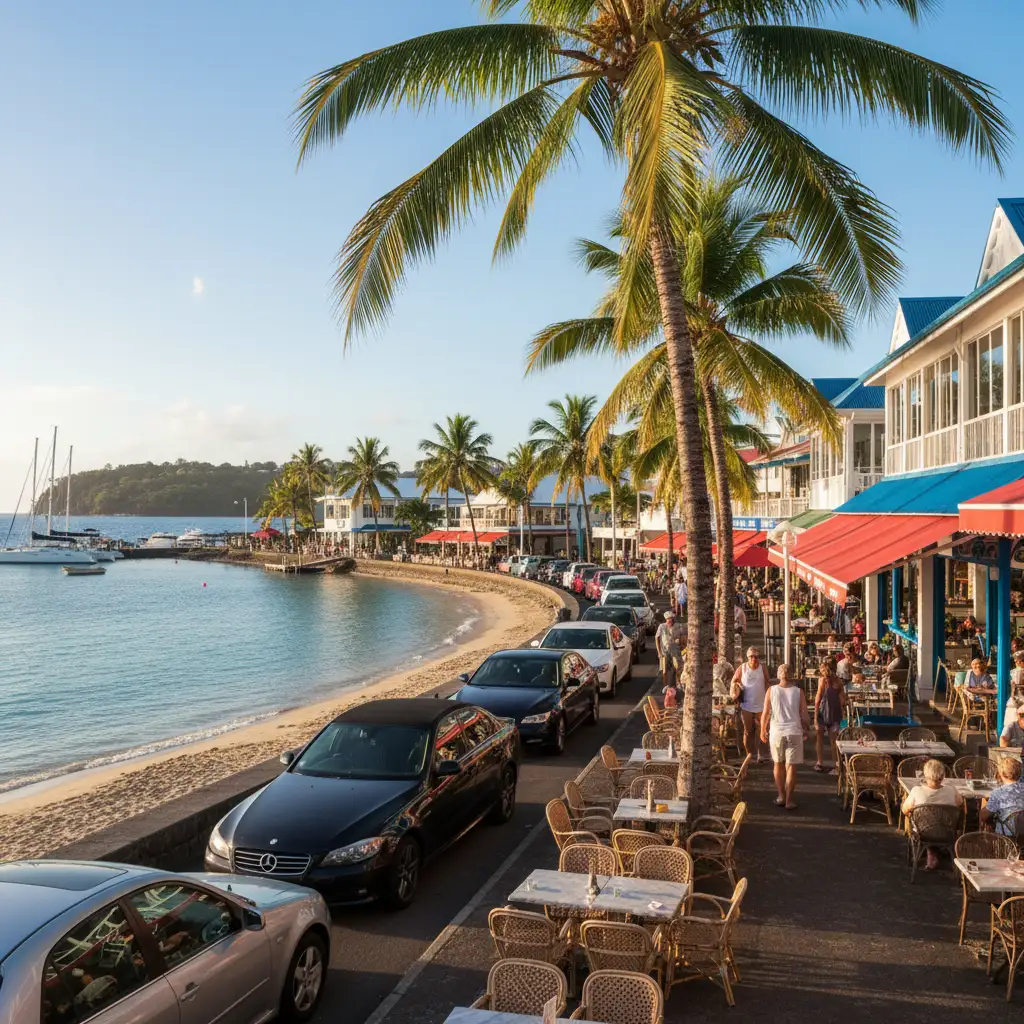
Driving in Nouméa can be congested during peak morning and afternoon hours. Parking in the city center (Centre-Ville) is often metered, and you will need to look for a “Horodateur” (parking meter) to pay for a ticket to display on your dashboard. In the tourist areas like Baie des Citrons, parking is free but fills up very quickly on weekends and evenings.
Local drivers are generally polite but assertive. If someone flashes their lights at you, it might be a warning of a hazard ahead (like a cow on the road) or a Gendarmerie checkpoint. It is also common for drivers to use their hazard lights to say “thank you” or to indicate they are slowing down suddenly. Always carry your physical license and rental documents with you, as the police do conduct random spot checks.
People Also Ask
Can I drive in New Caledonia with a New Zealand restricted license?
Technically, you must hold a full, valid driver’s license to drive internationally. Most rental agencies in New Caledonia require a full license and a minimum age of 21. It is not recommended to drive on a restricted or learner’s license.
Is there a lot of traffic in New Caledonia?
Traffic is primarily concentrated in Nouméa and the surrounding suburbs (Dumbéa, Mont-Dore). During rush hour (7:00 AM – 8:30 AM and 4:00 PM – 5:30 PM), the main arteries can be very slow. Outside of the capital, traffic is very light.
Do I need a 4WD to travel around the island?
For the main RT1 highway and most tourist spots, a standard 2WD car is sufficient. However, if you plan to explore the Great South or certain mountain tracks on the East Coast, a 4WD is safer and often necessary due to unpaved roads.
What side of the road do they drive on in New Caledonia?
They drive on the right-hand side of the road, which is the opposite of New Zealand. The steering wheel is on the left side of the car.
Are there tolls in New Caledonia?
No, there are currently no toll roads in New Caledonia. All major highways and bridges are free to use.
What happens if I get a speeding fine in a rental car?
The rental agency will receive the fine and charge it to your credit card, often adding an administrative processing fee. It is best to stick to the limits to avoid these costly charges.